








筛选结果
46 篇排序
 1:18:18EN
 Cognitive Revolution "How AI Changes Everything"· 2023年6月20日播客Fifteen Thousand Brain Numbers Were Enough to Reconstruct What Someone Saw主持 Nathan LabenzTanishq Mathew Abraham walks through MindEye, the fMRI-to-image system that maps a handful of voxel values onto CLIP and diffusion models.
 1:25:35ENCognitive Revolution "How AI Changes Everything"· 2023年5月21日播客Two and a Half Years From 33.3% to 86.5%: Google Sent Foundation Models to Medical School主持 Nathan LabenzVivek Natarajan walks Nathan Labenz through Med-PaLM and Med-PaLM 2: the data-light techniques, the nine-axis clinician evals, and why a high USMLE-style score is the wrong trophy.
 42:18EN
 No Priors: AI, Machine Learning, Tech, & Startups· 2023年5月18日播客 · 2 人对谈Ten Percent of Search Is Health — and the Doctor Is Googling Too主持 Sarah Guo, Elad GilGoogle researcher Karan Singhal on Med-PaLM 2, the real bar for medical language models, and why medicine is a harder alignment lab than chatbots.
 1:28:43ENCognitive Revolution "How AI Changes Everything"· 2023年5月16日播客Clinical Guidelines Are 11% Evidence. Curai’s Founder Still Wants GPT-4 in the Exam Room主持 Nathan LabenzNeal Khosla of Curai Health argues that large language models already match median U.S. physicians on today’s tests — and that the real work is scaffolding, supervision, and a doctor’s signature.
 58:24ENCognitive Revolution "How AI Changes Everything"· 2023年5月11日播客Among 100 Random Doctors, Zak Kohane Would Be Surprised If One Beat GPT-4主持 Nathan LabenzHarvard's biomedical informatics chair on a rare newborn case, why drug-style trials will not certify a general medical model, and why the AI should still work for the patient.
 46:57ENNo Priors: AI, Machine Learning, Tech, & Startups· 2023年3月2日播客 · 2 人对谈95% of Drug Programs Fail. Daphne Koller Is Betting Machine Learning on the First Decision主持 Sarah Guo, Elad GilA new medicine still takes more than a decade and well over a billion dollars — and Insitro's founder argues the expensive failures start with the wrong target, indication, or patient.
 50:12ENNo Priors: AI, Machine Learning, Tech, & Startups· 2023年2月20日播客 · 2 人对谈The Drone Is Only 15 Percent of the Problem主持 Sarah Guo, Elad GilZipline CEO Keller Rinaudo Cliffton on why blood delivery in Rwanda, not a cooler airplane, built the world's largest commercial autonomous system.
 2:43:51EN → 简体中文
 Lex Fridman· 2022年6月25日播客 · 2 人对谈两根管子,相距几毫米:Jonathan Reisman 谈人体的诚实设计嘉宾 Jonathan Reisman · 主持 Lex Fridman这位急诊医生、《看不见的身体》(The Unseen Body)的作者,带 Lex Fridman 从喉咙一路走到北极。他认为,人体解剖大多精妙,有时只差一点点,而且始终是一部写在伤疤上的故事。
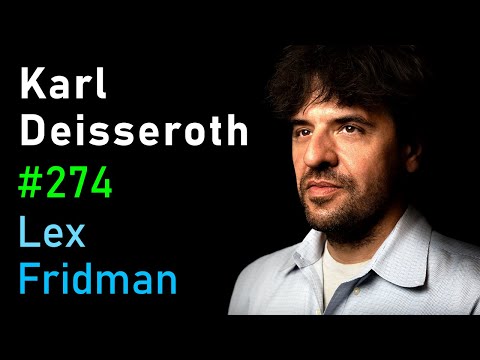 3:21:29EN → 简体中文Lex Fridman· 2022年4月7日播客 · 2 人对谈心智一出问题,才看得出它原本是做什么用的嘉宾 Karl Deisseroth · 主持 Lex Fridman斯坦福大学精神科医生 Karl Deisseroth 与 Lex Fridman 谈抑郁症、精神分裂症和光遗传学(optogenetics),以及为什么不必先有一套“万物理论”,也能先治好眼前的一种症状。
 1:41:34ENLex Fridman· 2021年6月6日播客 · 2 人对谈Aging Is a Scratched Disc. David Sinclair Thinks the Body Kept a Backup嘉宾 David Sinclair · 主持 Lex FridmanThe Harvard geneticist tells Lex Fridman why aging is information loss, how three genes gave a blind mouse its sight back, and why skipping meals may beat the perfect diet.
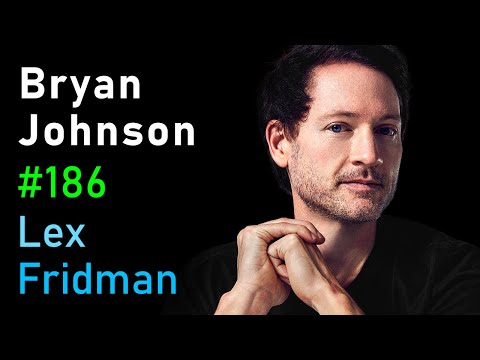 2:31:30EN → 简体中文Lex Fridman· 2021年5月24日播客 · 2 人对谈大脑是社会里最后一个没有被工程化的系统嘉宾 Bryan Johnson · 主持 Lex FridmanBryan Johnson 在 Lex Fridman 面前演示了 Kernel Flow,然后主张:认知是社会最大的未被测量的输入,心理健康、饮食和下一波脑机接口,都应当靠数字说话,别靠感觉。
 2:39:45ENLex Fridman· 2020年10月25日播客 · 2 人对谈The obesity gene was never the obesity gene嘉宾 Manolis Kellis · 主持 Lex FridmanManolis Kellis tells Lex Fridman how one nucleotide a million bases from FTO rewrote obesity biology, and why human genetics is now driving the study of disease.
 1:02:14ENLex Fridman· 2020年6月30日播客 · 2 人对谈The 28-year wait: Robert Langer on rejection, polymers, and a thousand students嘉宾 Robert Langer · 主持 Lex FridmanThe MIT bioengineer talks with Lex Fridman about drug delivery, tissue engineering, patents, and the long path from a Folkman hypothesis to Avastin.
 1:12:03ENLex Fridman· 2020年5月5日播客 · 2 人对谈Mice Don't Get Alzheimer's: Daphne Koller on Disease in a Dish嘉宾 Daphne Koller · 主持 Lex FridmanThe Coursera co-founder and insitro CEO on why most diseases are not one disease, how to turn cells into data, and why overconfident neural nets can kill.
 36:10ENLex Fridman· 2019年11月12日播客 · 2 人对谈So You're Saying There's a Chance: Musk on Neuralink, AI, and a Pale Blue Dot嘉宾 Elon Musk · 主持 Lex FridmanLex Fridman and Elon Musk move from consciousness and an AI referee to the engineering of a brain implant, Tesla Autopilot, and Carl Sagan's lonely speck.
 1:17:29ENLex Fridman· 2019年9月23日播客 · 2 人对谈The Algorithm Is Already Better. The Clinic Still Uses 1967.嘉宾 Regina Barzilay · 主持 Lex FridmanMIT's Regina Barzilay on why deep learning already beats the breast-cancer 'density' score — and why data, liability, and incentives still will not move.
 1:00:11ENLex Fridman· 2019年6月17日播客 · 2 人对谈Rosalind Picard: Clippy Never Saw You Frown, and That's the Whole Problem嘉宾 Rosalind Picard · 主持 Lex FridmanThe MIT professor who named affective computing on emotion recognition, privacy, seizure-detecting wearables, and why a device you can take off is safer than a camera you cannot see.
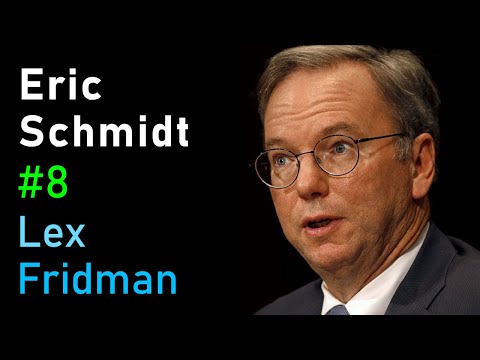 33:07ENLex Fridman· 2018年12月4日播客 · 2 人对谈They Ran an Extension Cord Next Door and Invented Google嘉宾 Eric Schmidt · 主持 Lex FridmanEric Schmidt tells Lex Fridman that Larry and Sergey never held the entrepreneurship meeting: they had a better algorithm, too little power in the dorm, and a $100,000 check.
 1:02:57ENCognitive Revolution "How AI Changes Everything"播客Virtual Biopsies in One Second: How a Seven-Year-Old CycleGAN Is Beating Newer Models in the Clinic主持 Nathan LabenzTanishq Mathew Abraham explains how deep learning turns label-free 3D tissue images into virtual H&E stains fast enough to guide tumor surgery.
 1:04:35EN
 Unsupervised Learning: With Jacob Effron播客Oscar Health's AI Playbook: Translate the Bureaucracy First, Then Reinvent Care主持 Jacob EffronMario, Oscar Health's CTO and co-founder, explains how a regulated insurer deploys LLMs today and what stands between healthcare and AI doctors.
 2:04:21ENCognitive Revolution "How AI Changes Everything"播客"AI Doctors Are Here": A Father's Account of Fighting His Son's Burkitt Leukemia With GPT-5 Pro and Gemini 3主持 Nathan LabenzNathan Labenz recounts the first three weeks of his 6-year-old son's cancer diagnosis and how frontier models served as second opinions, bedside co-pilots and relapse planners.
 1:22:17ENCognitive Revolution "How AI Changes Everything"播客One Set of Weights, Fourteen Medical Tasks: Inside Google's Multimodal Med-PaLM M主持 Nathan LabenzVivek Natarajan and Tao Tu explain how Google built a single generalist biomedical model that reads images, genomics and text, and what it will take to put it in front of patients.