30 秒でわかる
Matthew Berman recounts OpenAI DevDay announcements including dots, the Ultrafast inference tier, GPT-6.1 Sol, Codex tools, apps and ChatGPT Space. He compares the event’s stated costs and limits and shares his early impressions.
- 1Always-on assistantsBerman describes dots as proactive agents available through ChatGPT and connected work tools.
- 2Ultrafast and costHe reports a substantial speed increase but warns that rapid token usage can become expensive.
- 3GPT-6.1 SolHe compares the model’s stated prices and benchmark performance with Astra.
- 4Codex toolsSecurity scanning, cloud execution, voice and review were among the developer announcements.
- 5ChatGPT SpaceThe collaboration feature brings people, agents and work materials into a shared environment.
ポイント
- Dots are presented as proactive personal agents connected to user tools and cloud environments.
- Ultrafast prioritizes inference speed at higher cost, while Berman highlights Sol’s lower quoted token prices.
- Codex announcements cover cloud work, security scanning, voice and code review.
- The video describes a renewed apps experience and a collaborative ChatGPT Space.
チャプターごとに整えた全文を読む
Dots and personal assistants
Berman describes the always-on agent and its connections. He discusses usage and his preference for a separate app.
I attended OpenAI DevDay and saw a series of announcements, from a customizable ModRetro handheld to new AI assistants and developer tools. One of the largest was dots, an always-on personal agent that OpenAI positions alongside a new generation of assistants inspired by OpenClaw.
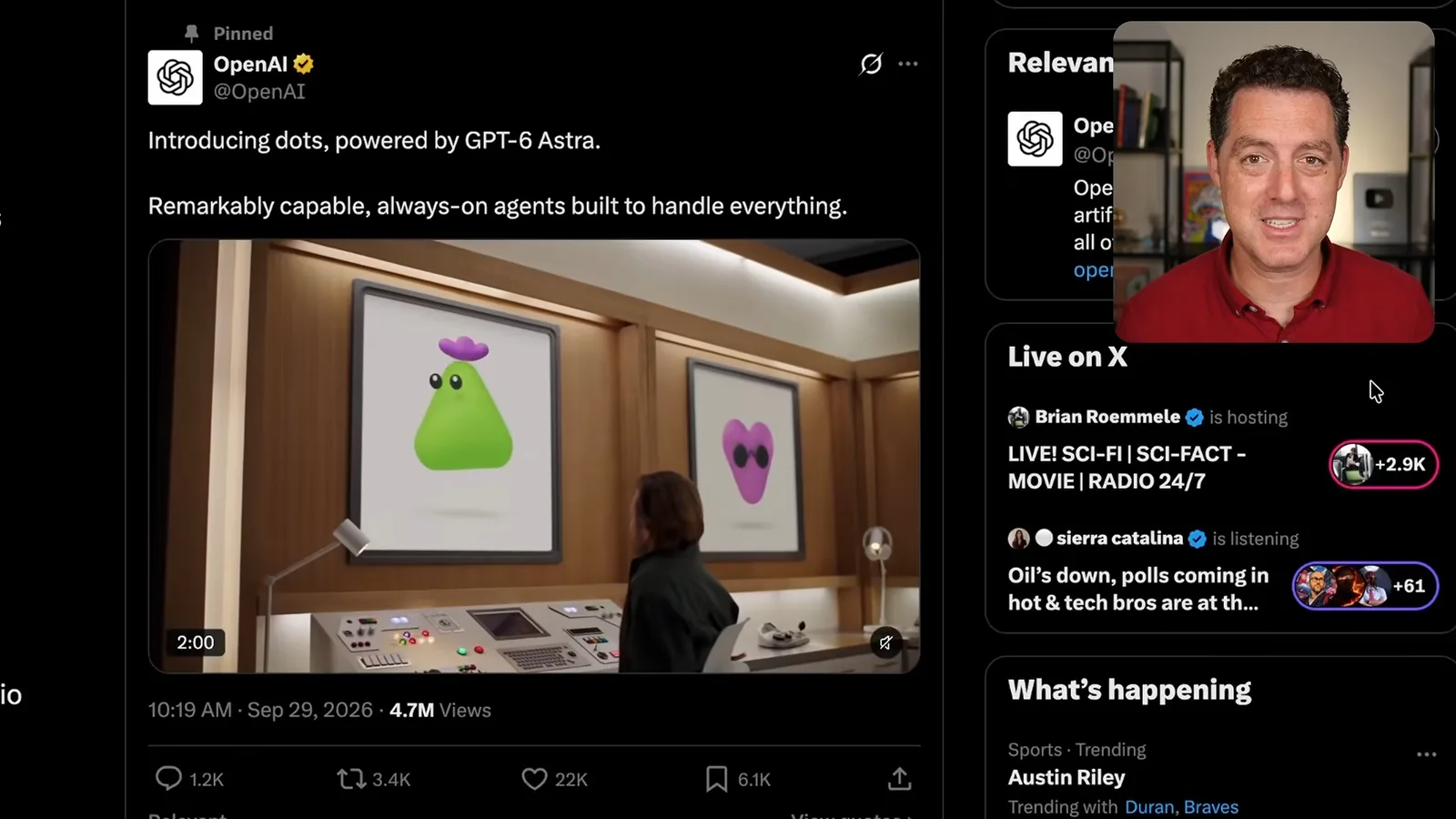
The idea is for a dot to work proactively throughout the day rather than wait for every prompt. Berman says it can be reached through ChatGPT, Slack and Teams, runs in its own cloud environment and can connect to accounts such as email, documents and calendars. He hopes a simpler assistant experience will make useful AI accessible to more people.
Dots live in ChatGPT and can work through ChatGPT and Codex threads. I would prefer a separate app, although I understand the appeal of building on existing tools and environments. Berman says conversations with a dot do not count toward ChatGPT usage, but work performed through ChatGPT or Codex threads does.
Inference speed and model pricing
He compares Ultrafast, subscription limits and GPT-6.1 Sol. He discusses the trade-off between speed and cost.
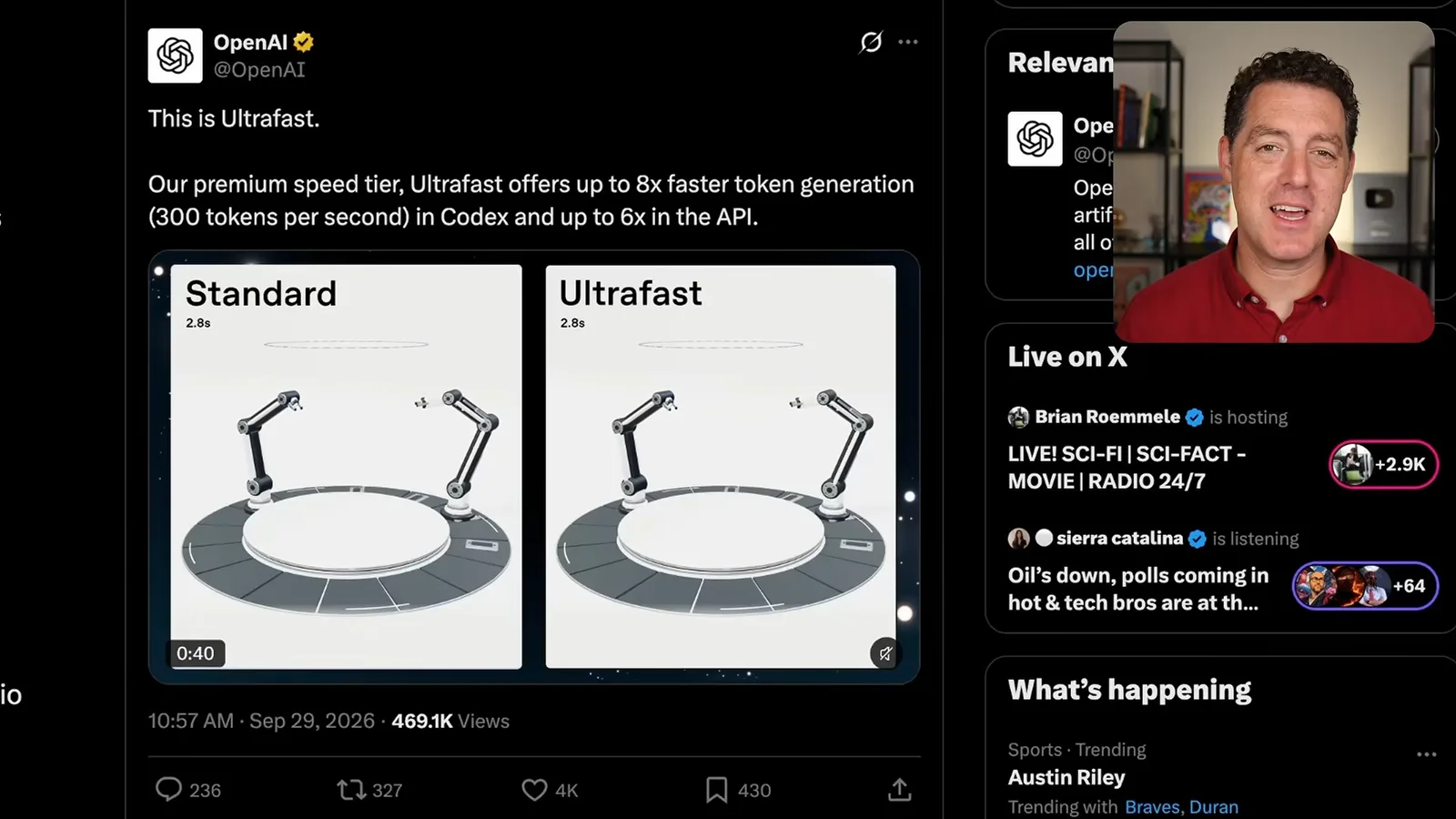
Ultrafast is a high-speed tier for GPT-6 Astra using Cerebras hardware. OpenAI’s announcement says it can generate tokens up to eight times faster in Codex and up to six times faster in the API. Berman warns that the higher cost can add up quickly: during early access, he says he spent $1,000 in about 90 minutes.
The $500-per-month Pro 500 plan offers higher limits. Berman argues that the price of a given level of intelligence has fallen even as users may spend more on frontier quality or speed. He compares the new plan’s stated usage multiplier with a changed multiplier for the $200 tier, and cautions that limits and costs matter.
GPT-6.1 Sol is the announcement I find most impressive: I consider it fast, efficient and close to Astra on several tasks at a lower price. The prices quoted in the video are $2 per million input tokens and $10 per million output tokens for Sol, compared with $10 and $50 for Astra; cached input is quoted at $0.10 per million for Sol.
Berman shows developer-oriented, PDF and computer-use benchmark comparisons. He says Sol performs near Astra on some tests, while Astra leads at the high end of OSWorld. He speculates that post-training techniques may explain some of the improvement, without claiming knowledge of the exact methods.
Developer tools and collaboration
The remaining announcements cover Codex, a Decisions API preview, apps and ChatGPT Space.
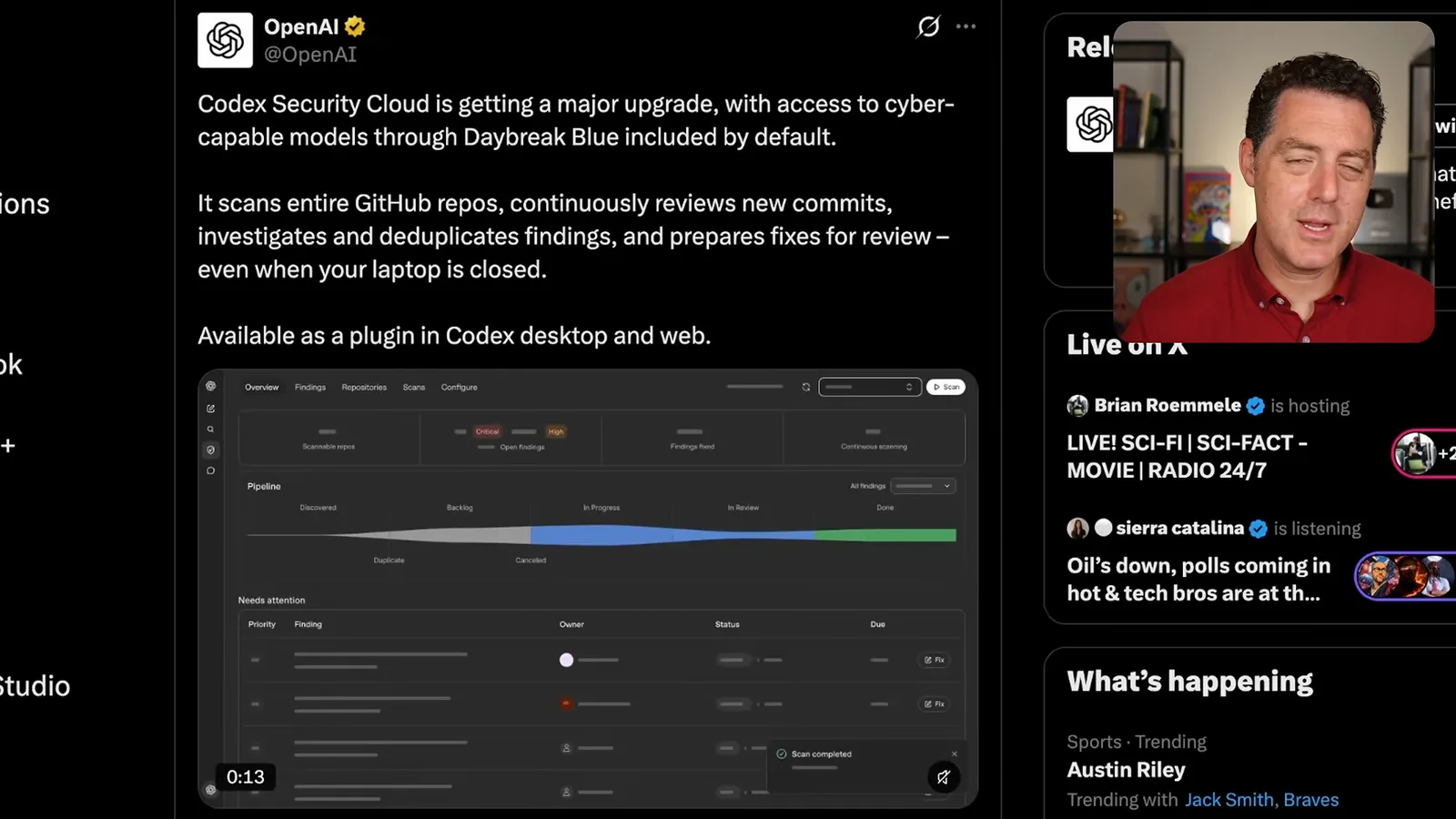
OpenAI also announced an upgrade to Codex Security Cloud for continuously scanning repositories and preparing findings for review. Berman welcomes cloud-native Codex work because a local laptop need not stay open. With very fast inference, he observes that local tool calls and terminal commands can become the bottleneck.
Other announcements include a refreshed voice-controlled CLI, a new code review experience and a preview Decisions API based on a smaller model. Berman expects a competing purpose-built decision model to remain faster, which is his prediction rather than a demonstrated comparison.
OpenAI is also relaunching plugins and native apps in ChatGPT. Berman describes signing in to third-party applications with ChatGPT and bringing an existing token allowance to them, and sees potential for users who would otherwise face separate subscriptions.
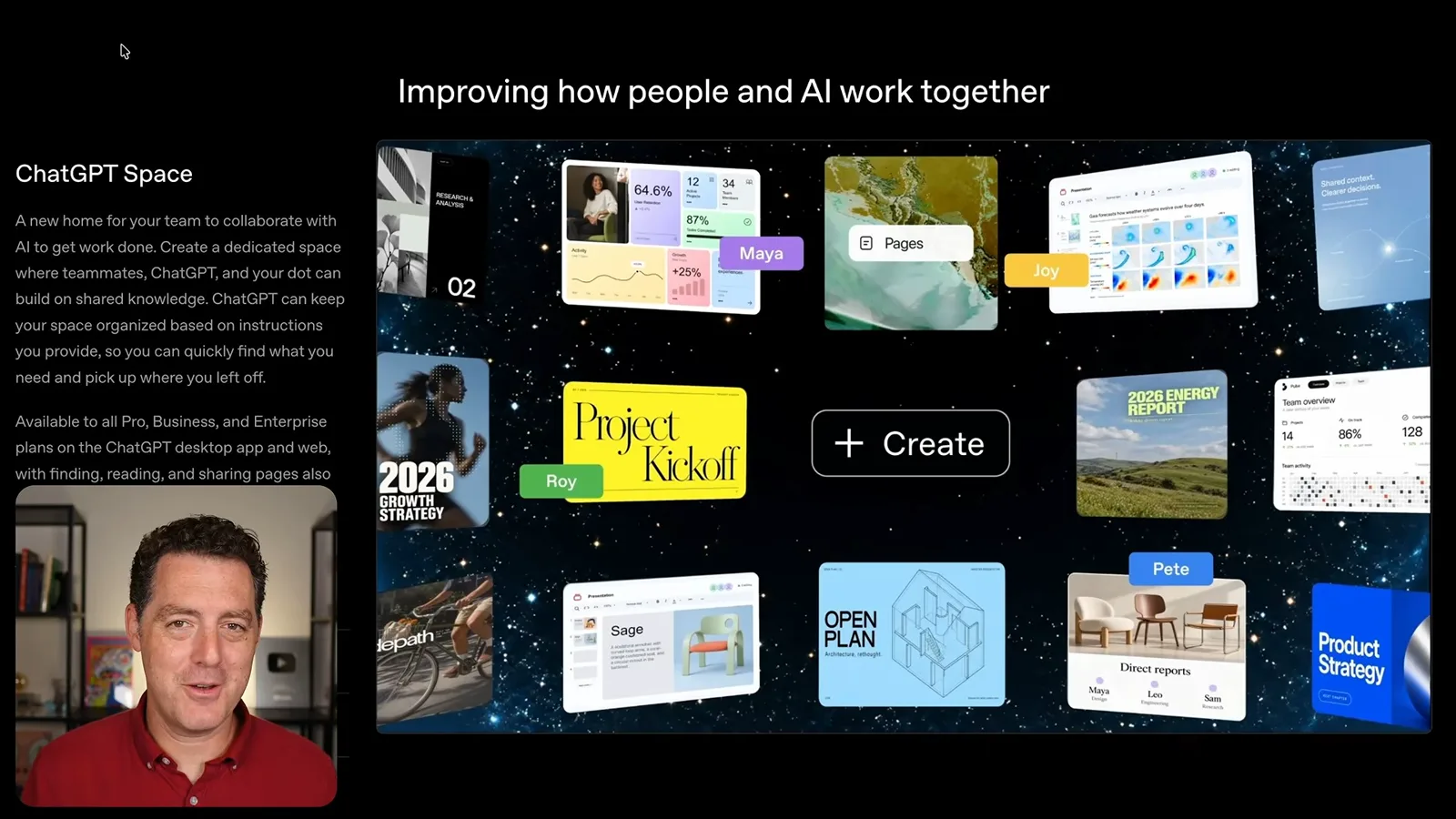
Finally, he introduces ChatGPT Space as a collaborative area where teammates and agents can work with materials such as presentations, spreadsheets and websites. He compares the idea to Notion. These descriptions reflect the event and the video’s account at the time, rather than a guarantee of current availability or pricing.
同じチャンネルの記事
 25:50EN
 32:20EN
 45:08EN
 12:14EN
 10:36EN
 17:37EN