30 秒でわかる
Matthew Berman uses an August 2026 Vercel AI Gateway snapshot to explore growing use of open-weight models and the concentration of modeled spending among premium providers. He discusses price per completed task, customization, privacy, competition and possible geopolitical dependencies. The platform data are a limited snapshot, modeled spending is not company revenue, and his predictions about future market shares and chips remain uncertain.
- 1A platform-specific shiftThe Vercel chart shows a rising share of open-weight tokens on its gateway during the period displayed, not all global use.
- 2Usage and modeled spend differIn the August 24 snapshot DeepSeek accounts for 25.2% of tokens and 2.8% of modeled spend, versus 24.5% and 64.6% for Anthropic. These are platform estimates, not provider-wide revenue.
- 3Why premium models can earn moreBerman argues that difficult, high-value tasks may justify higher prices; that depends on actual outcomes and alternatives.
- 4Cost per taskA lower token price may be offset by higher token consumption or retries, so evaluation must include effectiveness and total cost.
- 5Control and tradeoffsOpen weights can support customization and hosting choices, but privacy depends on deployment, contracts and operational practices.
- 6A geopolitical hypothesisBerman worries that future co-design of models and Chinese chips could create dependencies for US users; he presents this as a possible future, not a current necessity.
ポイント
- A platform's token share measures usage on that platform, not the entire AI market or company revenue.
- The displayed August 24 snapshot shows similar DeepSeek and Anthropic token shares but very different modeled spend shares.
- Compare total cost and success per task, not just price per token; model behavior and workload matter.
- Open weights can enable self-hosting and customization, subject to license terms, infrastructure costs and security controls.
- Berman's forecasts about frontier revenue and dependence on Chinese chips are hypotheses, not demonstrated outcomes.
チャプターごとに整えた全文を読む
The Vercel usage chart
Berman introduces a platform snapshot showing a rising open-weight share and compares token usage with modeled spending.
Matthew Berman argues that a shift in the AI market is visible in a Vercel chart. The video was published in August 2026 and reflects his interpretation of that moment. The figures come from a particular platform and cannot by themselves describe all AI usage or all provider revenue.
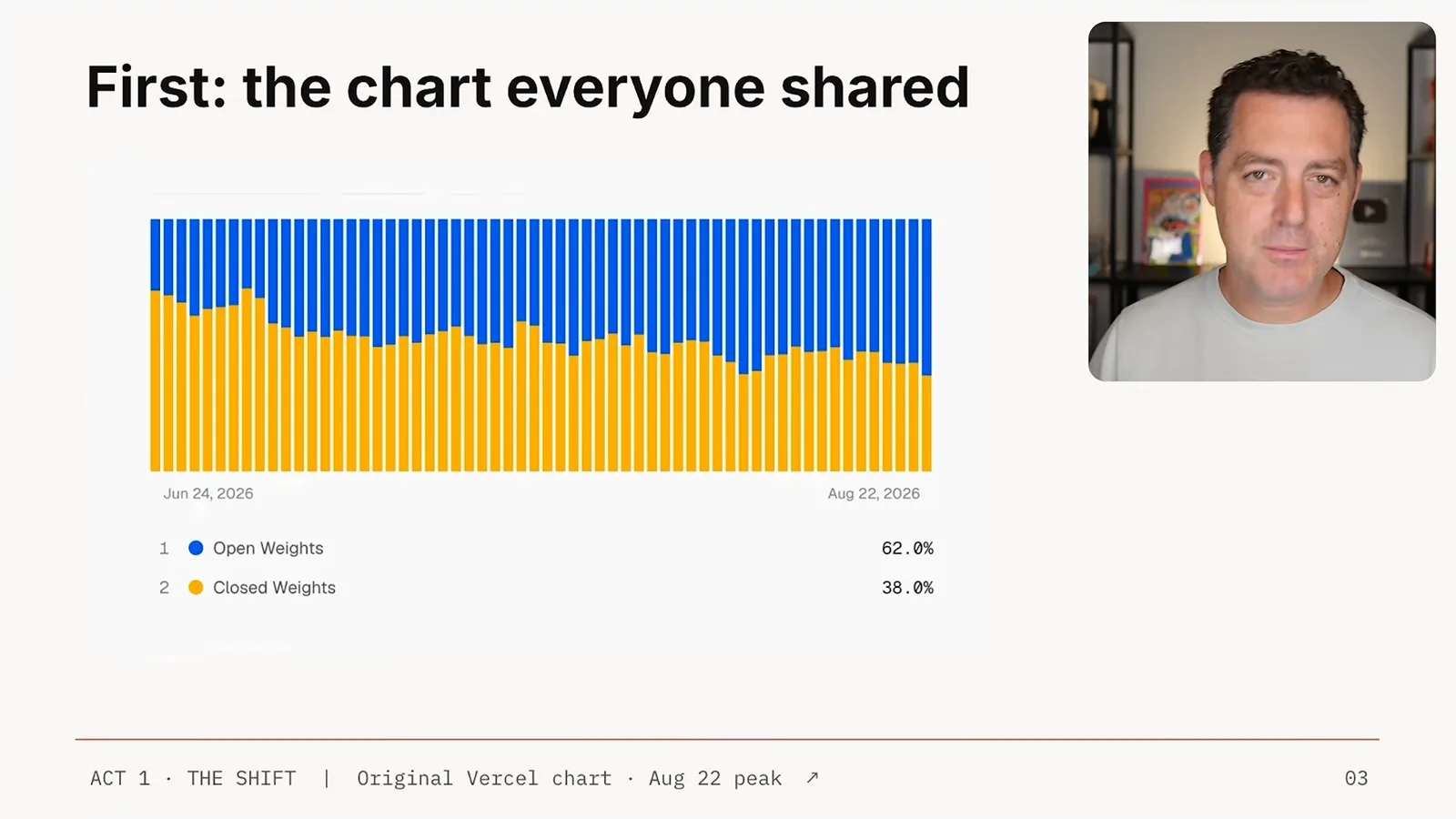
The chart tracks open- and closed-weight model token shares on Vercel's AI Gateway from late June to late August. Its displayed endpoint shows 62% open weights and 38% closed weights. Berman sees the rising open-weight share as evidence of growing adoption; this is a gateway sample, not a census of the market.
Berman highlights models from Chinese developers and the option to download, host and customize open weights. Those possibilities vary with the model's license and the user's infrastructure. Open weights do not automatically mean all training data and code are open, nor do they guarantee free commercial use.
The number of tokens and the money spent are different measures. A slide labeled Vercel AI Gateway's August 24 snapshot shows DeepSeek at 25.2% of tokens and 2.8% of modeled spend, against Anthropic at 24.5% and 64.6%. Modeled spend is an estimate within this sample, not each company's total revenue.
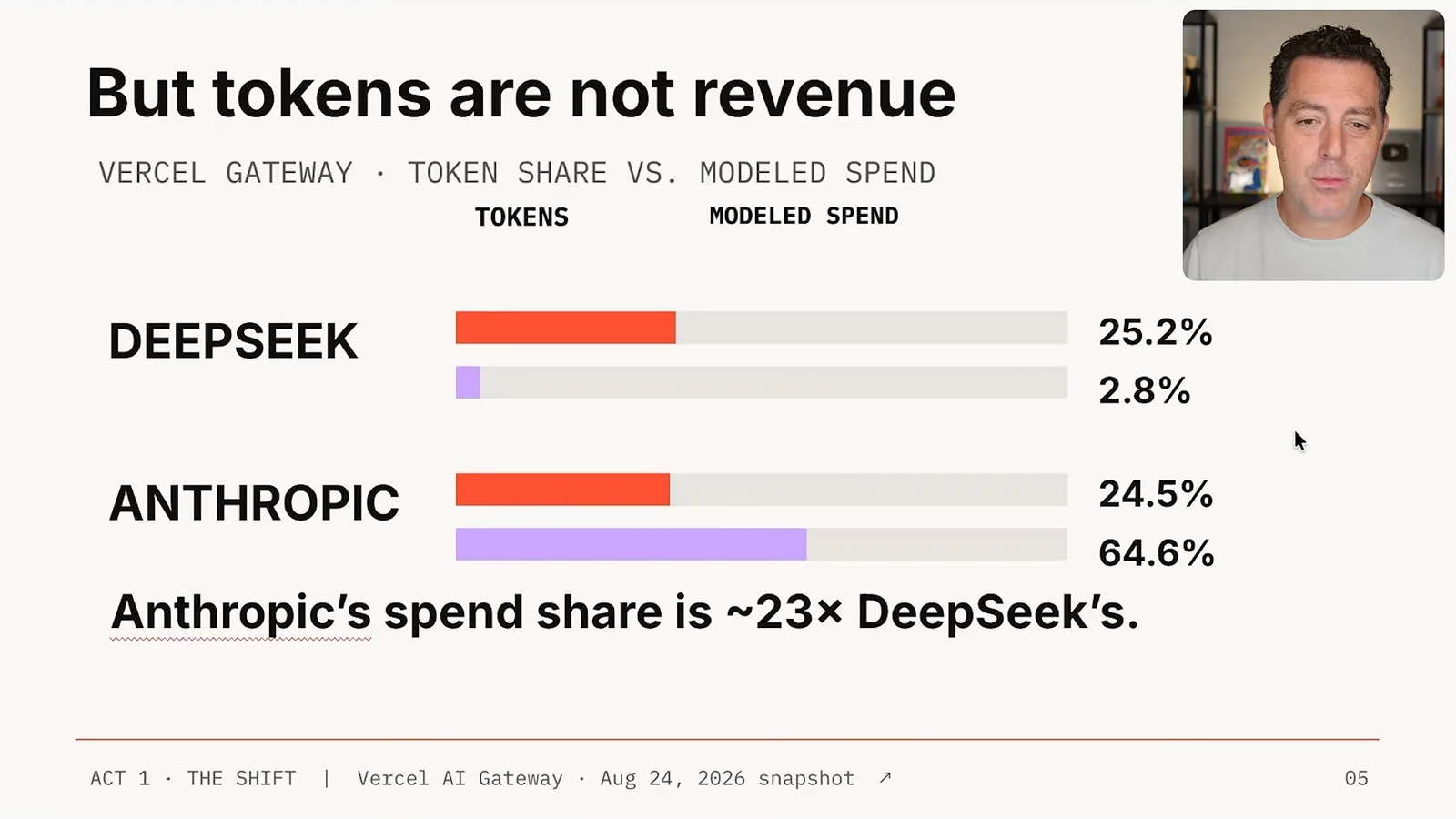
Berman interprets the gap as evidence that customers pay a premium for leading models on difficult work. He argues that a small difference in capability can be valuable for high-stakes tasks. That is an economic interpretation, and the chart alone does not establish why customers chose each model.
Premium models and lower-cost alternatives
He discusses the value of frontier performance, the potential demand effects of cheaper models and price differences.
Investor Gavin Baker's view, as presented by Berman, is that widely available open weights could expand usage and infrastructure demand. Berman also cites a prediction that frontier models capture a disproportionate share of value despite a smaller share of tokens. Neither greater demand nor a particular revenue split is guaranteed.
The video compares a premium model's listed output-token price with a much cheaper Flash model. Berman acknowledges they are different model classes: a lower price can make routine tasks more accessible, while a better result on a difficult task may justify a premium. The cited prices are historical and do not measure full workflow cost.
Enterprise choice and task cost
The discussion covers customization, privacy and a comparison of costs for completing a task.
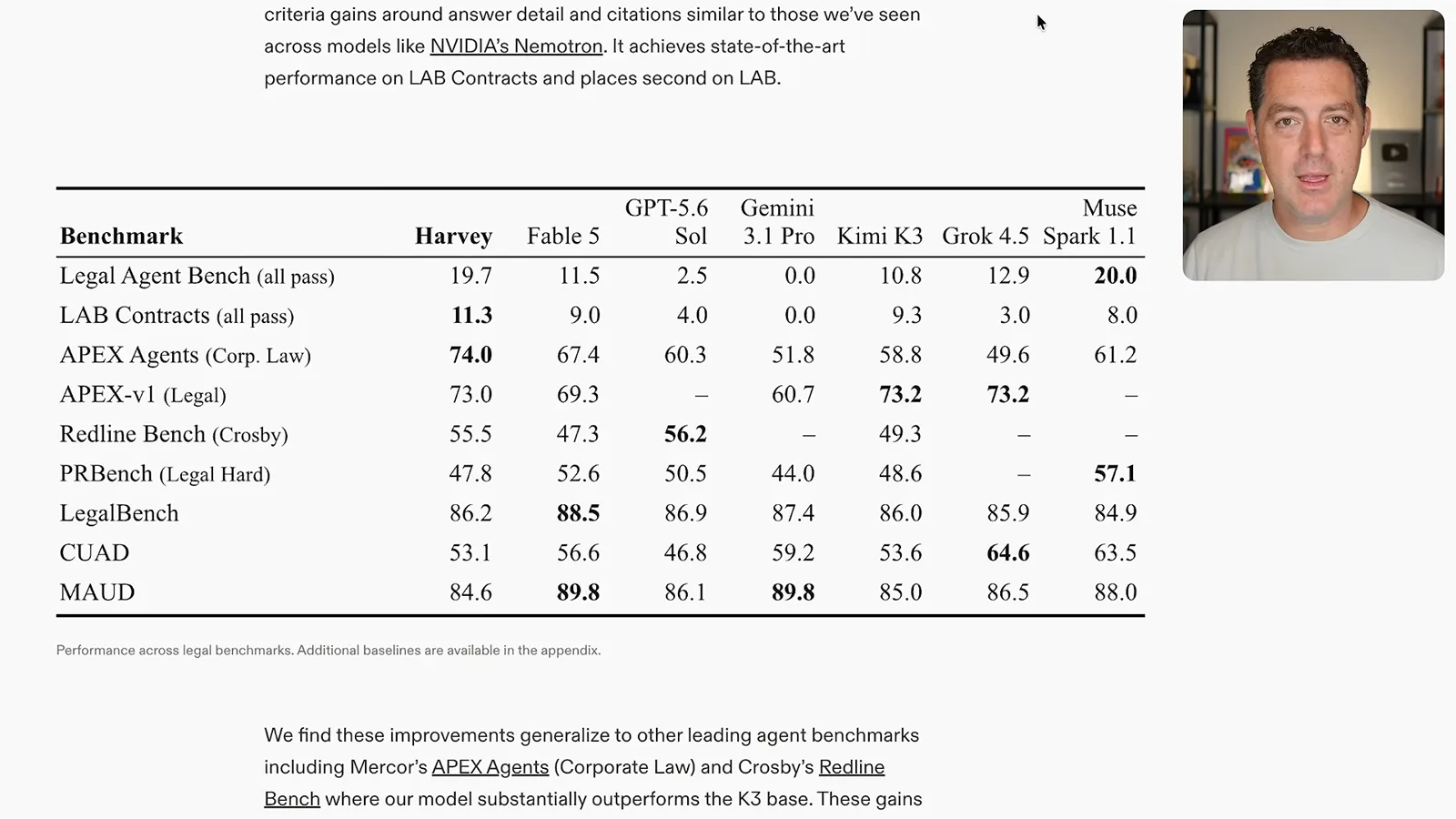
Berman says enterprise model choice also depends on privacy, product fit and customization. He names examples of companies using open-weight models and describes Harvey's legal-model fine-tuning. Benchmark results are presented as the vendor's reported evaluation, not independent proof of reliable legal work.
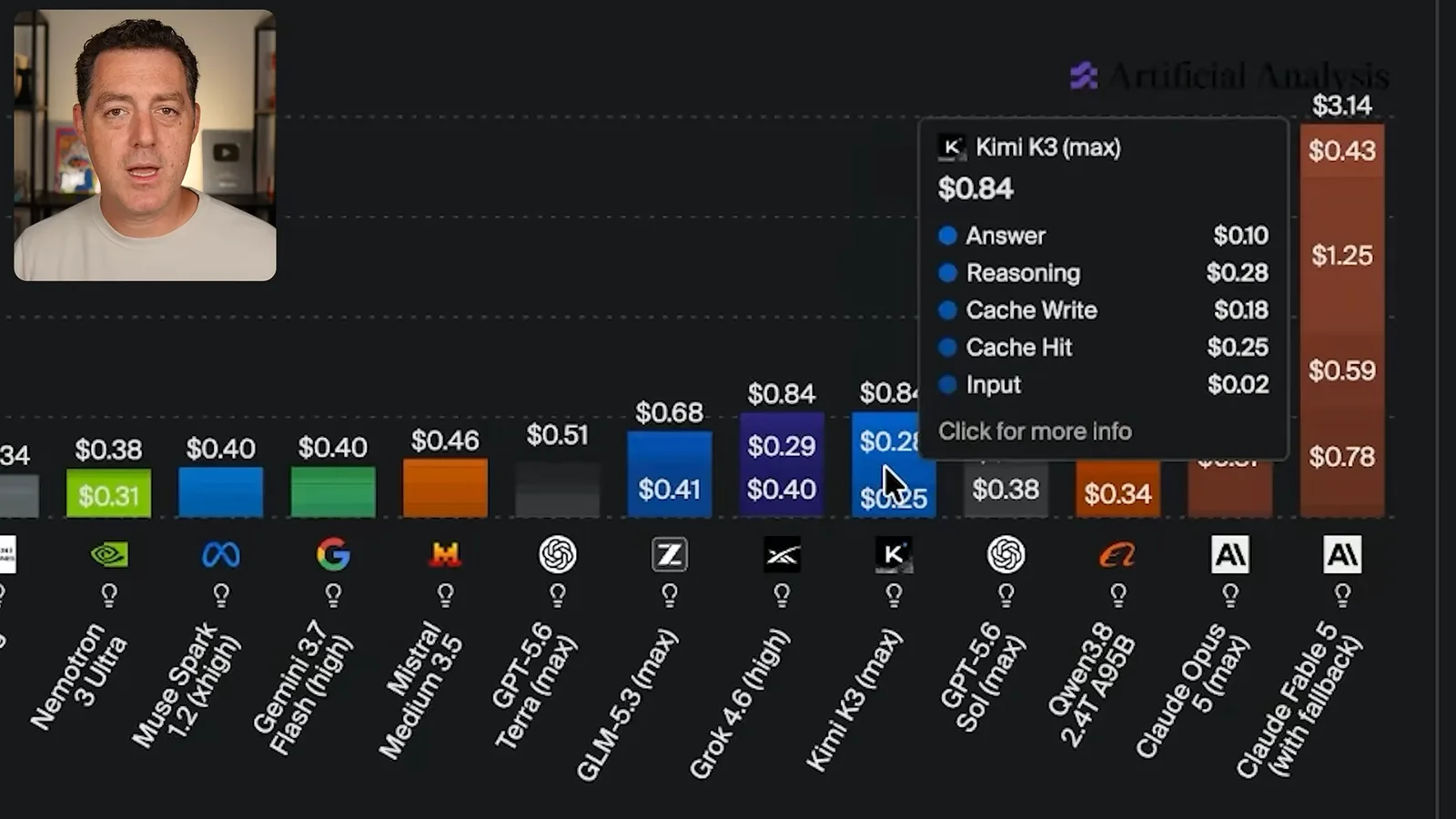
A per-task comparison illustrates why unit token prices are incomplete: a model can be cheaper per token but consume more tokens for a similar task. Berman cites an example of $0.84 versus $0.96 and recommends accounting for actual task completion. A meaningful comparison should also consider success rates and retries.
Economist Christian Catalini's framework, as Berman summarizes it, separates inexpensive general models, specialized models adapted to enterprise context, and premium frontier generalists. Berman treats these as possible segments of the market, rather than as measurements that settle how future spending will divide.
Control, competition and open weights
Berman considers hosting choices, platform risk, customization and the model ecosystem.
Berman favors open weights because self-hosting and fine-tuning can give an organization more control and reduce dependence on a single model provider. He worries about a provider retaining information or competing with customers. Actual data use and retention depend on the service, contract and configuration; self-hosting also creates operational responsibilities.
Alternative hosting providers can give buyers more negotiating options. Customization can improve a model for a particular domain, but benefits depend on data quality, evaluation, cost and licensing. Berman views competition among model and infrastructure providers as useful pressure on premium labs.
Berman points to a large ecosystem of derived models and an Artificial Analysis index where several open-weight models score close to the leaders. Rankings summarize selected tests, not performance on every real task. He also uses a housing analogy to argue that adapting a model can build organizational knowledge over time.
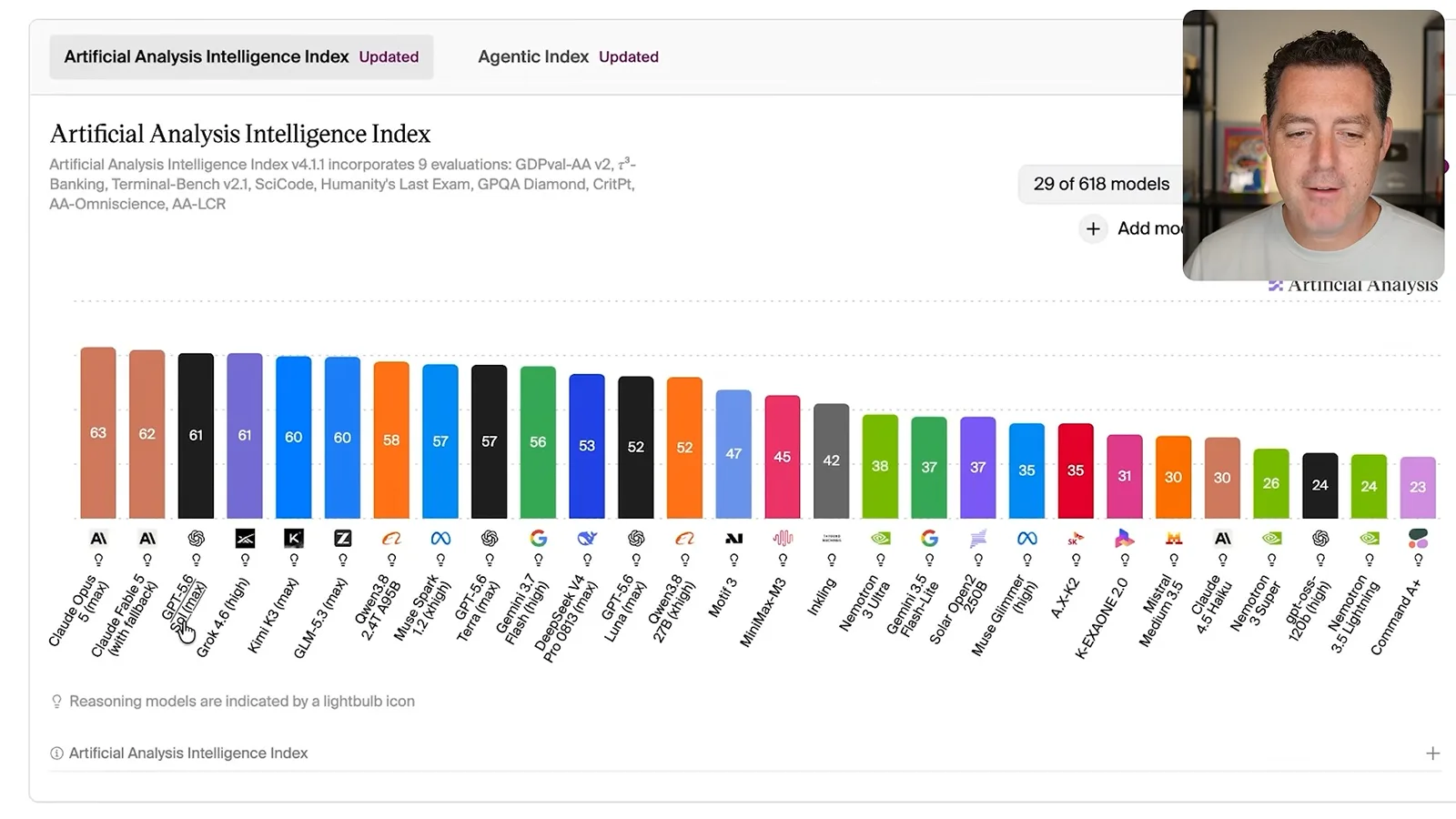
He notes price reductions by a closed-model provider and predicts that open weights will lead on token volume while frontier labs capture most spending. The Vercel snapshot supports a distinction between usage and modeled spend in that sample; it cannot establish that the predicted market outcome will persist.
Market predictions and geopolitical risk
He forecasts different winners in usage and spending and raises a hypothetical dependence on future Chinese hardware.
Berman's final concern is geopolitical: if models and future Chinese chips are closely co-designed, US companies relying on those models could face a new dependency. This is a scenario he proposes, not evidence that open-weight models currently require Chinese hardware. He closes by encouraging readers to learn about local deployment and customization.
同じチャンネルの記事
 25:50EN
 32:20EN
 45:08EN
 0:32EN
 12:14EN
 10:36EN