Will AI Change What Programmers Do?

Matthew Berman responds to Ryan Dahl's prediction about writing code and argues that systems thinking will remain important.

MBMatthew BermanIntervenant · Forward Future
Chaîne
Matthew Berman
Publié
22 janv. 2026
Vidéo
1:08
Lecture
1 min
Diapositives
1
Original
anglais
Ouvrir sur YouTube
En faisant défiler, la vidéo se réduit en bas à droite et continue. Les sous-titres suivent votre langue de lecture.
Langue de lectureDisponible en 2 langues
Cet article n’est pas encore disponible en français ; il s’affiche dans l’original en anglais.
RÉSUMÉ

En 30 secondes

Matthew Berman reacts to Node.js creator Ryan Dahl's statement that the era of humans writing code is over. Berman predicts that cheaper code generation will expand software demand and change developer work, while acknowledging uncertainty about new jobs. These are predictions, not proof that manual programming has ended or employment will rise.

  1. 1A prediction about codingBerman cites Ryan Dahl's claim about the end of humans writing code; the claim is a prediction rather than a demonstrated universal fact.
  2. 2Systems thinkingBerman believes programming judgment and the ability to direct agents will become more important.
  3. 3Demand and uncertaintyHe invokes Jevons paradox to argue cheaper code may increase demand, while the actual impact on jobs remains uncertain.

À retenir

  1. Dahl predicts that directly writing syntax will become less central to software engineering.
  2. Berman argues that system design and directing agents will remain valuable.
  3. Cheaper production can stimulate demand, but the effect on total software employment is not automatic.
TEXTE INTÉGRAL

Lire le texte remanié, chapitre par chapitre

Transcription seule
01

Dahl's prediction

Berman introduces the Node.js creator's view of manually writing code.

Matthew Berman cites Node.js creator Ryan Dahl's prediction that the era of people directly writing code is over. Berman says other programmers have voiced similar views. This is a forecast about how software work may change, not evidence that people have already stopped writing code.

02

Programming beyond syntax

He emphasizes systems thinking and directing agents.

Berman argues that programming as systems thinking remains important even if agents produce more syntax. He expects experienced engineers to direct agents and build more, while less experienced developers and people without coding backgrounds gain new ways to turn ideas into software. The quality of generated code still requires evaluation.

03

Demand and new work

Berman predicts cheaper software will create demand and possibly new occupations.
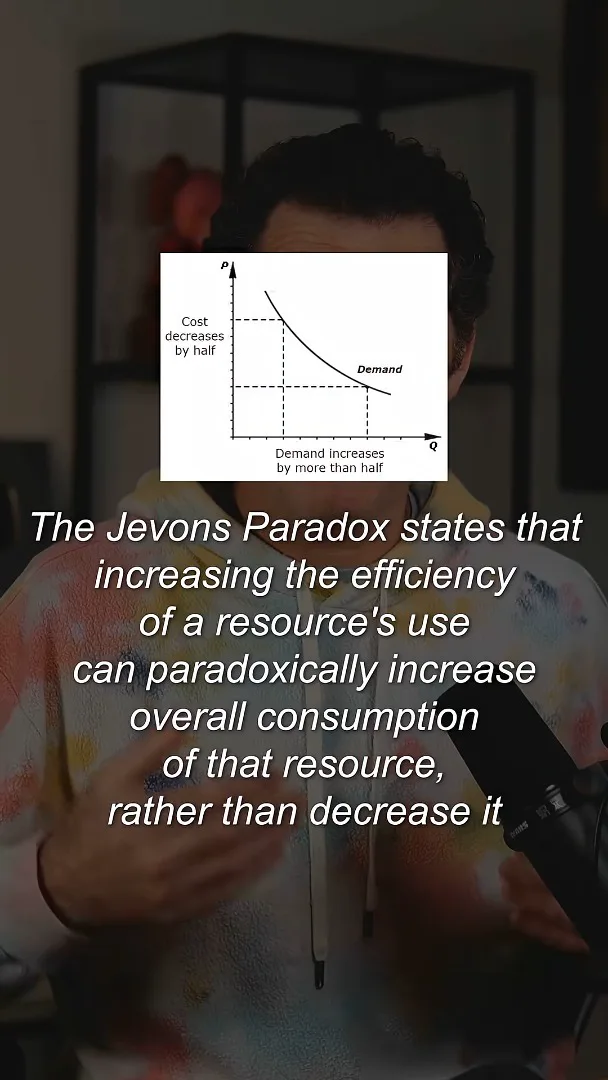
Jevons paradox illustration
DIAPOSITIVE 1 / 1Jevons paradox illustrationThe video illustrates the argument that efficiency gains can increase overall use, a possible outcome rather than a universal rule.

He invokes Jevons paradox: lower cost and greater efficiency can encourage more use, potentially offsetting savings. More demand for software is plausible but not guaranteed, and it does not establish what will happen to developer jobs or wages. Berman expects new kinds of work to emerge, while conceding that their nature is not yet known; the clip cuts off during his final example.

Sur la même chaîne

6 diapositives25:50EN
MBMatthew Berman· 24 oct. 2026Kimi K3.1 Pro Tested: Strong 3D Demos, Uneven Results and Competitive PricingMatthew Berman · Forward FutureMatthew Berman tests the open-weight model on coding, 3D rendering and visual explanations, then compares benchmark results and prices.Open-weight modelsBenchmarksAI cost & performance+1
2 diapositives32:20EN
MBMatthew Berman· 23 oct. 2026Who Is Local AI For? The Costs, Trade-offs and a Hybrid FutureMatthew Berman · Forward FutureMatthew Berman weighs data control and independence against hardware cost, setup complexity and inference speed.Local inferenceOpen-weight modelsAI cost & performance+1
45:08EN
MBMatthew Berman· 21 oct. 2026Sam Altman on AI Discovery, Consciousness, Compute and a Human-Centered FutureMatthew Berman, Sam Altman · Forward FutureIn a conversation with Matthew Berman, Altman discusses scientific progress, personal assistants, recursive self-improvement and the importance of human agency.AI for sciencePersonal agentsConsciousness+2
0:32EN
MBMatthew Berman· 21 oct. 2026Sam Altman on the Continuing Demand for Software WorkSam Altman, Matthew Berman · OpenAIIn a short interview excerpt, Altman says demand for software may be larger than expected even as AI changes how it is made.Future of WorkSoftware engineeringAgents de code
5 diapositives12:14EN
MBMatthew Berman· 14 oct. 2026Gemini 4 Argon Tested: 3D Demos, a Spreadsheet Prototype and Benchmark ResultsMatthew Berman · Forward FutureMatthew Berman tests Google’s model on games and visual projects, then compares reported coding and agent benchmarks.GeminiBenchmarksAgents de code+1
5 diapositives10:36EN
MBMatthew Berman· 13 oct. 2026Meta Muse Wonder Tested: Strong Benchmarks, Mixed Demos and Quota FrictionMatthew Berman · Forward FutureMatthew Berman tests Meta’s models on browser demos and reviews their published benchmark scores, availability and cost.Modèles et entraînementBenchmarksAI cost & performance+1