In 30 seconds
In February 2023, Matthew Berman discusses Nothing, Forever, a near-continuous Twitch show inspired by Seinfeld. He considers its generated dialogue, synthesized voices and pixelated visuals, while pointing to weak comic timing and a moderation failure that led to a temporary suspension. He also raises questions about ownership, credit and a future of personalized entertainment. That future is his prediction, not a demonstrated replacement for human creators; the show itself combined AI components with human-created software and artwork.
- 1A continuous sitcom experimentMismatch Media’s Nothing, Forever combined generated dialogue, synthetic voices and pixelated scenes in a Seinfeld-inspired stream.
- 2Comedy and timingBerman sees the show’s absurdity as fascinating, while criticizing its awkward pauses and misplaced laugh track.
- 3Moderation and rightsThe host asks who should receive credit for generated work and describes a two-week Twitch suspension after offensive dialogue.
- 4A possible media futureHe imagines small teams using AI to produce films or personalized shows, while acknowledging uncertainty about when that could happen.
Takeaways
- Nothing, Forever was a procedurally produced Seinfeld homage presented on Twitch as a continuous show.
- The creators reported using GPT-3 for dialogue, speech synthesis for voices and Unity to assemble the visual production.
- Berman finds the show’s nonsensical humor intriguing but its timing and awkward silences weak.
- A 2023 Twitch suspension illustrated the difficulty of moderating live generated dialogue.
- Questions about credit, copyright and whether AI will reshape film and television remain open.
Read the edited text by chapter
Generative AI reaches comedy
Berman introduces AI’s growing influence, image generation and ChatGPT. He asks whether comedy might be another medium affected.
The video opens with a deliberately awkward stand-up joke from the generated show. Matthew Berman then notes that AI and machine learning had already influenced social feeds, scientific research and games, before recent advances made generative systems more visible. He asks whether comedy may be the next medium affected.
Berman describes DALL·E as a tool that creates images from text descriptions and notes controversy around AI art, competitions and copyright. He then discusses ChatGPT’s late-2022 debut and its ability to respond conversationally and produce many kinds of text, including code, essays and comedy.
Nothing, Forever and its limits
He presents a clip from the continuous Seinfeld homage and discusses its peculiar humor and poor timing. The production used multiple tools and human-created components.
Nothing, Forever was a Twitch show from Mismatch Media that ran nearly continuously as a procedurally generated homage to Seinfeld. It paired computer-generated voices with a pixelated visual style. In the excerpt, characters discuss a restaurant and joke about trading jokes for a meal or relying on friends.
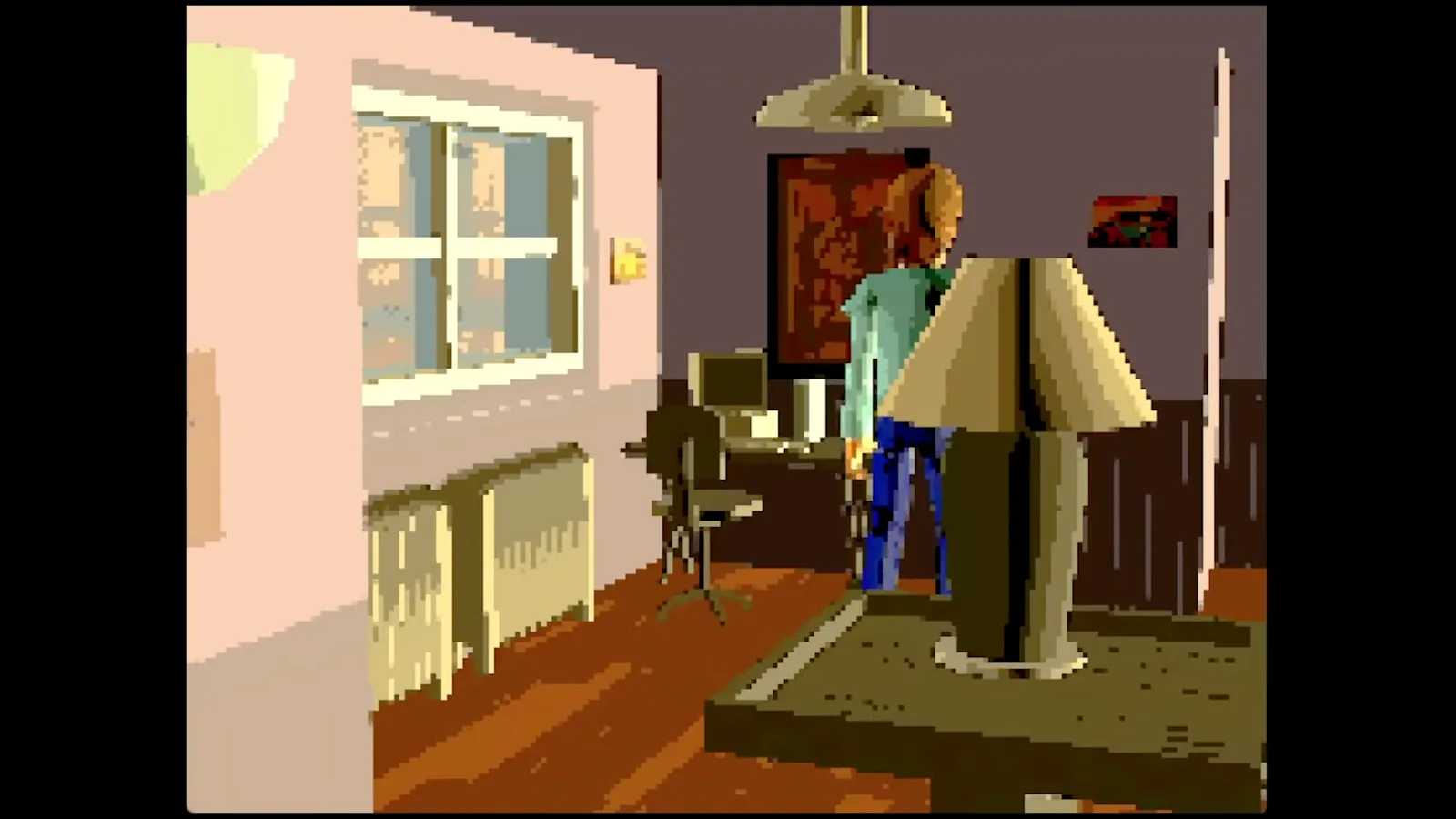
Berman says the dialogue used GPT-3 and associates the project’s visuals with Stable Diffusion and DALL·E. For technical context, the creators told [TechCrunch](https://techcrunch.com/2023/02/03/nothing-forever-ai-generated-seinfeld-twitch/) that a GPT-3 Davinci model supplied scripts, Azure speech services voiced characters and Unity assembled the visuals. The project used human-designed software and assets as well as generated components; it was not made independently of people.
I find the show mostly funny in its absurdity. Its jokes can be nonsensical and the laugh track can arrive before a punchline has landed, yet it is fascinating to watch such a production generated in real time. The synthetic voices and awkward silences leave little comic timing, so I do not think comedians need to fear immediate replacement on this evidence.
Moderation, ownership and future media
Berman considers credit for training material and the show’s temporary suspension. He imagines more personalized, AI-assisted film and television.
I also wonder who should own generated content and how much credit belongs to the creators of works used in training. These are questions rather than resolved legal conclusions. Real-time generation creates another challenge: moderation must keep up with material as it appears.
In February 2023 Twitch suspended the channel for 14 days after generated dialogue included transphobic and homophobic material. The creators said an outage led them to switch models and that their moderation setup failed to work properly with the fallback. Their explanation identifies a production failure; it does not make the harmful output harmless.
I imagine a future in which small teams prompt, edit and refine AI output into films, create digital performers, or make television that responds to viewers and even an audience of one. Whether such productions will match large-budget films or replace existing jobs is not established by this experiment. The timing—five, ten or twenty years—is uncertain, though I expect substantial change within our lifetimes.
More from this channel
 34:21EN
 Matthew Berman· Oct 27, 2026Matthew Berman Examines Anthropic’s IPO Filing, AI Growth and GovernanceMatthew Berman, Sam Altman · Forward FutureThe presenter reviews the S-1’s financial metrics, compute strategy and voting structure while questioning the tension between rapid AI development and safety.
 0:36ENMatthew Berman· Oct 25, 2026Kimi K3.1 and a Rubik’s Cube Solver DemonstrationMatthew Berman · Forward FutureMatthew Berman shows a scrambled virtual cube being solved and gives the Kimi K3.1 test a favorable assessment.
 25:50ENMatthew Berman· Oct 24, 2026Kimi K3.1 Pro Tested: Strong 3D Demos, Uneven Results and Competitive PricingMatthew Berman · Forward FutureMatthew Berman tests the open-weight model on coding, 3D rendering and visual explanations, then compares benchmark results and prices.
 32:20ENMatthew Berman· Oct 23, 2026Who Is Local AI For? The Costs, Trade-offs and a Hybrid FutureMatthew Berman · Forward FutureMatthew Berman weighs data control and independence against hardware cost, setup complexity and inference speed.
 1:03:37ENMatthew Berman· Oct 23, 2026Matthew Berman’s Team Tests Kimi K3.1 on Animation, Games, and ChartsMatthew Berman, Alex, Brian · Forward FutureA live team AMA turns into an informal test of Kimi K3.1, from personal-agent workflows to motion graphics, a browser game, and a benchmark chart.
 0:53ENMatthew Berman· Oct 22, 2026Sam Altman on AI and the Discovery of New KnowledgeSam Altman · OpenAIAltman expects progress in mathematical discovery to extend to biology, materials and energy.