In 30 seconds
Matthew Berman demonstrates a virtual Rubik’s Cube solver associated with Kimi K3.1. He says it uses a solving algorithm rather than reversing the scramble, and judges the displayed result a pass; the short clip does not inspect the implementation or show repeated trials.
- 1A test still worth tryingBerman says he expected models to pass easily, but considers open-weight models to have struggled.
- 2Scramble and solveThe virtual cube is scrambled and Berman says a solver uses an algorithm rather than reversing the moves.
- 3An animated resultThe interface plays the calculated turns and displays a solved cube; Berman calls it a strong pass.
Takeaways
- Berman says some open-weight models still struggle with his Rubik’s Cube test.
- The displayed virtual cube starts scrambled and plays a sequence of turns to a solved state.
- Berman says the program calculates a solution using an algorithm rather than simply reversing the scramble.
- A single demonstration does not establish the solver’s reliability across all possible cube states.
Read the edited text by chapter
The Rubik’s Cube test
Berman revisits a test he expected models to pass easily. He says open-weight models have still had difficulty.
I thought the Rubik’s Cube test had become too easy for AI models, but in my experience open-weight models still do not do well on it. This short demonstration is associated with Kimi K3.1; the clip does not provide a systematic comparison across models or trials.
Solving the scrambled cube
He starts the solver and describes its approach. The virtual cube is shown turning through a solution.
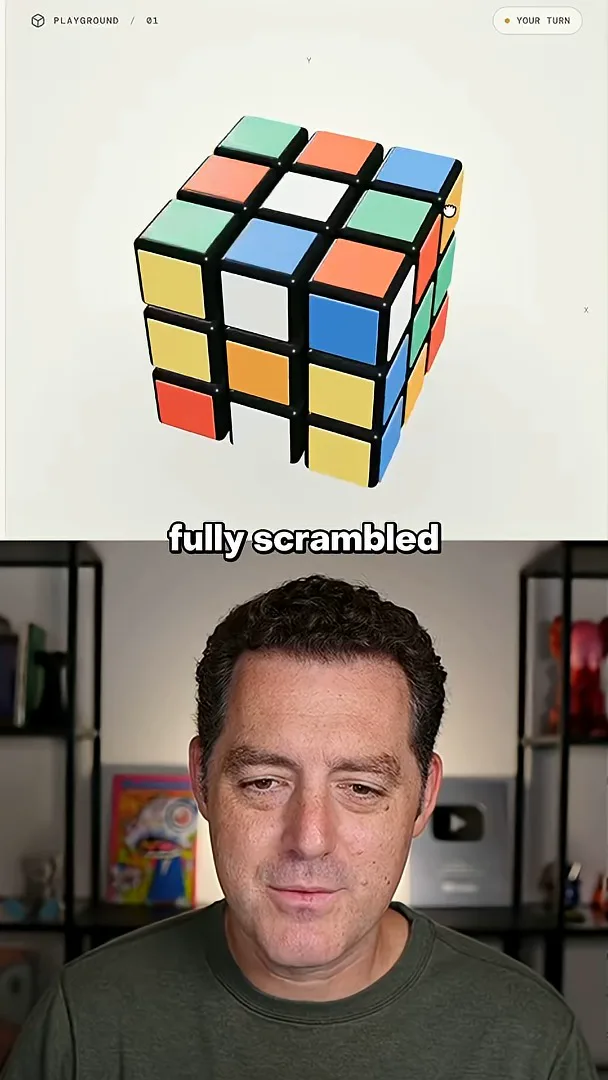
The virtual cube is fully scrambled. I say the solver uses an algorithm to find a solution rather than simply reversing the scrambling moves. When I start it, the interface plays the turns one by one in three dimensions; I describe the sequence as calculated in advance. The video does not inspect the underlying code to verify the method.
Result and assessment
The displayed cube reaches a solved state and a celebration appears. Berman considers it one of the best passes.
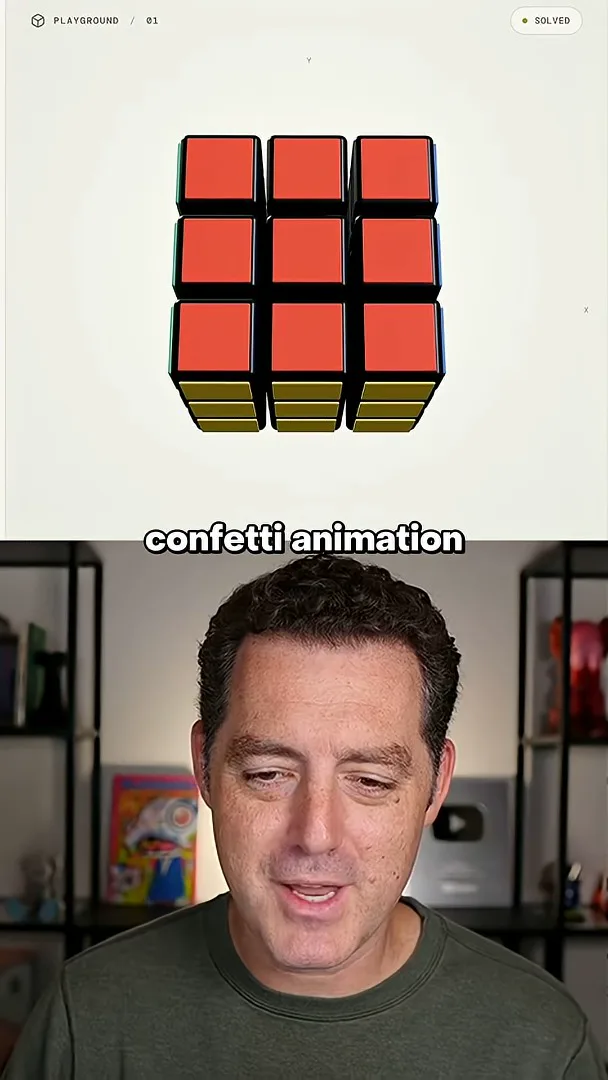
The displayed cube reaches a solved state and a small confetti animation appears. I call it an excellent pass, one of the best I have seen. This demonstrates the result for the shown scramble, without establishing performance on every possible cube state.
More from this channel
 34:21EN
 Matthew Berman· Oct 27, 2026Matthew Berman Examines Anthropic’s IPO Filing, AI Growth and GovernanceMatthew Berman, Sam Altman · Forward FutureThe presenter reviews the S-1’s financial metrics, compute strategy and voting structure while questioning the tension between rapid AI development and safety.
 25:50ENMatthew Berman· Oct 24, 2026Kimi K3.1 Pro Tested: Strong 3D Demos, Uneven Results and Competitive PricingMatthew Berman · Forward FutureMatthew Berman tests the open-weight model on coding, 3D rendering and visual explanations, then compares benchmark results and prices.
 32:20ENMatthew Berman· Oct 23, 2026Who Is Local AI For? The Costs, Trade-offs and a Hybrid FutureMatthew Berman · Forward FutureMatthew Berman weighs data control and independence against hardware cost, setup complexity and inference speed.
 1:03:37ENMatthew Berman· Oct 23, 2026Matthew Berman’s Team Tests Kimi K3.1 on Animation, Games, and ChartsMatthew Berman, Alex, Brian · Forward FutureA live team AMA turns into an informal test of Kimi K3.1, from personal-agent workflows to motion graphics, a browser game, and a benchmark chart.
 0:53ENMatthew Berman· Oct 22, 2026Sam Altman on AI and the Discovery of New KnowledgeSam Altman · OpenAIAltman expects progress in mathematical discovery to extend to biology, materials and energy.
 0:22ENMatthew Berman· Oct 21, 2026A Robot Bodyguard Video Shows Dramatic Rescue ScenariosMatthew Berman · Forward FutureMatthew Berman reacts to a short robot demonstration depicting fighting and vehicle-rescue scenarios.