In 30 seconds
Theo Browne describes testing Ultrafast on two pull-request reviews, each involving fewer than 100 lines of code. He reports $600 of combined usage and points to an output price that rose from $50 to $300 per million tokens.
- 1An everyday testTheo tried Ultrafast on two pull-request reviews, both under 100 lines.
- 2$600 of combined usageHe reports $600 of usage for the two reviews together.
- 3A higher output priceHe compares output prices of $50 and $300 per million tokens to explain why the usage value can rise quickly.
Takeaways
- Theo reports $600 of usage across two pull-request reviews, each under 100 lines.
- The output price he cites rises from $50 to $300 per million tokens in Ultrafast.
- This is one personal example, not a typical or guaranteed cost for reviewing pull requests.
Read the edited text by chapter
Two small pull requests
Theo describes using Ultrafast for ordinary work. Both reviewed pull requests were under 100 lines.
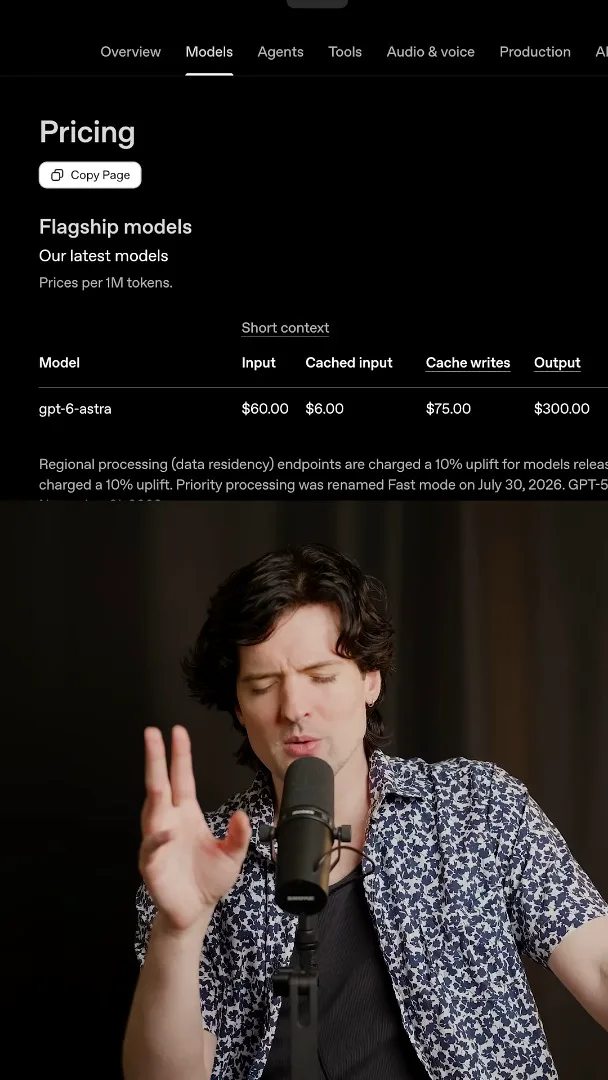
When I first tested Ultrafast, I used it for ordinary day-to-day work, including reviewing two pull requests. Both were under 100 lines of code. Together, the two reviews used $600 worth of tokens.
The reported usage
He reports $600 of combined usage. He points to a sixfold difference in output-token price.
The output price I am comparing rises from $50 to $300 per million tokens in Ultrafast. That helps explain how a small-looking review can produce such a large usage figure. This is my experience with two reviews, not a general price for every review.
More from this channel
 36:07EN
 Theo - t3․gg· Oct 27, 2026Theo on Token Costs, Coding Agents, and the Price of AI CapabilityTheo Browne · Ping LabsA viral estimate of Lauren's AI spending prompts a closer look at cache pricing, benchmarks, and the changing work of coding agents.
 30:37ENTheo - t3․gg· Oct 26, 2026Theo’s Three Skills for Reviewing and Shipping with Coding AgentsTheo Browne · Ping LabsHow sol-loop, full-send and full-stop encode review, verification and different levels of merge authority.
 0:43ENTheo - t3․gg· Oct 23, 2026Theo Distinguishes Security Vulnerabilities from Active AttacksTheo Browne · Ping LabsA short explanation of why disclosed software flaws and reported attacks are different kinds of security news.
 29:22ENTheo - t3․gg· Oct 22, 2026Theo on Security Vulnerabilities, Stolen API Keys and AITheo Browne · Ping LabsA look at the gap between vulnerability disclosure and patching, and a speculative account of why stolen inference keys may be valuable.
 31:13ENTheo - t3․gg· Oct 20, 2026Theo on Why Smarter Models Help More Than DevelopersTheo Browne · Ping LabsFrom game modifications to compiler experiments, Theo revisits his assumptions about who benefits from more capable AI.
 31:47ENTheo - t3․gg· Oct 18, 2026Theo on Asking Agents for Outcomes and Building the Tools They NeedTheo Browne · Ping LabsA tool-call report, a troubleshooting playbook and connected data show how prompting can reshape product engineering.