30 秒でわかる
Theo Browne describes testing Ultrafast on two pull-request reviews, each involving fewer than 100 lines of code. He reports $600 of combined usage and points to an output price that rose from $50 to $300 per million tokens.
- 1An everyday testTheo tried Ultrafast on two pull-request reviews, both under 100 lines.
- 2$600 of combined usageHe reports $600 of usage for the two reviews together.
- 3A higher output priceHe compares output prices of $50 and $300 per million tokens to explain why the usage value can rise quickly.
ポイント
- Theo reports $600 of usage across two pull-request reviews, each under 100 lines.
- The output price he cites rises from $50 to $300 per million tokens in Ultrafast.
- This is one personal example, not a typical or guaranteed cost for reviewing pull requests.
チャプターごとに整えた全文を読む
Two small pull requests
Theo describes using Ultrafast for ordinary work. Both reviewed pull requests were under 100 lines.
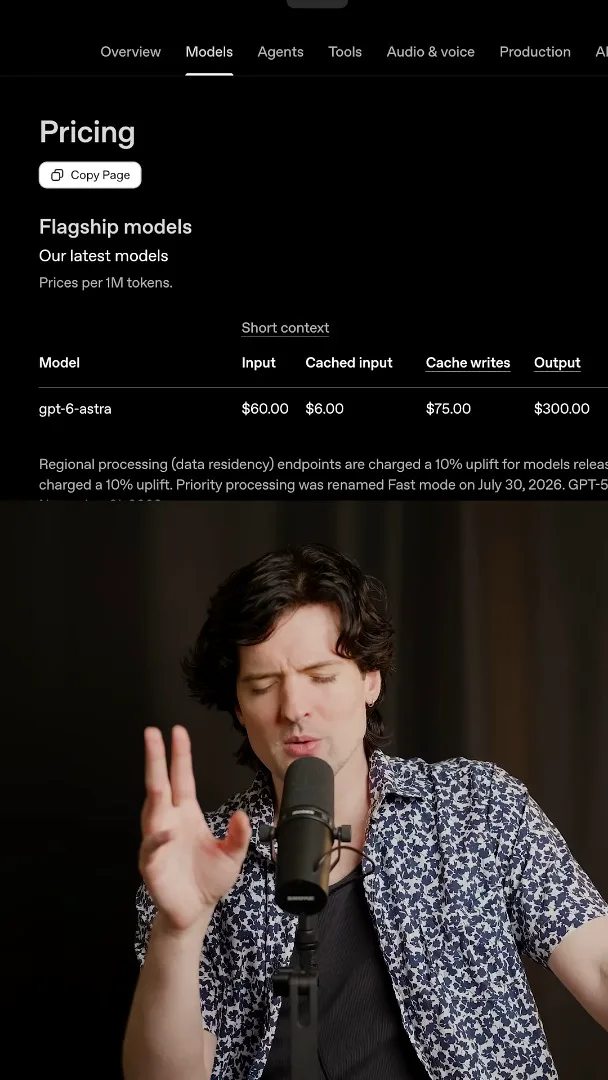
When I first tested Ultrafast, I used it for ordinary day-to-day work, including reviewing two pull requests. Both were under 100 lines of code. Together, the two reviews used $600 worth of tokens.
The reported usage
He reports $600 of combined usage. He points to a sixfold difference in output-token price.
The output price I am comparing rises from $50 to $300 per million tokens in Ultrafast. That helps explain how a small-looking review can produce such a large usage figure. This is my experience with two reviews, not a general price for every review.
同じチャンネルの記事
 36:07EN
 Theo - t3․gg· 2026年10月27日Theo on Token Costs, Coding Agents, and the Price of AI CapabilityTheo Browne · Ping LabsA viral estimate of Lauren's AI spending prompts a closer look at cache pricing, benchmarks, and the changing work of coding agents.
 30:37ENTheo - t3․gg· 2026年10月26日Theo’s Three Skills for Reviewing and Shipping with Coding AgentsTheo Browne · Ping LabsHow sol-loop, full-send and full-stop encode review, verification and different levels of merge authority.
 0:43ENTheo - t3․gg· 2026年10月23日Theo Distinguishes Security Vulnerabilities from Active AttacksTheo Browne · Ping LabsA short explanation of why disclosed software flaws and reported attacks are different kinds of security news.
 29:22ENTheo - t3․gg· 2026年10月22日Theo on Security Vulnerabilities, Stolen API Keys and AITheo Browne · Ping LabsA look at the gap between vulnerability disclosure and patching, and a speculative account of why stolen inference keys may be valuable.
 31:13ENTheo - t3․gg· 2026年10月20日Theo on Why Smarter Models Help More Than DevelopersTheo Browne · Ping LabsFrom game modifications to compiler experiments, Theo revisits his assumptions about who benefits from more capable AI.
 31:47ENTheo - t3․gg· 2026年10月18日Theo on Asking Agents for Outcomes and Building the Tools They NeedTheo Browne · Ping LabsA tool-call report, a troubleshooting playbook and connected data show how prompting can reshape product engineering.