In 30 seconds
Matthew Berman demonstrates a virtual Rubik’s Cube, first showing a 3×3 and then scrambling and solving a 20×20 cube. The short clip does not explain the solver, establish how AI was involved or independently verify every move and face.
- 1A smaller cubeBerman begins by showing a virtual 3×3 cube being solved.
- 2A 20×20 scrambleHe switches to a larger virtual cube and scrambles it.
- 3The displayed solutionThe cube rapidly returns to a solved appearance; the clip does not explain the underlying method.
Takeaways
- The demonstration shows a virtual 20×20 cube after scrambling and then with uniformly colored visible faces.
- The clip does not explain the solving algorithm or how AI was used.
- A short visual demonstration alone does not verify the solver’s behavior on every possible scramble.
Read the edited text by chapter
From 3×3 to 20×20
Berman begins with a smaller virtual cube, then chooses and scrambles a 20×20 cube.
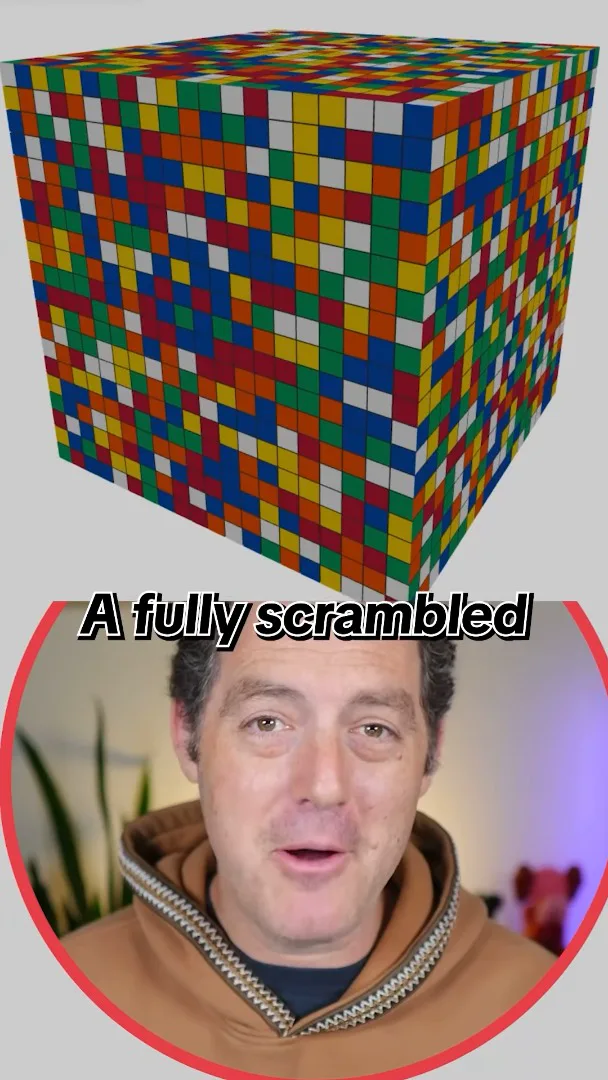
I start with a virtual Rubik’s Cube and show it being solved. Then I switch to a 20×20 cube and scramble it, producing a much more complex-looking arrangement of colored squares.
Solving the larger cube
The demonstration shows the cube returning to a solved appearance. The clip does not describe the algorithm.
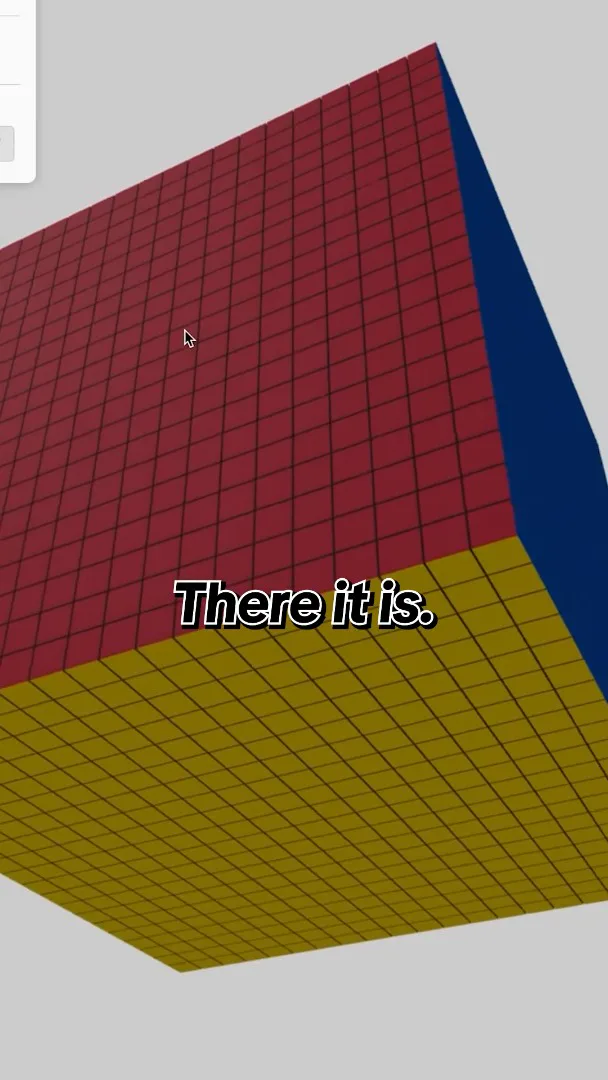
I ask the program to solve the 20×20 cube, and it quickly returns to a solved appearance. The visible faces are uniform in color. The clip does not explain how the solver works or show enough to establish the role of AI or its performance across different scrambles.
More from this channel
 34:21EN
 Matthew Berman· Oct 27, 2026Matthew Berman Examines Anthropic’s IPO Filing, AI Growth and GovernanceMatthew Berman, Sam Altman · Forward FutureThe presenter reviews the S-1’s financial metrics, compute strategy and voting structure while questioning the tension between rapid AI development and safety.
 0:26ENMatthew Berman· Oct 25, 2026Sam Altman on Human Values and Problem-Solving in an AI WorldSam Altman · OpenAIIn a short interview excerpt, Altman considers the enjoyment of solving hard problems and the human role in interpreting results.
 0:36ENMatthew Berman· Oct 25, 2026Kimi K3.1 and a Rubik’s Cube Solver DemonstrationMatthew Berman · Forward FutureMatthew Berman shows a scrambled virtual cube being solved and gives the Kimi K3.1 test a favorable assessment.
 0:21ENMatthew Berman· Oct 24, 2026An AI-Generated Kimi Benchmark Chart Used Invented ScoresMatthew Berman · Forward FutureMatthew Berman asks for a graph of Kimi K3.1 Pro benchmarks, then discovers that the displayed figures are illustrative placeholders.
 25:50ENMatthew Berman· Oct 24, 2026Kimi K3.1 Pro Tested: Strong 3D Demos, Uneven Results and Competitive PricingMatthew Berman · Forward FutureMatthew Berman tests the open-weight model on coding, 3D rendering and visual explanations, then compares benchmark results and prices.
 32:20ENMatthew Berman· Oct 23, 2026Who Is Local AI For? The Costs, Trade-offs and a Hybrid FutureMatthew Berman · Forward FutureMatthew Berman weighs data control and independence against hardware cost, setup complexity and inference speed.