In 30 seconds
In March 2024, Matthew Berman reviews examples made by filmmakers and artists with OpenAI’s Sora video model. He highlights surreal storytelling and visual detail, notes occasional artifacts and deepfake concerns, and discusses claims about scaling and possible future world models.
- 1Eleven generations edited togetherPaul Trillo describes his Golden Record film as an imagined journey from Earth materials to a time capsule, assembled from 11 Sora generations.
- 2A surreal characterThe shy kids short follows a balloon-headed narrator who sees fragility and everyday life from a different perspective. The filmmakers emphasize the appeal of making unreal things.
- 3Imaginary hybrid animalsDon Allen Stevenson III’s sequence imagines creatures combining features of animals, including a giraffe-flamingo and whale-octopus.
- 4Compute and visual qualityBerman discusses a reported talk about scale and shows a comparison of puppy videos at base, 4× and 32× compute. The examples illustrate visual differences, not a comprehensive assessment of simulation.
Takeaways
- Paul Trillo said his Golden Record sequence combined 11 separate Sora generations.
- The filmmakers shy kids used a balloon-headed character to tell a surreal story about perspective and fragility.
- Artists can use generated video to explore imagined subjects as well as approximate real scenes.
- Berman sees detailed outputs but also points to odd shadows and an unexplained object as limitations.
- The claim that scaling alone creates simulation capabilities is a reported research interpretation, not proof that Sora accurately models the world.
- Real-time generated games and more capable world models are future possibilities Berman speculates about, not demonstrated capabilities in this video.
Read the edited text by chapter
Filmmakers experiment with Sora
Berman introduces new examples and reviews Paul Trillo’s edited Golden Record sequence. He then shows shy kids’ surreal balloon-headed character.
OpenAI has shared new Sora videos and sought feedback from directors, artists and other creative practitioners. I want to look at what they have made, what looks promising and what questions remain about how creators might use the model.
Director Paul Trillo has made a stylized sequence called The Golden Record, imagining a journey from raw materials on Earth to a time capsule of human life. He says he cut together 11 different Sora generations to explore that imagined odyssey. The finished work is an edited sequence, not a single uninterrupted generation.
Next is a film by the filmmaker group shy kids. Its balloon-headed character says that being full of hot air brings difficulties, from windy days to an ill-advised trip to a cactus store. The character also describes seeing the world differently and finding a reminder that life is fragile.
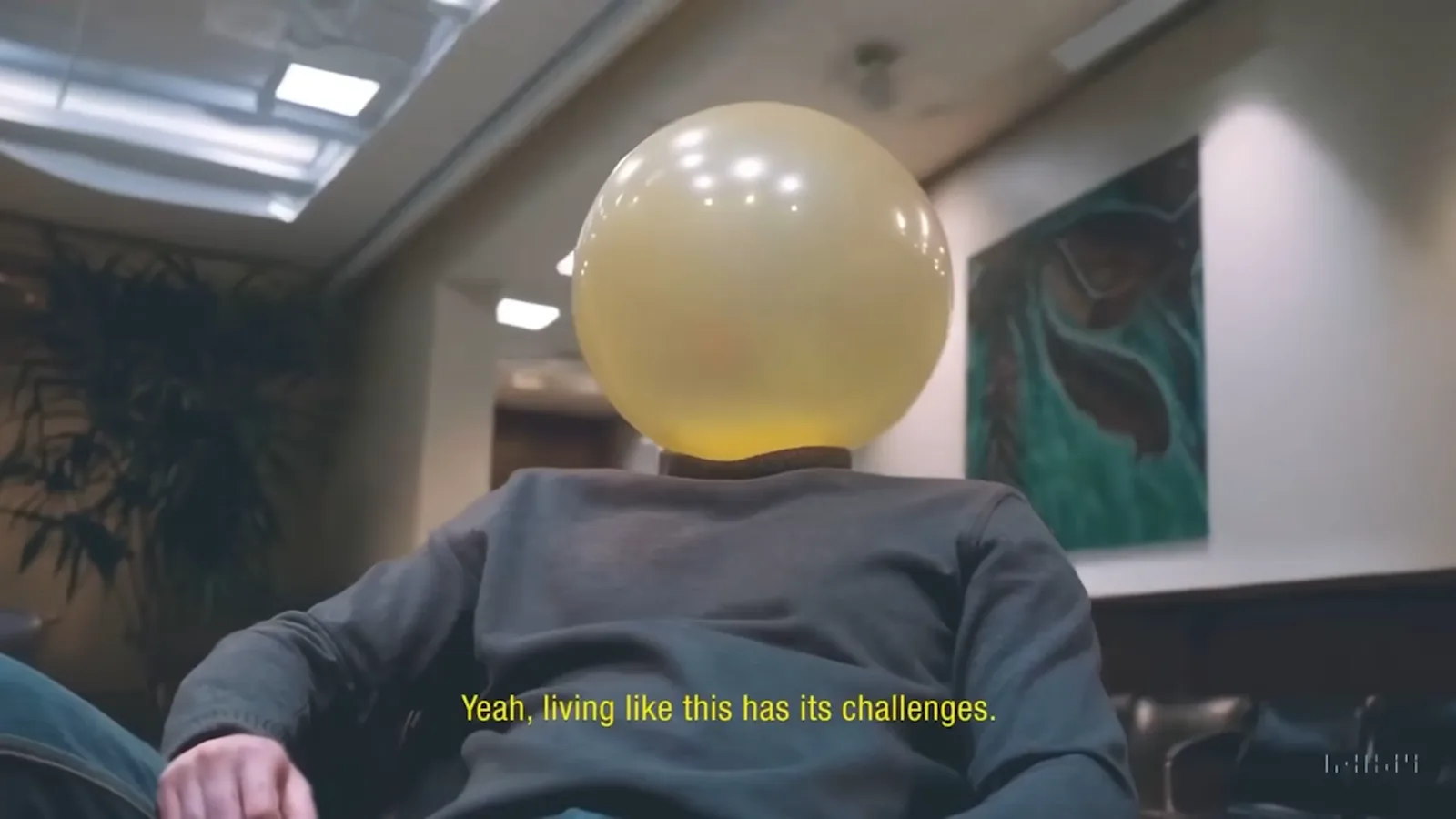
The filmmakers say that Sora’s ability to produce realistic-looking images is impressive, but they are especially excited by making the surreal. I think that is a recurring theme: generated video can make images that might be difficult to envision or capture, not just imitate existing reality.
Visual styles and imagined animals
Further films show stylized imagery and detailed scenes. A sequence of hybrid animals illustrates how creators can depict imagined creatures.
Another stylized clip follows, with striking changes of imagery. I also show work by Nik Kleverov of Native Foreign, including a clockmaker in a detailed workshop. I am impressed by the detail and by how objects appear to remain coherent across the scenes, though a few examples cannot establish reliability across all generations.

Several more examples explore unusual materials and forms, including clothing that looks like stained glass. One clip has a texture that I find unsettling, so I warn viewers who are sensitive to clustered patterns. These scenes show how the model can be used to explore a visual idea rather than reproduce a conventional shot.
Another artist, Don Allen Stevenson III, presents a sequence of imaginary hybrid animals. It includes a giraffe-flamingo, flying pigs, a whale-octopus and an eel-cat. A narrator describes these creatures as inhabitants of imagined parallel worlds.
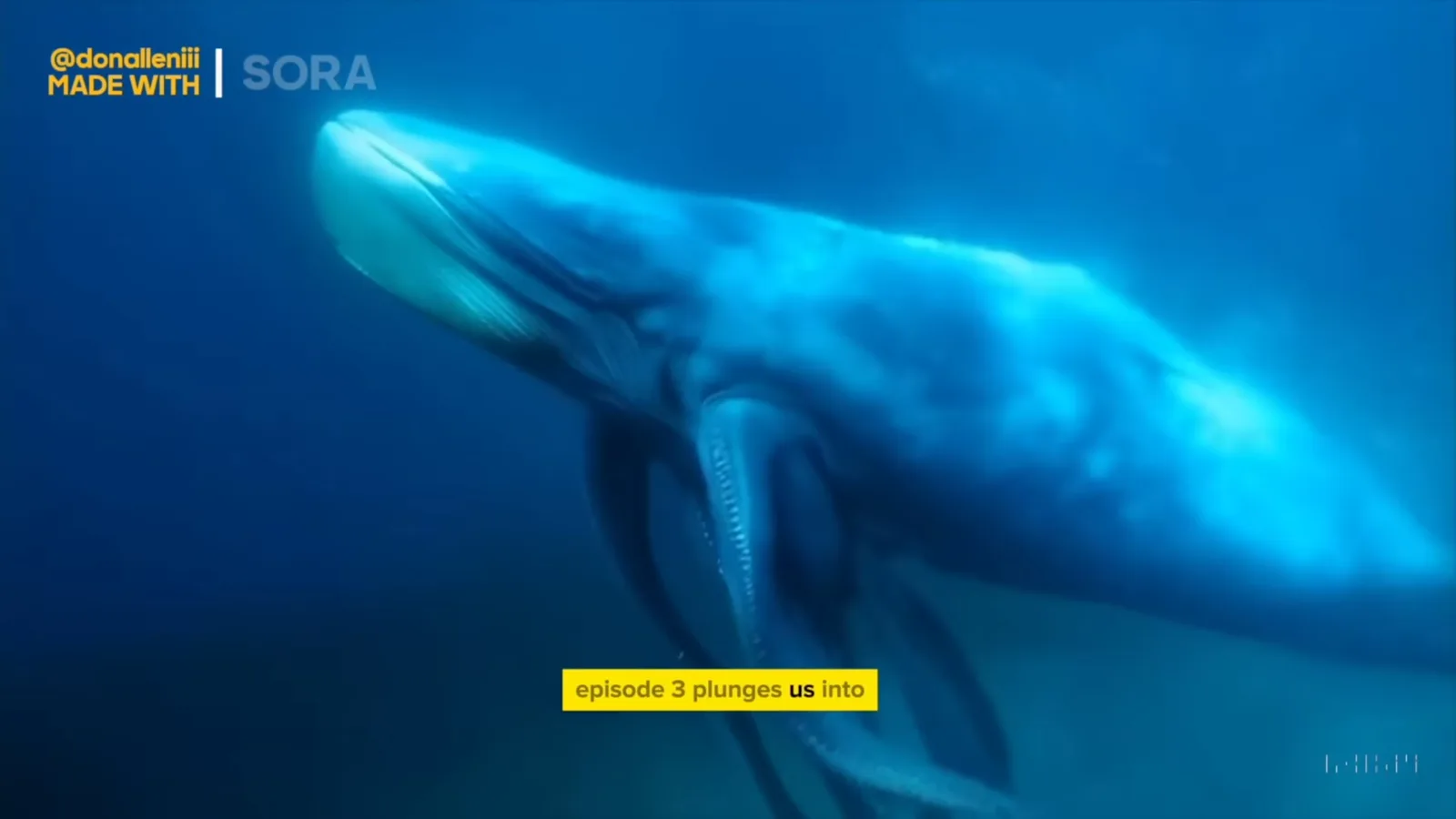
The sequence continues with a bunny-armadillo, a horsefly that combines a horse and a fly, a reptilian kangaroo and a fox-crow. The strange combinations are precisely the point: the video gives recognizable animal traits to creatures that do not exist.
Availability, risks and earlier examples
Berman comments on artist Alex Reben’s work and speculates about release timing and deepfakes. He reviews earlier Sora clips of a car, a museum and a bee.
The final artist example is by sculptor and OpenAI artist in residence Alex Reben. At the time of this March 2024 video, I do not expect Sora to be released that year; that is my speculation, not an announced schedule. I imagine the team is considering both creative possibilities and possible harms, including deepfakes.
I also wonder whether video generation could move toward a world model able to predict aspects of reality. That is a possibility, not something these clips establish. Looking at earlier examples, a supercar drives through a rainy city at night; the scene looks impressive to me, although I notice shadows that look odd.
I imagine a future video game generated as it is played, if sufficient computing power becomes available. That is a speculative application, not a feature demonstrated here. Another example, posted by Tim Brooks, takes the viewer through a museum filled with paintings, sculptures and works in different styles.
A further example posted by Sean Ralston depicts a bee moving through a field of flowers. It looks striking, though I notice a small white object behind the bee and cannot tell what it is. Such details matter when assessing a generated scene, even when the overall effect is convincing.
Scaling and simulation
A reported Berkeley talk prompts discussion of compute and emerging simulation. Berman compares generated puppy footage at different compute levels and speculates about future scaling.
I refer to a post summarizing a talk at Berkeley about the technology behind Sora. Its account attributes emerging simulation capabilities largely to compute and scale, without explicit inductive biases. The post is a summary of a talk, and the interpretation should not be treated as proof that the model accurately simulates physical reality.

That claim contrasts with Yann LeCun’s argument, in a separate interview, that scaling alone would not suffice to turn language models into world simulators. I see the Sora examples as part of that debate and wonder whether further scaling could support more realistic simulations; the outcome remains an open question.
A comparison shows puppy videos produced at baseline, 4× and 32× compute. The baseline is hard to make out, the 4× example is recognizable but blurry, and the 32× example looks much clearer to me. It is an illustrative comparison of particular samples, not evidence that the best sample is flawless or indistinguishable from reality in general.

I would like to see what happens at 64× or 128× compute. For now these examples show how rapidly the visual quality can change within a demonstration, while leaving questions about cost, reliability, creative control and safe deployment.
More from this channel
 34:21EN
 Matthew Berman· Oct 27, 2026Matthew Berman Examines Anthropic’s IPO Filing, AI Growth and GovernanceMatthew Berman, Sam Altman · Forward FutureThe presenter reviews the S-1’s financial metrics, compute strategy and voting structure while questioning the tension between rapid AI development and safety.
 0:26ENMatthew Berman· Oct 25, 2026Sam Altman on Human Values and Problem-Solving in an AI WorldSam Altman · OpenAIIn a short interview excerpt, Altman considers the enjoyment of solving hard problems and the human role in interpreting results.
 0:36ENMatthew Berman· Oct 25, 2026Kimi K3.1 and a Rubik’s Cube Solver DemonstrationMatthew Berman · Forward FutureMatthew Berman shows a scrambled virtual cube being solved and gives the Kimi K3.1 test a favorable assessment.
 0:21ENMatthew Berman· Oct 24, 2026An AI-Generated Kimi Benchmark Chart Used Invented ScoresMatthew Berman · Forward FutureMatthew Berman asks for a graph of Kimi K3.1 Pro benchmarks, then discovers that the displayed figures are illustrative placeholders.
 25:50ENMatthew Berman· Oct 24, 2026Kimi K3.1 Pro Tested: Strong 3D Demos, Uneven Results and Competitive PricingMatthew Berman · Forward FutureMatthew Berman tests the open-weight model on coding, 3D rendering and visual explanations, then compares benchmark results and prices.
 32:20ENMatthew Berman· Oct 23, 2026Who Is Local AI For? The Costs, Trade-offs and a Hybrid FutureMatthew Berman · Forward FutureMatthew Berman weighs data control and independence against hardware cost, setup complexity and inference speed.