30 秒看懂
On August 1, 2025, Matthew Berman discusses AI news and interviews Hiten Shah about Meta, work, education and startup execution. Nico Christie then describes Fundamental Research’s agent research and its Shortcut spreadsheet product, before Berman rounds up recent models. Product and benchmark claims are attributed to their speakers, and predictions are not presented as established outcomes. The broadcast includes no disclosed sponsorship; its announcements and prices reflect their 2025 context.
- 1Meta’s strategyShah and Berman interpret Meta’s personal-superintelligence message and its cautious approach to open models.
- 2Work and adaptationShah expects workers to learn new tools; both discuss uncertainty and anxiety about the pace of change.
- 3Search-indexed chatsThe short-lived discoverability feature applied to selected shared chats, not private conversations by default.
- 4OSWorld and ShortcutChristie recounts benchmark results and describes his company’s spreadsheet agent; comparisons depend on tasks and test conditions.
- 5Building agentsChristie discusses cache reuse, tool interfaces, model selection and benchmark design.
- 6Model roundupBerman reviews Qwen, GLM, Deep Cogito, Gemini and image-generation announcements as of August 2025.
要点建议
- Shah views Meta’s personal-superintelligence messaging through the lens of company strategy, while Berman worries about restrictions on open models.
- Both discuss adaptation and education, but their optimistic employment forecasts do not establish what will happen across the labor market.
- Christie describes Shortcut’s spreadsheet-agent architecture and internal benchmarks; his performance claims are not an independent demonstration of universal superiority.
- A short-lived ChatGPT sharing feature allowed users to opt into search discovery; private chats were not indexed by default.
- AlphaGo learned from human expert games as well as self-play; its famous Move 37 does not show that human data was absent.
- The 2025 model and funding roundup mixes releases, reported figures, rumors and historical availability.
按章节阅读整理后的全文
Opening news
After an opening waiting period, Berman reviews reported hiring, NotebookLM, a mystery model and funding news. Figures and identities are attributed to their sources.
Matthew Berman opens the August 1, 2025 stream with weekly AI news and introduces two guests: serial founder Hiten Shah, then working on AI products at Dropbox, and Nico Christie of Fundamental Research, whose spreadsheet agent Shortcut had attracted attention.
Berman says Wired reported that Meta approached staff at Mira Murati’s Thinking Machines Lab for its superintelligence group. The article cited very large compensation offers; Meta spokesperson Andy Stone disputed the details and said only a handful were approached. Berman believes most rejected the offers, a separate impression rather than a verified count.
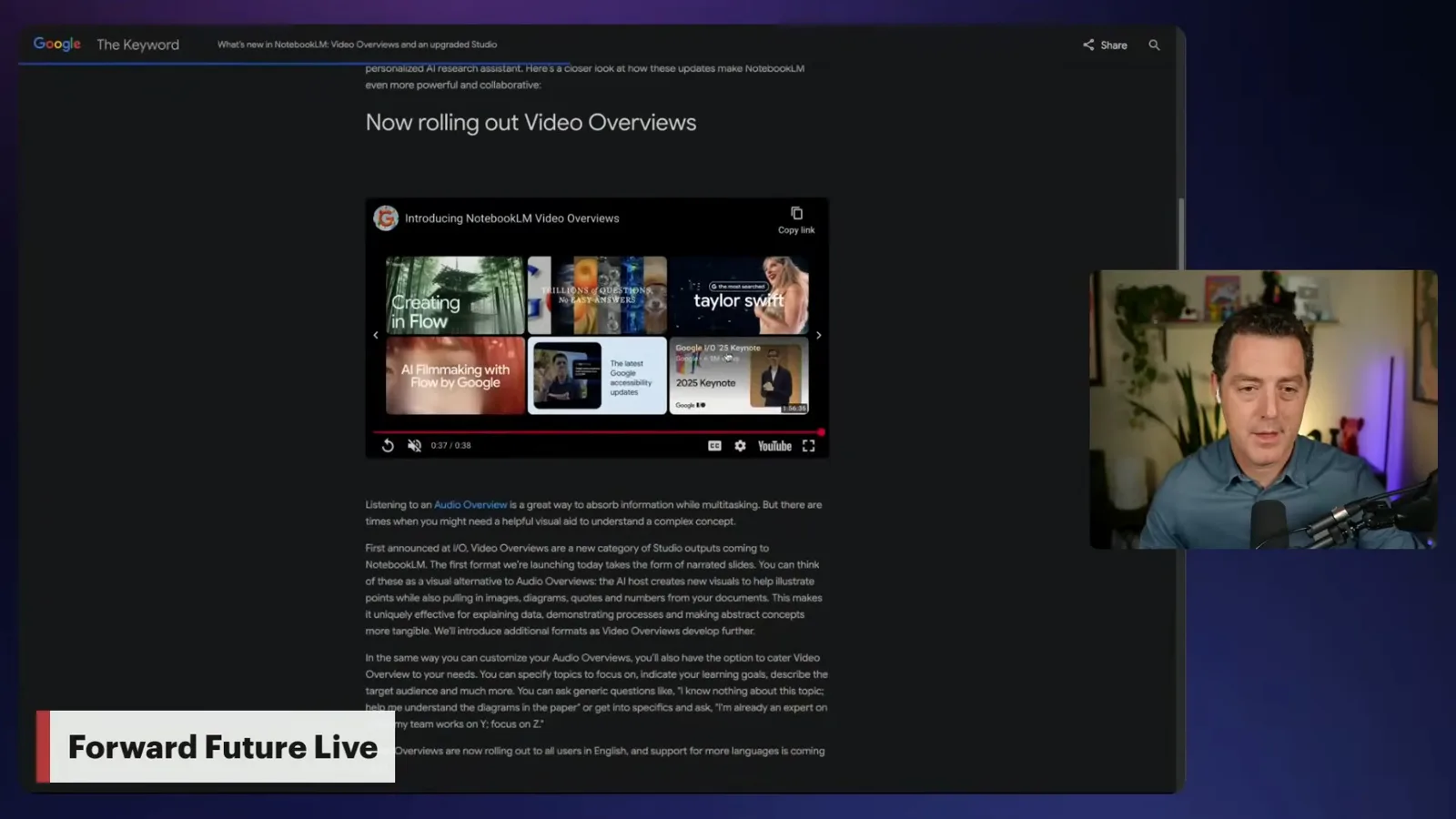
Google’s NotebookLM added Video Overviews alongside its audio format. Berman plays an example about surrealism and explains that documents can be transformed into narrated visual material. He says he has not personally used NotebookLM much and asks how viewers use it.
Berman discusses Horizon Alpha, a then-anonymous model on OpenRouter. He suspects it is an upcoming OpenAI open model because it identifies itself as OpenAI, but acknowledges that attribution was unconfirmed; a model’s self-description is not reliable provenance. His observed 100–130 tokens per second is a personal test, not a general benchmark.
He reports that Cohere was in talks to raise funding at a stated valuation and cites projected revenue. Those were reports and projections, not completed financing or audited results. He contrasts its enterprise focus with larger model providers.
Berman discusses a reported OpenAI funding round at a $300 billion valuation and names investors. He then cites a report of $12 billion in annualized revenue and 700 million weekly ChatGPT users; annualized revenue is a run-rate, not necessarily realized annual revenue.
He also cites reported Anthropic fundraising talks at a $170 billion valuation, compared with a previous $58 billion valuation. Across the reports, he sees a cycle of talent competition, fundraising and infrastructure spending; the proposed rounds were not all confirmed completed transactions.
Hiten Shah on Meta and open models
Shah and Berman discuss personal superintelligence, company incentives, model openness and competition. Their interpretations of motives are speculative.
Berman introduces Hiten Shah, a founder of Crazy Egg and KISSmetrics whose company Nira was acquired by Dropbox. Berman adds that Shah was an early investor in his previous company. Their discussion begins with Meta’s public vision of personal superintelligence.
Berman summarizes Mark Zuckerberg’s contrast between personal empowerment and a centrally directed system that automates valuable work. He interprets it as a challenge to other labs, while recognizing its marketing character. Meta’s wording is its own vision, not proof that a rival has adopted the contrasting plan.
Shah compares competing AI narratives with earlier smartphone-platform wars. He argues leaders need their companies to remain relevant, and their messages help consumers choose an ecosystem. He treats Meta’s statement as strategy shaped by its consumer products and competition for attention.
Shah contrasts Meta’s cash flow with the fundraising needs of other labs and says company narratives evolve while Meta remains skilled at growing engagement. Berman recalls Meta’s earlier emphasis on virtual and augmented reality and asks what “personal” superintelligence would mean technically if computation remains centralized.
Shah says marketing is not unique to Meta: OpenAI and Anthropic also need investment for compute and have their own visions. The speakers agree that AI is likely to do more in the future, without claiming to know the final form or timeline.
Berman reads Meta’s warning that future systems may introduce new safety concerns and that it must be careful about what it open sources. As a supporter of open models, he worries the statement signals a retreat and could strengthen China’s position.
Shah is less alarmed. He argues companies act according to business incentives, sees the statement as a hedge and notes Meta’s existing Llama contributions. He does not claim Meta promised to open every future model; his expectation of continued releases is a forecast.
Shah suggests Meta’s investment in AR and VR is partly a response to depending on Apple and Android platforms. Berman sees AI glasses as a convergence of its hardware and AI investments, describing possible approaches from simple wearable glasses to more capable devices.
Berman says AI labs ultimately must compete and raise money, citing reported discussions about Anthropic financing. He fears US companies may keep frontier models closed while releasing older generations. These are interpretations of strategy, not established plans for every lab.
Shah points to data, context and labeling as important competitive factors alongside open weights. He discusses China’s technology deployment and Meta’s investment in talent and data infrastructure, while recognizing that his account of Chinese adoption is based partly on others’ experiences rather than a measured comparison.
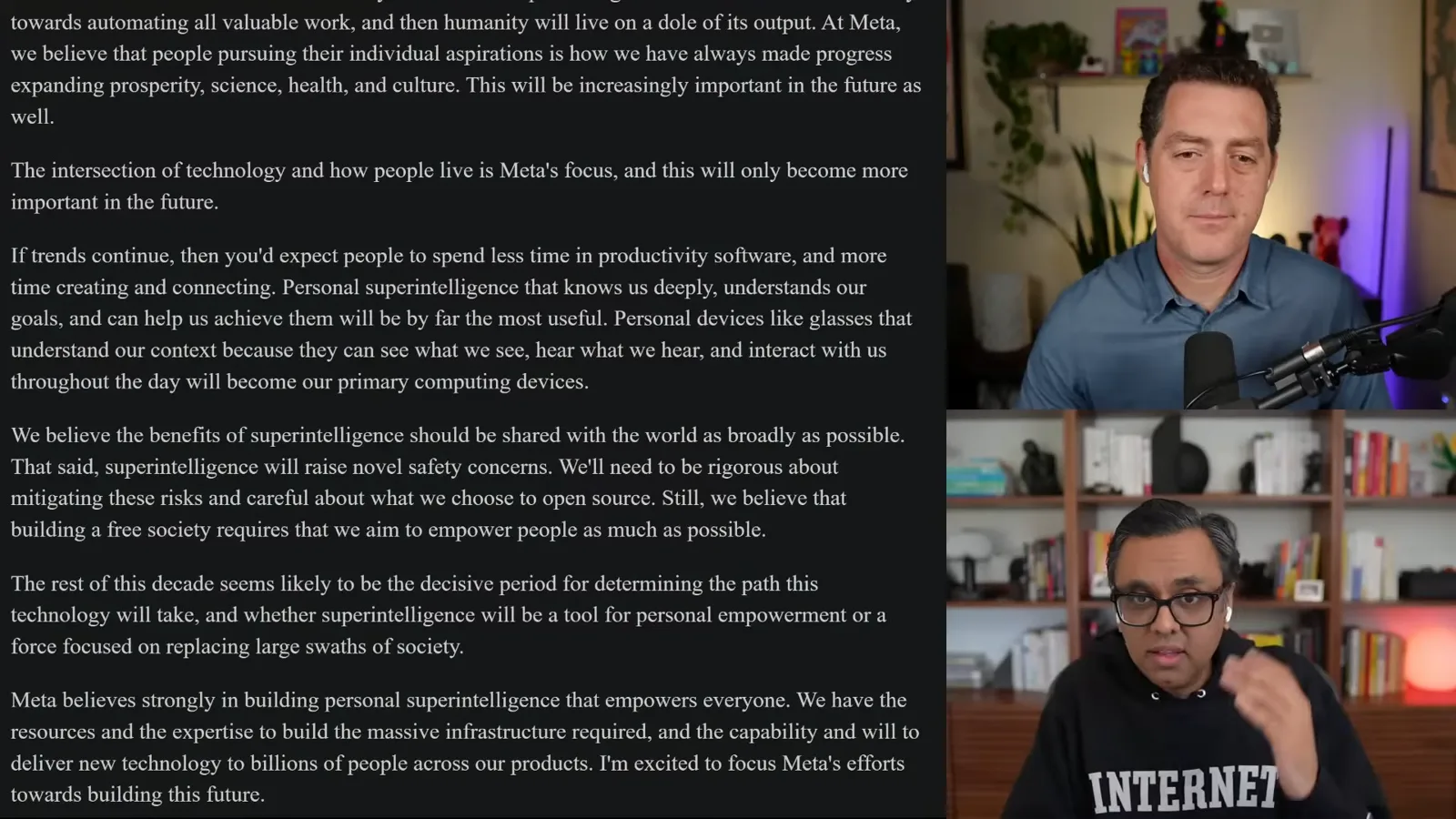
Berman praises Meta’s broader open-source contributions but sees tension between US calls for open models and Meta’s caution. He asks Shah to compare US and Chinese approaches. Rankings and predictions cited in the discussion are snapshots from 2025, not current standings.
Shah offers a speculative strategic interpretation: Meta’s caution could be intended in part to attract government incentives for domestic investment. He presents it as one possible reading, not evidence of a private negotiation. Berman agrees that public statements may address several audiences.
Work, parenting and founders
The pair explore adaptation to AI, skills for children and startup execution. They distinguish personal optimism from predictions about society.
Berman turns to work. He is optimistic that productivity could give people more choice over their time, but asks whether Shah expects major white-collar displacement or a more favorable outcome. Neither has evidence that a particular distribution of jobs or leisure is guaranteed.
Shah sees technological change through his experience growing up with computers and working at a large company after a career as a founder. He says many colleagues are trying to understand how AI can help them, and expects those with experience to teach others.
Shah anticipates that some occupations and markets will be compressed while people learn new roles. He suggests more workers may manage AI systems, much as managers coordinate people. This is his hopeful interpretation, not proof that every displaced worker will find an equivalent job.
Berman agrees about potential benefits but thinks AI could diffuse faster and cause more dramatic disruption than earlier technologies. Shah agrees that the scale could be exceptional, while pointing to current model hallucinations as a reminder of existing limits.
Asked whether everyone he knows is excited, Shah corrects the characterization: people he interacts with are generally optimistic and trying to learn, not necessarily excited. Berman says people outside the technology industry often seem uncertain or nervous, particularly about how to begin.
Shah sees apprehension as a natural response to change. He warns that technology professionals may be too confident that they understand everyone else’s uses, and says the range of possible applications makes forecasts difficult.
Shah recalls an older business owner using ChatGPT to write personalized birthday poems for friends. He thought the results were imperfect, yet the ability delighted the user. The story illustrates one person’s experience, not a measure of broader adoption.
Berman asks what AI changes about raising children. Shah describes a childhood that encouraged independence and says he wants his children to develop critical thinking, self-awareness, creativity and a habit of seeking truth.
Shah gives an example: his daughter made plant-shaped crochet coasters as a thoughtful gift, combining creativity and attention to his needs. He wants to encourage such abilities in ways children find meaningful, while helping them use new technology thoughtfully.
Berman adds curiosity and persistence, and suggests taste may become valuable when generative tools produce an abundance of content. He views nurturing creativity early as one possible foundation for that judgment, not a proven formula for future success.
Asked how founder advice has changed, Shah describes urging his brother-in-law to stop deliberating and build. He now emphasizes urgency and real feedback more strongly than before, although understanding customers remains important.
Shah says the emerging pattern is to ship something quickly and learn from use, rather than complete all the learning before building. Berman connects this to reported culture changes at larger companies and to Box CEO Aaron Levie’s emphasis on building and iteration.
Shah argues startups have long valued speed, and that the point is not merely using a prototyping tool. As a product manager, he aims to unblock engineers so they can ship and learn; a prototype is useful only if it helps that outcome.
Berman thanks Shah and recommends his work. The discussion closes with their shared appreciation for learning and helping others use technology.
Robot, privacy and infrastructure news
Berman discusses a Figure clip, ChatGPT share-link discovery, model reasoning and AI infrastructure investment. Several viral claims require context.
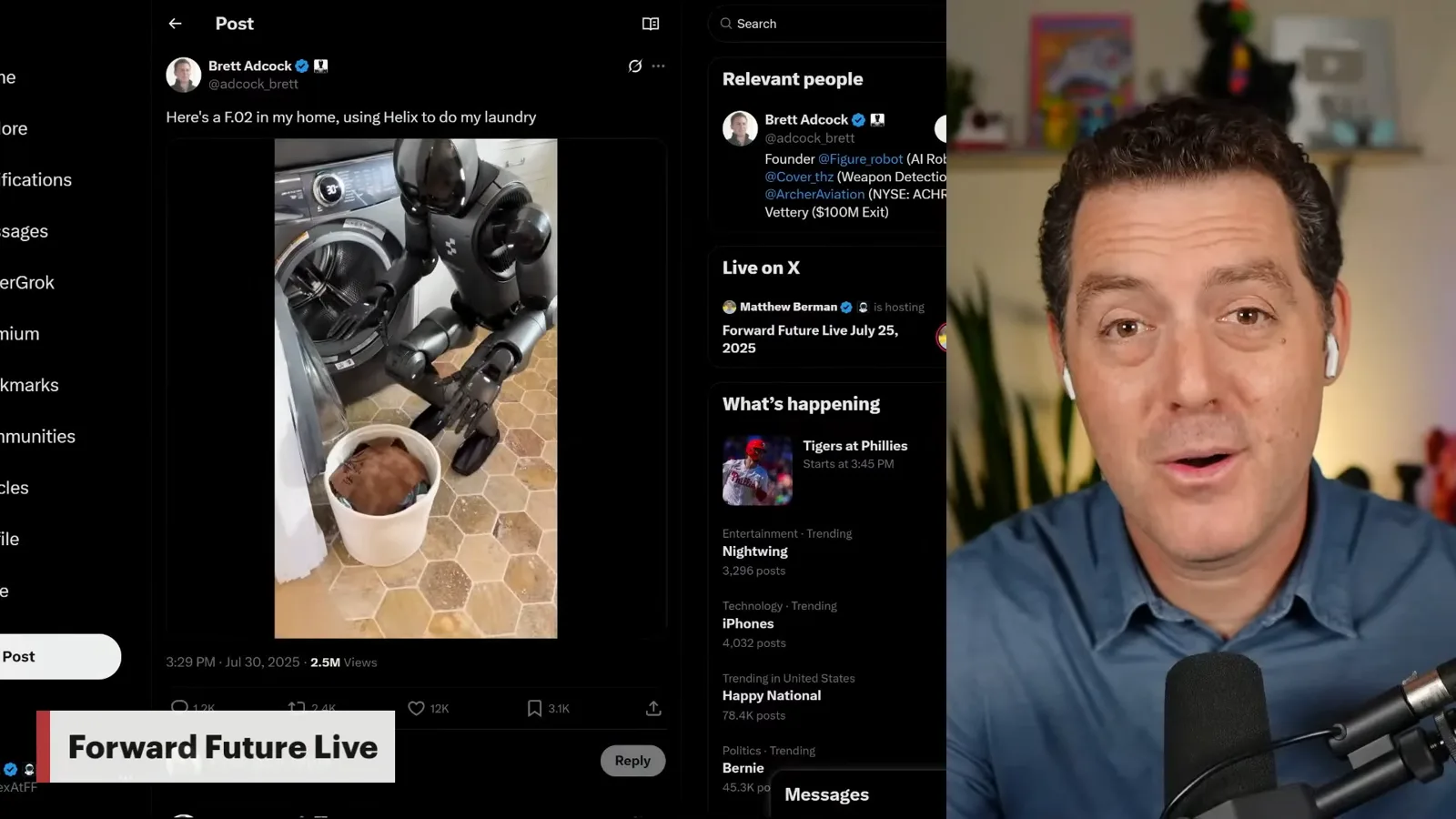
Berman shows a video from Figure CEO Brett Adcock of a robot handling laundry at home. He finds the dexterity striking and imagines help with dishes and laundry. The selected company clip does not independently establish the system’s autonomy, reliability or readiness for general household use.
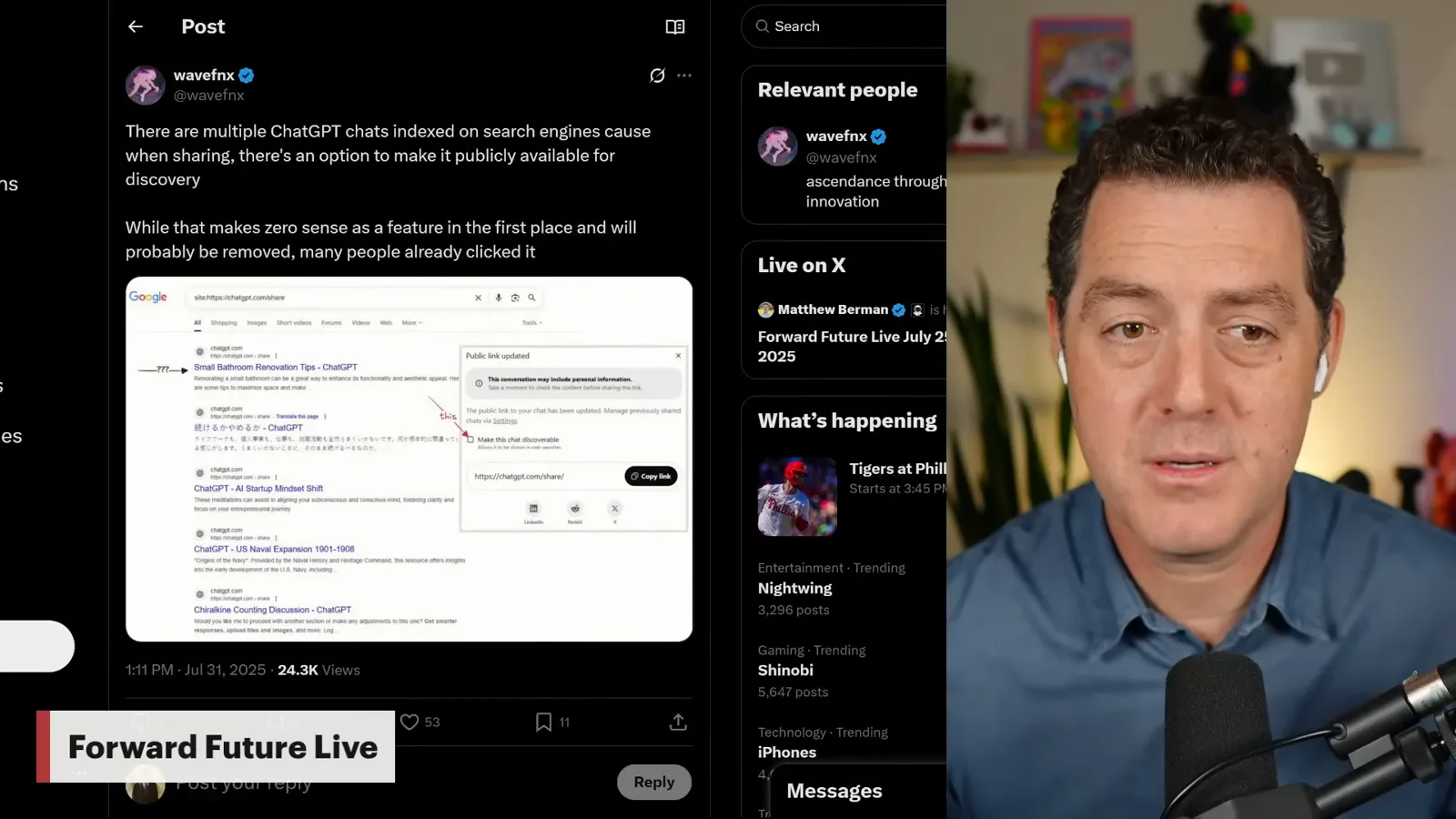
Berman says ChatGPT conversations were indexed by default, then acknowledges uncertainty and displays a post describing an optional discovery setting when sharing. OpenAI removed the short-lived search-discovery feature. The available evidence concerns user-shared links selected for discovery, not private chats being indexed by default; anyone with an ordinary share link could still view its contents.
Berman plays an OpenAI discussion in which an unidentified speaker describes models developing legible but different reasoning patterns. Berman relates this to Anthropic interpretability work and suggests internal computation need not resemble human thought. Such observations do not directly establish an AI’s subjective experience.
Berman points to AlphaGo’s surprising Move 37 against Lee Sedol as an example of nonhuman strategies. He says the original system learned only by reinforcement learning, but [DeepMind](https://deepmind.google/research/alphago/) explains that it first learned from human expert games and then improved through self-play; AlphaGo Zero later learned without human game data.
Berman favors environments where systems explore with compute rather than relying exclusively on human examples. This is a research preference and a prediction, not proof that humans or human data can be removed from all model development.
Berman cites reporting that AI infrastructure investment contributed substantially to recent US economic growth and shows an investment chart. He also cites spending by large technology companies and a comparison with the dot-com era. These figures reflect the cited report’s definitions and period, not a complete measure of AI returns or overall spending.
He notes that some proposed data centers reuse industrial sites with access to energy. Viewers question whether benefits and profits will be shared broadly; Berman hopes they will diffuse over time and describes that goal as part of Forward Future’s mission. Distributional outcomes remain uncertain.
Nico Christie on research and Shortcut
Christie describes OSWorld, consciousness, his spreadsheet product and agent design. Product and benchmark claims are his own.
Berman welcomes Nico Christie, founder at Fundamental Research and creator of Shortcut. Christie says he is pleased to speak to a technical audience. Berman asks about the company’s earlier computer-use work and the OSWorld benchmark.
Christie describes OSWorld as a benchmark for computer-use tasks spanning office applications, web, email and media. He recounts earlier work on game-playing agents and says his team explored agents that can collaborate across environments. These descriptions and performance claims are his account of the work.
Christie says the team raised funding, worked on Minecraft and Roblox agents and later turned to computer use. He reports that after roughly five and a half weeks they reached about 45% on OSWorld, compared with approximately 20% for an earlier Anthropic preview. The scores are his historical claims and depend on versions, tools and evaluation conditions.
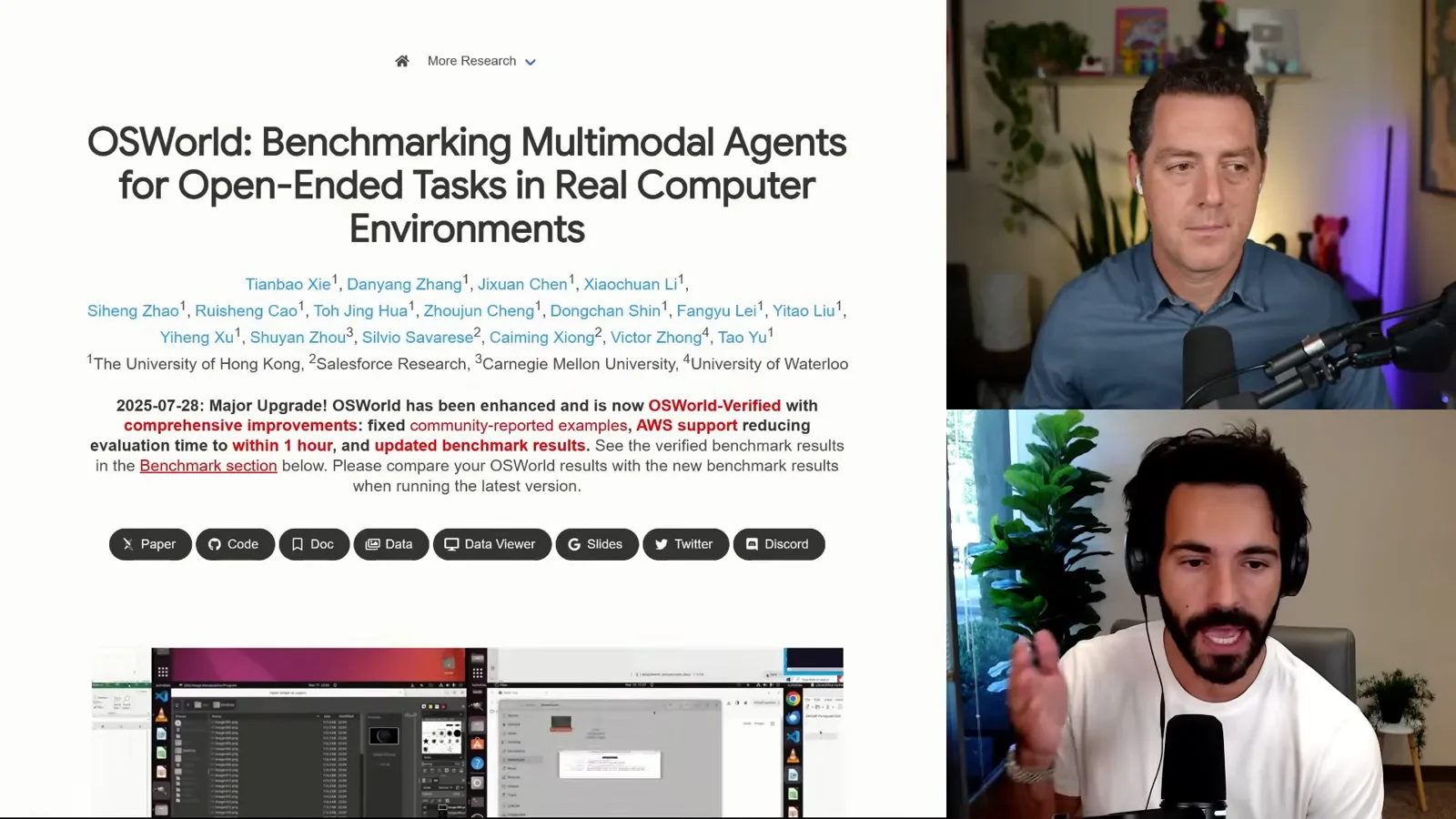
He says their spreadsheet subset reached 68% compared with a 62% human result and calls that an early encounter with “superhuman” performance. This is a comparison on a specified benchmark subset, not evidence that the product outperforms all spreadsheet workers in real jobs. He says it was still not good enough and motivated a more constrained environment.
Berman asks what Christie means by modeling consciousness. Christie says he sees phenomena such as self-modeling, theory of mind and empathy as legitimate subjects for computational study, while acknowledging they are not solved. His view that they can be modeled is philosophical and scientific conjecture, not evidence that his systems are conscious.
Berman recalls a worm-modeling project, and Christie discusses machines that represent themselves and other people as a possible aid to collaboration. A connectome or simplified simulation does not by itself reproduce every biological feature or resolve consciousness; their exchange is exploratory.
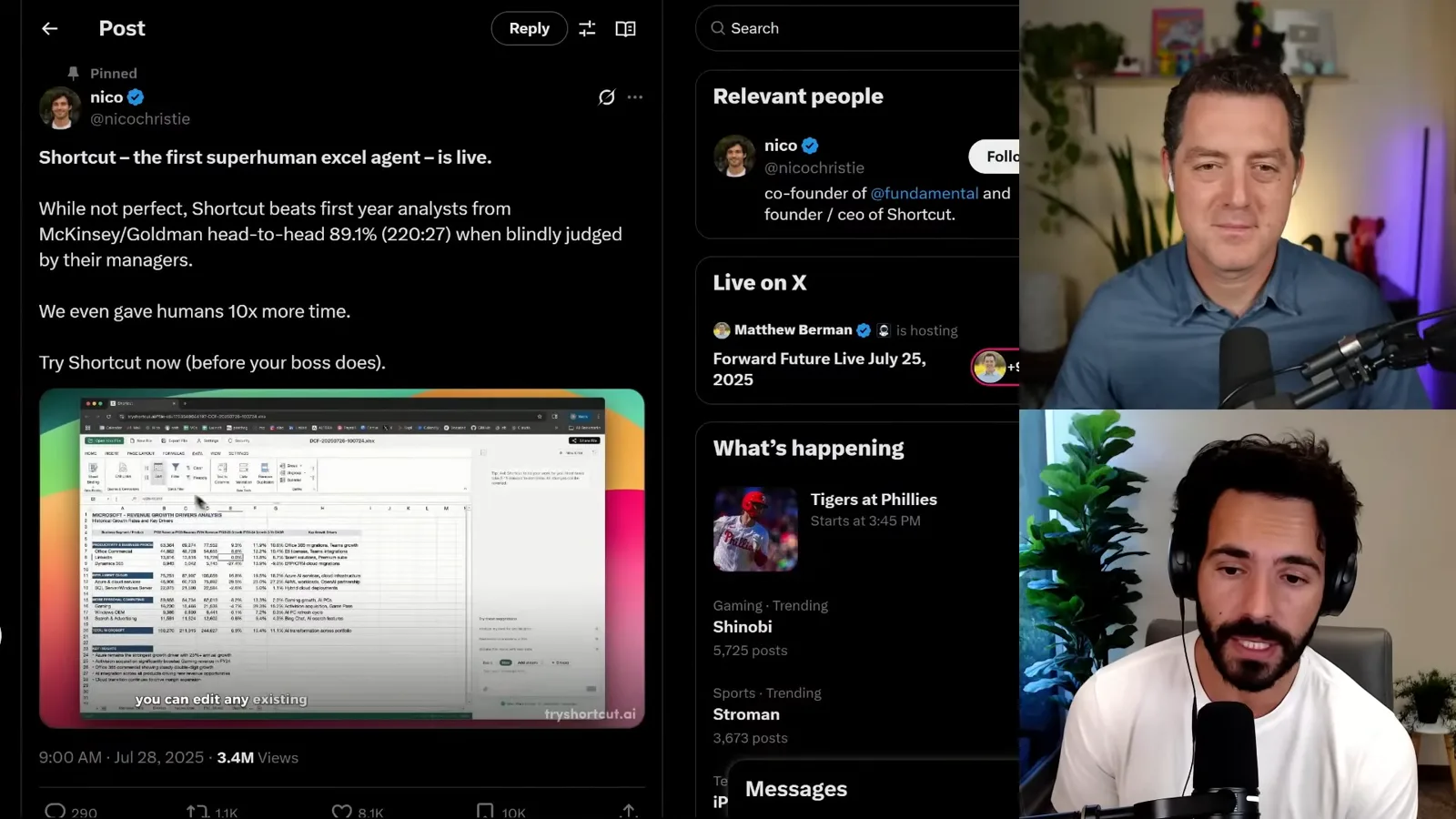
Christie introduces Shortcut as an AI spreadsheet agent and claims broad Excel compatibility and near-complete task coverage. Those are product claims from its creator, not independently verified feature parity or proof it can perform all spreadsheet work.
Christie says its intended advantage over contemporary spreadsheet assistants is handling longer multi-step tasks with subagents and verification. His comparisons with Microsoft Copilot describe his view of products at that time; the conversation does not provide controlled head-to-head evidence for every task.
Berman asks whether Fundamental’s strength is agent building. Christie agrees and compares the company’s approach to ByteDance: a core technical capability can support several different products. He says the team is trying to systematize what it learned across games, OSWorld and Shortcut.
For builders, Christie emphasizes context engineering and cache reuse. He claims that careful management can yield cache hit rates above 90% over long runs; that number is his experience under unspecified workloads, not a general guarantee.
They discuss cache invalidation, an old computer-science challenge made harder by changing agent context. Berman asks how developers should handle it; Christie recommends examining both caching and the tools available to the agent.
Christie argues that owning the software environment can expose a more useful machine interface than relying on a narrow third-party API. He suggests code generation and custom tools can sometimes be more appropriate than driving a graphical interface, without disclosing the details of his own design.
Asked why he reproduced an Excel-like interface, Christie recalls his finance experience and the importance of keyboard shortcuts and familiar spreadsheet workflows. He believes users are more willing to adopt a new assistant if their working environment feels familiar.
He compares that strategy to Cursor building on a familiar editor and adding AI features. His goal is compatibility first, followed by capabilities he believes competitors lack. The claim of feature parity is a product ambition and does not establish complete compatibility.
Christie says a desktop app exists internally but was not yet live. Asked about models, he says his team has begun more intensive post-training while also using closed frontier models. He wants a model-agnostic architecture so the team can swap models according to quality, speed and cost.
Berman asks whether local models might improve speed for spreadsheet users. Christie thinks the narrower spreadsheet environment and an owned interface make training and local deployment attractive; he also sees browser overhead as a performance consideration. These are design hypotheses, not measured results for every device.
Benchmarks, organization and work
Christie discusses internal evaluations, research-product organization, jobs and education. His economic claims and forecasts are not established causal conclusions.
On benchmarks, Christie says the hardest part is matching evaluation tasks to the actual user experience. He recalls a Minecraft benchmark that looked impressive but did not correspond closely enough to what users found fun.
Christie says his internal spreadsheet evaluation uses customer data only with explicit permission, initial and reference files, and verification. He groups tasks into building from scratch, updating for new data, modifying complex files and starting from templates; missing cases are added as they appear.
He speculates that Anthropic may place more weight on internal evaluations than public leaderboards. That is his inference about another company, not confirmed evidence of its internal priorities. An internal benchmark can guide development but its results require transparent methods for outside comparison.
Berman asks how Fundamental balances research and product. Christie describes tension between open-ended exploration and commercial delivery, and offers his interpretation of OpenAI’s product focus. His account of OpenAI’s internal motivations is opinion, not independently verified fact.
Christie describes three connected parts of his organization: small research groups, a core engineering platform for agent frameworks and observability, and product teams such as Shortcut. He wants product founders to understand the underlying technology while treating themselves as demanding users.
He says successful products need their own integration and deployment teams rather than pulling every researcher into one project. He mentions discussions with an investor about the difficulty of balancing research and commercial work.
Christie says other applications are in development, including a general computer-use agent and a reading-oriented product, but gives few details. These are plans from an interview, not proof of released or validated products.
Berman asks whether spreadsheet agents threaten junior analysts’ jobs. Christie expects substantial productivity gains and sees learning to use new tools as important. He acknowledges that tools capable of acting on their own introduce a new dimension to historical comparisons.
Christie attributes Microsoft layoffs and the wider economy to factors including interest rates, and speculates that AI prevented a deeper downturn. Those are causal claims without supporting analysis in the interview; layoffs and macroeconomic outcomes cannot be attributed to a single cause on this evidence.
He expects junior analysts and senior engineers who do not adopt new tools to be especially vulnerable. At the same time, he hopes analysts, consultants and accountants will become more productive. This is a forecast about labor markets, not a guarantee of job security or an assessment of every worker.
Berman mentions concerns that entry-level software engineers are struggling to find work. Christie describes hiring a particularly capable young intern and predicts that skilled AI users will be valuable. One hiring anecdote does not establish the overall demand for entry-level workers.
Christie compares the disruption to the arrival of spreadsheets, saying some people suffered while others adopted the new tools. His characterization of spreadsheets as the greatest job displacer is a broad historical claim, not substantiated by evidence in the interview.
Berman asks what skills Christie wants his children to learn and how AI’s benefits might be shared. Christie says he does not have a complete answer, suggests wider public ownership of AI companies, and emphasizes technical literacy and access to new tools.
Christie argues strongly that young people should learn to use technology and gives examples of experimenting with apps. His statement assigning responsibility for a person’s skills to their parents or themselves is his opinion, not a universal assessment of people’s opportunities or constraints.
He describes a young colleague advancing quickly in context engineering and speculates about age and learning. Berman clarifies that Christie means practical familiarity with tools, not necessarily setting up a programming environment. Anecdotes about individuals do not prove a general neurological advantage.
Berman thanks Christie and asks where to try Shortcut. Christie says the product had just opened to users at the time. Product access, capabilities and terms may have changed since August 2025.
Model releases and closing
Berman surveys Qwen, GLM, Deep Cogito, Gemini, FLUX and ARC results. He closes with the historical context of the announcements.
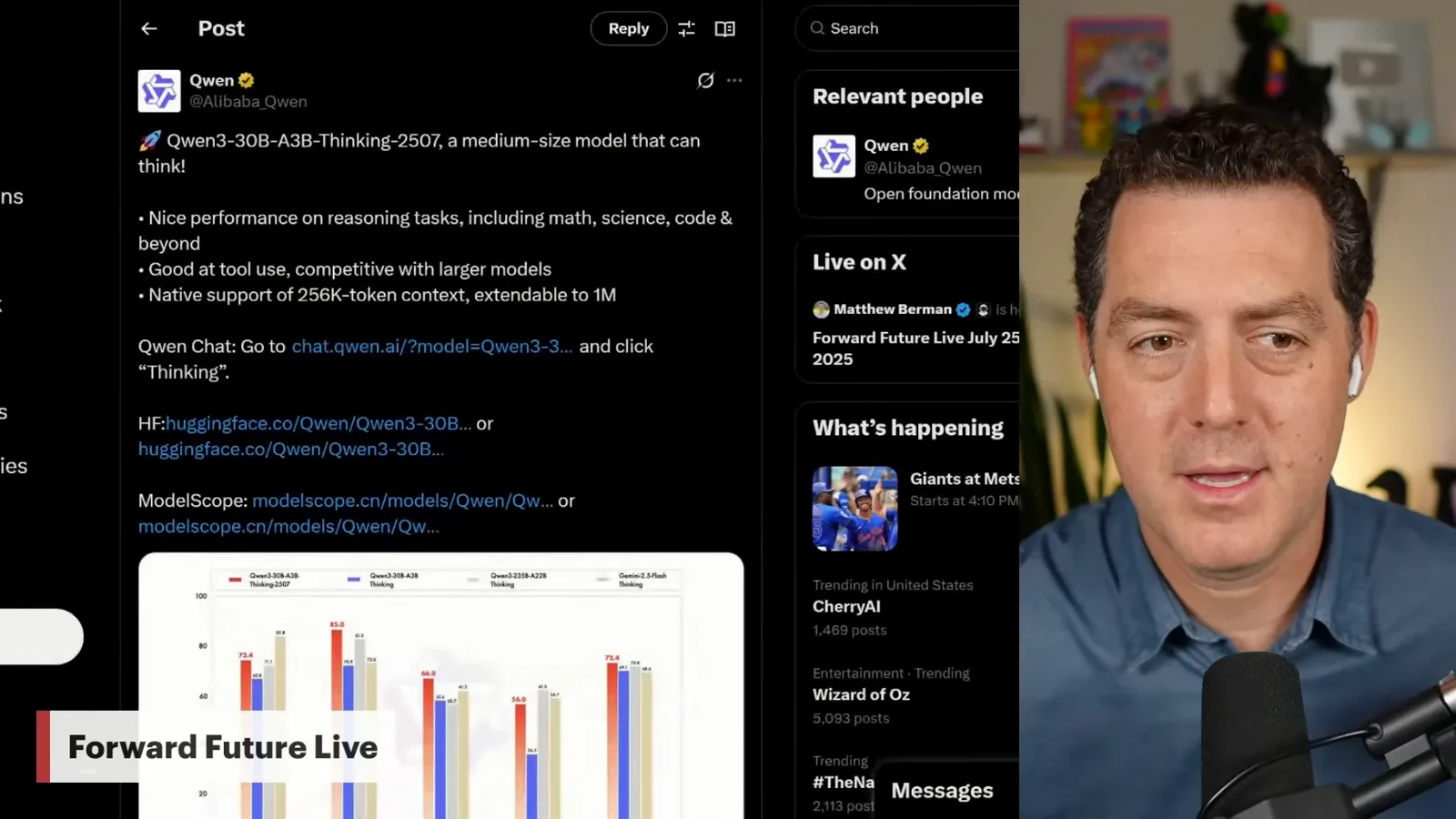
Berman returns to the week’s model releases. He describes Qwen3-30B-A3B Thinking as a mixture-of-experts model with about 3 billion active parameters and cites a 256K context window extendable to one million. Local use depends on hardware, memory and configuration; active parameters alone do not determine the full resource requirement.
Berman discusses Gemini 2.5 Deep Think and a specialized Gemini system’s 2025 IMO gold-standard result. Google said the competition system solved five of six problems under contest conditions; a medal-standard score does not mean the system received a contestant’s medal. In its [August 1 announcement](https://blog.google/products-and-platforms/products/gemini/gemini-2-5-deep-think/), Google distinguished the app version: a faster variation that reached bronze-level performance in its internal IMO evaluation, while the full competition version was offered to selected mathematicians.
Berman returns to the anonymous Horizon Alpha model and repeats the rumor that it is OpenAI’s open model. He says his coding tests used direct zero-shot prompts rather than integrations with Cursor, Windsurf or other agentic frameworks. The model’s identity remained unconfirmed in the stream.
Deep Cogito announced several hybrid reasoning models, including 70B, 109B mixture-of-experts, 405B and 671B variants. Berman reads the company’s account of iterative distillation and policy improvement. Those technical and license claims describe the release at the time; individual model terms should be checked.
Berman discusses Gemini 2.5 Deep Think and a specialized Gemini system’s 2025 IMO gold-standard result. Google said the advanced competition system solved five of six problems under contest conditions; reaching a medal-standard score is not the same as the system receiving a contestant’s medal. The consumer Deep Think offering should not automatically be equated with the specialized IMO configuration.
Berman discusses the then-current paid Ultra plan and says Google does not pay him; he is a fan of the bundle. Prices, entitlements and access may have changed. His statement that the exact IMO model was available in the app requires the configuration distinction above.
He introduces FLUX.1 Krea dev from Black Forest Labs and Krea, praising its natural-looking examples and describing open weights. Selected images do not establish performance for every prompt, and model availability and permitted commercial use depend on the relevant license.
Berman points to a then-leading ARC-AGI-2 result for Gato AI of 21.6%. That is a particular leaderboard entry and date, not a measure of AGI achieved or a current ranking. He sees the recent open-weight releases as evidence of increasing competition near the frontier.
Berman closes by thanking Hiten Shah, Nico Christie, producer Alex and viewers, and points to the Forward Future newsletter. The episode’s model results, plans, comparisons and prices should be read in their August 2025 context.
同频道的其他文章
 34:21EN → 简体中文
 Matthew Berman· 2026年10月27日Matthew Berman 解读 Anthropic 的上市文件、AI 增长与治理Matthew Berman, Sam Altman · Forward Future主持人审视 S-1 中的财务指标、算力战略和投票结构,并质疑 AI 快速发展与安全之间的张力。
 0:26EN → 简体中文Matthew Berman· 2026年10月25日Sam Altman 谈 AI 世界中的人类价值与问题解决Sam Altman · OpenAI在一段简短的访谈摘录中,Altman 思考解决难题的乐趣,以及人在解读结果时的作用。
 0:36EN → 简体中文Matthew Berman· 2026年10月25日Kimi K3.1 与魔方求解演示Matthew Berman · Forward FutureMatthew Berman 展示一个被打乱的虚拟魔方如何复原,并对 Kimi K3.1 的测试给予积极评价。
 0:21EN → 简体中文Matthew Berman· 2026年10月24日AI 生成的 Kimi 基准图表使用了虚构分数Matthew Berman · Forward FutureMatthew Berman 要求生成一张 Kimi K3.1 Pro 基准图表,随后发现图中的数字只是示意性占位值。
 25:50EN → 简体中文Matthew Berman· 2026年10月24日Kimi K3.1 Pro 实测:3D 演示出色,表现不一,价格有竞争力Matthew Berman · Forward FutureMatthew Berman 测试这款开放权重模型的编程、3D 渲染和视觉讲解能力,并比较基准成绩与价格。
 32:20EN → 简体中文Matthew Berman· 2026年10月23日本地 AI 究竟适合谁?成本、取舍与混合模式的未来Matthew Berman · Forward FutureMatthew Berman 权衡数据控制和自主权,与硬件成本、设置复杂度及推理速度之间的关系。