








筛选结果
41 篇排序
 38:10EN → 简体中文
 Google DeepMind· 2026年10月1日从深度伪造到 DNA:SynthID 如何给 AI 加水印Hannah Fry, Pushmeet Kohli, Jeremy Ratcliffe · Google DeepMindHannah Fry 请来 Pushmeet Kohli 和 Jeremy Ratcliffe,讲解 SynthID:一种已用于文本、图像和视频的数学水印,正在延伸到蛋白质序列,好让 DNA 合成公司能把 AI 设计的分子和自然界的分子区分开来。
 47:22EN
 Sequoia Capital· 2026年8月4日播客From One in a Thousand to 15 Percent: Chai Discovery Treats Drug Design as a Scaling ProblemJoshua Meier and Matthew McPartlon tell Sequoia’s Training Data why antibody design is an engineering problem, not a bespoke science, and why they sell a molecular CAD suite instead of their own drugs.
 58:27ENSequoia Capital· 2026年3月24日播客Even a dumber AI can win science if it never leaves the labGinkgo Bioworks CEO Jason Kelly tells Sequoia why autonomous labs, not smarter models, will change how experimental science gets done.
 3:18:09EN → 简体中文
 Lex Fridman· 2025年11月30日播客 · 2 人对谈目标超出各部分时,一个东西就活了嘉宾 Michael Levin · 主持 Lex Fridman塔夫茨大学生物学家 Michael Levin 对 Lex Fridman 说,智能是一个可说服性(persuadability)的光谱,即使是冒泡排序也承载着意想不到的目标,而大脑是一个瘦客户端(thin client),连接着物理学并不拥有的空间。
 1:29:30EN
 Cognitive Revolution "How AI Changes Everything"· 2025年10月14日播客2,500 Compounds and a 51 Percent Hit Rate: How a Small Graph Net Found New Antibiotics主持 Nathan LabenzMIT's Jim Collins tells Nathan Labenz how a bootlegged 2018 project, a binary growth-inhibition label, and Chemprop graph networks pulled novel antibiotics out of chemical space that labs could never screen by hand.
 57:52EN
 Unsupervised Learning: With Jacob Effron· 2025年8月13日播客They Aimed for 1%. The Lab Hit 20%. Chai Discovery Moved Antibody Design Onto the Computer.主持 Jacob EffronJoshua Meier on three waves of AI drug discovery, why Chai-2 behaves like Photoshop for molecules, and why a 1% hit rate was supposed to be enough to change the industry.
 49:27EN
 No Priors: AI, Machine Learning, Tech, & Startups· 2025年7月3日播客 · 2 人对谈From 0.1% to 20%: Chai-2 Turns Antibody Design Into Prompt Engineering主持 Sarah Guo, Elad GilChai Discovery co-founders Joshua Meier and Jack Dent tell Sarah Guo how a generative model now designs antibodies that bind on the first 24-well plate.
 2:02:27ENCognitive Revolution "How AI Changes Everything"· 2025年6月7日播客She set out to build mirror life. Then she talked the field into stopping主持 Nathan LabenzUniversity of Minnesota geneticist Kate Adamala tells Nathan Labenz why every known organism shares one chemical alphabet — and why flipping that alphabet would be a branch of synthetic biology better left unexplored.
 1:12:29ENCognitive Revolution "How AI Changes Everything"· 2025年6月4日播客Google's AI Co-Scientist Solved a Phage Puzzle Humans Missed for Years主持 Nathan LabenzImperial College scientists José Penadés and Tiago Costa told the Podovirus podcast how a still-unreleased Google system recovered their unpublished answer: tailless capsids that pick up stray phage tails.
 55:40ENSequoia Capital· 2025年4月29日播客To Solve All Diseases, Isomorphic Labs Needs a Half-Dozen AlphaFoldsMax Jaderberg on turning DeepMind's game-playing research into a general AI engine for drug design—and why prediction alone cannot search a 10^60 molecular universe.
 1:43:54ENCognitive Revolution "How AI Changes Everything"· 2025年3月23日播客A Year to Grow a Brain Organoid, an Hour to Simulate It主持 Nathan LabenzStanford postdoc Siyu He tells Nathan Labenz how Squidiff and CORAL move single-cell and spatial experiments into the computer — and where the models still cannot go.
 1:33:01ENCognitive Revolution "How AI Changes Everything"· 2025年1月15日播客Rare Diseases Are Common: How a Harvard Gene Hunter Uses o1-pro on the Cases Sequencing Already Missed主持 Nathan LabenzDr. Catherine Brownstein of Boston Children's Hospital explains why cheap genomes made her job harder, why data sharing still beats any model, and where ChatGPT Pro actually gives her hours back.
 1:13:23ENCognitive Revolution "How AI Changes Everything"· 2024年10月12日播客An AI Found a GABA-Cancer Link. The Next Step Is Talking to the Cells.主持 Nathan LabenzMichael Levin and Leo Pio Lopez on a multilayer embedding that predicted melanoma, a cancer with no mutations, and why biology's real interface is cognitive.
 1:18:32ENCognitive Revolution "How AI Changes Everything"· 2024年9月20日播客A DNA Model That Can Tell Which Genes You Cannot Touch主持 Nathan LabenzStanford's Brian Hie walks through hybrid architectures, a genome-scale language model trained only on DNA, and an antibody that binds 25 times tighter than nature.
 1:30:37ENCognitive Revolution "How AI Changes Everything"· 2024年8月30日播客64 Bytes of Random Code, and Computational Life Showed Up Anyway主持 Nathan LabenzGoogle researchers Ettore Randazzo and Luca Versari show that self-replicators can arise from a soup of random strings with no fitness function at all.
 1:59:15ENCognitive Revolution "How AI Changes Everything"· 2024年5月25日播客A Protein Backbone in a Minute: The Real Progress, Bottlenecks, and Risks of AI Biology主持 Nathan LabenzThe White House set a thousand-fold lower reporting bar for biological models than for language models—and this conversation shows why that gap already looks prescient.
 1:25:09ENCognitive Revolution "How AI Changes Everything"· 2024年2月9日播客Two-Headed Worms, Regenerated Legs, and a Sort That Learned to Wait主持 Nathan LabenzTufts biologist Michael Levin tells Cognitive Revolution why anatomy is rewritable software, and why he stopped a paper that might have made AI more alive.
 37:01ENNo Priors: AI, Machine Learning, Tech, & Startups· 2023年9月28日播客 · 2 人对谈DNA Is Code, but You Compile It with a Pipette主持 Sarah Guo, Elad GilGinkgo Bioworks CEO Jason Kelly tells No Priors why cells are worth the magic, why biology has no AWS, and why a pandemic should look like cybersecurity.
 2:18:25ENLex Fridman· 2023年9月1日播客 · 2 人对谈Grow Everything: Neri Oxman on Giving Nature a Vote嘉宾 Neri Oxman · 主持 Lex FridmanThe designer-scientist who left MIT to build OXMAN talks silkworm pavilions, bees in space, and why the end of human agency might be the start of nature's.
 35:24ENNo Priors: AI, Machine Learning, Tech, & Startups· 2023年8月24日播客 · 2 人对谈The Author of Attention Is All You Need Now Compiles mRNA Like Bytecode主持 Sarah Guo, Elad GilJakob Uszkoreit on why Transformers won, why models spend compute on the wrong things, and why drug discovery has to become generation rather than screening.
 2:40:18ENLex Fridman· 2022年12月29日播客 · 2 人对谈Every Living Cell Runs the Same Translation Machine嘉宾 Betül Kaçar · 主持 Lex FridmanAstrobiologist Betül Kaçar tells Lex Fridman how the tree of life is drawn backward, why nitrogen was fixed only once, and why the genetic code is an alphabet with room for typos.
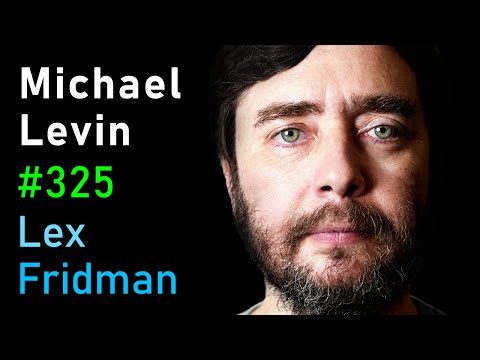 3:00:21EN → 简体中文Lex Fridman· 2022年10月1日播客 · 2 人对谈切掉涡虫的头,新长出的大脑仍然记得嘉宾 Michael Levin · 主持 Lex FridmanMichael Levin 认为,DNA 只负责搭建硬件,生物电网络保存着身体的蓝图,而青蛙皮肤细胞能变成进化从未设计过的机器人。
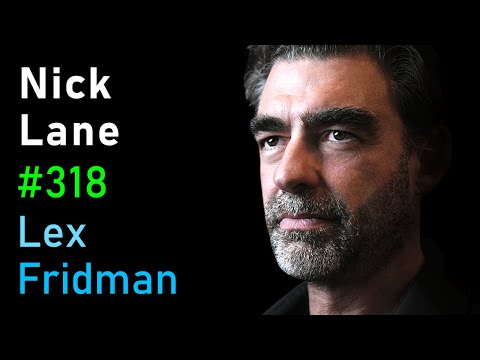 3:43:01EN → 简体中文Lex Fridman· 2022年9月7日播客 · 2 人对谈把氢和二氧化碳放进试管,热力学想要细胞,却什么也没发生嘉宾 Nick Lane · 主持 Lex Fridman生物化学家 Nick Lane 和 Lex Fridman 聊了水热喷口、线粒体、性和意识,也谈到了为什么细菌应当很常见,文明却很罕见。
 2:10:39EN → 简体中文Lex Fridman· 2022年7月1日播客 · 2 人对谈Demis Hassabis:先解决智能,再解决其他一切嘉宾 Demis Hassabis · 主持 Lex FridmanDeepMind 首席执行官告诉 Lex Fridman:图灵测试为什么是一份出错的考卷,AlphaFold 如何改写了生物学,以及射电天空的寂静为何暗示我们或许是孤独的。
加载更多已显示 24 篇,共 41 篇