







筛选结果
72 篇排序
 1:31:35EN
 Cognitive Revolution "How AI Changes Everything"· 2025年3月6日播客Thirty Years of Research, Collapsed into One Sentence主持 Nathan LabenzImmunologist Derya Unutmaz on writing a medical patent in half an hour, treating o1 Pro as a professor-level collaborator, and why he no longer trusts his own expertise until he asks the model.
 40:33EN
 No Priors: AI, Machine Learning, Tech, & Startups· 2025年2月27日播客 · 2 人对谈Moderna was only company 18. The real product is the company factory主持 Sarah Guo, Elad GilNoubar Afeyan tells No Priors how Flagship Pioneering turned starting companies into a profession, underwrites scientific uncertainty, and wants AI to run discovery the way Waymo drives.
 57:41ENNo Priors: AI, Machine Learning, Tech, & Startups· 2025年2月25日播客 · 2 人对谈A Hundred Million Cells, Four People, Three Days: Biology's ImageNet Moment主持 Sarah Guo, Elad GilVevo Therapeutics and the Arc Institute open-sourced Tahoe-100M and a 230-million-cell atlas in the same week — and argued that virtual cells, not just protein folders, are the next language model of biology.
 1:40:22ENCognitive Revolution "How AI Changes Everything"· 2025年1月22日播客Twenty-atom crystals taught an AI the physics of a heartbeat主持 Nathan LabenzOrbital Materials' Jonathan Godwin and Tim Duignan tell Nathan Labenz how a neural network trained on tiny crystals simulated a potassium ion channel on a single 2017 GPU.
 1:01:53ENCognitive Revolution "How AI Changes Everything"· 2024年12月18日播客Humans Wrote 1.3 Percent of the Tokens. The AI Lab Still Designed Working Nanobodies.主持 Nathan LabenzStanford's James Zou describes a GPT-4o research group that invented a protein-design pipeline for under $100 — and a sparse autoencoder that pulled an undocumented motif out of ESM-2.
 1:55:53ENCognitive Revolution "How AI Changes Everything"· 2024年12月5日播客AI Beats Humans at Reading Papers. It Still Cannot Count Atoms.主持 Nathan LabenzAndrew White, Head of Science at Future House, maps what language models can already do in chemistry and biology—and the bottlenecks they do not dissolve.
 39:22ENNo Priors: AI, Machine Learning, Tech, & Startups· 2024年11月14日播客 · 2 人对谈A Fields Medalist Stuck for Two Hours. AlphaProof Climbed for Three Days.主持 Sarah Guo, Elad GilThe DeepMind team behind AlphaProof tells Sarah Guo and Elad Gil how an AlphaZero-style agent, a Lean verifier, and test-time reinforcement learning reached IMO silver — and why the missing skill is still theory building.
 1:23:37ENCognitive Revolution "How AI Changes Everything"· 2024年10月23日播客Nine of the top ten research ideas were Claude's主持 Nathan LabenzStanford PhD student Chenglei Si ran a blind study pitting Claude 3.5 Sonnet against more than a hundred NLP researchers on novel research ideas.
 41:42EN
 Sequoia Capital· 2024年10月22日播客Neural Networks Are Still Waiting for Their ThermodynamicsOpenAI researcher Dan Roberts on why physicists keep migrating into AI, and why the field still lacks the equivalent of the ideal gas law.
 1:13:23ENCognitive Revolution "How AI Changes Everything"· 2024年10月12日播客An AI Found a GABA-Cancer Link. The Next Step Is Talking to the Cells.主持 Nathan LabenzMichael Levin and Leo Pio Lopez on a multilayer embedding that predicted melanoma, a cancer with no mutations, and why biology's real interface is cognitive.
 39:45ENSequoia Capital· 2024年9月24日播客Harmonic’s Bet: Teach AI Math Directly, and the Riemann Hypothesis Falls by 2029Robinhood’s Vlad Tenev and Harmonic co-founder Tudor Achim tell Sequoia why math is reasoning, why Lean is the verifier, and why they refuse to wait for mathematical skill to emerge from scale.
 1:18:32ENCognitive Revolution "How AI Changes Everything"· 2024年9月20日播客A DNA Model That Can Tell Which Genes You Cannot Touch主持 Nathan LabenzStanford's Brian Hie walks through hybrid architectures, a genome-scale language model trained only on DNA, and an antibody that binds 25 times tighter than nature.
 1:54:01ENCognitive Revolution "How AI Changes Everything"· 2024年6月26日播客A Tiny Network Grew a Salt Crystal the Training Data Never Showed主持 Nathan LabenzTim Duignan trained tens of thousands of parameters on salt water. The model invented a crystal — and a continuum solvent theory he had spent a PhD failing to write by hand.
 1:59:15ENCognitive Revolution "How AI Changes Everything"· 2024年5月25日播客A Protein Backbone in a Minute: The Real Progress, Bottlenecks, and Risks of AI Biology主持 Nathan LabenzThe White House set a thousand-fold lower reporting bar for biological models than for language models—and this conversation shows why that gap already looks prescient.
 1:20:44ENCognitive Revolution "How AI Changes Everything"· 2024年3月30日播客Seeing Like a Mamba: Vision, Rotting States, and a Cell Model in 90 Days主持 Nathan LabenzNathan Labenz and Jason Meaux survey the vision papers, long-context experiments, and biology work that followed the original Mamba release.
 1:25:09ENCognitive Revolution "How AI Changes Everything"· 2024年2月9日播客Two-Headed Worms, Regenerated Legs, and a Sort That Learned to Wait主持 Nathan LabenzTufts biologist Michael Levin tells Cognitive Revolution why anatomy is rewritable software, and why he stopped a paper that might have made AI more alive.
 1:50:57ENCognitive Revolution "How AI Changes Everything"· 2024年1月12日播客Twenty-Eight Days After GPT-4, an AI Designed and Ran a Chemistry Experiment主持 Nathan LabenzGabe Gomes and his Carnegie Mellon students built Coscientist, a language-model agent that plans, codes, and executes real experiments on a remote cloud lab.
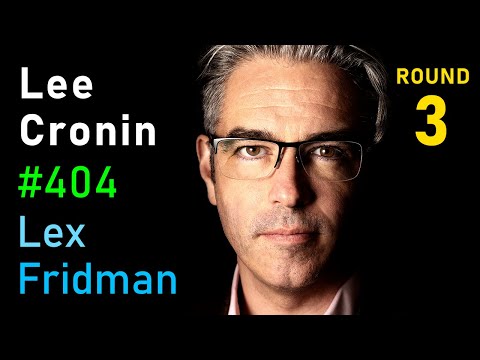 3:19:21EN → 简体中文
 Lex Fridman· 2023年12月9日播客 · 2 人对谈没有拷贝的复杂,不过是随机:Lee Cronin 谈装配理论嘉宾 Lee Cronin · 主持 Lex Fridman这位格拉斯哥化学家带 Lex Fridman 走过他那篇有争议的《自然》论文、一台为其他星球设计的生命探测仪,以及“宇宙大到装不下自己的未来”这一论断。
 37:01ENNo Priors: AI, Machine Learning, Tech, & Startups· 2023年9月28日播客 · 2 人对谈DNA Is Code, but You Compile It with a Pipette主持 Sarah Guo, Elad GilGinkgo Bioworks CEO Jason Kelly tells No Priors why cells are worth the magic, why biology has no AWS, and why a pandemic should look like cybersecurity.
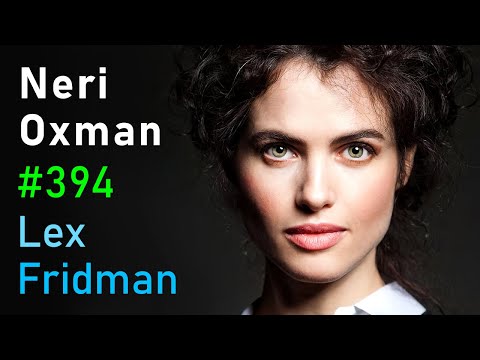 2:18:25ENLex Fridman· 2023年9月1日播客 · 2 人对谈Grow Everything: Neri Oxman on Giving Nature a Vote嘉宾 Neri Oxman · 主持 Lex FridmanThe designer-scientist who left MIT to build OXMAN talks silkworm pavilions, bees in space, and why the end of human agency might be the start of nature's.
 35:24ENNo Priors: AI, Machine Learning, Tech, & Startups· 2023年8月24日播客 · 2 人对谈The Author of Attention Is All You Need Now Compiles mRNA Like Bytecode主持 Sarah Guo, Elad GilJakob Uszkoreit on why Transformers won, why models spend compute on the wrong things, and why drug discovery has to become generation rather than screening.
 2:07:04EN → 简体中文Lex Fridman· 2023年5月28日播客 · 2 人对谈核糖体早就解决了数字化制造嘉宾 Neil Gershenfeld · 主持 Lex FridmanNeil Gershenfeld 与 Lex Fridman 对话,谈图灵(Turing)为什么要把读写头和纸带分开,fab lab 为何是制造领域的“个人电脑时刻”,以及用大约二十种零件培育一个文明需要些什么。
 46:57ENNo Priors: AI, Machine Learning, Tech, & Startups· 2023年3月2日播客 · 2 人对谈95% of Drug Programs Fail. Daphne Koller Is Betting Machine Learning on the First Decision主持 Sarah Guo, Elad GilA new medicine still takes more than a decade and well over a billion dollars — and Insitro's founder argues the expensive failures start with the wrong target, indication, or patient.
 2:06:25ENLex Fridman· 2022年12月19日播客 · 2 人对谈Nathalie Cabrol Wants the Nature of Life, Not Just a Signal from Mars嘉宾 Nathalie Cabrol · 主持 Lex FridmanThe SETI Institute astrobiologist tells Lex Fridman why crater lakes, panspermia, and a Mandelbrot view of language all point to the same question: what life actually is.
加载更多已显示 24 篇,共 72 篇