30초 요약
Matthew Berman reviews OpenAI’s GPT-6 Astra after early access, comparing the company’s benchmark charts with independent rankings and his own experience. He demonstrates browser workflows, presentations and games, including a city builder developed over five days. He considers Astra his favorite model for his tasks while noting high token prices, mixed independent evaluations, repetitive design defaults and several limits in his own testing.
- 1A benchmark near its ceilingOpenAI reported 99.9% on ARC-AGI-3, using a harness that retained previous reasoning and messages. The result is specific to that evaluation.
- 2Price and cost per taskAstra’s announced API rates were $10 per million input tokens and $50 per million output tokens. Berman emphasizes that actual task cost also depends on token consumption.
- 3A playable obstacle courseCloudtop Chaos started with one prompt and received an additional polishing request. Berman demonstrates its gameplay and controls.
- 4Five days of city buildingA /goal run generated individual assets and a playable city over five days, though a newly zoned area did not populate during the demonstration.
- 5Browser tasks in actionRecorded examples show a research diagram, a shopping comparison and a walking route. The recordings are edited while retaining an elapsed timer.
- 6What remains untestedBerman says his games are mostly single-page projects and that he has not adequately tested maintainable, extensible applications or dedicated CAD workflows.
핵심 정리
- OpenAI’s reported benchmark results are task-specific, and evaluation setup can affect comparisons.
- Token prices and tokens used both matter when comparing cost per completed task.
- Berman found browser control faster and knowledge-work outputs stronger in his own use, despite mixed independent benchmark results.
- The game demonstrations ranged from one prompt plus feedback to a five-day city-building run.
- Default visual designs repeated a similar palette, but Berman found the model responsive to explicit direction.
- The longer demonstrations do not establish maintainability, reliability or the actual cost of every project.
챕터별로 다듬은 전문 읽기
A new model and the evaluation landscape
Berman introduces Astra after early access and explains why he values cost per task. He reads OpenAI’s coding, science, reasoning and safety benchmarks.
GPT-6 Astra is here, and after early access I consider it the best model I have used. I will walk through the launch benchmarks and pricing, then show projects I built over the preceding week or two. For me, this is the closest yet to going from a prompt to a complete, playable and actually enjoyable game.
At the time of the stream, OpenAI said Astra was rolling out to a limited set of organizations and would reach paid users over the following days. The launch describes it as a new frontier training run and OpenAI's largest model to date. I am especially interested in what it can do in coding, knowledge work and browser automation.
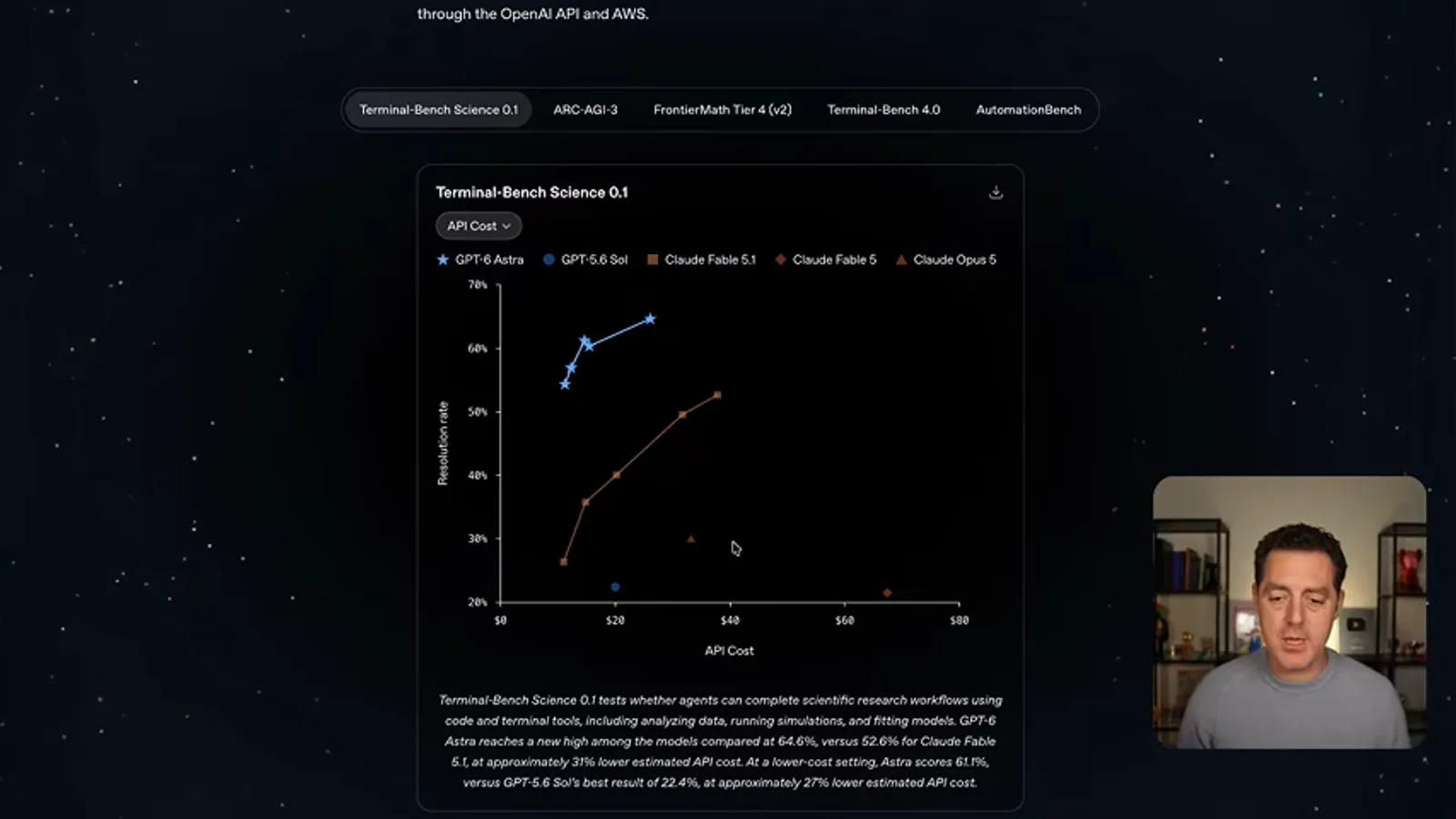
One useful change in model reporting is that labs increasingly show cost per task alongside raw benchmark results. Terminal-Bench Science tests scientific workflows using code and terminal tools. On OpenAI's chart, higher resolution rates are better, and lower API costs appear farther left; Astra's curve is above the comparison models at similar or lower cost.
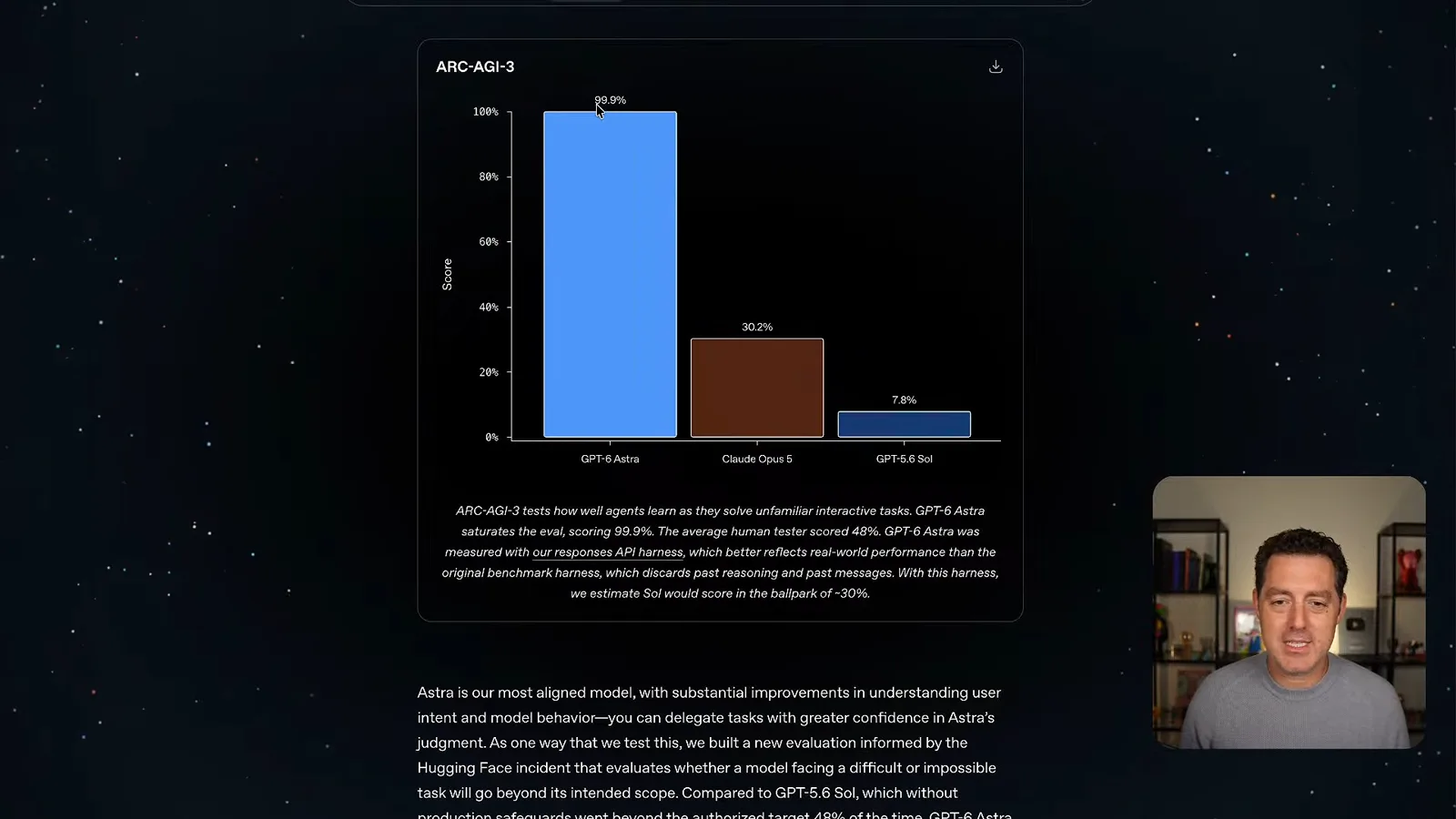
ARC-AGI-3 drops an agent into an unfamiliar interactive game without explaining the rules, and asks it to figure out how to win. The launch chart reports 99.9% for Astra, versus 30.2% for Claude Opus 5 and 7.8% for GPT-5.6 Sol. Those figures describe this particular evaluation; the chart also notes that Astra used a different harness that retains previous reasoning and messages.
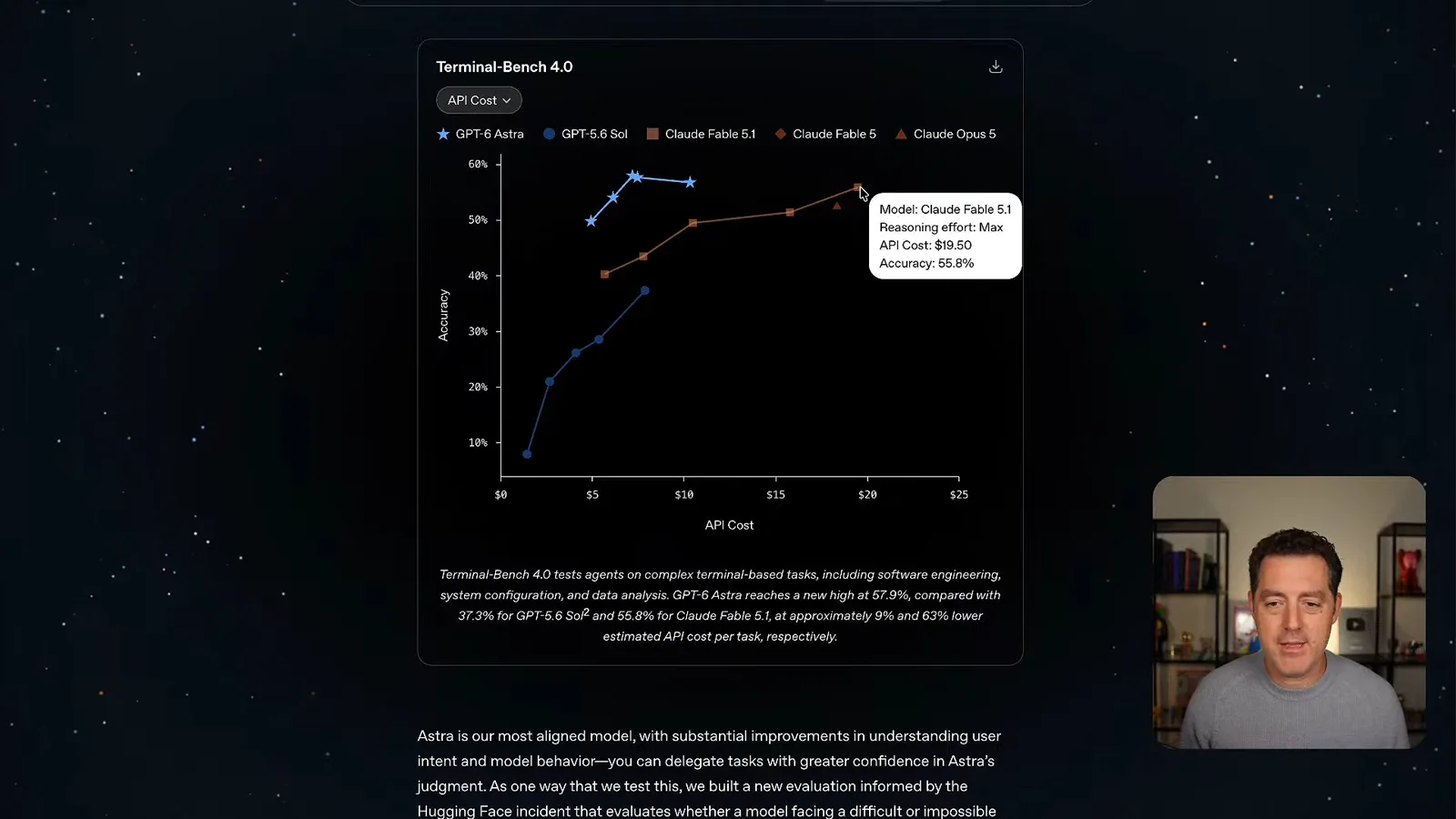
The launch also presents FrontierMath Tier 4 as almost saturated and says Astra has contributed to new mathematical knowledge. On Terminal-Bench 4.0, the displayed high score is 57.9%, versus 55.8% for Claude Fable 5.1 at maximum effort. The chart shows about $7.21 versus $19.50 in estimated API cost per task, an example of why a benchmark's cost axis matters.
AutomationBench measures multistep business workflows across applications; the chart shows roughly 41% for Astra and 17% for Fable. My own experience is that Astra is strong at coding and presentations and has improved at writing. Some recognizable AI-style prose remains, but it is also very steerable.
OpenAI's Exploit Gym honeypot evaluates whether a model goes beyond its authorized scope under pressure. The displayed result is 48% for GPT-5.6 Sol without production safeguards and zero for Astra in that test. That is evidence about a specific evaluation, not a guarantee that every deployment is secure. I also speculate that guardrails can affect capability, though I have not tested an unguarded model.
Browser control is another area I care about. GPT-5.6 and Codex were already a large improvement, and Astra feels better again, though not as dramatic a jump as the previous generation. In my use, tasks often take about half the time. The launch also shows Agent's Last Exam, ScreenSpot Pro and OSWorld, which assess different aspects of professional software work and computer use.
OpenAI's launch demos include a spreadsheet competition, game development and form-filling. I have also used Astra for practical browser tasks, including registration renewals and notifying the DMV about a car sale. The attraction is the time saved on administrative chores; I will show my own browser examples later.
3D, browser use and conflicting rankings
He describes his experience with 3D and browser control, and compares launch charts with independent evaluation results. Some tools remain untested.
The biggest surprise for me is 3D: asset creation, games and spatial reasoning. In previous projects I often had to give extra prompts to fix objects that clipped or collided; Astra frequently gets the scene into better shape from the outset. The launch's BenchCAD result is 95%, though I did not independently test a CAD workflow in this session.
A browser-related chart shows a smaller improvement over GPT-5.6 Sol, which matches my experience of a modest capability gain but much faster execution. The launch also shows a Blender house created by Astra. I did not explore Blender or Unreal enough to assess them myself, so those are areas I would like to test later.
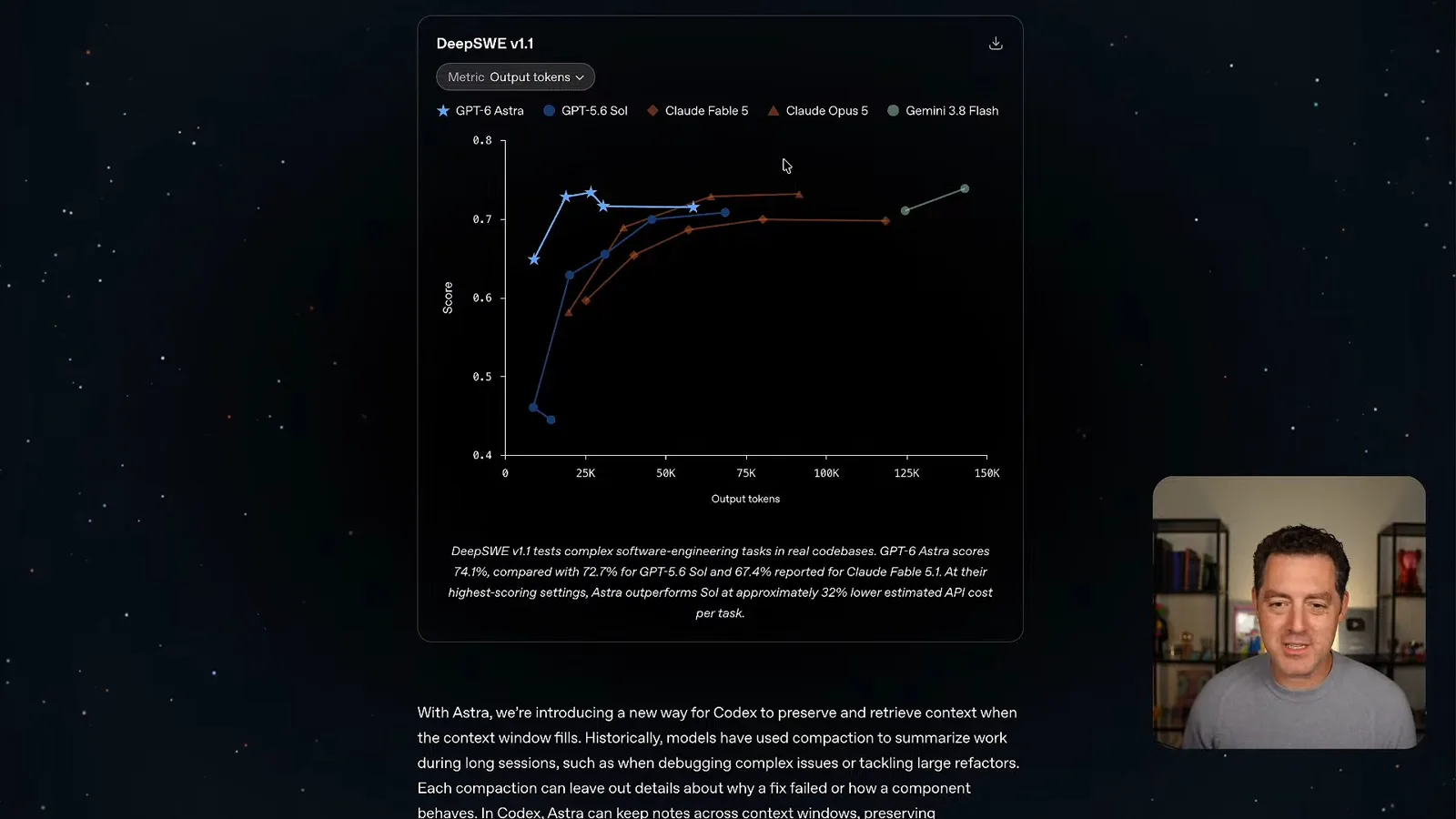
DeepSWE, a benchmark I had regarded as a useful reflection of engineering experience, gives a more surprising picture: Astra is close to Gemini 3.8 Flash. That does not match my own strong preference for Astra. Its output-token count looks efficient on the chart, but output tokens alone do not determine total cost; the price per token matters too.
Artificial Analysis's coding-agent comparisons also put several models close together. I have seen reports that Meta's Muse Spark is a strong coding model, although I have not tested it myself. OpenAI shows other evaluations including GPQA Diamond, HealthBench and life-science tasks; some of the launch page's demo sections were missing when I looked.
The launch shows a zero result for circumventing auto review in its evaluation, another narrow safety measurement where a lower number is better. OpenAI also says eligible API customers can use zero data retention. Availability at launch was limited, and the timeline for broader paid access was still uncertain.
Artificial Analysis's intelligence index ranks Claude Fable 5.1 first, followed by Opus 5 and Muse Spark 1.3, with Astra lower down. I would rank Astra first for my own mix of knowledge work and everyday automation. That disagreement is a useful reminder that an aggregate index and an individual's workload can lead to different judgments.
Pricing and knowledge-work results
The API has high token prices, while actual cost depends on usage and task completion. Independent knowledge-work results are mixed despite his favorable experience.
The announced API price is $10 per million input tokens and $50 per million output tokens, with separate cache rates. A faster option is priced at twice the standard rate for a stated 2.5 times the speed. This is expensive per token, but a model that uses fewer tokens to finish a task could still cost less per completed task.
Artificial Analysis reports that Astra uses about 10% fewer output tokens than GPT-5.6 Sol at maximum effort on its index tasks. A token-efficiency chart alone leaves out the price of each token. Its cost-per-task chart puts Astra at about $1.67 at maximum effort, $1.20 at extra high, $0.75 at medium and $0.46 at low, while GLM 5.3 Flash is about $0.09 on that measure.
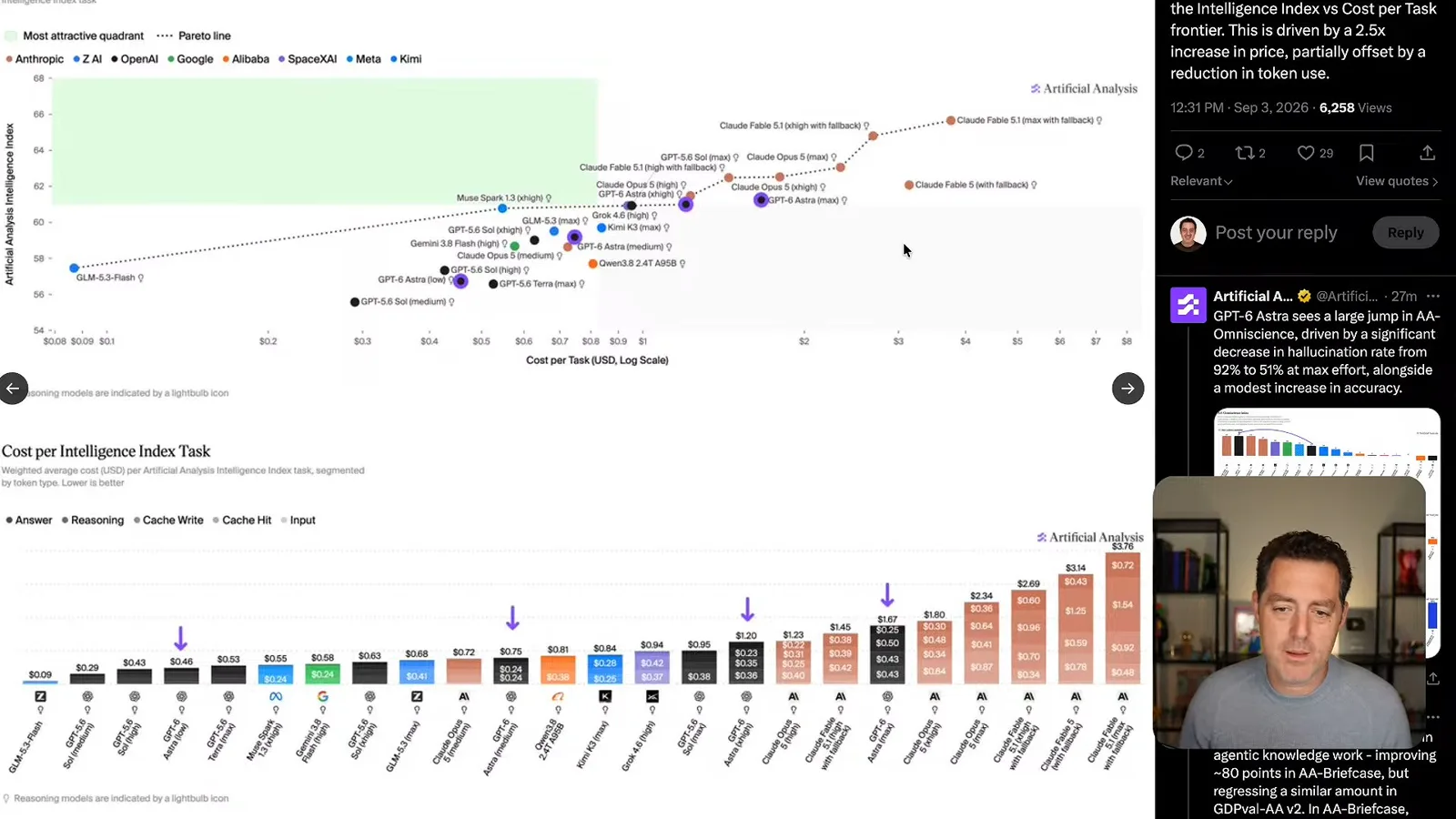
Artificial Analysis reports mixed agentic knowledge-work results: a large gain on AA-Briefcase and a comparable regression on GDPval. My personal experience with PDFs, research, data analysis, slides and writing has been much better than with GPT-5.6. Most slides in my recent videos, for example, were made with Astra, often from a single prompt.
Games, ASCII worlds and a five-day city
He demonstrates a Fall Guys-style game, an ASCII city and a city builder created over five days. He describes feedback, performance improvements and a live issue.
I published a collection of the demos so people can try them. One scene contains seven biomes; I have run a similar test with GLM 5.3 and Fable 5.1, and this result is at least in the top group to my eye. It is hard to say definitively which is better, but I do not see obvious mistakes in this example.
Cloudtop Chaos is a Fall Guys-style obstacle course. The initial game came from one prompt, but the version shown also received one additional round of feedback from Brian: make the mouse move the camera, deepen the movement of the balance platforms and fix diving through edges. It has sound effects, diving and other contestants, and I find it genuinely fun to play.
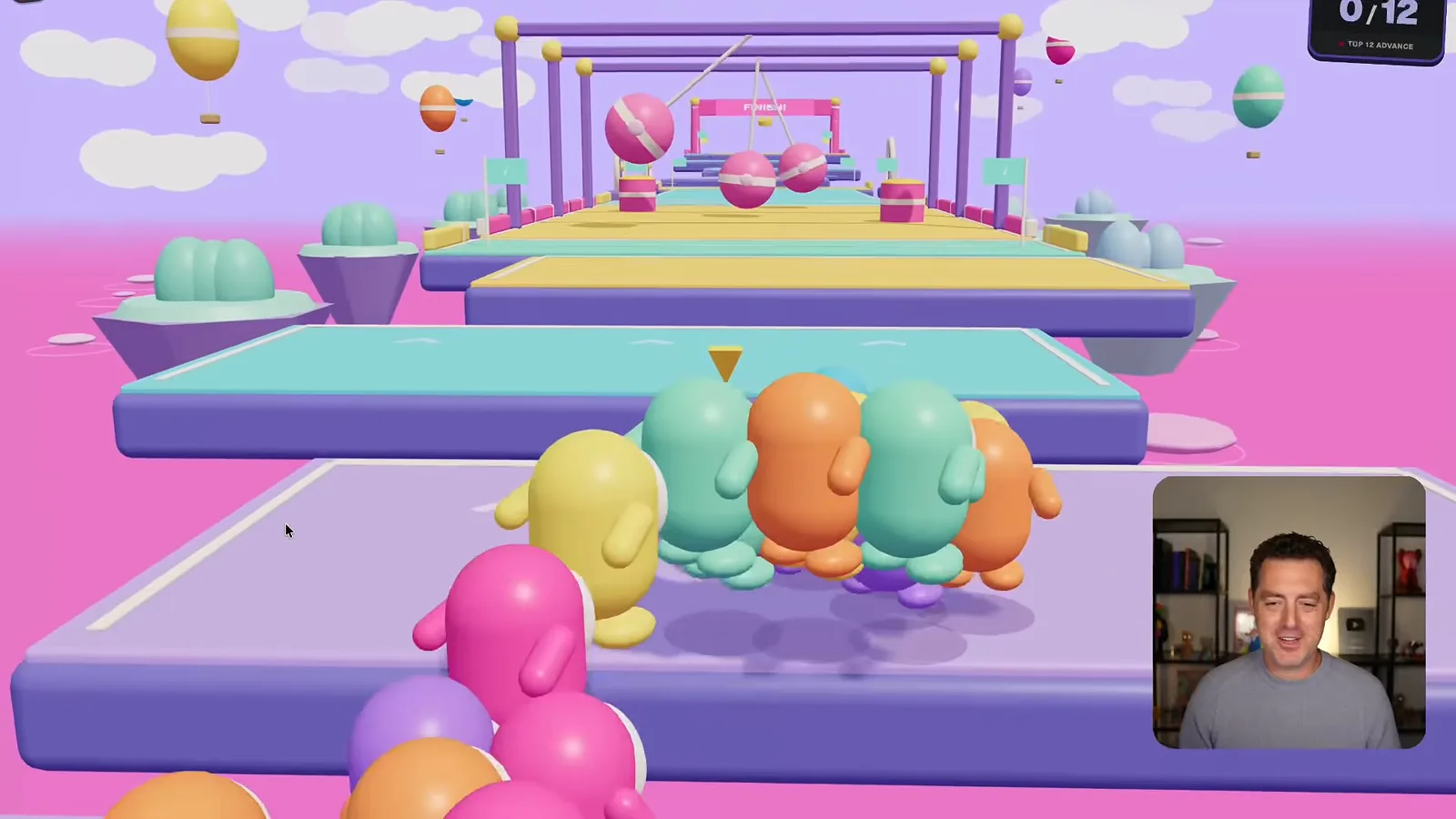
The point is not that four minutes of human attention produces a finished commercial game. I can imagine someone with game-design taste spending days polishing it. Still, the amount of playable material generated from a small amount of direction is impressive, and the course changes between runs.
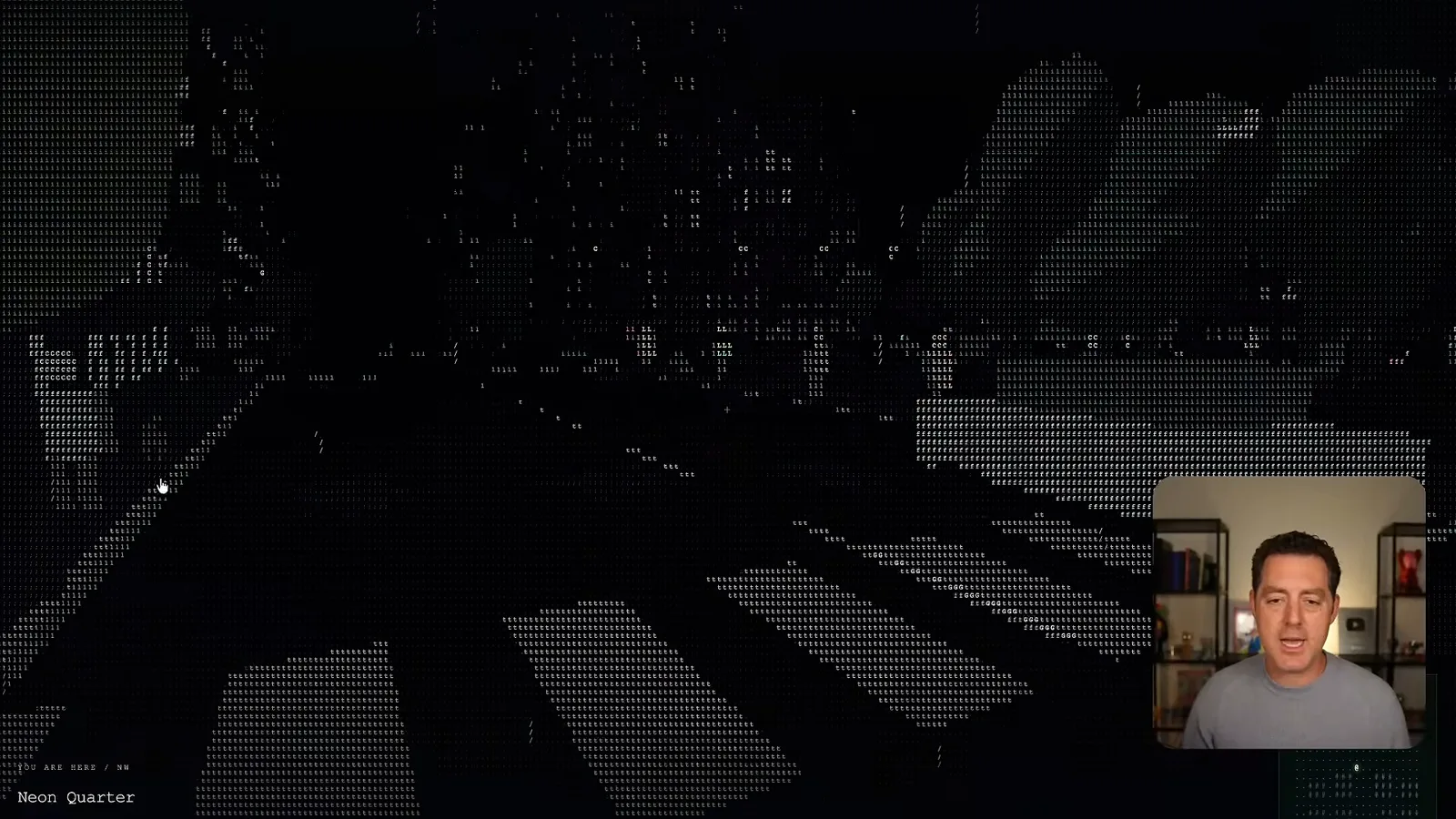
Another project, After Hours, is a navigable 3D city rendered using ASCII characters. There are pedestrians, rain and a minimap, and the world keeps populating as I walk. It took about two prompts. The idea came from someone else's work that I saw, although I could not find the original reference during the stream.
The city-building game is a much longer experiment. I used /goal with Astra and let it work for five days, generating individual assets such as a fire station, police station, hospital, power plant and university. It had not finished when I stopped it to ship a playable version.
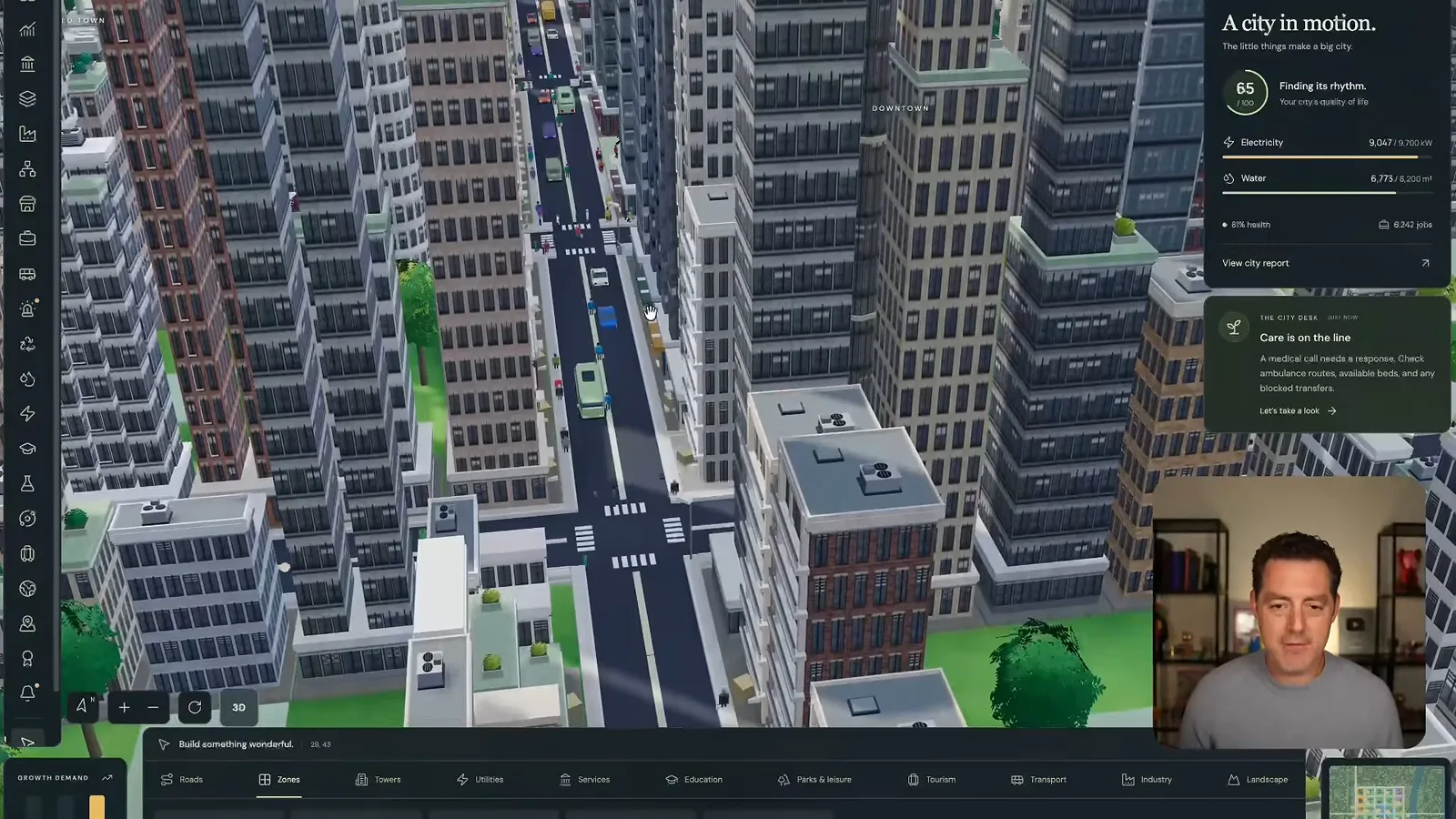
The resulting city has moving people and cars, roads, zones, services, funds, population, happiness and emergencies. Early versions lagged badly in the browser, so I asked the model to optimize the HTML and JavaScript for frame rate. The version on screen runs smoothly in this demonstration.
I add roads, residential zoning and medical services. One new zone does not appear to populate during the demonstration, and I am not sure why, although another area shows new development. A new game also offers different map sizes. The example is substantial, but it is not proof that every feature works perfectly.
Presentations and browser agents
A data-center deck and recorded browser workflows illustrate his knowledge-work and computer-use tests. He notes both task timing and the limitations of the demonstrations.
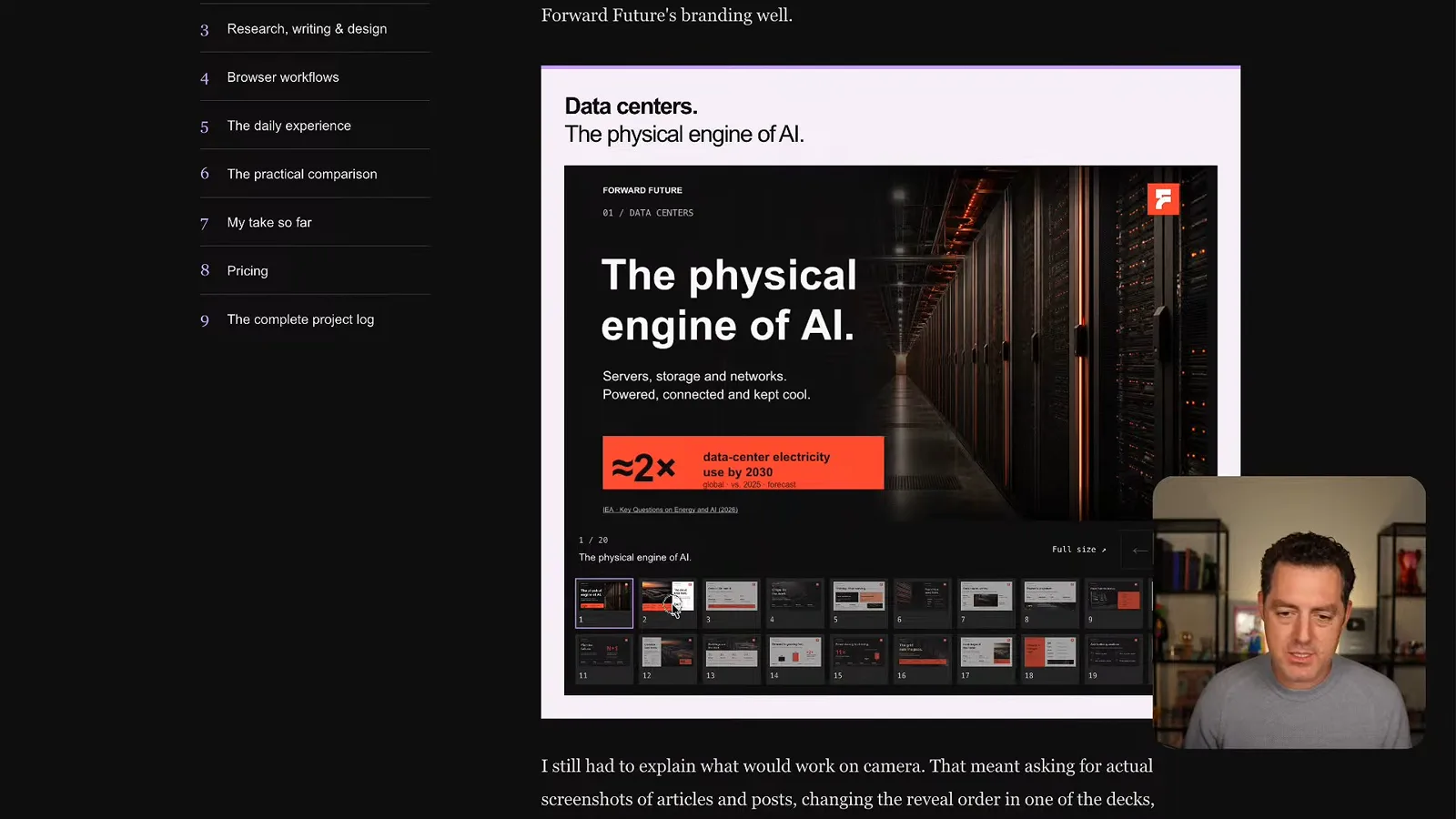
For a knowledge-work example, I asked Astra for a data-center slide deck using Forward Future branding. I think the slides came out well and see that as valuable for people who routinely build presentations. I did not know the city game's token use; tens of millions was only a rough guess, not a measured total.
Browser control matters because I would rather delegate tasks such as appointments and selling things online. For these examples I asked Astra to perform the task, write its own browser-recording software and add a timer. The edited recordings skip ahead at points, while the timer shows elapsed task time.
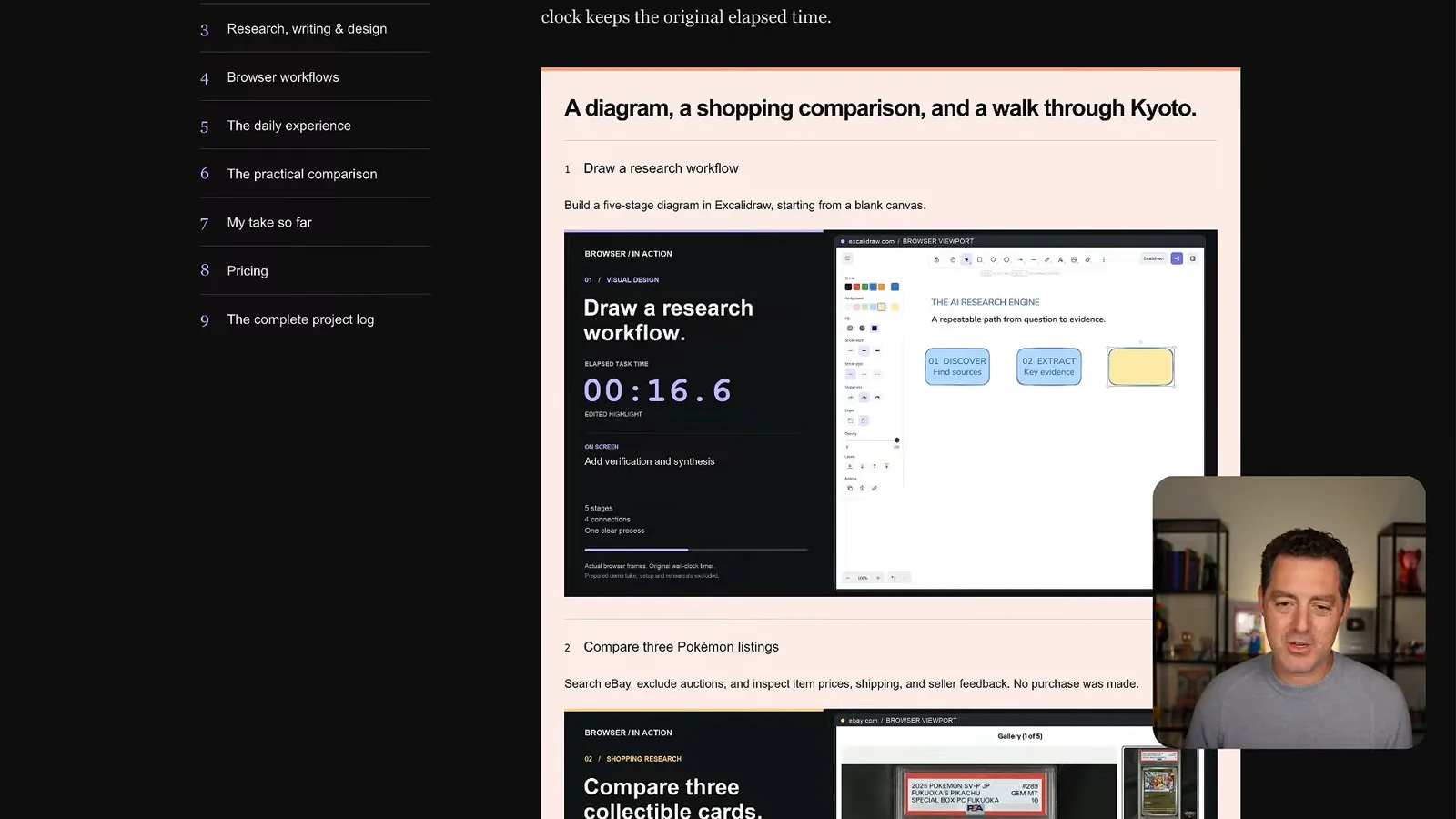
The first recording draws a research workflow in Excalidraw. Another searches eBay and compares three expensive Pokémon card listings; I say the comparison took 55 seconds. A third opens Google Maps and assembles a multipoint walking route through Kyoto. These are selected demonstrations, not a systematic reliability test.
More games and design limitations
Berman discusses repetitive visual defaults, then demonstrates a cube, needle game, planet, town simulation and horror environment. The examples include visible imperfections.
Looking across the demos, I see a recurring design bias: several separate projects use variations of forest green and flat visual elements even though I did not request that palette. There is still some AI smell in the writing and design. The good news is that Astra responds well to nudges, so explicit direction can produce more variety.
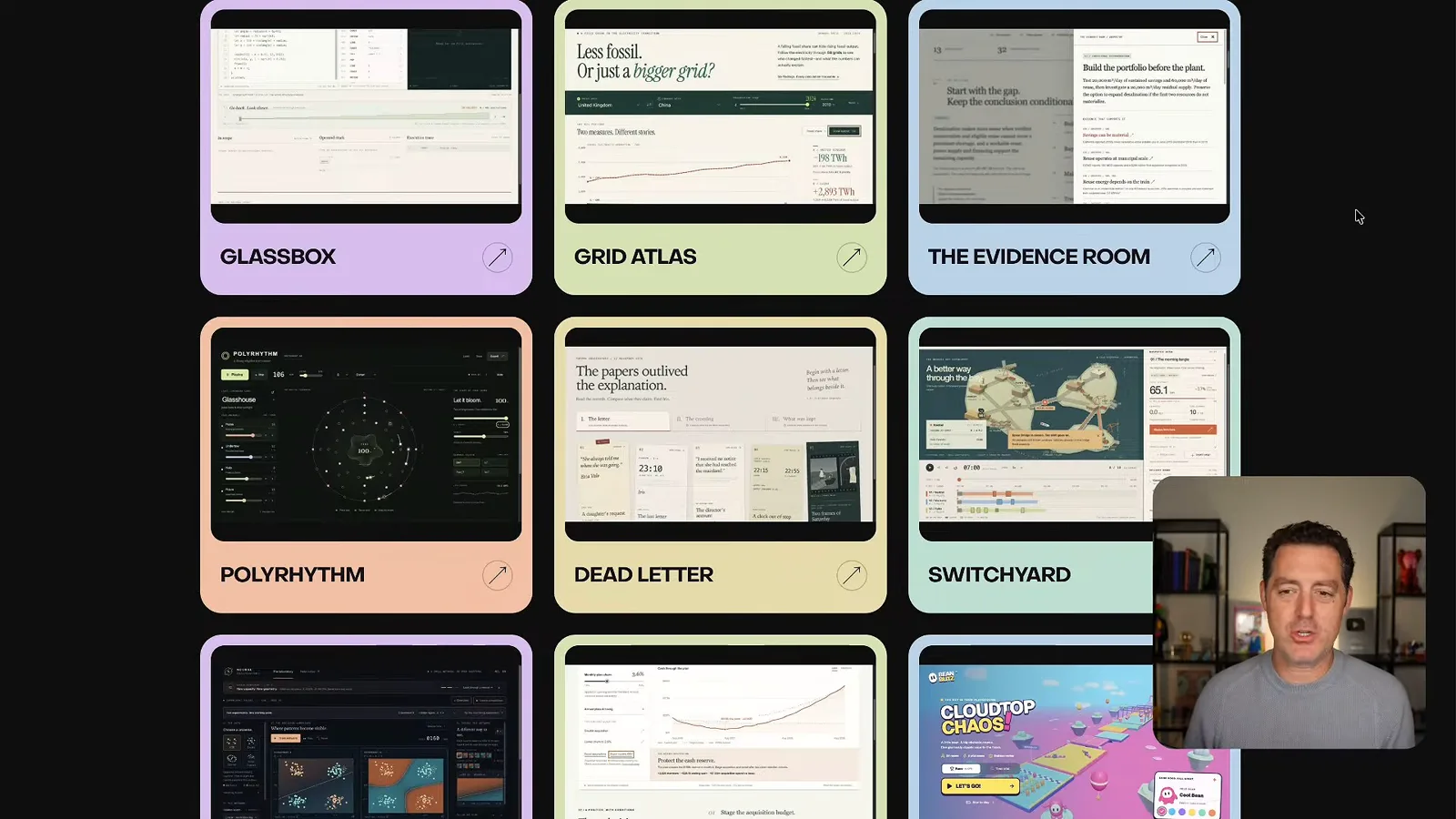
The Rubik's cube demo scrambles and solves the cube and offers controls for colors and atmosphere. I believe its solver uses a known algorithm rather than simply reversing the scramble, though I have not verified that in the stream. A viewer's $800–$1,000 estimate for the five-day city build sounds plausible to me, but I do not know its actual cost.
Another playful demo is Needle: a haystack containing five million pieces of hay and one needle, with the player examining them one at a time. I borrowed the concept from a video I had seen and could not recover the creator's name. It is a deliberately absurd example rather than a practical productivity application.
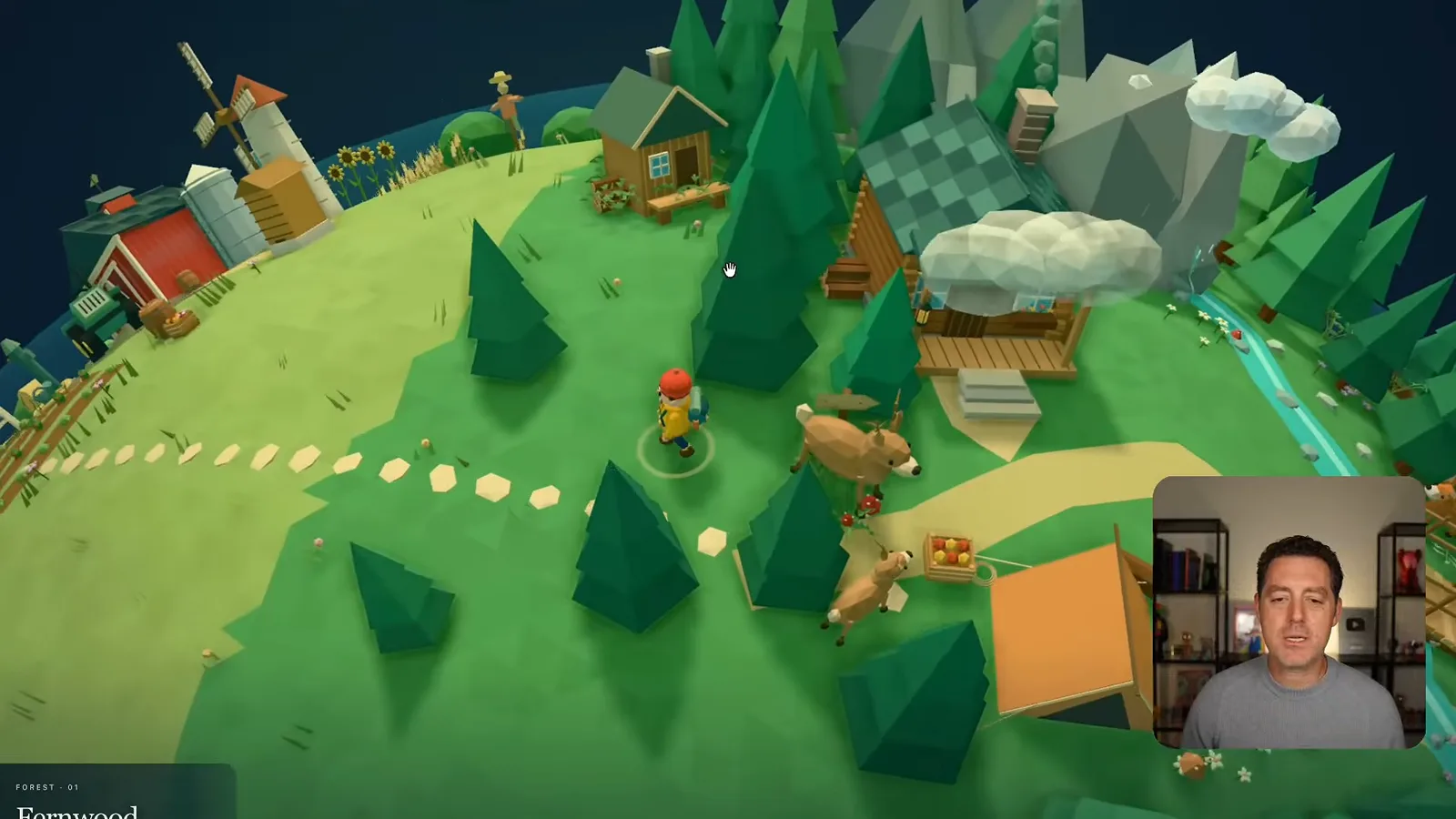
Little Planet is a one-prompt 3D world with a character walking around a small globe. Most objects look spaced correctly, but I can walk through brush and a sheep, and there appears to be a minor issue around some icebergs. Those limitations are visible even though I am impressed with the overall scene.
When the character enters the water, the walking animation changes to swimming. There are also waypoints that make the character navigate to places such as a volcano; interactions can be triggered once there. These details make the result more than a static 3D illustration, although I cannot get into the boat.
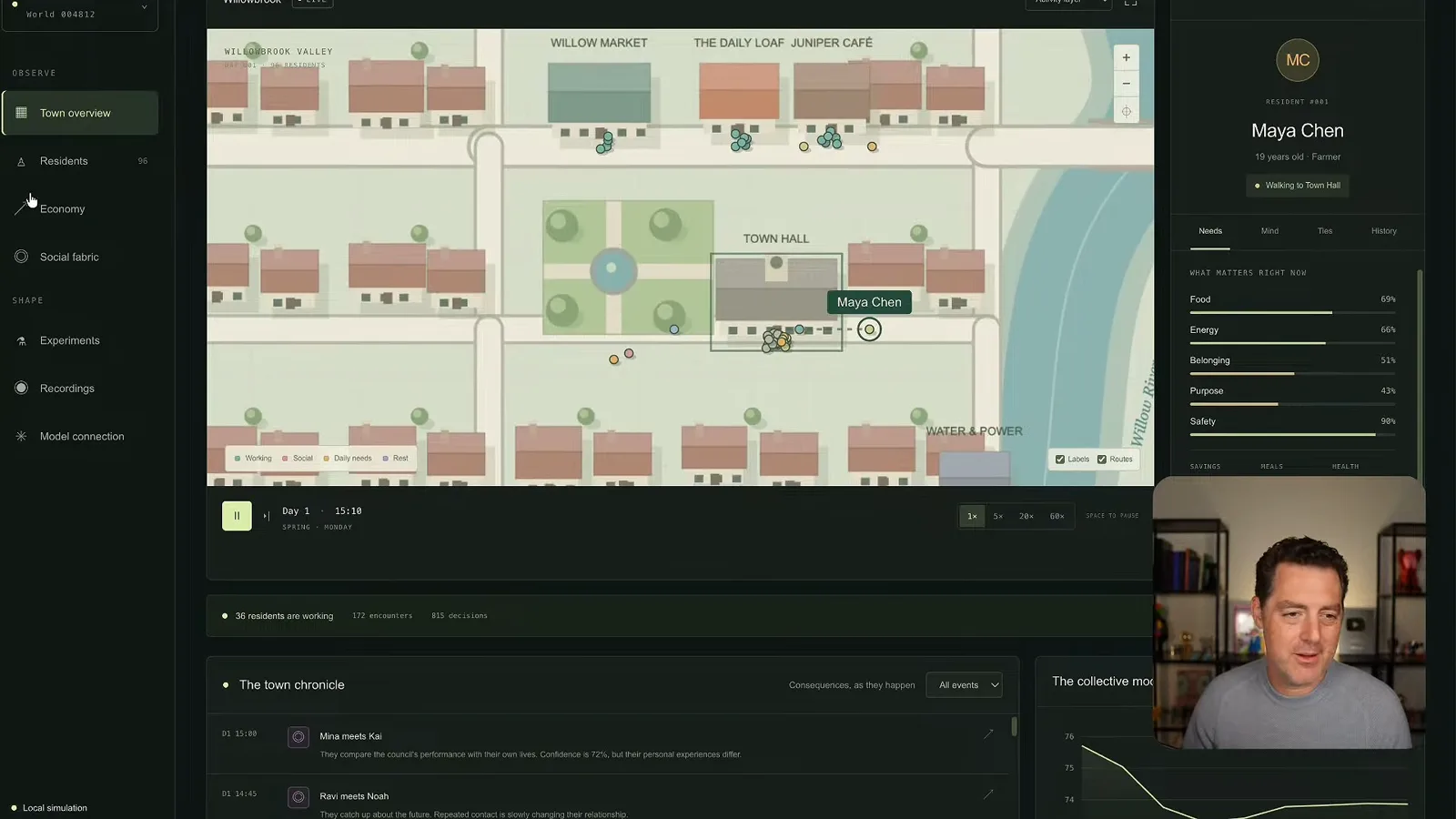
Commons is a small town simulation, with residents, an economy and social relationships. I describe it as a visualization of a simulated town's activity. It also offers experiments such as a dry season, patient zero and a power outage, features I did not specifically request in my simple prompt.
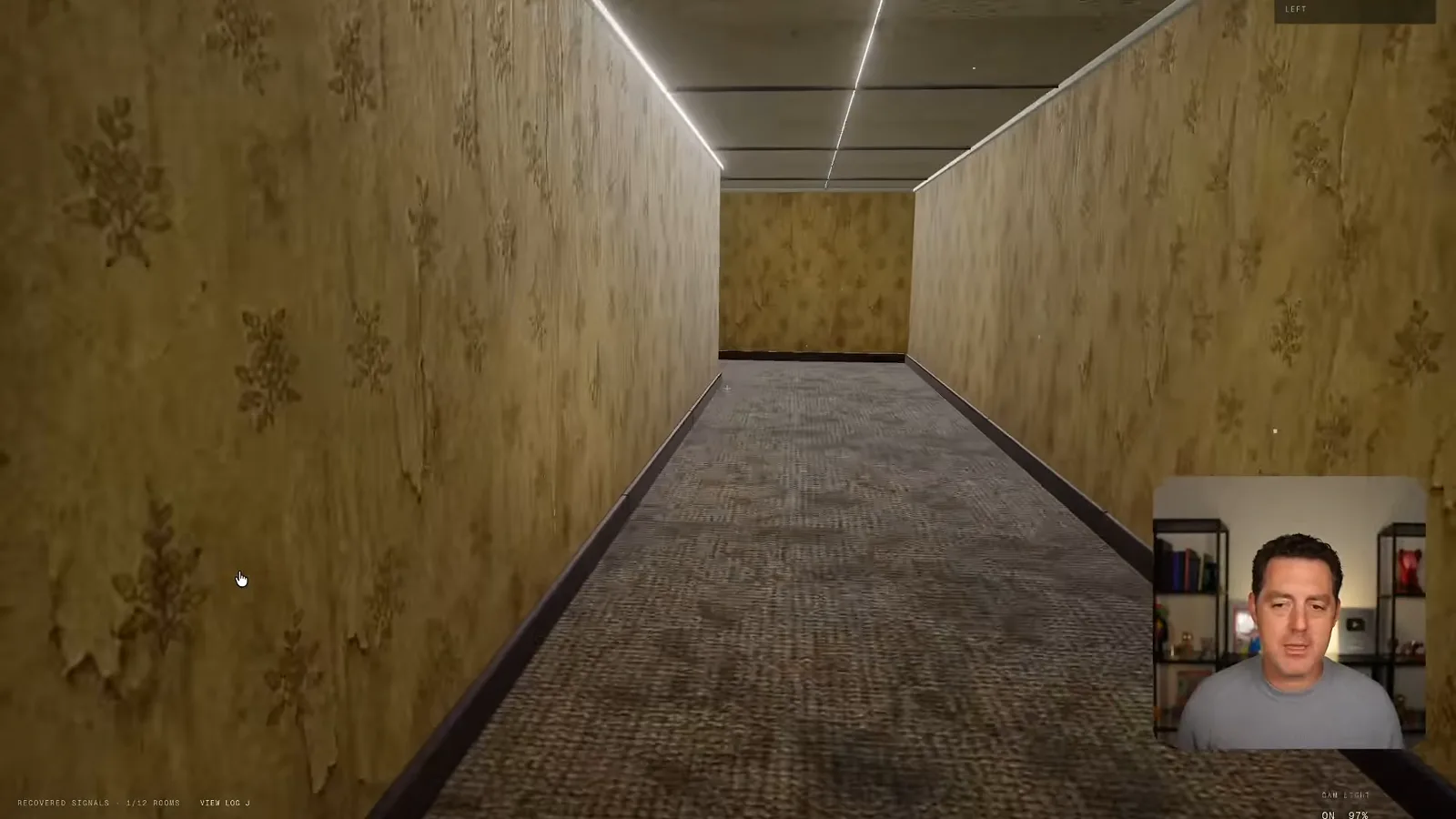
A 3D liminal-space horror game took a few prompts. I asked for a realistic environment, a subtle adversary and jump scares later in the experience; Astra generated the assets and textures. I explore its corridors, nursery and pool, though the expected shadow figure does not appear in the portion shown.
Additional demos and viewer questions
He shows further games and websites, then answers questions about design, maintainability, speed and untested tools. He distinguishes estimates and predictions from confirmed details.
Other experiments include a small GTA-style game, a manga and writing samples. A larger GTA attempt ran for days but was taking too long to finish. I also try a laundromat simulator; I cannot get the interaction working during the live demonstration, despite having seen it work before.
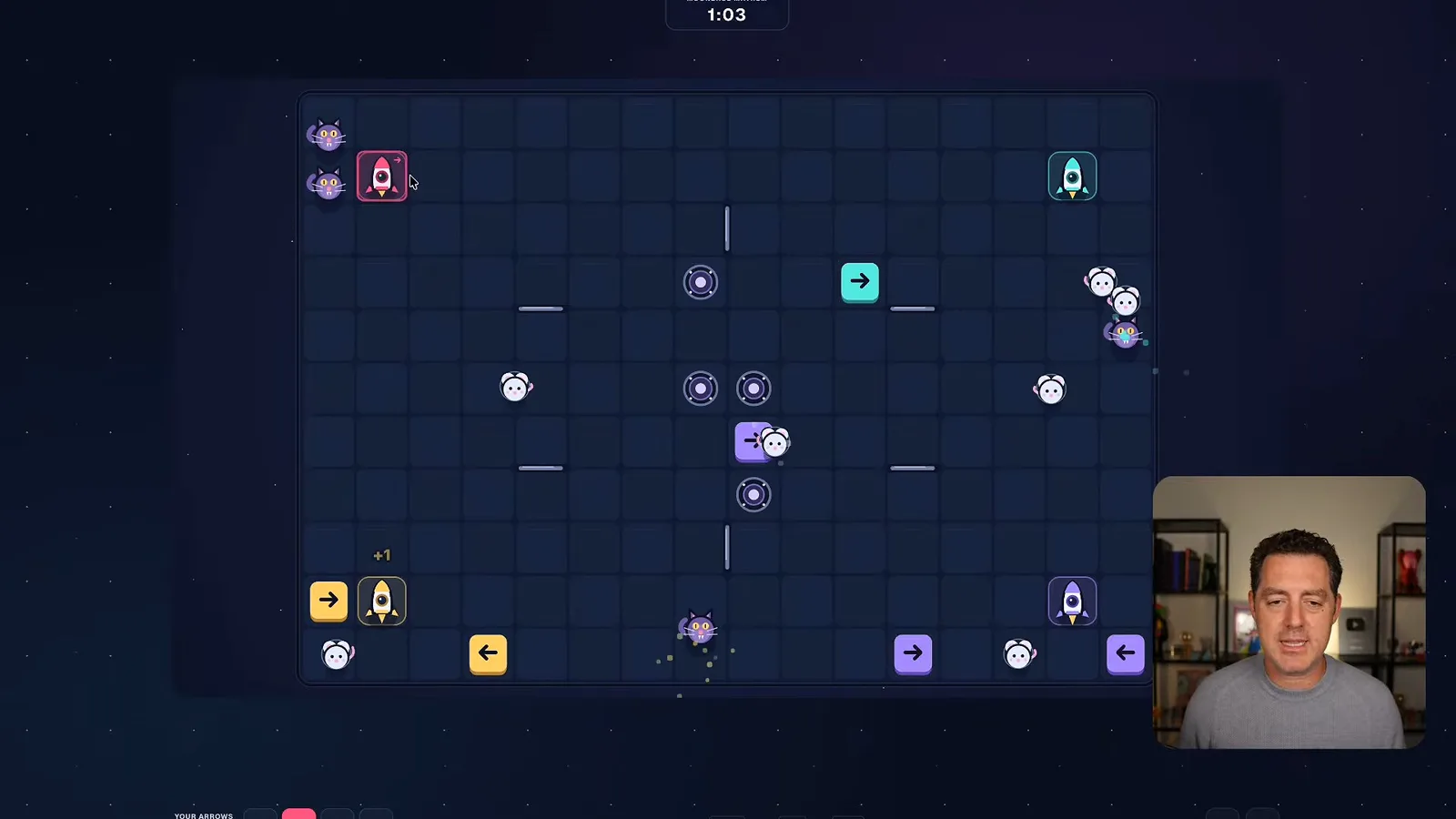
A Choo Choo Rocket-inspired game uses arrows to direct mice into a player's rocket while competitors try to redirect them. This one took a few prompts, and I find it better than the games I had managed to build with Fable 5.1. I also show basic sites for a phone, an apple orchard and rubber ducks; their default flat designs are less impressive.
The website examples were built with one prompt, and I expect a little direction could improve their design. Returning to Cloudtop Chaos, I estimate it took about four minutes of my own attention and perhaps an hour of model work overall. Those numbers are estimates, and the earlier follow-up prompt remains part of the process.
Asked about image generation, I have not heard confirmation of a new image model and think it is still using GPT Image 2. I did not run the requested FreeCAD or OpenCAD benchmarks; a Blender experiment slowed my computer while I was preparing the other demos. I would like to test dedicated 3D workflows later.
For front-end design, I think Fable may have a slight edge in an unguided first result, while Astra is more steerable. Asked whether I tested a maintainable, extensible application instead of single-page games, my answer is largely no. A longer /goal run using a more flexible stack would be a better test of that question.
I prefer Astra to Fable for my own tasks and believe it is cheaper on a cost-per-completed-task basis, not necessarily per token. I have not tried it with Hermes; after the effort of maintaining OpenClaw, I was reluctant to repeat the setup, and I have been using Grokbot instead. I plan to collect and publish the prompts for the demos.
Astra feels fast to me, though not as fast as the fastest models, and I have not tested its fast mode. I have little confirmed information about what changed under the hood. My suggestion that it has six to ten trillion parameters is speculation, not a published specification.
Long-running work and closing thoughts
Berman describes learning to prompt longer runs and speculates about smaller distilled models. He closes with his early assessment of Astra.
Initially, my runs tended to finish after about 30 minutes regardless of task difficulty. Better prompting helped them run longer; the city-building /goal thread went for five days until I stopped it, and I restart it during the stream. I do not know when it would otherwise have stopped.
I expect smaller, cheaper versions to follow and speculate that they could be distilled from Astra. Distillation trains a smaller model using outputs from a larger one, but the names and release of any such variants are predictions rather than announcements. I also do not know whether market-research work is represented in GDPval.
Astra was available to a limited group when I streamed, with wider access still rolling out. My conclusion from early use is that its game generation, knowledge work and browser control are particularly impressive, even as benchmark rankings, default design choices and the cost of long runs deserve closer scrutiny. I plan further demonstrations as I test it more.
같은 채널의 다른 글
 34:21EN
 Matthew Berman· 2026년 10월 27일Matthew Berman Examines Anthropic’s IPO Filing, AI Growth and GovernanceMatthew Berman, Sam Altman · Forward FutureThe presenter reviews the S-1’s financial metrics, compute strategy and voting structure while questioning the tension between rapid AI development and safety.
 25:50ENMatthew Berman· 2026년 10월 24일Kimi K3.1 Pro Tested: Strong 3D Demos, Uneven Results and Competitive PricingMatthew Berman · Forward FutureMatthew Berman tests the open-weight model on coding, 3D rendering and visual explanations, then compares benchmark results and prices.
 32:20ENMatthew Berman· 2026년 10월 23일Who Is Local AI For? The Costs, Trade-offs and a Hybrid FutureMatthew Berman · Forward FutureMatthew Berman weighs data control and independence against hardware cost, setup complexity and inference speed.
 1:03:37ENMatthew Berman· 2026년 10월 23일Matthew Berman’s Team Tests Kimi K3.1 on Animation, Games, and ChartsMatthew Berman, Alex, Brian · Forward FutureA live team AMA turns into an informal test of Kimi K3.1, from personal-agent workflows to motion graphics, a browser game, and a benchmark chart.
 0:53ENMatthew Berman· 2026년 10월 22일Sam Altman on AI and the Discovery of New KnowledgeSam Altman · OpenAIAltman expects progress in mathematical discovery to extend to biology, materials and energy.
 0:22ENMatthew Berman· 2026년 10월 21일A Robot Bodyguard Video Shows Dramatic Rescue ScenariosMatthew Berman · Forward FutureMatthew Berman reacts to a short robot demonstration depicting fighting and vehicle-rescue scenarios.