30 秒でわかる
In this August 18, 2023 news roundup, Matthew Berman discusses research on CAPTCHAs, the failure to substantiate LK-99's claimed room-temperature superconductivity, robots, OpenAI, medical and coding models, AI video and music, simulated agents, Google products and safety. His forecasts and the contemporary product claims are presented as views from that moment, not guarantees of later results. The medical examples concern research and developer claims, not proof of clinical readiness. The video contains no identified sponsor segment.
- 1CAPTCHAs under pressureBerman highlights a study comparing humans and automated solvers across specific challenges and argues that spam economics matter.
- 2LK-99's disputed claimHe reviews reporting that sample behavior and a resistivity transition could be explained without room-temperature superconductivity.
- 3Medical AI hopes and limitsBerman discusses GPT-4 research and DoctorGPT developer claims. Neither exam-style results nor a model release establishes clinical safety or efficacy.
- 4Moderation as an iterative processPolicy experts create labeled examples, compare them with GPT-4's labels, and revise ambiguous rules. Human review remains important.
- 5Generative agent simulationsA Stanford and Google research project models characters with routines and interactions; Berman imagines possible uses in future games.
- 6Safety and red teamingBerman reviews concern about testing fast-moving models and argues that security and safety risks deserve serious attention.
ポイント
- In a 2023 study, automated solvers outperformed humans on some tested CAPTCHA types; the result does not establish that every CAPTCHA is ineffective.
- Independent investigations found strong alternative explanations for LK-99's purported superconducting signatures.
- Medical question-answering and exam performance are not equivalent to safe, validated medical practice.
- OpenAI described an iterative moderation workflow that compares model labels with human policy experts and refines the policy.
- Generative agents produced simulated social behavior in a research environment, not evidence that the agents actually have human lives.
- Berman sees benefits in AI tools while warning that safety testing, security and effects on publishers need attention.
チャプターごとに整えた全文を読む
CAPTCHAs, LK-99 and robots
Berman discusses automated CAPTCHA tests and the evidence against LK-99's claimed superconductivity. He then compares quoted prices for Unitree and Boston Dynamics robots.
In this August 2023 roundup, I start with a study of CAPTCHAs: those image selections, puzzles and other tests designed to distinguish people from automated traffic. The researchers compared human and automated performance on several challenge types and found that bots could be faster and more accurate on some of the tested tasks. That result concerns the evaluated systems and challenges, not every CAPTCHA or every anti-abuse defense.
Elon Musk argues that subscription payments can make large-scale bot activity more costly on X. In my own experience running companies, raising the cost of spam can help discourage it. This is an economic argument, not proof that a credit card or subscription by itself eliminates automated abuse.
LK-99, a material that a South Korean team claimed could superconduct at room temperature, attracted enormous attention. By the time of this video, independent work discussed in Nature had found strong reasons to doubt that interpretation. The partial levitation in the original demonstration was not enough on its own to establish superconductivity.

Researchers also examined the reported drop in resistivity. An impurity, copper sulfide, undergoes a transition at a similar temperature and can explain that feature without requiring a superconductor. Although the initial claim was disappointing, I enjoyed watching so many people become interested in materials science and the process of checking a remarkable result.
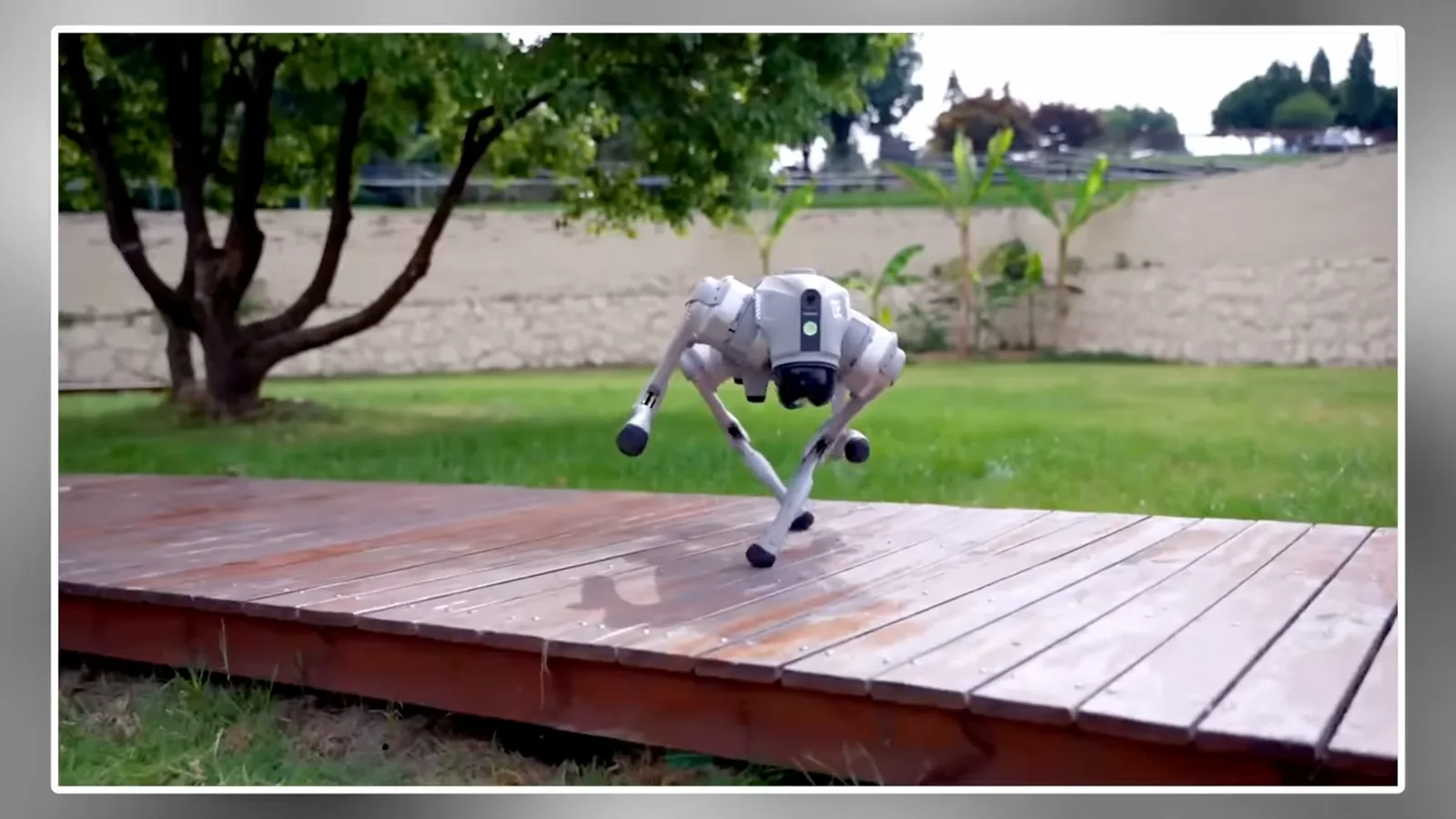
Unitree introduced a humanoid robot at a quoted price around $90,000, while I compare Boston Dynamics' Spot at $75,000 with a Unitree quadruped advertised from about $1,600. These were 2023 figures for different products and configurations, not like-for-like performance comparisons. Unitree attributed some cost reduction to its own lidar; I am unsure how much that alone explains the difference.
OpenAI, medicine and coding models
He covers OpenAI's acquisition and contemporary financial speculation. Medical research claims and Stability AI's coding model lead to a discussion of potential productivity benefits and limits.
OpenAI acquired Global Illumination, the team behind a Minecraft-like open-source game project. OpenAI said the team would work on core products including ChatGPT. I wonder whether the acquisition is primarily about bringing in talent or whether its game-building experience may have broader uses; that is my speculation, not the company's announced reason.
Reports at the time estimated that operating ChatGPT cost $700,000 a day and speculated about OpenAI's finances. The figure is an outside estimate, not independently established here, and does not establish that bankruptcy was imminent. I am skeptical of the bankruptcy prediction because of ChatGPT's popularity, OpenAI's backers and the company's continued investment; that is my judgment, not a financial forecast to rely on.
Turning to health, I discuss Microsoft research on GPT-4's ability to structure clinical-trial criteria and answer medical questions. Such tasks could eventually help researchers work with complex studies or recruitment. Performance on a dataset or a narrow research task does not show that a model can diagnose, treat patients safely, or replace a clinician.
I also mention DoctorGPT, a Llama 2 7B-based project whose creator claimed it could pass the US medical licensing examination and run locally. The claim needs independent evaluation, including exactly which questions and conditions were used; it does not mean the model is a licensed doctor. I am optimistic that AI could improve access and cost, but those outcomes require real clinical validation.
Stability AI introduced StableCode, a coding-oriented model with roughly three billion parameters and a version supporting a 16,000-token context. The intended use includes integration with development tools such as Visual Studio Code. I like the possibility of making developers more productive, although generated code still needs to be checked and tested.
Moderation, defense and enterprise AI
Berman describes an iterative GPT-4 moderation process and the Pentagon's generative AI task force. He also discusses Azure-based enterprise deployments and privacy concerns.
OpenAI described using GPT-4 to help build and apply content policies. Policy specialists first label a small reference set, then GPT-4 independently labels the same examples after reading the policy. Experts examine disagreements, ask about the model's reasoning, clarify ambiguous rules and repeat the process.
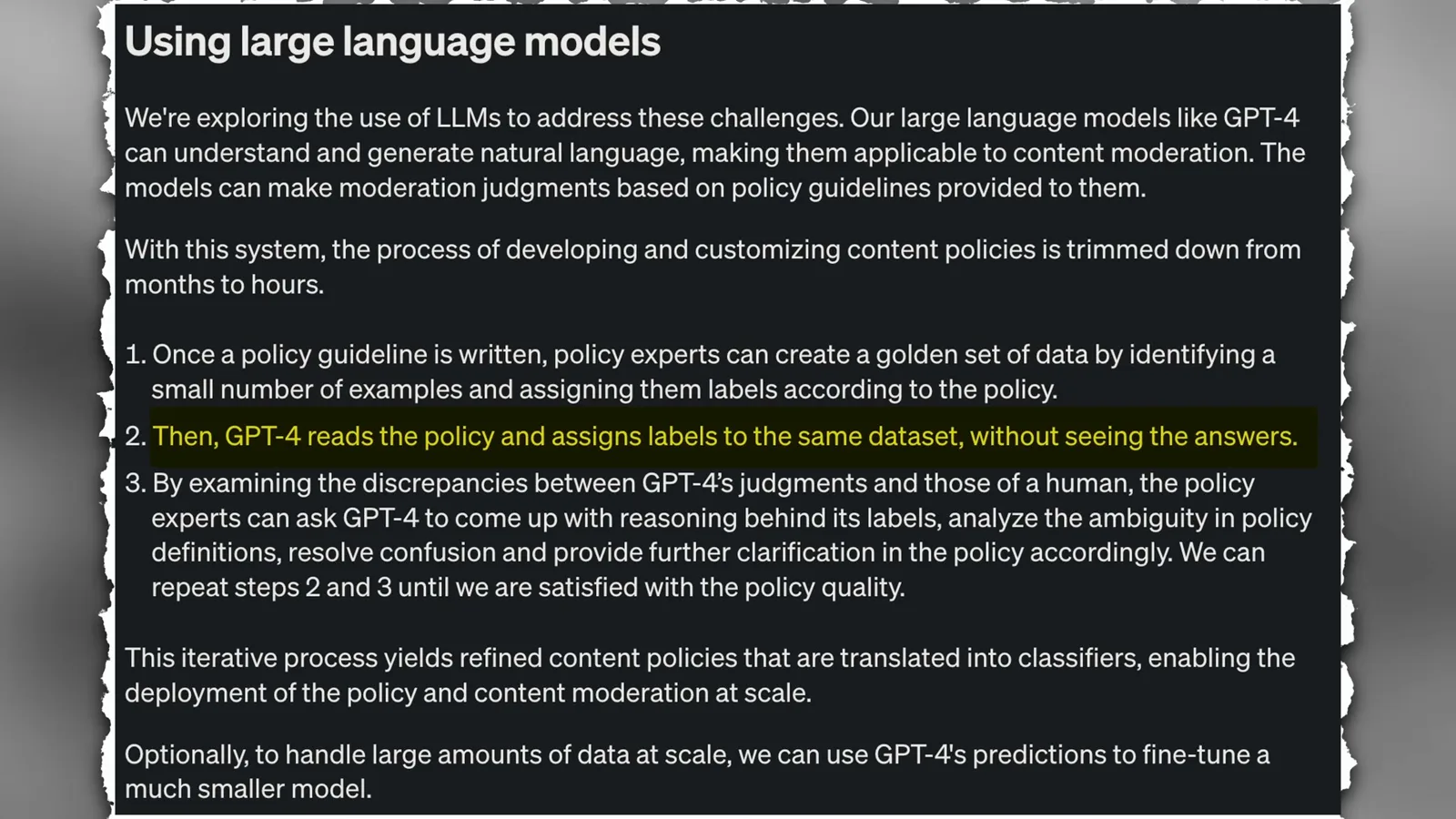
I see potential for moderation teams, but the claim that a tool is universally the best is not established by this example. OpenAI's own discussion notes bias and the need for monitoring, validation and human involvement; experienced reviewers outperformed GPT-4 in its reported comparison. The workflow is a way to refine a policy, not a guarantee of correct moderation.
The US Department of Defense announced a generative AI task force to assess and support responsible use of the technology across the department. I point out that military applications can include both defensive and offensive uses, though the announcement itself does not establish that this one group controls every such application.
I discuss Microsoft Azure ChatGPT as an enterprise deployment approach for organizations concerned about sending private information to a public chatbot. An Azure-hosted solution can be configured with enterprise controls, but it is still a cloud deployment: privacy and security depend on architecture, access controls and service terms, rather than following automatically from the product name.
Video, music and simulated agents
Runway's video extension and an AI video example precede reported talks about licensed music voices. Berman then looks at two projects inspired by generative agents.
Runway updated Gen-2 with an extension feature for generated video. The demonstration starts from a text prompt, an image, or both, and adds four seconds at a time. The narration calls the upper length 18 seconds, while the embedded tutorial says three extensions yield 16 seconds; the figures are inconsistent in the source, and these are historical product details.
For the AI video of the week, I show a clip suggested by gingerbot 5000 and posted by fugitive. I think it may have been made using WarpFusion, though that is my inference rather than a confirmed production credit. The example illustrates the creative effects that video tools were beginning to make accessible.
A report says Google and Universal Music were in early discussions about licensing artists' voices for AI-generated songs, potentially allowing fans to create music with participating artists' permission. These were talks, not a finalized universal licensing scheme. I contrast the idea with the removal of a viral song using AI-generated Drake and The Weeknd vocals, and hope artists can choose whether to participate.
I expect AI-generated music to enable more people to create, even if much of the resulting volume is low quality. A few exceptional pieces could still make the technology worthwhile. That is a prediction about a developing creative field, not a measurement of how it will turn out.
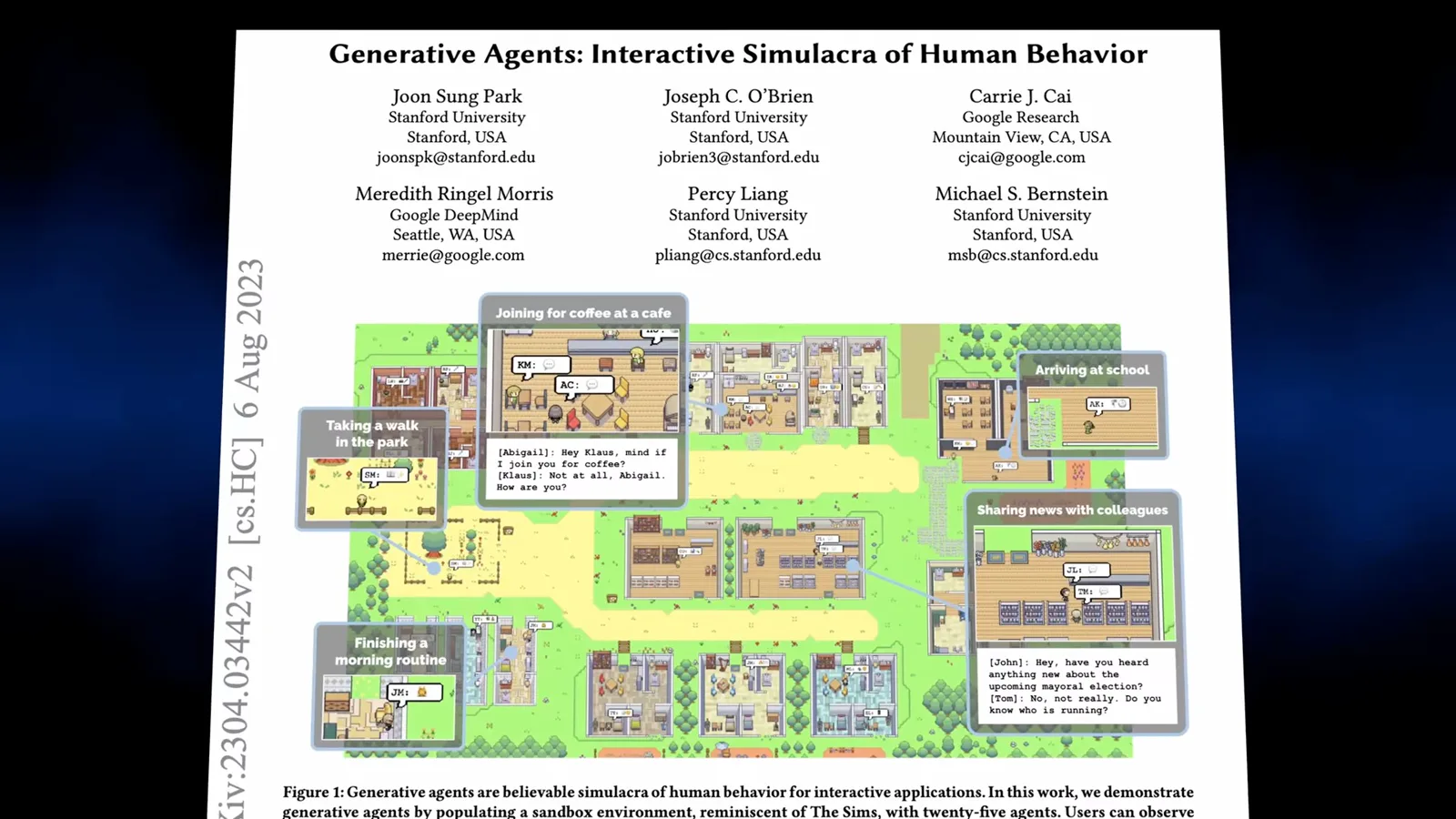
The Generative Agents research project from Stanford and Google simulated characters that plan routines, interact and form apparent social relationships in a small virtual environment. Its authors released code, and a16z published a related simulation inspired by the work. These are designed simulations of behavior, not evidence that the agents experience relationships as people do.
I can imagine such simulations making game characters more dynamic: an NPC in a game like Skyrim or Grand Theft Auto might continue activities outside the player's immediate view. That is a possible design direction, not a feature established by these research demonstrations.
Search, ChromeOS and AI safety
He considers Google's generative search features, a reported ChromeOS writing tool and their implications for publishers. The roundup ends with concerns about red teaming and security.
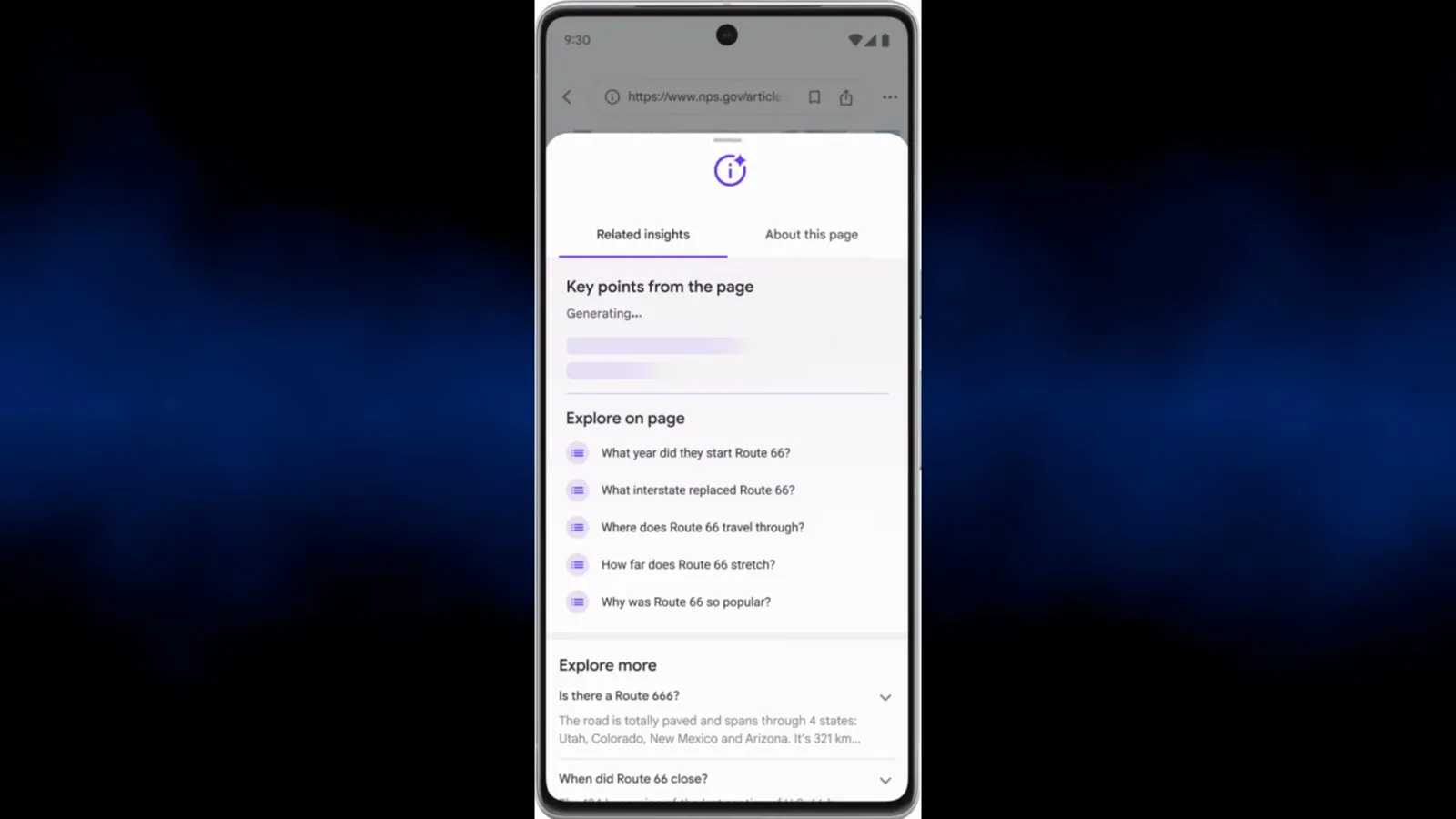
Google was adding generative search features such as explanations and summaries of web pages. I can see the convenience for users, but I worry that answers presented directly in search could reduce visits and revenue for publishers. Similar concerns could arise for AI summaries of YouTube videos; the scale of any effect would have to be measured.
A separate report discussed possible AI writing features for ChromeOS, including rewriting selected text, preset prompts and continuing a user's writing. At the time this was reported as an unannounced product, so it should be treated as a proposal rather than a confirmed release or promise about current availability.
Finally, an Associated Press report on red teaming highlights concerns that competition could push AI systems to market before their risks have been adequately tested. Language models learn patterns from large datasets rather than following only hand-written rules, which makes their behavior difficult to exhaustively predict. I believe security, training-data manipulation and other safety issues deserve serious attention, even as companies invest in safeguards.
同じチャンネルの記事
 34:21EN
 Matthew Berman· 2026年10月27日Matthew Berman Examines Anthropic’s IPO Filing, AI Growth and GovernanceMatthew Berman, Sam Altman · Forward FutureThe presenter reviews the S-1’s financial metrics, compute strategy and voting structure while questioning the tension between rapid AI development and safety.
 0:26ENMatthew Berman· 2026年10月25日Sam Altman on Human Values and Problem-Solving in an AI WorldSam Altman · OpenAIIn a short interview excerpt, Altman considers the enjoyment of solving hard problems and the human role in interpreting results.
 0:36ENMatthew Berman· 2026年10月25日Kimi K3.1 and a Rubik’s Cube Solver DemonstrationMatthew Berman · Forward FutureMatthew Berman shows a scrambled virtual cube being solved and gives the Kimi K3.1 test a favorable assessment.
 0:21ENMatthew Berman· 2026年10月24日An AI-Generated Kimi Benchmark Chart Used Invented ScoresMatthew Berman · Forward FutureMatthew Berman asks for a graph of Kimi K3.1 Pro benchmarks, then discovers that the displayed figures are illustrative placeholders.
 25:50ENMatthew Berman· 2026年10月24日Kimi K3.1 Pro Tested: Strong 3D Demos, Uneven Results and Competitive PricingMatthew Berman · Forward FutureMatthew Berman tests the open-weight model on coding, 3D rendering and visual explanations, then compares benchmark results and prices.
 32:20ENMatthew Berman· 2026年10月23日Who Is Local AI For? The Costs, Trade-offs and a Hybrid FutureMatthew Berman · Forward FutureMatthew Berman weighs data control and independence against hardware cost, setup complexity and inference speed.