30 秒でわかる
In this September 2023 roundup, Matthew Berman discusses Coca-Cola, Apple, prison data labeling, AI product announcements, Tesla, Meta, market infrastructure and AI safety. A claim about specimens shown at a Mexican hearing was unverified; his product predictions and comparisons reflect the information and views of the time.
- 1Unverified extraterrestrial claimJaime Maussan’s claims about the specimens were not proof of alien life; the reported find location was Peru.
- 2Stable Audio launchThe original service had free and paid tiers; describing the entire product as open source was not supported by its launch announcement.
- 3Tesla’s assisted drivingBerman describes his own mixed experience and predicts an advantage, without an independent safety comparison.
- 4Conditional copyright commitmentMicrosoft’s promise applied to eligible commercial customers and had safeguards and other conditions.
- 5AI and waterThe cited water estimate is scenario-dependent and should not be treated as a fixed cost per prompt.
ポイント
- Claims that specimens presented at a Mexican hearing were extraterrestrial were not established.
- The original Stable Audio announcement described free and paid service tiers; it did not establish that the whole product was open source.
- Tesla’s driver-assistance system required supervision, and Berman’s competitive assessment was his opinion.
- Microsoft’s 2023 Copilot copyright commitment covered eligible customers and claims subject to conditions.
- Water-use estimates and medical AI claims depend on the study, setting and workload.
- The roundup’s product prices and reported plans are historical, not current guidance.
チャプターごとに整えた全文を読む
AI-flavored soda and Apple
Berman discusses Coca-Cola’s Y3000, Apple’s 2023 event and his own predictions for Siri.
In this September 15, 2023 roundup, Matthew Berman discusses consumer AI products, Apple, autonomous driving, enterprise announcements and safety. His forecasts and reports describe that week’s information, not a current assessment of the products or their capabilities.
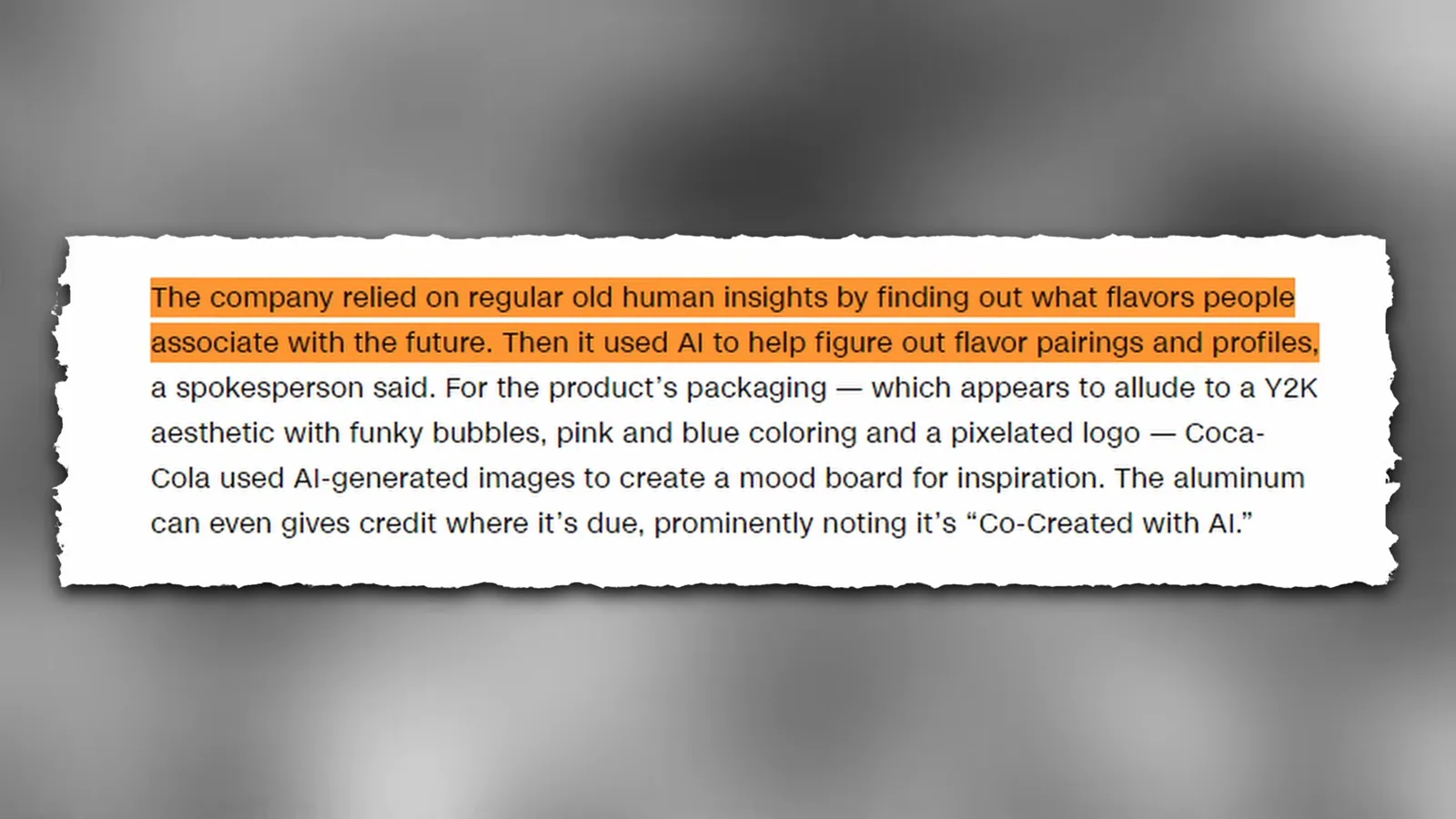
Coca-Cola introduced Y3000, a flavor developed with human insights and AI assistance. Berman cites reporting that the company gathered people’s associations with the future, used AI to explore flavor pairings and generated imagery for a packaging mood board. He sees the release as an attempt to reach younger consumers.
Apple’s 2023 iPhone event emphasized features such as computational photography and predictive text without, in Berman’s account, foregrounding the term AI. He predicts a future version of Siri powered by Apple’s reported internal AI work and running largely on device. That was his speculation, not a feature Apple announced at this event.
Berman imagines a voice assistant that could complete multi-step tasks and discusses spatial video capture for iPhone 15 Pro and Apple’s forthcoming Vision headset. He also shows an object-capture example for creating 3D assets. His assistant scenario is a hypothetical, not a demonstration of those capabilities.
Labor, disputed specimens and audio
The roundup covers prison data-labeling work, unverified claims presented at a Mexican hearing and Stability AI’s audio product.
A WIRED report describes optional prison work in Finland labeling Finnish-language real-estate text for a startup, Metroc. Berman cites a reported three-hour shift and approximately $1.67 an hour, and weighs digital-work experience against unease about low-paid prison labor. The article’s example is a specific program, not evidence about prison labor generally.
At a Mexican congressional hearing, journalist Jaime Maussan presented two specimens and claimed they were non-terrestrial. The reported origin was near Cusco in Peru, not Mexico. Their extraterrestrial origin was not established, and assertions about unknown DNA do not establish alien life; Berman himself says the claims were unproven and likely false.
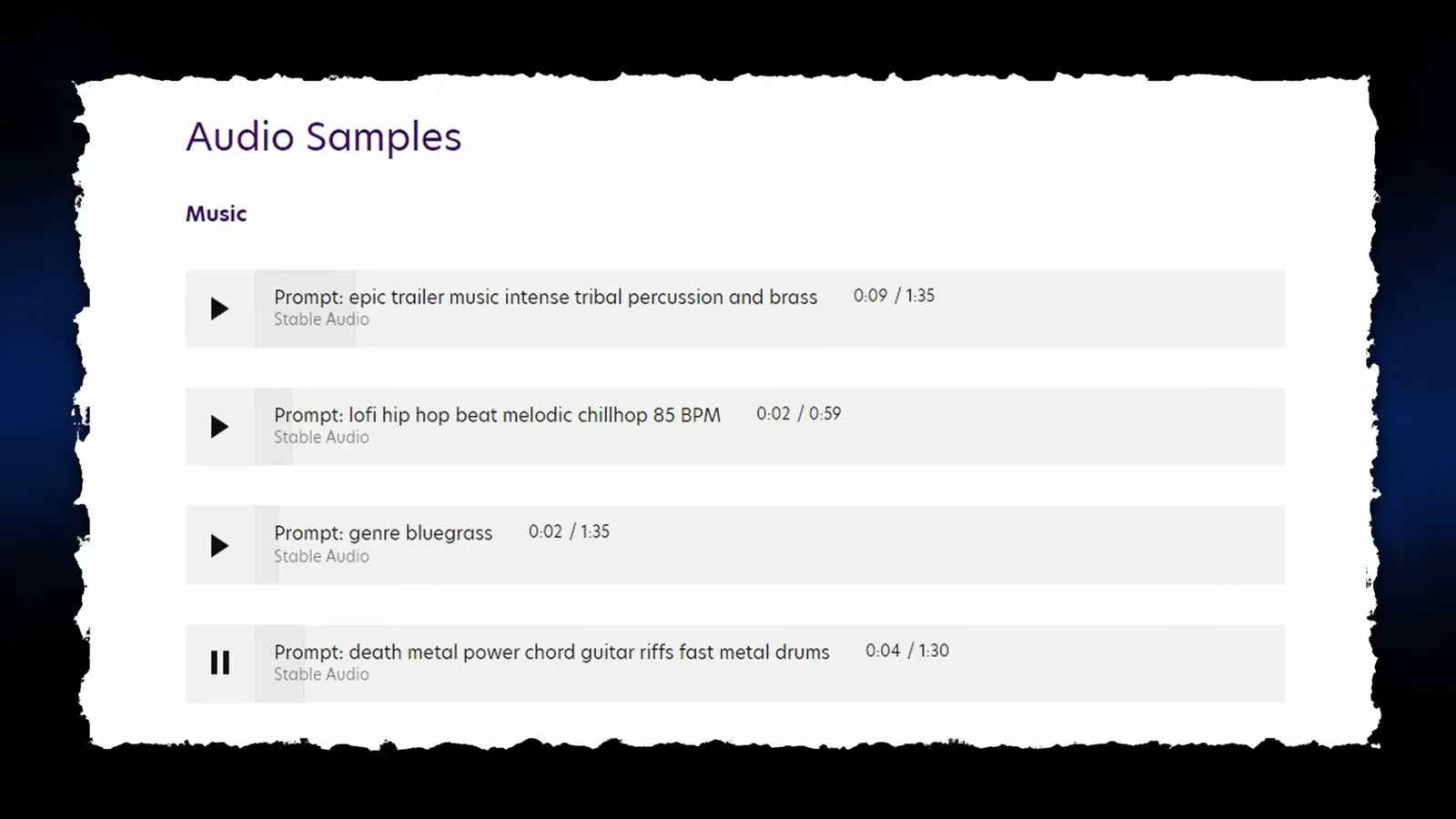
Stability AI introduced Stable Audio for text-to-audio generation. Berman calls the entire product open source and free, but the company’s September 2023 announcement described a free basic web tier and paid Pro tier; it did not establish that the original product’s model weights were open. Stable Audio Open was announced separately later.
AI services and autonomous driving
Berman discusses Slack, Claude Pro, Character.AI and Tesla, distinguishing his experience and predictions from verified comparisons.
Berman welcomes planned Slack features for summarizing threads, channel highlights and search, hoping they will help find important information in noisy conversations. He also discusses Anthropic’s then-new $20-per-month Claude Pro subscription, which promised higher usage and priority access. These are announcements and prices from 2023, not current availability or terms.
He cites a report that Character.AI had grown rapidly among younger mobile users, while saying he had not personally found much use for role-playing characters. The reported audience and usage estimates are attributed to that source and are not independently verified in the video.
Turning to Tesla, Berman describes reporting about a shift toward end-to-end neural-network driving and argues Tesla’s fleet data could be an advantage. He says his own test of the driver-assistance system was impressive but sometimes failed and required substantial attention. His claim that Tesla was far ahead of competitors is an opinion, not an independent safety comparison; drivers must supervise the system.
Models, markets and copyright
Reported Meta plans, Nasdaq’s order type and Microsoft’s conditional copyright commitment follow.
Berman cites reporting that Meta was assembling chips and infrastructure for a new model intended to compete with GPT-4, with training reportedly planned for 2024. These were reported intentions at the time, not a demonstrated result or a guarantee about a future model’s performance or licensing.
Nasdaq received SEC approval for its Dynamic M-ELO order type. According to Nasdaq, the system evaluates more than 140 market factors and adjusts a holding period by symbol; its reported test improvements concern its own fill-rate and market-impact measures. The approval did not mean every trade would avoid price increases or that all market orders used AI.
Microsoft announced a Copilot Copyright Commitment covering certain copyright claims for eligible commercial customers, including GitHub Copilot. Berman summarizes this as Microsoft assuming legal responsibility, but the commitment has conditions: customers must use the applicable safeguards and not deliberately seek infringing material. It is not blanket protection against every legal claim.
Safety, disclosure and resources
Berman discusses education, voluntary pledges, disclosure policies and water consumption.
He discusses essay-writing services that advertise to students, including services combining AI output with human intervention. Berman compares AI writing tools with calculators and speculates that education may place greater emphasis on using them after learning basics. That is his educational view, not a conclusion that writing skills no longer matter.
Berman reports voluntary AI-safety commitments by additional technology companies and Google’s announced $20 million responsible AI fund. He welcomes the efforts while questioning whether voluntary pledges and the amount of funding are sufficient. A voluntary commitment is not the same as a binding legal guarantee.
He discusses Google’s disclosure requirements for certain AI-altered election ads and Amazon’s requirement that Kindle publishers disclose AI-generated content. Berman favors disclosure to audiences. He also mentions copyright disputes; whether AI-assisted material qualifies for copyright protection depends on human authorship and jurisdiction, rather than a single rule covering every use of AI.
Berman turns to water used for cooling data centers and cites an estimate of roughly 500 milliliters for a series of 5 to 50 prompts. That figure comes from a particular research estimate and depends heavily on location, cooling, power generation, model and workload; it is not a fixed water cost for every user or prompt.
Research applications and global models
The video closes with concrete-design and lung-nodule examples, an AI video and a cautious account of YandexGPT.
An MIT researcher is developing algorithms to design concrete structures that use less material while preserving strength. Berman presents it as a promising research application; the example does not establish that every resulting design is ready for construction or that it achieves a specific emissions reduction.
He also describes Optellum’s software for assessing lung nodules using CT data, and suggests AI could help clinicians identify cancer earlier. Performance and clinical benefit depend on the population, validation and clinical workflow; the description is not evidence that the system can replace doctors or that every patient needs fewer scans.
Berman shares an AI-made recreation of a Pulp Fiction scene as his video of the week. He then discusses reports about YandexGPT and Russian-language performance, noting that he has not tested it and cannot substantiate a broad claim that it outperforms GPT-4. He closes by observing that AI development is a global competition.
同じチャンネルの記事
 34:21EN
 Matthew Berman· 2026年10月27日Matthew Berman Examines Anthropic’s IPO Filing, AI Growth and GovernanceMatthew Berman, Sam Altman · Forward FutureThe presenter reviews the S-1’s financial metrics, compute strategy and voting structure while questioning the tension between rapid AI development and safety.
 0:26ENMatthew Berman· 2026年10月25日Sam Altman on Human Values and Problem-Solving in an AI WorldSam Altman · OpenAIIn a short interview excerpt, Altman considers the enjoyment of solving hard problems and the human role in interpreting results.
 0:36ENMatthew Berman· 2026年10月25日Kimi K3.1 and a Rubik’s Cube Solver DemonstrationMatthew Berman · Forward FutureMatthew Berman shows a scrambled virtual cube being solved and gives the Kimi K3.1 test a favorable assessment.
 0:21ENMatthew Berman· 2026年10月24日An AI-Generated Kimi Benchmark Chart Used Invented ScoresMatthew Berman · Forward FutureMatthew Berman asks for a graph of Kimi K3.1 Pro benchmarks, then discovers that the displayed figures are illustrative placeholders.
 25:50ENMatthew Berman· 2026年10月24日Kimi K3.1 Pro Tested: Strong 3D Demos, Uneven Results and Competitive PricingMatthew Berman · Forward FutureMatthew Berman tests the open-weight model on coding, 3D rendering and visual explanations, then compares benchmark results and prices.
 32:20ENMatthew Berman· 2026年10月23日Who Is Local AI For? The Costs, Trade-offs and a Hybrid FutureMatthew Berman · Forward FutureMatthew Berman weighs data control and independence against hardware cost, setup complexity and inference speed.