30 秒でわかる
In this November 22, 2024 roundup, Matthew Berman discusses an AGI prediction, Figure’s BMW factory demonstration, FLUX.1 Tools, Qwen2.5-Turbo and several other AI releases. Company performance claims and future predictions are presented as reports from the time, not independently verified outcomes.
- 1Figure at BMWBrett Adcock reported faster operation and higher success for Figure 02 robots; some demonstration footage is sped up.
- 2Four FLUX toolsBlack Forest Labs showed image filling, depth and edge guidance, and image variation.
- 3A million-token contextQwen reported a larger context, a passkey retrieval result and faster time to first token for a specified long input.
- 4Geospatial scansNiantic described using location scans and visual positioning technology in its large geospatial model.
- 5Quantum error identificationGoogle DeepMind introduced AlphaQubit for identifying errors in quantum computers.
ポイント
- Musk’s proposed 2026 AGI timeline was a prediction, while Figure’s robot speed and success figures were company claims.
- FLUX.1 Tools added image editing and structural guidance through Fill, Depth, Canny and Redux.
- Qwen’s million-token retrieval and speed figures describe specific tests, not universal performance.
- Niantic’s geospatial work drew on location scans, raising questions about future uses of that data.
- AlphaQubit targets quantum error identification; it is one piece of the broader challenge of practical quantum computing.
チャプターごとに整えた全文を読む
AGI predictions and factory robots
Berman discusses Musk’s AGI forecast and Figure’s demonstration at BMW. He considers speed and safety constraints for robots.
In this November 2024 roundup, I begin with Elon Musk’s prediction that AGI would arrive by 2026 at the latest. His timelines have not always been accurate, and this is a forecast rather than an established deadline.
Figure CEO Brett Adcock shared footage of Figure 02 humanoid robots at a BMW factory. He claimed the autonomous fleet was 400% faster and had a sevenfold higher success rate; these are company-reported figures, and portions of the footage are sped up.
Moving faster is constrained by hardware such as actuators, but also by safety: a mistake at higher speed can be costly. I look forward to robots that could eventually help with household chores, though the factory demonstration does not establish that capability.
FLUX image controls
Black Forest Labs introduces Fill, Depth, Canny and Redux. Examples illustrate editing and guiding images.
Black Forest Labs announced FLUX.1 Tools for editing and guiding image generation rather than only generating images from scratch. The announcement describes open-access models in the dev series and access through its API; availability and licensing depend on the particular model.
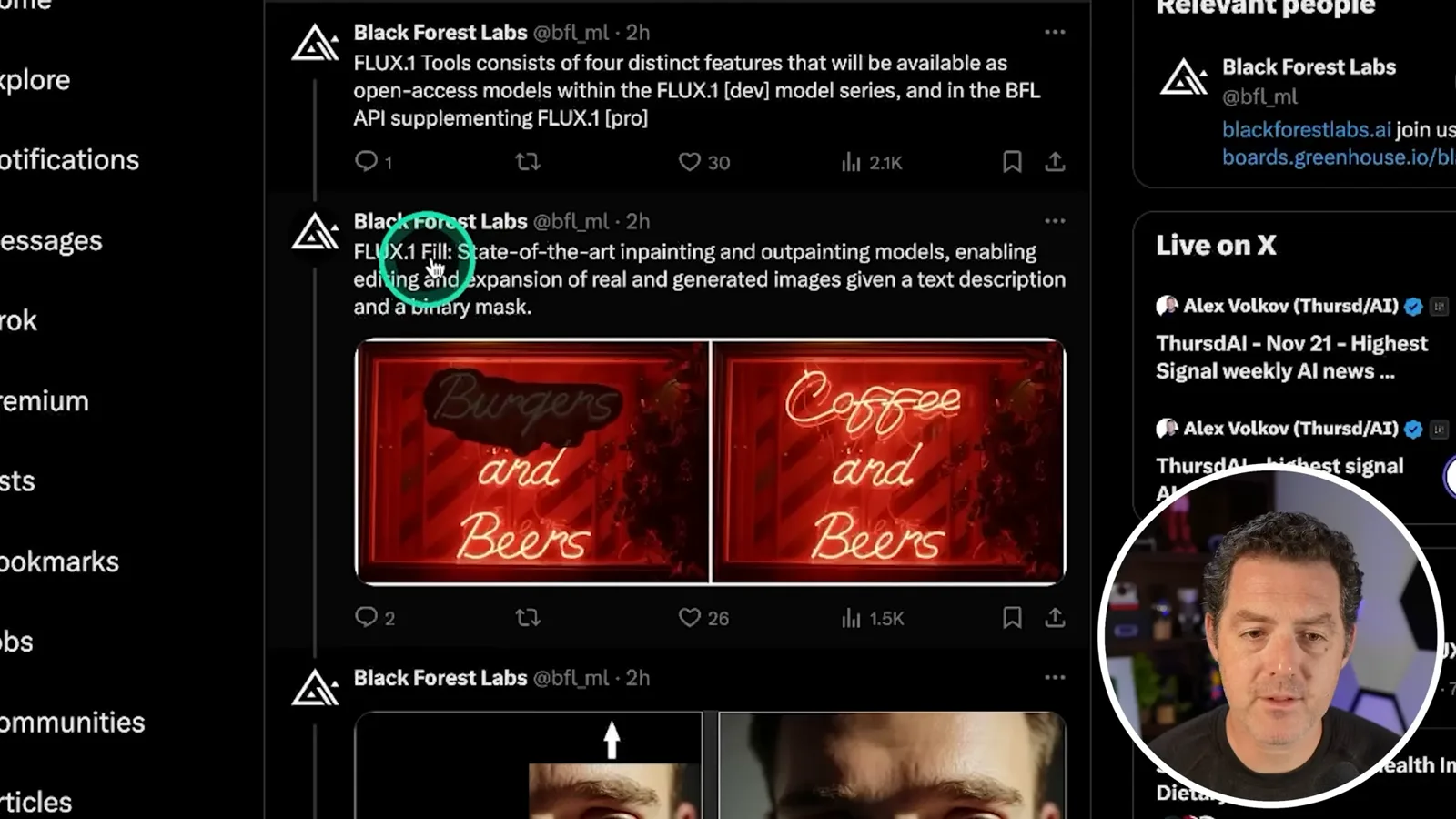
FLUX.1 Fill uses a text description and a binary mask for inpainting or outpainting. One example edits a sign, while another expands a small image of an eye into a larger portrait.
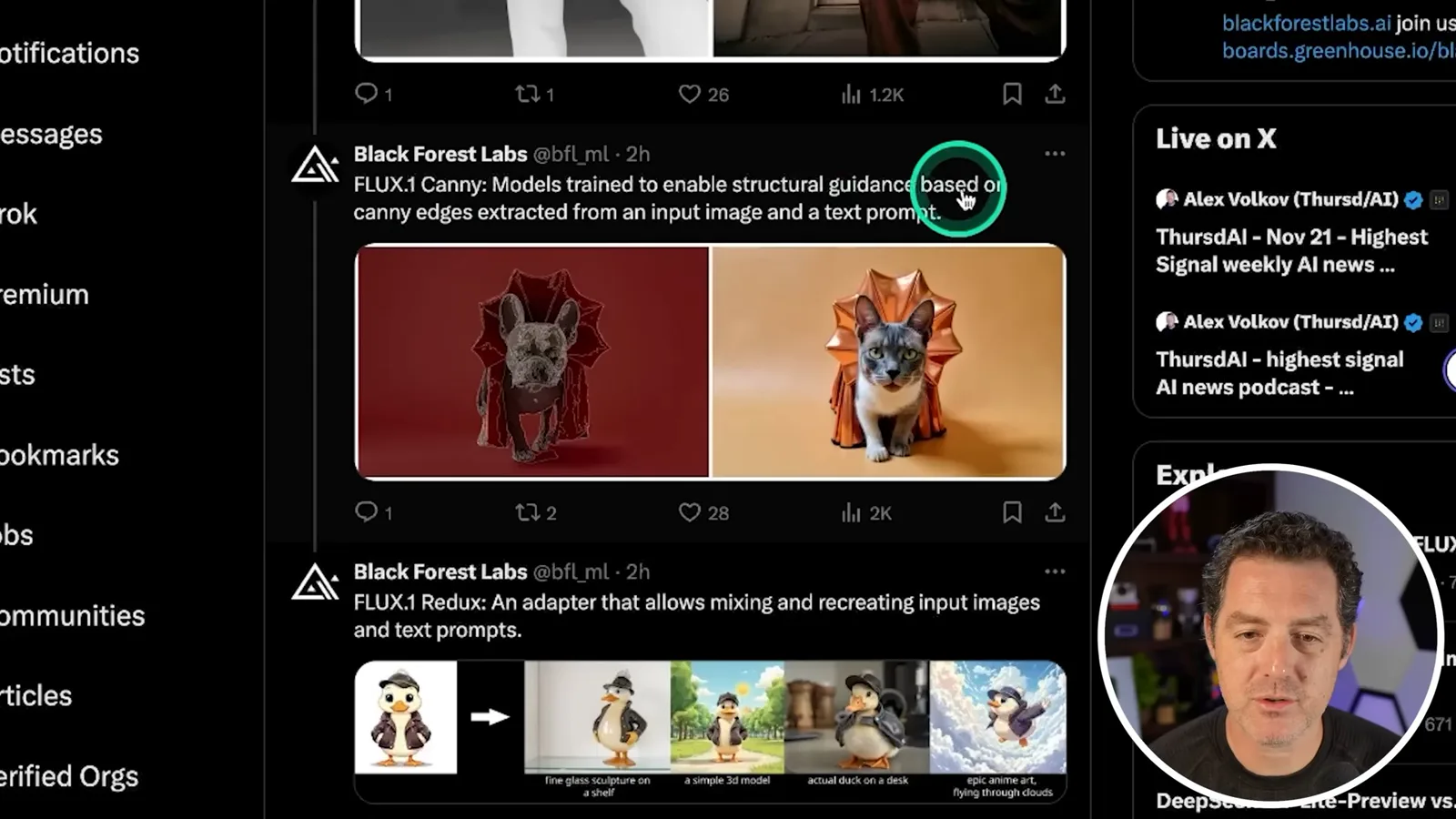
FLUX.1 Depth guides generation using a depth map extracted from an input image, while FLUX.1 Canny uses detected edges and a text prompt. Both provide structural guidance while letting the generated appearance change.
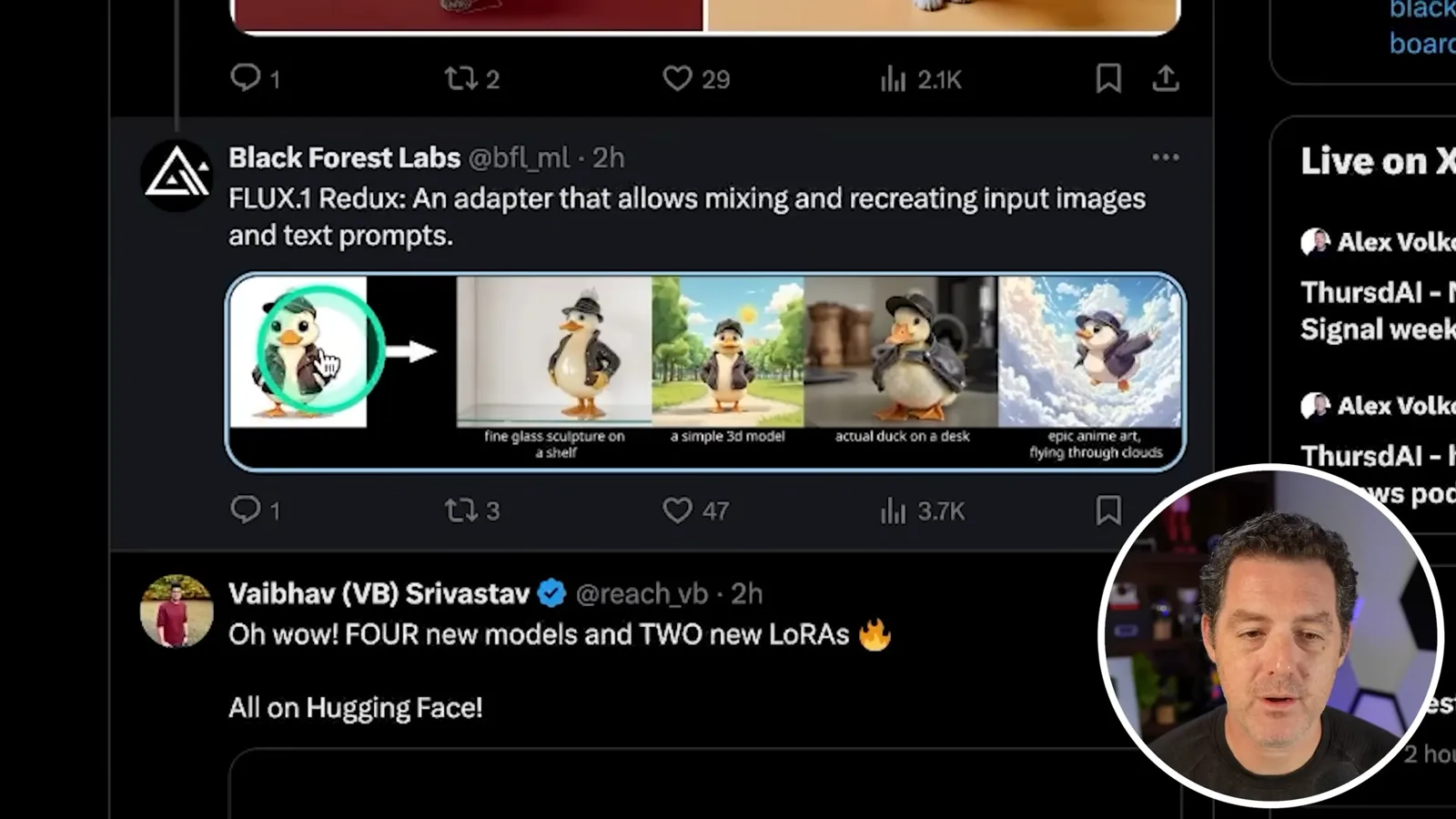
FLUX.1 Redux mixes or recreates an input image with a prompt. The demonstration takes a cartoon duck and produces versions such as a glass sculpture, a 3D model and an anime scene.
Long context and voice agents
Qwen reports longer context and faster processing. ElevenLabs introduces configurable conversational agents.
Qwen announced Qwen2.5-Turbo with a context window expanded from 128,000 to one million tokens. Its reported 100% score applies to a particular million-token passkey retrieval test, not every long-context task.
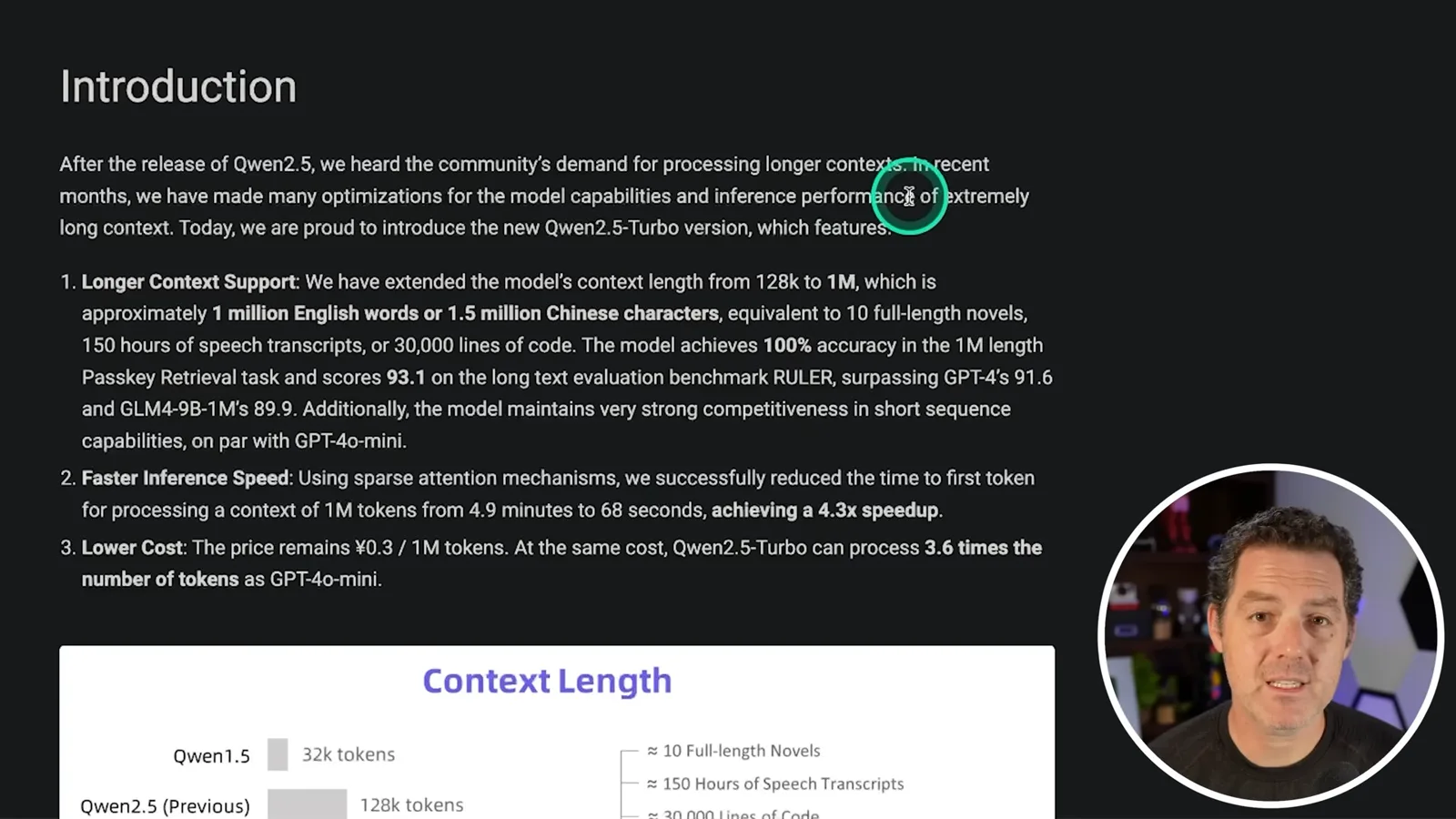
The announcement says time to first token for a million-token context fell from 4.9 minutes to 68 seconds, a 4.3-fold speedup, with the quoted price unchanged. These are the provider’s figures under its stated conditions, not a guarantee for every workload.
ElevenLabs introduced tools for building conversational agents with configurable voice and response length. Developers can provide a knowledge base through a file, URL or text and integrate a custom language model.
Mapping, music and memory
Niantic describes geospatial AI, Suno announces V4, and Gemini adds a memory feature.
Niantic described a large geospatial model drawing on scans from Pokémon GO and other products. Its visual positioning system uses a phone image and a 3D map built from scans of locations; I wonder how the company will eventually use the data, but its future business plans are speculation.
Suno announced its V4 music model with claims of better audio, sharper lyrics and more dynamic song structures. Its features include remastering existing tracks, lyric assistance and cover art; I play a sample and say it resembles contemporary pop.
Google began rolling out a Gemini Advanced feature for remembering a user’s interests and preferences. Users could ask it to remember information, view or edit it, delete it and see when it was used, according to the announcement.
Reasoning, quantum errors and writing
Berman covers desktop voice, a DeepSeek reasoning preview and AlphaQubit. He closes with GPT-4o’s writing update.
OpenAI brought Advanced Voice Mode to the desktop ChatGPT app. I welcome the feature even though I find voice mode occasionally buggy and repetitive, and I use ChatGPT and Perplexity regularly.
DeepSeek offered a preview of a reasoning model that spends time on a problem before responding. I welcome the prospect of an openly available reasoning model, but at the time of this video the model was not yet available to download.
Google DeepMind introduced AlphaQubit, an AI-based system for identifying errors in quantum computers. Noise makes quantum computations difficult, and better error decoding can help address that challenge; it does not by itself establish that practical everyday quantum computing has arrived.
OpenAI also announced a GPT-4o update intended to make creative writing more natural and useful, and improve responses to uploaded files. I have found language-model prose repetitive and full of filler, so I am interested in testing whether the update improves it.
同じチャンネルの記事
 25:50EN
 32:20EN
 0:22EN
 45:08EN
 0:32EN
 12:14EN