En 30 secondes
Matthew Berman tests Claude Sonnet 5.5 on an ocean simulation, browser game, Lego design app and Unreal Engine city. He finds impressive results but also clipping, sound problems and substantial compute use for the largest project. He compares company-reported benchmarks and prices with Opus 5.5.
- 1Ocean simulationA browser scene supports adjustable waves, weather, a yacht and an underwater view.
- 2Playable obstacle gameThe generated Three.js game includes multiple rounds and bots, with occasional clipping.
- 3Lego design workflowThe app pairs AI shape descriptions with programmatic part selection and build checks.
- 4A costly city demoThe Unreal Engine project took days and millions of tokens, and still showed visual defects.
- 5Benchmarks and priceThe displayed Sonnet and Opus scores are close on several tests, with lower quoted prices for Sonnet.
À retenir
- Sonnet generated interactive games and 3D scenes, though the demos still had visible and audio defects.
- The Lego app combines AI shape descriptions with programmatic part selection and checks.
- A large city simulation took multiple days and millions of tokens.
- The displayed benchmarks are close on several measures; the quoted Sonnet input and output prices are half those of Opus.
Lire le texte remanié, chapitre par chapitre
Ocean and game demonstrations
Berman shows an interactive ocean and a playable browser obstacle game. Both demonstrate capability while the game still has clipping.
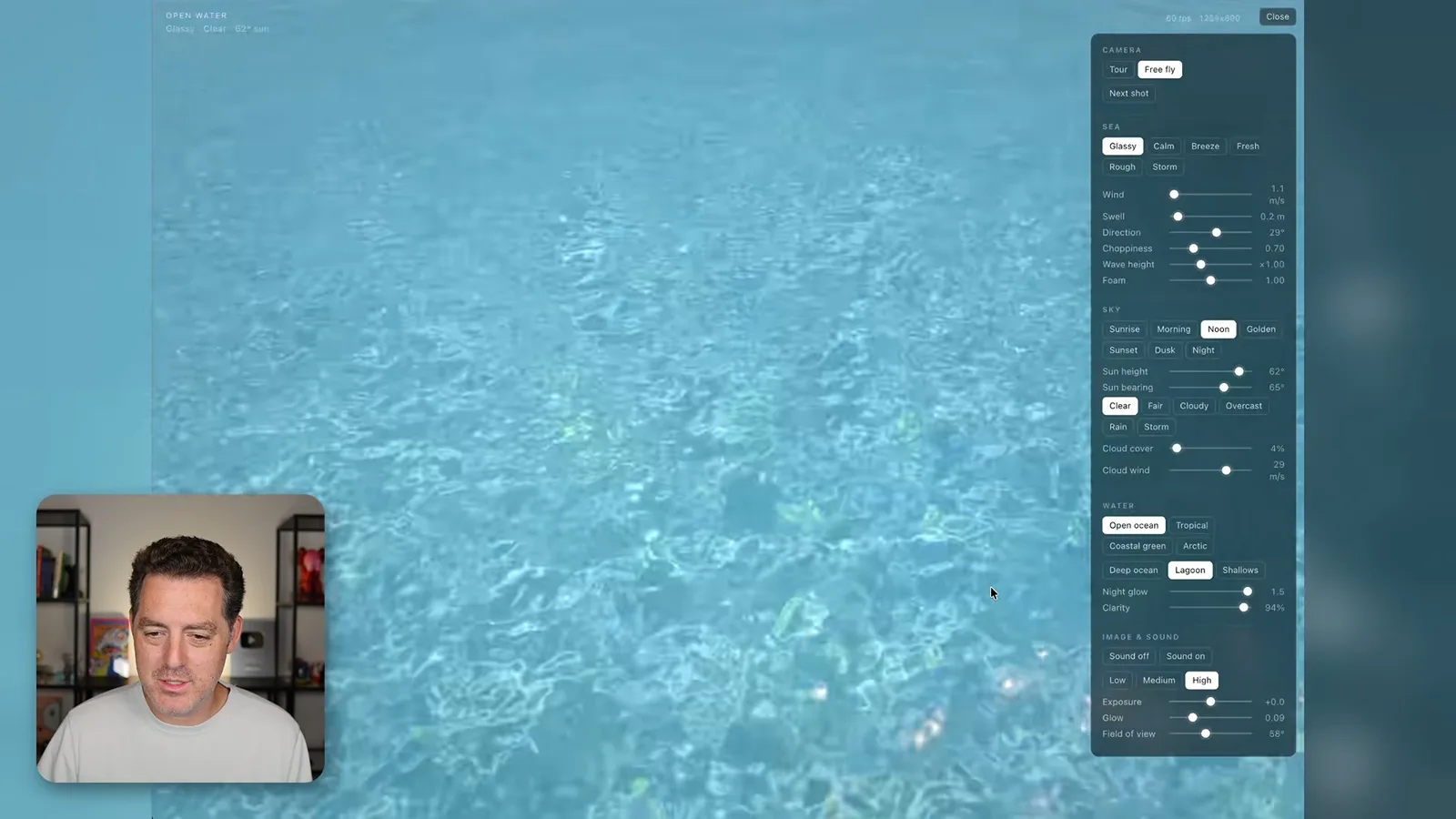
I have been testing Claude Sonnet 5.5 with early access. In my experience it is unusually capable for its price, and I will show both successful demos and their limitations. My first prompt asked for a browser-based 3D ocean with realistic waves, weather, a yacht and an underwater view.
The scene offers controls for sea state, time of day, cloud cover, waves and lighting. Reflections move across the water, the boat leaves a wake, and the camera can go underwater to see fish and shafts of light. I also asked the model to record and edit demo clips of the scene.
Next I asked for a playable Three.js Fall Guys-style game with 59 bots and multiple rounds. I explicitly asked the model to check its work using screenshots, video or gameplay. The result is fun in my test, with jumping, diving and obstacles, though I notice occasional clipping.
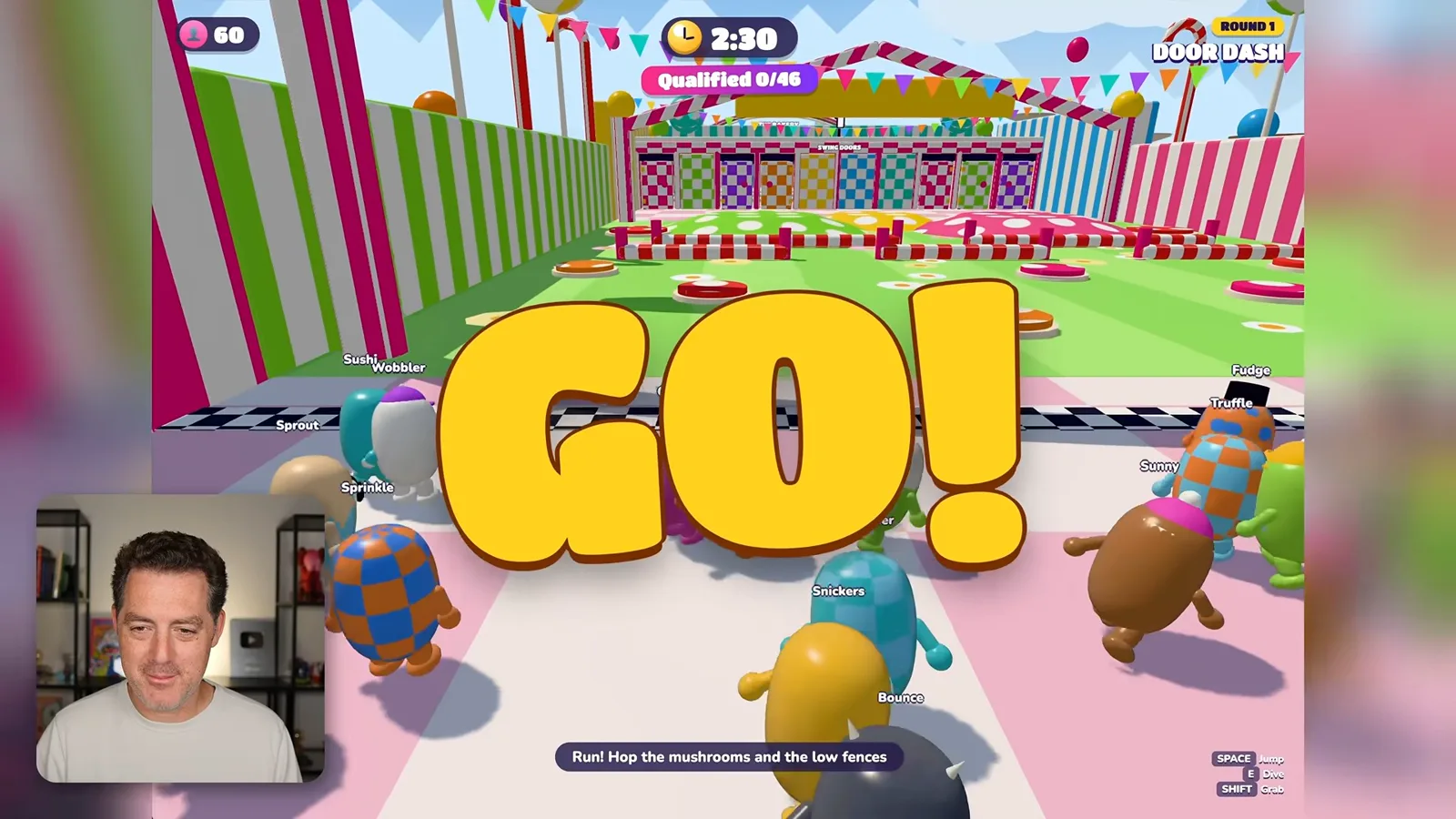
The game includes customization and many levels. In my experience Sonnet’s version is comparable to my Opus 5.5 version, and after improving my prompt I even find it more fun. That is a personal comparison of these builds rather than a general benchmark.
Lego, city and game projects
A Lego app produces parts and instructions, while a large Unreal city takes days to build. Other team demos show additional games and limitations.
A Lego design app takes a text request or image and produces a model using real parts and colors, with a parts list and step-by-step instructions. My prompt asked the AI to describe shapes while a program selects parts and checks connectivity, sending errors back for correction.
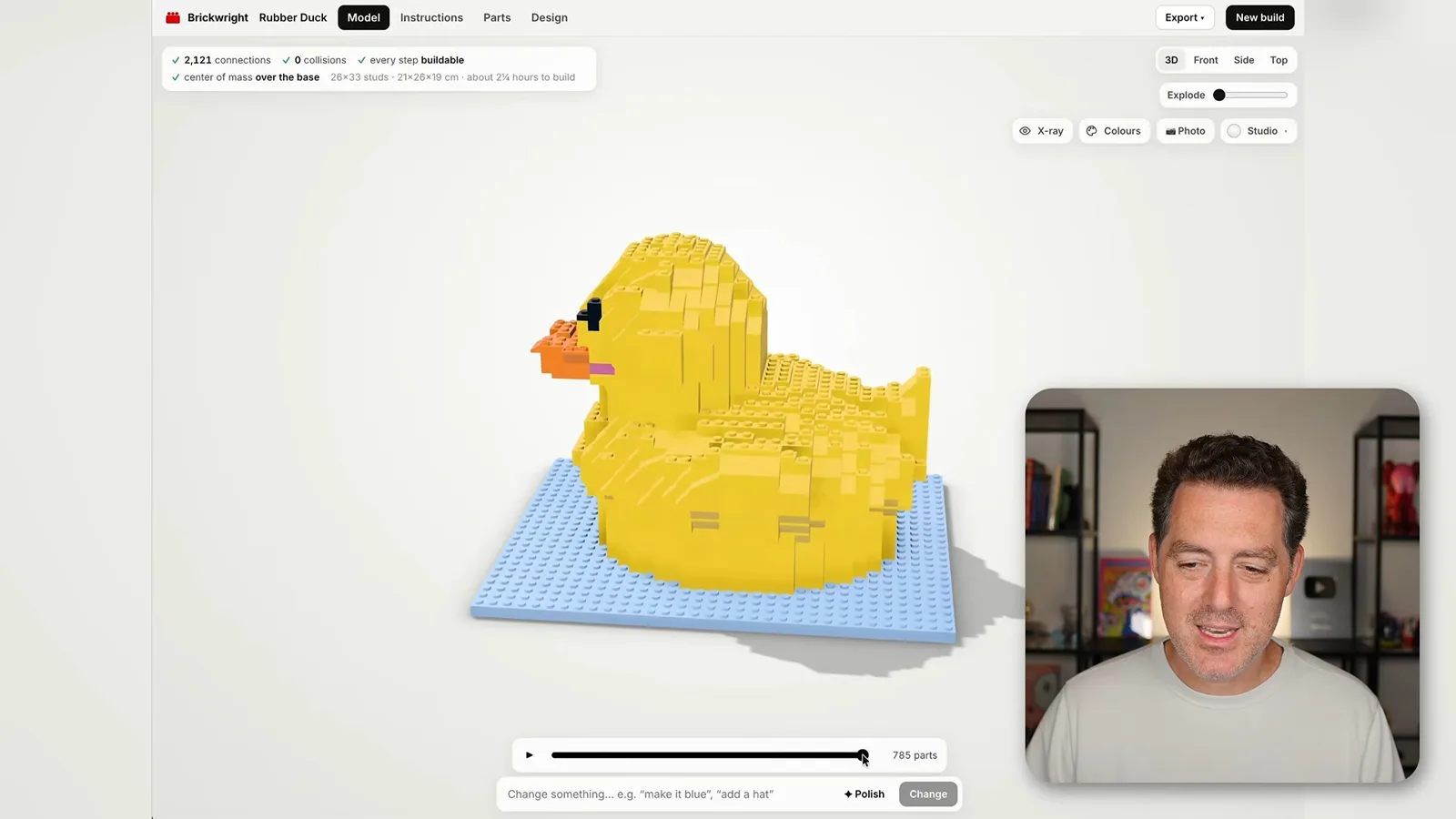
A ready-made rubber duck has 281 instruction steps. I can inspect it from different views, change lighting and export instructions, parts lists or model data. The exploded view is imperfect, but the demonstration shows a useful workflow rather than requiring the model to place every brick directly.
I also asked Sonnet to build a real-scale downtown San Francisco simulation in Unreal Engine using city data, moving people and vehicles. The prompt requested an event input that could make traffic, crowds and emergency services react, plus comparison with real photographs. Free assets had to be downloaded as well.
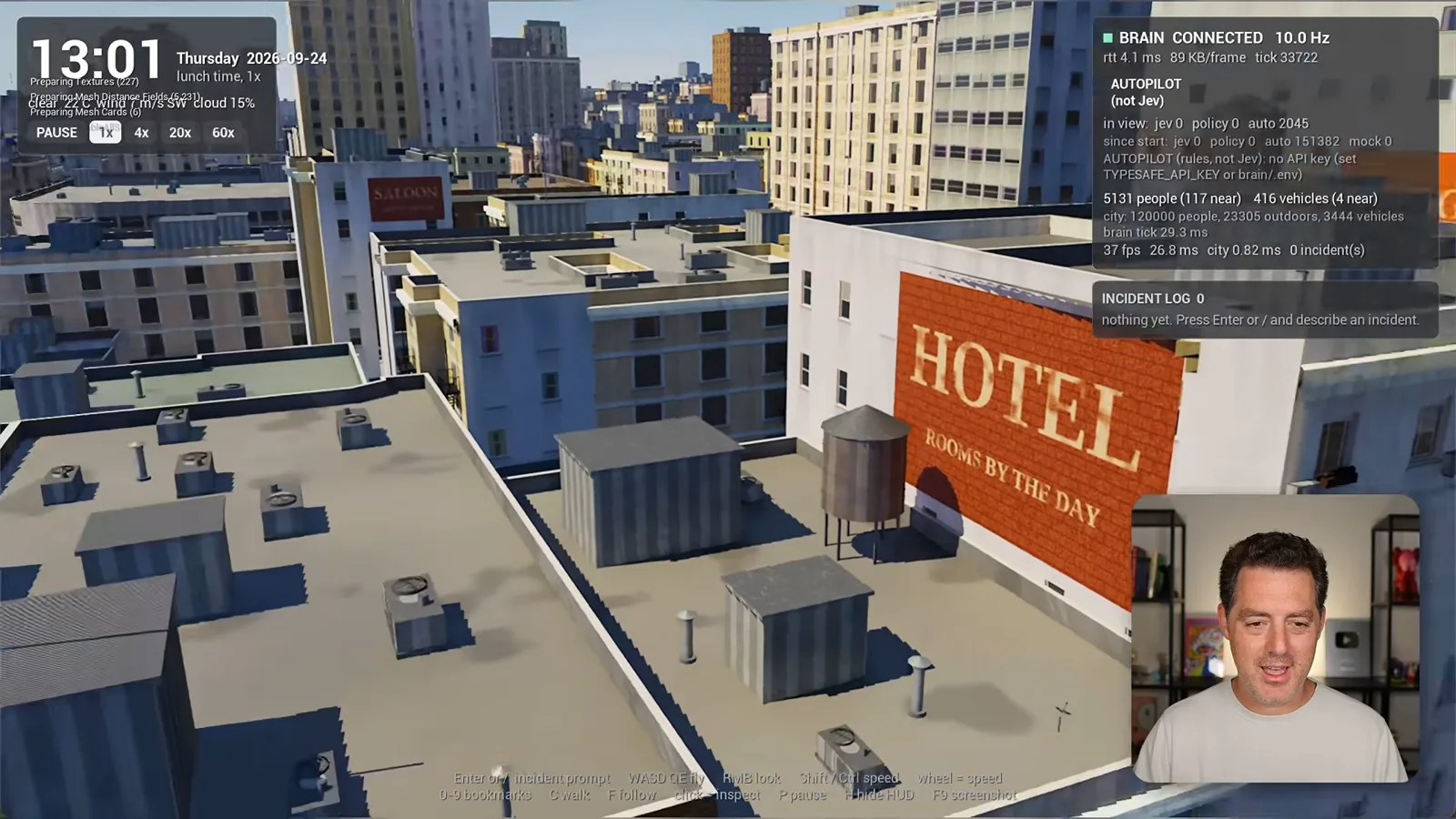
The result has recognizable buildings, people and traffic, but it can overload my computer and has shimmering and shadow problems. It took multiple days and millions of tokens. I am impressed by the result, but this is a demanding project rather than a quick one-prompt success.
My team also made an Age of Empires-style game, an Unreal city inspired by Batman, a realistic Mario scene and a racing game. These demos show a range of playable or explorable results, with visual flaws such as shimmering windows. Across my attempts, sound and music remain a weak point.
Benchmarks, price and assessment
Berman compares company-reported scores and API rates with Opus, then gives his personal verdict.
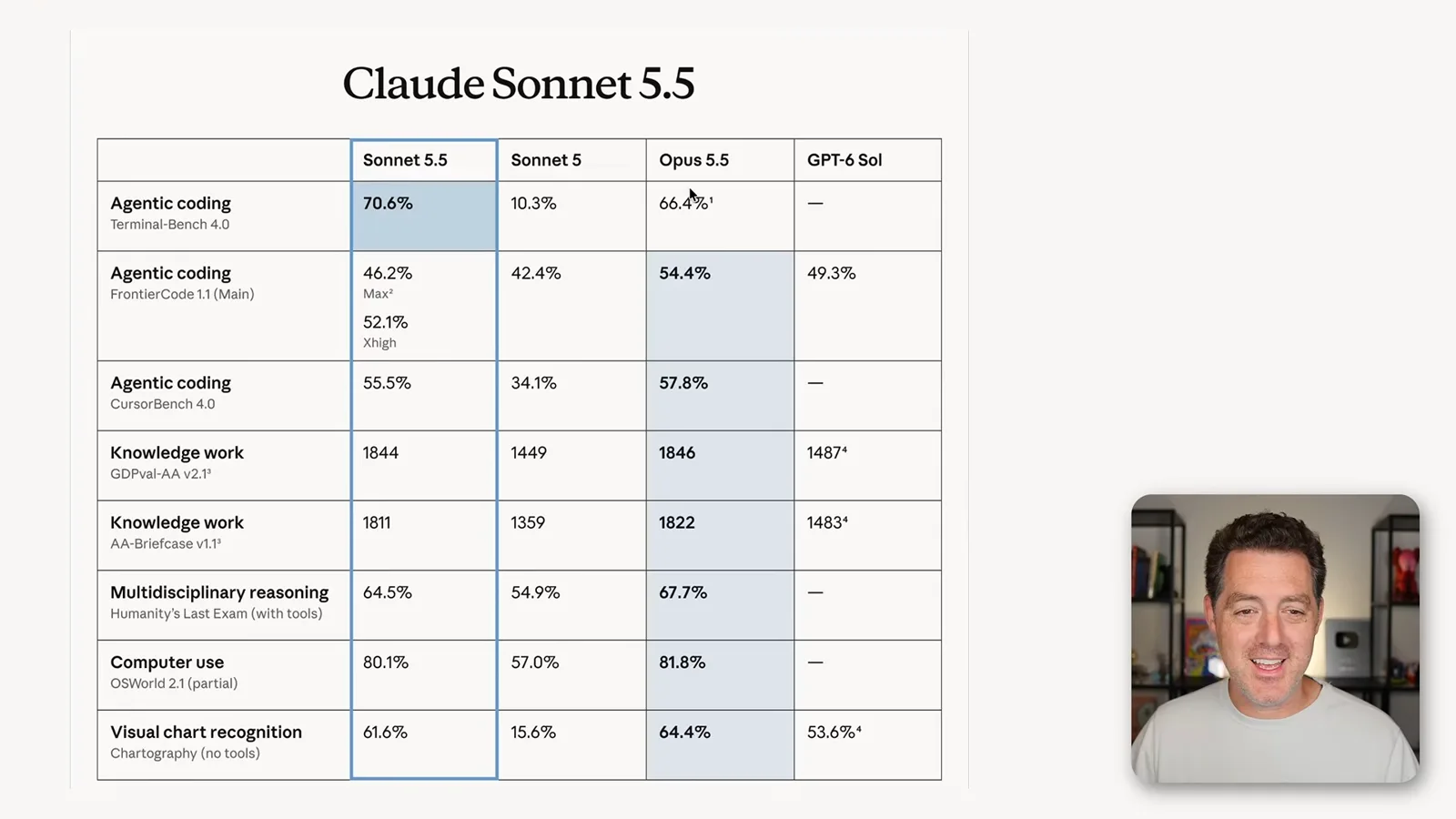
In the displayed company benchmark table, Sonnet 5.5 scores 70.6 on Terminal-Bench 4.0 versus Opus 5.5 at 66.4. On FrontierCode and CursorBench it is close but behind the displayed Opus figures. I found it difficult to distinguish the models on many of my own tests, although harder tasks might reveal larger differences.
The table also shows similar GDPval scores—1844 for Sonnet and 1846 for Opus—and close but not identical results on reasoning, computer use and chart recognition. I still find OpenAI models stronger for some browser and computer-use work. These numbers are specific benchmark results, not proof the models are identical.
One writing quirk I noticed is a tendency toward British spelling, such as ‘colour’. The model is steerable, so an instruction can change that. The video quotes Sonnet at $2 per million input tokens and $10 per million output tokens, versus $4 and $20 for Opus: half the listed price in each direction.
My overall verdict is strongly positive: the combination of capability, speed and price makes Sonnet compelling for the work I tested. I recommend trying the demos and comparing them with Opus directly, while keeping in mind the time, token use and defects shown in these examples.
Sur la même chaîne
 25:50EN
 32:20EN
 45:08EN
 12:14EN
 10:36EN
 17:37EN