En 30 secondes
At Tesla’s November 2019 Cybertruck unveiling, Elon Musk presented a steel-bodied electric pickup as a departure from conventional truck design. The event included a sledgehammer demonstration, two windows cracking during a live glass test, and planned suspension, cargo and charging features. The figures discussed are the launch presentation’s historical claims.
- 1Tesla aimed to rethink the pickupMusk connected an electric truck to sustainable transport.
- 2A sledgehammer tested the exteriorThe team compared a conventional door and Cybertruck’s exterior onstage.
- 3The live glass test cracked two windowsMusk noted the metal ball did not go through.
- 4The covered bed was called the vaultMusk presented planned storage and payload figures.
- 5The suspension lowered for an ATVA ramp and load mode were demonstrated at the end.
À retenir
- Musk framed an electric pickup as part of Tesla’s sustainable-energy goal.
- The design used an exterior steel structure that Tesla demonstrated with a sledgehammer.
- Both side windows cracked during a live metal-ball demonstration.
- The presentation described adjustable suspension, a covered bed and onboard power.
- Specifications and pricing discussed were 2019 plans rather than current product information.
Lire le texte remanié, chapitre par chapitre
Why an electric pickup
Musk introduces the 2019 unveiling and Tesla’s goals.
The video opens by placing the event in Los Angeles in November 2019. Tesla introduces Cybertruck as a different approach to the pickup, linking the vehicle to its goal of moving transport away from oil.
Elon Musk argues that pickup designs had looked similar for decades. He says a sustainable-energy transition also has to address trucks because pickups are among the most popular vehicles in the United States.
Tesla brings the angular Cybertruck onto the stage. Musk says the team wanted a vehicle that looked unlike conventional trucks while fitting within dimensions comparable to a Ford F-150.
Steel exterior and glass demonstrations
The team tests the exterior and glass onstage.
Musk describes an “exoskeleton” concept: instead of a conventional body and bed carried by a frame, he says the design moves structural loads toward the vehicle’s outer skin.
He says Tesla developed a thick, cold-rolled stainless-steel alloy for the exterior, and compares the idea of a load-bearing skin to an approach used in aircraft design.
To demonstrate the material, Franz von Holzhausen strikes a conventional truck door and then the Cybertruck exterior with a sledgehammer. Musk presents the comparison as an illustration of toughness.
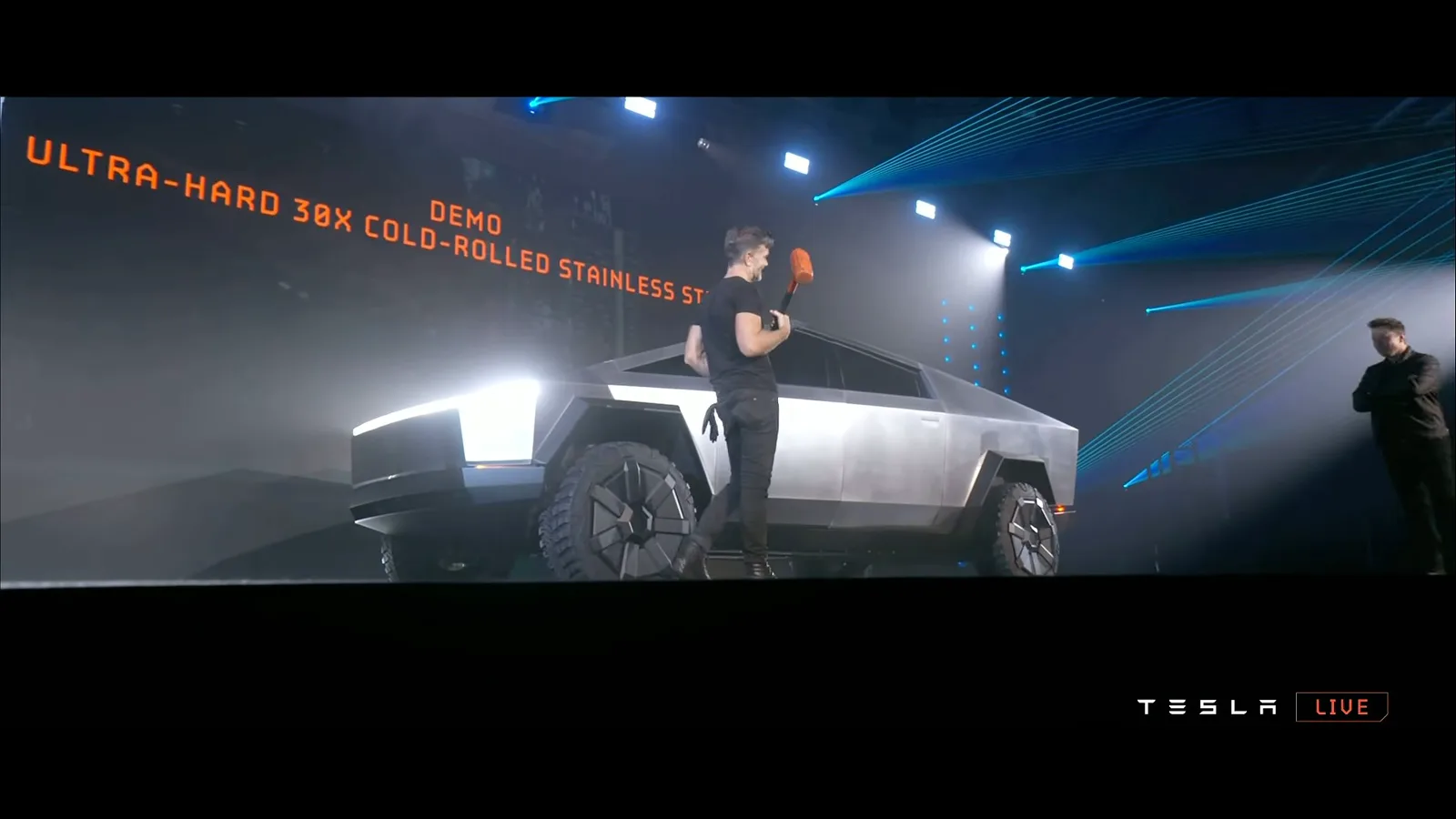
Musk also describes a prior demonstration involving a 9 mm handgun and the door material. This is a claim made at the launch about a particular test, not a general safety certification for the entire vehicle.
The presentation moves to the glass. Tesla first shows a comparison in which a metal ball breaks ordinary automotive glass, followed by a demonstration on its proposed armor glass.
When von Holzhausen throws a metal ball at the truck onstage, the front side window cracks. A second throw cracks the rear window as well; Musk notes that the ball did not pass through and jokes that there is room for improvement.
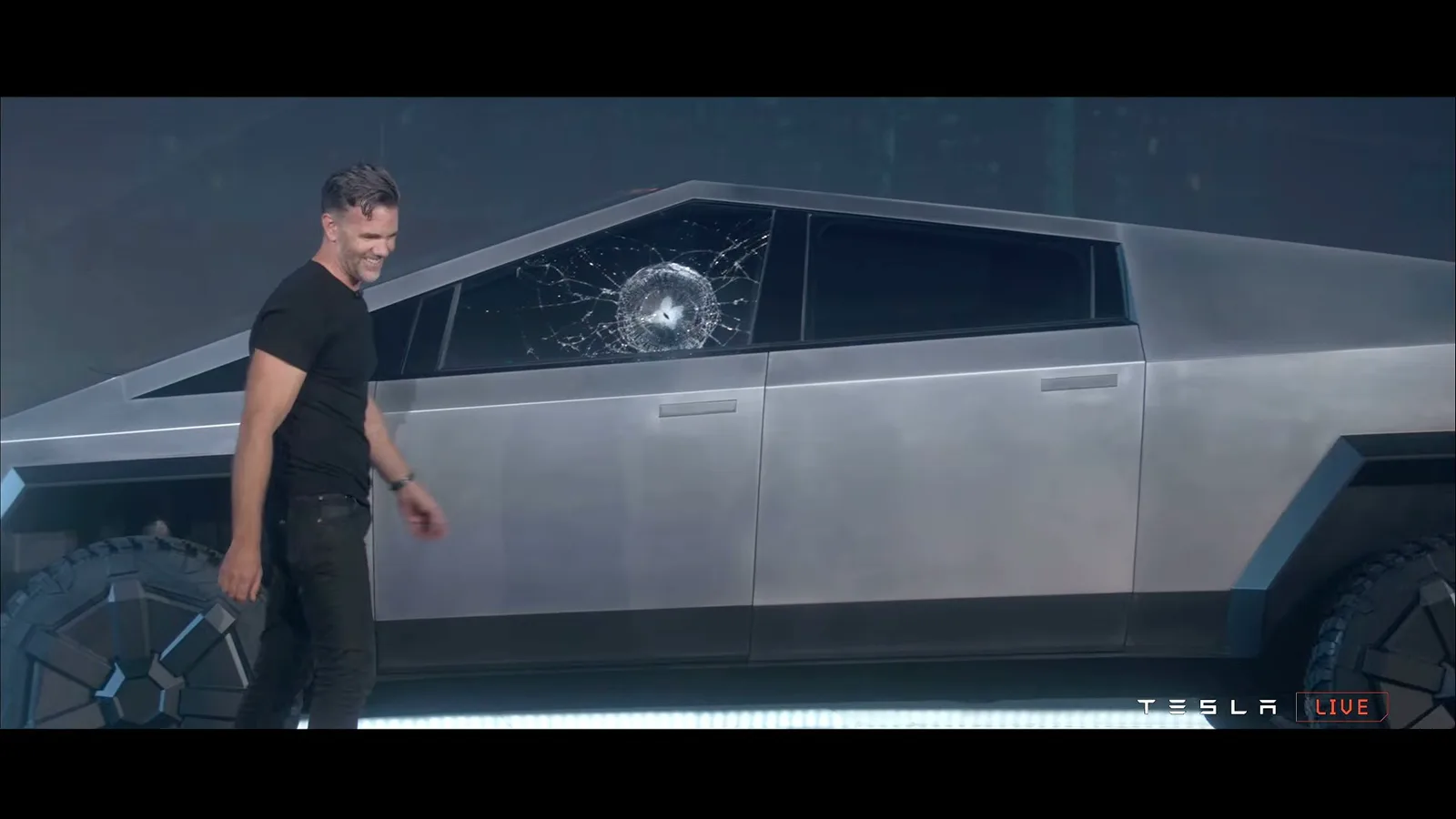
Musk says earlier tests had not produced the same visible result. The demonstration becomes an unplanned illustration of the difference between a controlled test and a live presentation.
Suspension, bed and performance
Musk describes planned capabilities and plays comparison videos.
The planned adaptive air suspension is intended to change ride height for highway driving, off-road travel and different loads. At the event Musk cites roughly 16 inches of maximum clearance as a design target.
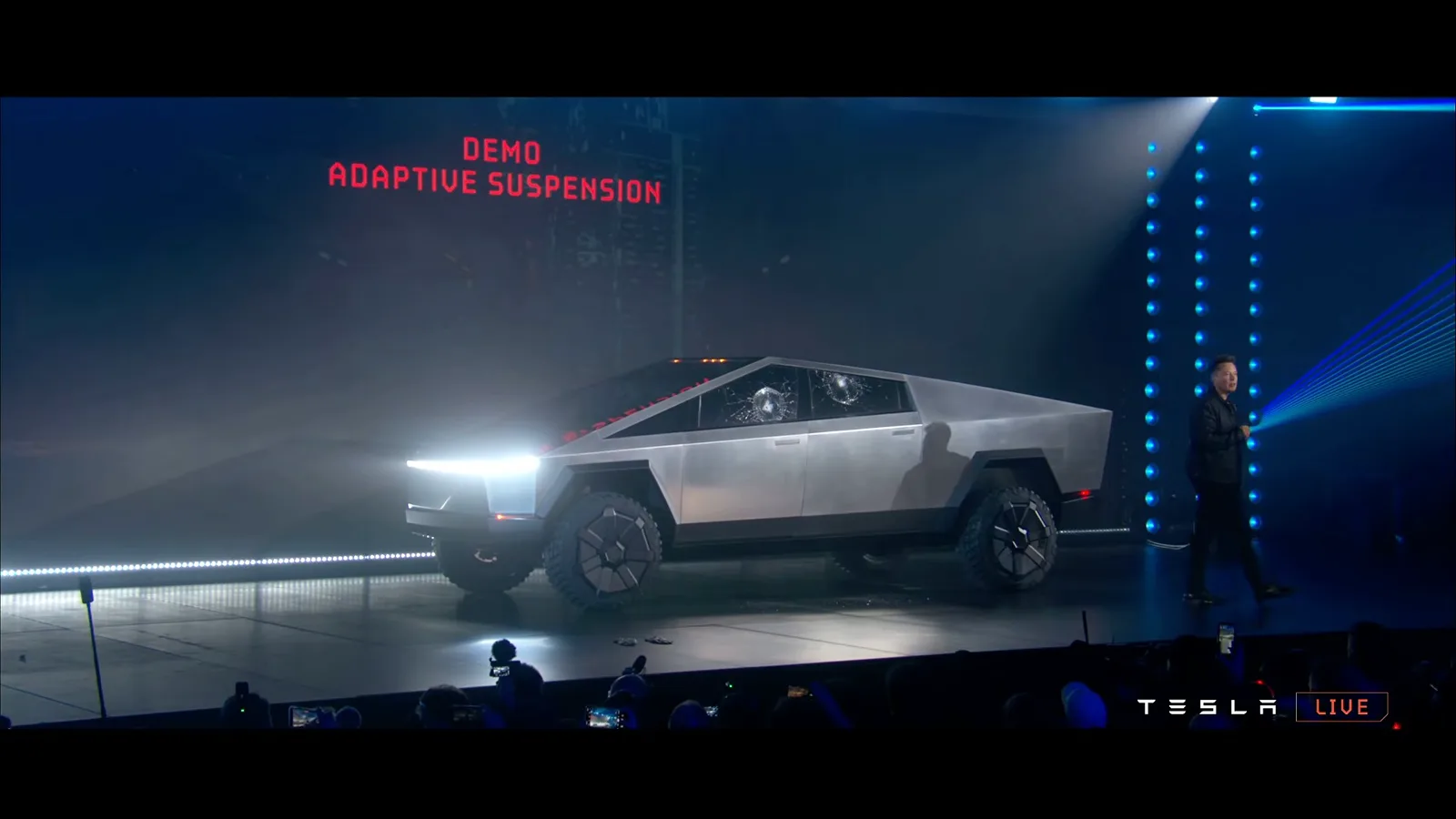
Musk calls the covered cargo area the “vault.” He gives launch-stage figures of a 6.5-foot bed, 100 cubic feet of rear storage and up to 3,500 pounds of payload.
A video then compares the truck with an F-150 in a tug-of-war. The presentation treats this as a demonstration, although the clip alone does not establish an all-around comparison of the two vehicles.
A separate acceleration clip compares Cybertruck with a Porsche 911. Musk says the truck in the footage is real; the video does not provide a full independent test protocol.
Musk also discusses off-road geometry and ground clearance. These were statements about the vehicle as presented in 2019 and should be read in that historical context.
Charging and configurations
The event covers charging, onboard power and planned versions.
He says the truck is planned to use Tesla’s Supercharger network, with charging capability above 250 kW. He also describes onboard electrical outlets and an air compressor drawing on the suspension system.
Musk says Autopilot is intended to be standard and introduces three configurations. The event’s pricing and specifications were plans announced at the time, not a current offer.
He argues that electricity and maintenance could make the truck less expensive to operate than a gasoline pickup. That comparison reflects Tesla’s presentation and depends on factors such as local energy prices and actual use.
After inviting the audience to order and take rides, Musk adds one more demonstration: an all-terrain vehicle is driven onto the truck using a ramp.
Loading an ATV
The truck lowers to accept an ATV on a ramp.
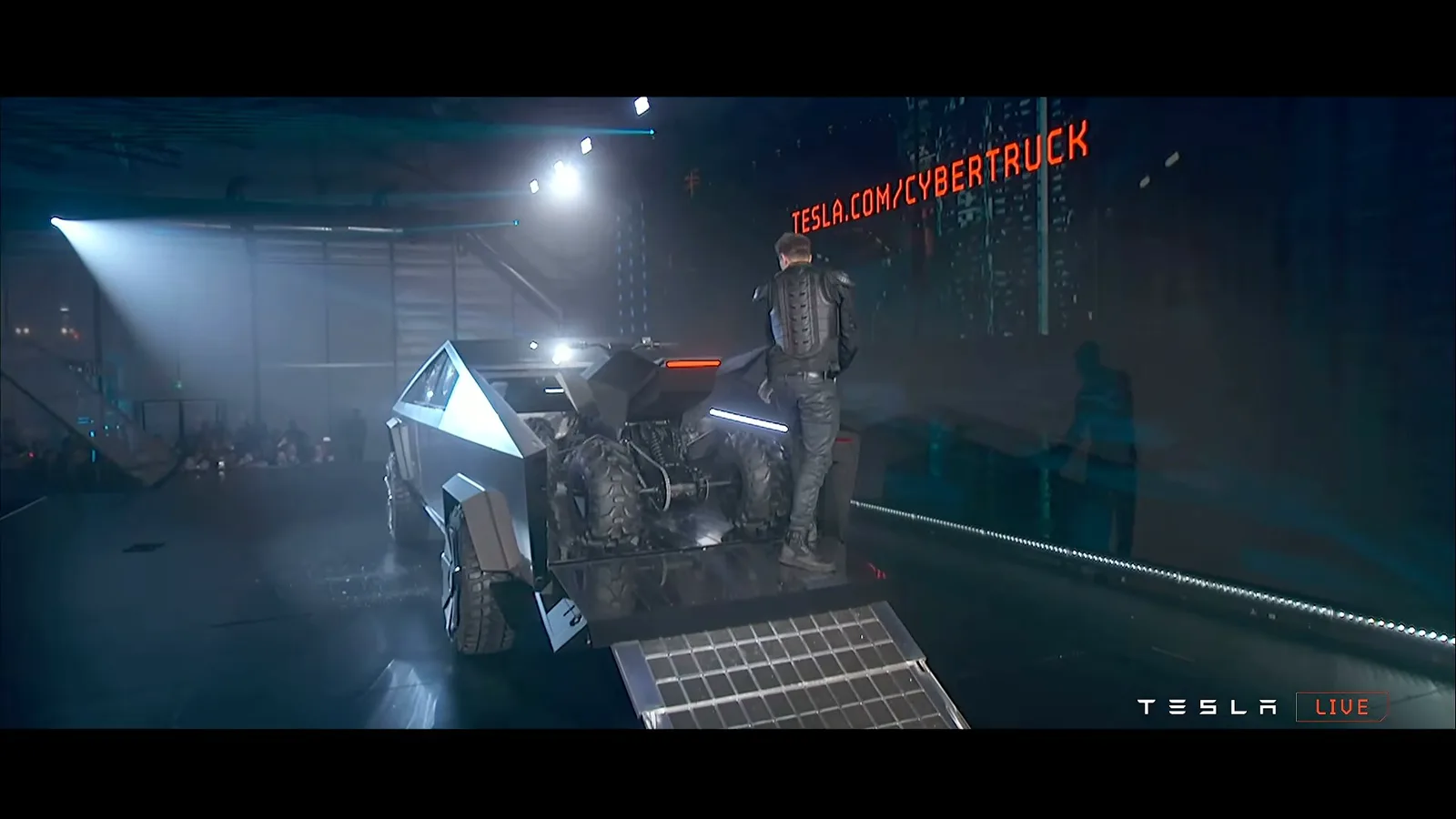
He shows how the suspension lowers for loading, calls it “load mode,” and says the ATV is charging in the bed. The event ends with another illustration of the truck’s adjustable height.
Sur la même chaîne
 59:56EN
 Tesla· 21 oct. 2026Tesla Q3 2026: Cash Flow, FSD Demand and the Cost of Scaling RobotsElon Musk, Vaibhav Taneja, Travis Axelrod · TeslaExecutives discuss quarterly margins, capital spending and plans for Cybercab, Optimus and chip production.
 23:21ENTesla· 16 oct. 2026Tesla’s Roadster Event: A Ramp Stunt, Aerodynamics and a 2028 Production TargetElon Musk, Franz von Holzhausen, Lars Moravy · TeslaElon Musk, Franz von Holzhausen and Lars Moravy demonstrate a prototype developed with SpaceX engineering.
 1:09:55ENTesla· 22 juil. 2026Tesla’s Q2: Margins Narrow as Spending on Robots and AI RisesTravis Axelrod, Elon Musk, Vaibhav Taneja, Ashok Elluswamy, Lars Moravy · TeslaTesla reported higher energy deployment and negative free cash flow while executives outlined Robotaxi and Optimus plans.
 27:27ENTesla· 21 mai 2026Tesla’s Final Model S and X Deliveries: How the Cars EvolvedElon Musk, Franz von Holzhausen, Lars Moravy · TeslaElon Musk and Tesla’s team recall a tent-based design studio, years of changes, and plans for the former production line.
 1:05:20ENTesla· 22 avr. 2026Tesla Plans a $25 Billion Investment Year as It Prepares OptimusTravis Axelrod, Elon Musk, Vaibhav Taneja, Lars Moravy · TeslaOn Tesla’s Q1 2026 call, executives detail one-time margin gains, battery constraints and plans for robots and driving software.
 1:07:30ENTesla· 28 janv. 2026Tesla Plans a Major Investment Year as S and X Wind DownTravis Axelrod, Elon Musk, Vaibhav Taneja, Lars Moravy · TeslaOn its Q4 2025 call, Tesla reported higher automotive margin and outlined spending on robots, autonomy and manufacturing.