En 30 secondes
At a 2016 Tesla and SolarCity event, Elon Musk presented a solar roof designed to look like conventional roofing while generating electricity. He paired it with Powerwall 2, a home battery announced with 14 kWh of storage, and Powerpack 2 for larger installations. Musk’s goal was for the combined lifetime cost of roof and electricity to be less than a conventional alternative. He also showed different glass-tile styles and a strength demonstration. The cost and durability comparisons were product goals presented at the launch.
- 1The roof was designed to resemble conventional roofingMusk says the aim was to make solar tiles attractive, durable and economical while generating electricity.
- 2A home battery shifts solar electricity into the eveningMusk describes charging the battery during the day and using stored energy after solar production falls.
- 3Powerwall 2 was announced with 14 kWh of storageMusk gives a 7-kW power figure and says the unit could supply selected household loads for about a day. Actual duration depends on consumption and conditions.
- 4Utility storage was part of the same planMusk introduces Powerpack 2 and cites planned projects in California and Hawaii, arguing that both utility and local generation will be needed.
- 5Glass finishes were intended to make roofs visually variedHe presents textured, slate-like, modern and Tuscan styles, with optical films or printing used to alter their appearance.
- 6The company demonstrated tile strengthMusk shows an impact comparison with conventional tiles and says longer life and lower total cost are design goals.
À retenir
- The proposed system combines rooftop solar generation, home battery storage and an electric vehicle.
- At launch, Musk described Powerwall 2 as a 14-kWh home battery with a 7-kW output figure; later specifications distinguish usable energy and output ratings.
- Solar roof tiles were designed to conceal cells from street-level views while admitting light from above.
- Musk distinguished new or replacement roofs from existing roofs, where conventional solar panels could be installed.
- The cost and longevity advantages discussed in 2016 were goals, not proof that every installation would achieve them.
Lire le texte remanié, chapitre par chapitre
A roof, battery and car as an energy system
SolarCity CEO Lyndon Rive introduces the joint launch. Musk describes a solar roof paired with storage and electric transport.
SolarCity CEO Lyndon Rive introduces a joint Tesla and SolarCity product event and thanks the teams involved. Elon Musk takes the stage to explain the intended combination of solar generation, storage and electric vehicles.
Musk says rising carbon dioxide levels and climate change motivate the work. He compares the challenge of making solar appealing with Tesla’s effort to make electric cars attractive, and says the houses around the event have demonstration solar roofs.
The goal, Musk says, is a solar roof that looks good, lasts longer and generates electricity, with a lower combined cost of roof and electricity than a conventional alternative. He presents these as product aims.
Musk describes three parts of the proposed system: a solar roof, a battery and an electric car. Solar output falls at dusk and is unavailable at night, so he says a battery can store daytime generation for later use.
Powerwall 2 and larger battery projects
Musk announces home and utility batteries and discusses storage projects. He argues that both rooftop and utility generation have a role.
He introduces Powerwall 2, describing it at the event as a 14-kilowatt-hour battery with a 7-kilowatt power figure. He estimates that it could supply a refrigerator, outlets and lights in a four-bedroom home for about a day; how long a battery lasts depends on the loads and available generation.
For larger users, Musk introduces Powerpack 2 and says installations can be combined at utility scale. He cites an 80-megawatt-hour Southern California Edison project under construction and a 52-megawatt-hour project announced in Hawaii.
Musk argues that distributed rooftop generation and utility-scale electricity are complementary. If transport and heating become more electrified, he expects electricity demand to increase, requiring both local generation and utility capacity.
Making solar tiles look like roofs
Musk shows several glass tile designs and explains how the view changes with angle. He presents durability and total cost as product goals.
The presentation returns to the intended customer experience: an electric car, Powerwall and solar roof that work together. Musk says aesthetics, affordability and integration are all needed if people are to choose the system.
He shows a house before and after a roof replacement, followed by closer views of a textured glass tile. Musk says solar cells can be seen behind the glass when viewed carefully.
A second design imitates French slate. Musk says a printing process produces variation between individual tiles, so roofs need not look identical. He shows the finish in more detail.
A third roof uses a more modern style. Musk says a film changes the apparent transparency with viewing angle: the cells can be visible from above while the roof appears opaque from a low street-level angle.
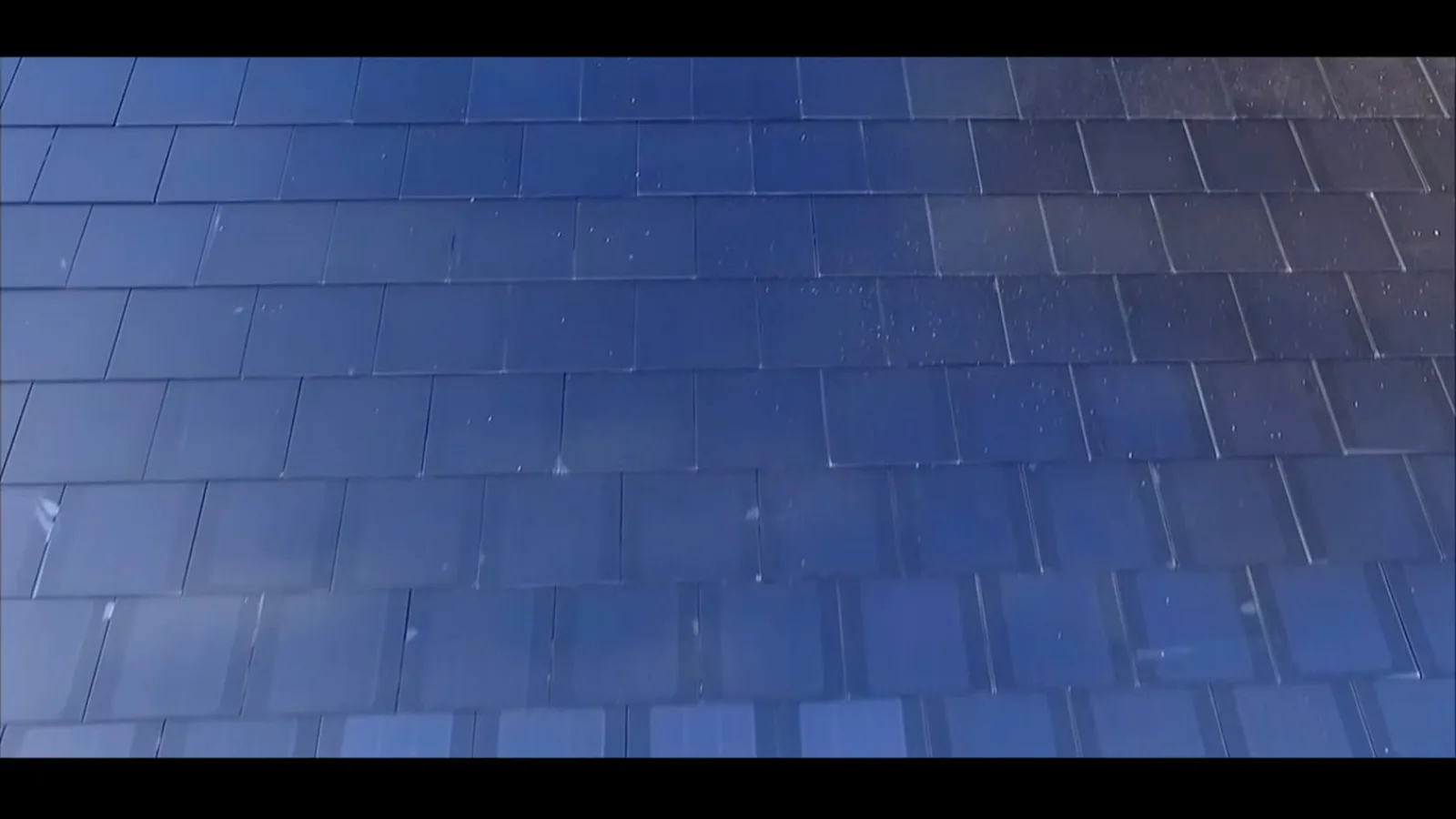
The fourth design resembles Tuscan tile. Musk says darker solar-generating tiles are interleaved with lighter tiles, and again demonstrates how the appearance changes with the viewing angle.
Musk says glass tiles can be made stronger and longer-lasting than conventional roofing materials. A video compares the effect of a dropped weight on several conventional tiles and a Tesla glass tile; he presents the comparison as part of the product demonstration.
Replacement roofs and existing homes
Musk compares a tile strength demonstration and distinguishes new roofs from existing roofs that could use panels. He closes with a vision of wider adoption.
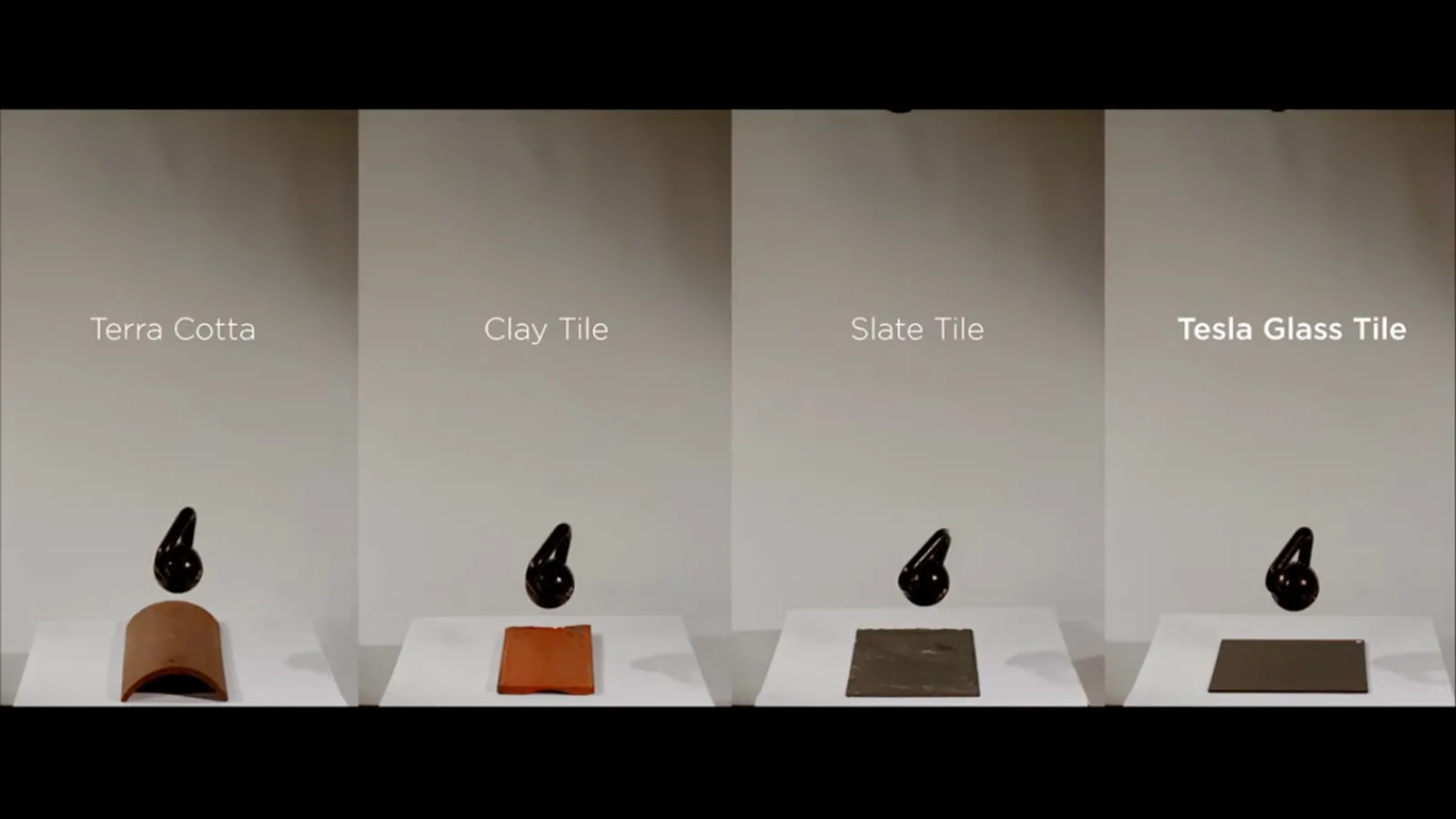
The intended market for a solar roof is a new house or a roof that needs replacement, Musk says. For a house with a relatively new roof, installing conventional solar panels on top may make more sense.
Musk points to the large number of roofs replaced each year and envisions households gradually choosing solar roofs.
Musk says people care about their homes and that the aim is to make a solar roof visually desirable as well as useful. The presentation closes and music plays for the remainder of the video.
Sur la même chaîne
 24:44EN
 Tesla· 6 nov. 2026Elon Musk Unveils the Cybertruck: Steel Body, Cracked Glass and a New Pickup DesignElon Musk · TeslaAt Tesla’s 2019 event, Musk introduced the electric pickup and demonstrated its body, glass, suspension and cargo bed.
 59:56ENTesla· 21 oct. 2026Tesla Q3 2026: Cash Flow, FSD Demand and the Cost of Scaling RobotsElon Musk, Vaibhav Taneja, Travis Axelrod · TeslaExecutives discuss quarterly margins, capital spending and plans for Cybercab, Optimus and chip production.
 23:21ENTesla· 16 oct. 2026Tesla’s Roadster Event: A Ramp Stunt, Aerodynamics and a 2028 Production TargetElon Musk, Franz von Holzhausen, Lars Moravy · TeslaElon Musk, Franz von Holzhausen and Lars Moravy demonstrate a prototype developed with SpaceX engineering.
 1:09:55ENTesla· 22 juil. 2026Tesla’s Q2: Margins Narrow as Spending on Robots and AI RisesTravis Axelrod, Elon Musk, Vaibhav Taneja, Ashok Elluswamy, Lars Moravy · TeslaTesla reported higher energy deployment and negative free cash flow while executives outlined Robotaxi and Optimus plans.
 27:27ENTesla· 21 mai 2026Tesla’s Final Model S and X Deliveries: How the Cars EvolvedElon Musk, Franz von Holzhausen, Lars Moravy · TeslaElon Musk and Tesla’s team recall a tent-based design studio, years of changes, and plans for the former production line.
 1:05:20ENTesla· 22 avr. 2026Tesla Plans a $25 Billion Investment Year as It Prepares OptimusTravis Axelrod, Elon Musk, Vaibhav Taneja, Lars Moravy · TeslaOn Tesla’s Q1 2026 call, executives detail one-time margin gains, battery constraints and plans for robots and driving software.