En 30 segundos
In this August 26, 2025 news roundup, Matthew Berman discusses xAI’s Macrohard announcement, Meta’s Midjourney partnership, generative worlds, robotics and Perplexity’s Comet Plus. He also examines a reported Google–Meta cloud deal, an Intel investment and competing positions on AI welfare and autonomous driving. The discussion mixes company announcements, reported claims and Berman’s own predictions. The episode was sponsored by HubSpot and Dell Technologies.
- 1Macrohard and an AI operating systemBerman imagines an operating system generated dynamically by a neural network, although xAI’s recruitment announcement did not demonstrate such a product.
- 2Meta partners with MidjourneyThe partnership licenses aesthetic technology for future products; specific consumer availability was not announced.
- 3Comet Plus and publisher revenuePerplexity proposed a $5 subscription and a publisher compensation model, with Pro and Max access included.
- 4Intel government investmentIntel announced an $8.9 billion investment for a 9.9% stake, funded by previously awarded program money.
- 5AI welfare remains unsettledSuleyman warned against premature anthropomorphism; Anthropic said model moral status was highly uncertain while exploring possible welfare measures.
- 6A narrower enterprise AI resultThe preliminary report discussed measurable business returns and deployment; a universal 95% failure rate goes beyond that evidence.
Conclusiones
- Macrohard was announced as an AI software project; an AI-generated operating system is Berman’s interpretation of its potential.
- Meta said it would license Midjourney technology, while Dynamics Lab showed interactive generated worlds.
- Comet Plus proposed paying publishers for visits, citations and agent actions, with partner details pending at the time.
- Intel announced a 9.9% government stake funded using previously awarded U.S. program funds.
- Microsoft’s Mustafa Suleyman and Anthropic took different approaches to the uncertain question of AI welfare.
- A preliminary enterprise AI report is not proof that 95% of every AI pilot has failed.
Lee el texto editado por capítulos
Macrohard and Meta’s image partnership
Berman considers xAI’s software project and Meta’s partnership with Midjourney. He separates his future-looking operating-system speculation from the announcement.
Elon Musk says xAI is building Macrohard, a tongue-in-cheek name for a purely AI software company. I see the announcement as a possible step toward an operating system generated by an end-to-end neural network. That is my interpretation and prediction: the recruitment announcement itself does not establish that a working Windows competitor exists.
Musk suggests that a software company could in principle be simulated by AI. I think the hardware question is less important than whether a normally deterministic operating system could be generated dynamically without sacrificing consistency or introducing hallucinations. Recent interactive world demonstrations make the idea intriguing, but they do not prove that an AI operating system is practical.
Meta announced a partnership to license Midjourney's aesthetic technology for future models and products. Chief AI officer Alexandr Wang described collaboration between the companies' research teams. I speculate that Meta wanted outside help with image generation and hope users eventually get access to Midjourney features, but the announcement did not spell out a free product or specific release.
Generative worlds, robotics and political advocacy
Mirage 2 and a Figure towel-folding demonstration illustrate different applications. Leading the Future announces an AI-focused political effort.
Dynamics Lab presented Mirage 2, a real-time generative world engine. Its examples turn text or an image into a playable scene, including a stylized village and an explorable version of Van Gogh's Starry Night. Users can share a created world by link; I cannot tell from this announcement that they can play together simultaneously.

The demos show navigation and actions such as running, jumping and attacking. A company comparison claims more than ten minutes of interaction and operation on a single consumer GPU, alongside a comparison with Genie 3. These are developer-supplied claims about particular demonstrations, not independently verified benchmark results.
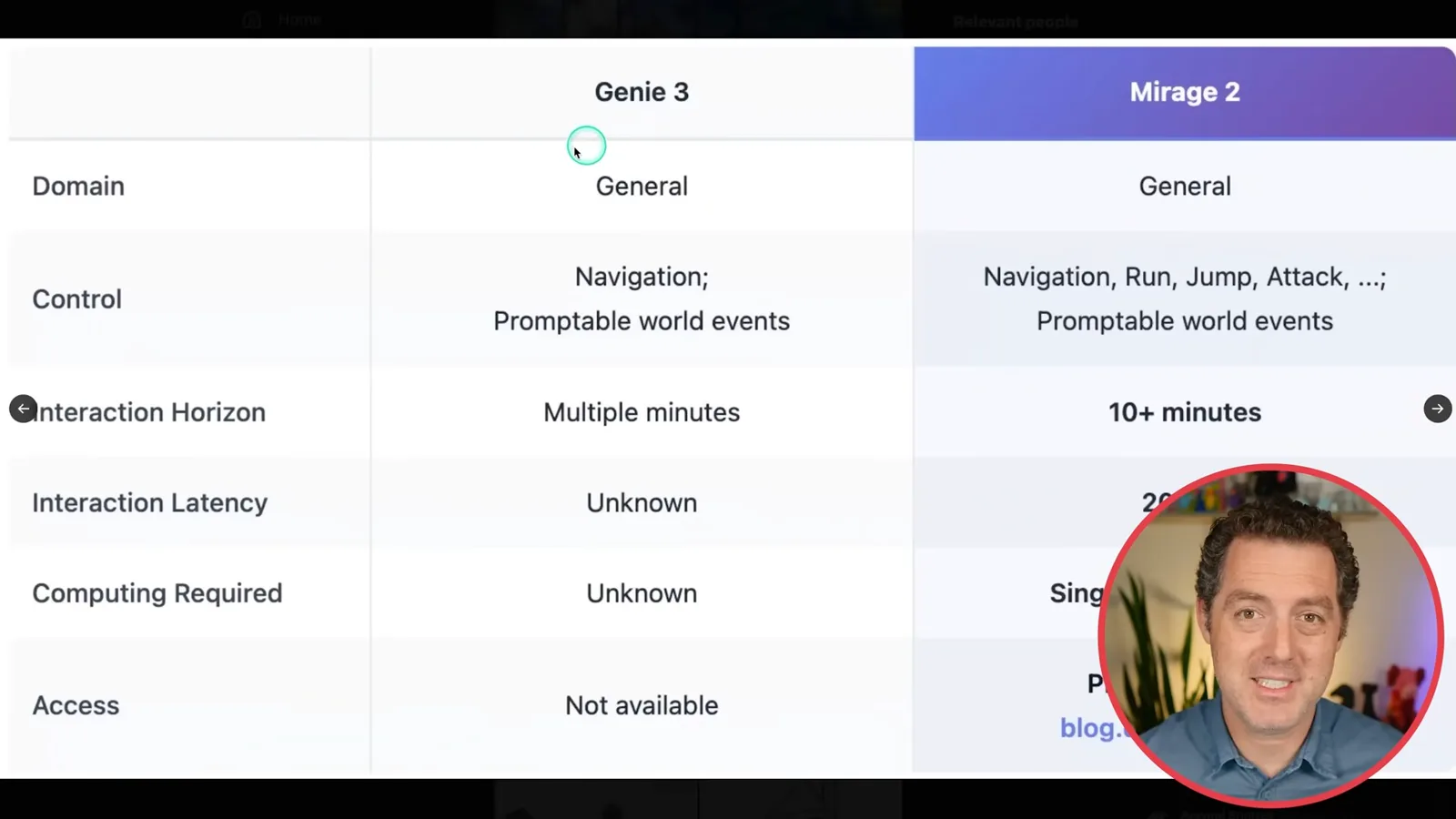
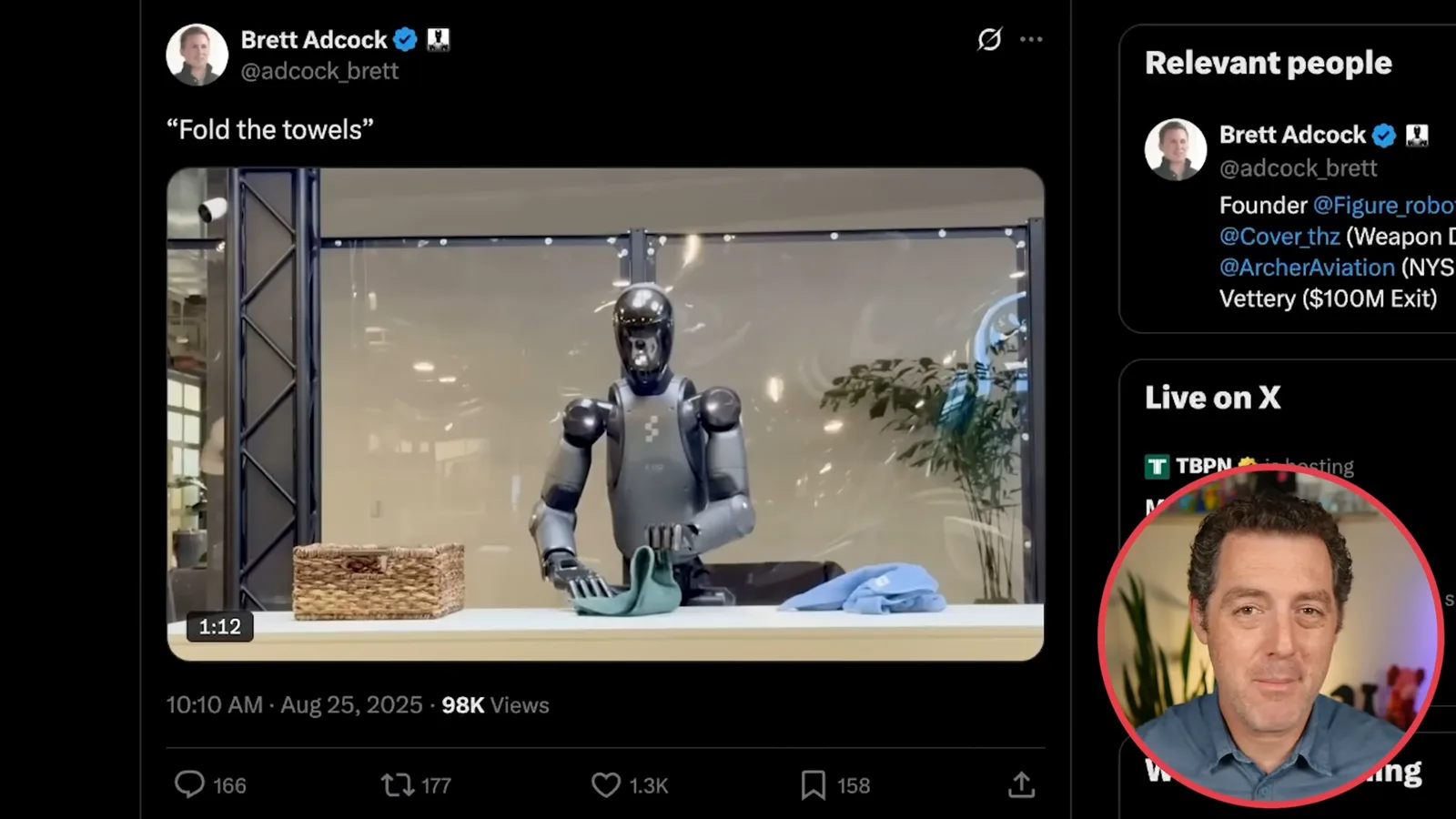
Figure showed a robot folding towels from a simple instruction. I find it notable because manipulating flexible fabric is difficult: the company says the demonstration was autonomous rather than teleoperated. One selected demo does not establish that an affordable general-purpose home robot is ready, even though I am excited by the progress.
A political group called Leading the Future announced a bipartisan effort to support pro-AI candidates and policies, saying more than $100 million had been committed initially. Its supporters include Andreessen Horowitz, Greg and Anna Brockman, Ron Conway, Joe Lonsdale and Perplexity. I tend to favor less AI regulation, though what the group will actually accomplish remains to be seen.
Publisher compensation and AI efficiency
Perplexity proposes Comet Plus and a way to pay publishers. Berman looks at a GPT-5 Pokémon experiment as one example of task efficiency.
Perplexity announced Comet Plus to give subscribers and their AI assistants access to participating publishers' premium content. The proposed standalone price was $5, with Pro and Max subscribers included. Perplexity said it would distribute subscription revenue to publishers after retaining a portion for compute, using visits, citations and agent actions in its allocation.
At the time of the announcement, Perplexity had not named the initial publishers, and I would have liked examples to make the offering easier to assess. The question is important: if an AI assistant reads and summarizes an article for a user, publishers may receive less direct traffic, so we need ways to compensate their work.
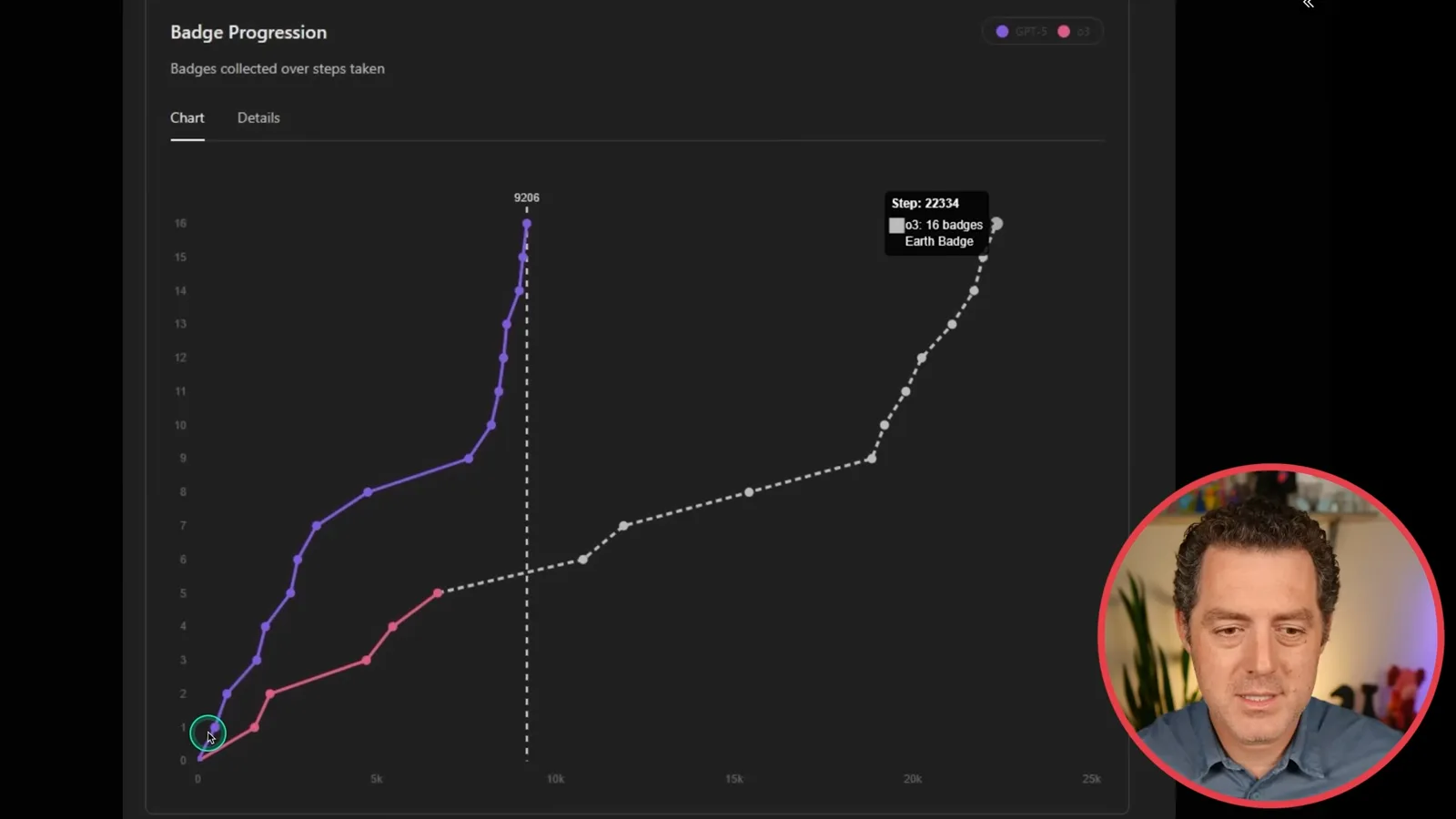
A Pokémon Crystal experiment reported that GPT-5 defeated Red in 9,517 steps, compared with 27,040 for o3 in the setup shown. The chart tracks badge progression rather than a universal measure of intelligence. I see task efficiency as important because fewer actions can reduce latency and cost and leave more budget for difficult reasoning; the outcome is specific to this game and test harness.
Cloud infrastructure and Intel
Berman discusses a reported Meta–Google cloud agreement. He also considers the implications of the U.S. government’s announced Intel stake.
The Information reported a deal under which Meta would spend about $10 billion on Google Cloud infrastructure and related services. I interpret it as a possible bridge while Meta expands its own data centers, but that is my speculation, not a disclosed explanation of the agreement. The reported scale also reflects a commercial arrangement, not a guarantee of future AI performance.
Intel announced an agreement under which the U.S. government would acquire a 9.9% stake through an $8.9 billion investment. Intel said the funds would come from $5.7 billion in previously awarded but unpaid CHIPS Act grants and $3.2 billion from the Secure Enclave program; the planned stake was passive and did not include a board seat.
I am conflicted: public ownership of a private company raises questions for me, while domestic chip manufacturing has strategic importance and Intel has faced intense competition. My remark that Intel was the last company manufacturing chips in the United States was too broad; other companies also manufacture semiconductors in the country. The agreement's outcome for Intel was still uncertain at the time.
AI welfare and models
The episode contrasts views of Mustafa Suleyman and Anthropic on AI welfare. Berman then notes Mistral Medium 3.1’s performance in a particular leaderboard.
Microsoft AI CEO Mustafa Suleyman argued that focusing on AI welfare prematurely could encourage people to anthropomorphize systems, potentially worsening unhealthy attachments and other human harms. This is his position in a contested debate, not proof that discussing AI welfare causes psychiatric illness.
Anthropic has taken a different approach by studying possible model welfare under uncertainty. It said Claude Opus 4 and 4.1 could end a narrow set of persistently harmful or abusive conversations after other attempts to redirect failed. Anthropic explicitly said it remained highly uncertain about the moral status of current or future models; this feature does not establish that Claude is conscious or human.
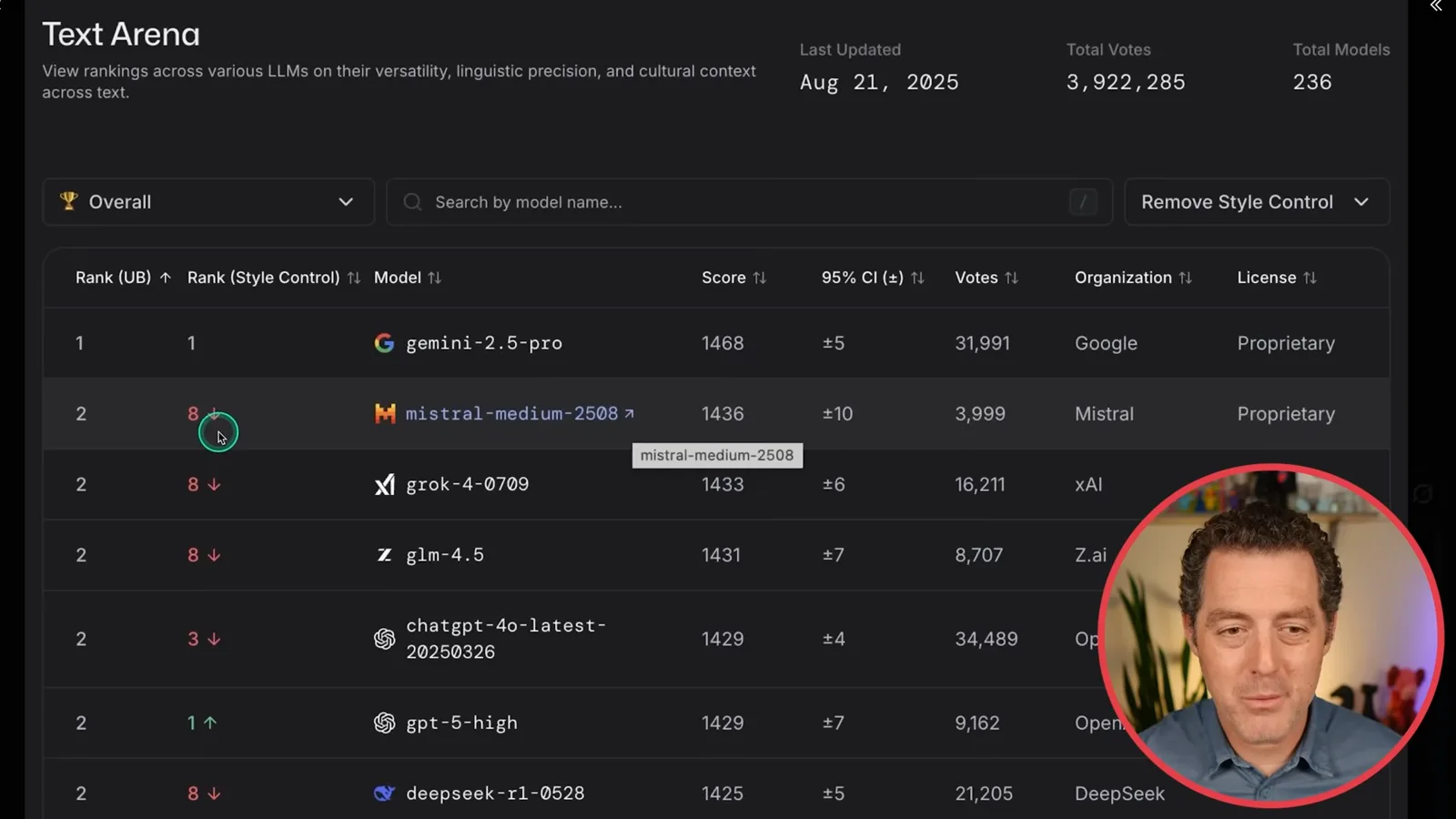
Mistral highlighted strong results for Medium 3.1 on a chatbot ranking, including second place in the category shown and eighth overall at that moment. I find it impressive for a relatively small model, but leaderboard positions reflect specific categories, users and evaluation periods and should not be treated as a permanent overall ranking.
Self-driving sensors and robotics chips
Uber’s CEO and Elon Musk disagree on autonomous-vehicle sensor choices. NVIDIA announces the Jetson Thor robotics platform.
Uber CEO Dara Khosrowshahi argued that driverless cars should be several times safer than humans and that, in the near term, reaching that standard with cameras alone would be difficult. He favored combining cameras, radar and lidar, whose cost he said had fallen. He allowed that a camera-only solution might eventually be possible.
Musk responded that lidar and radar could reduce safety through conflicting sensor inputs and claimed Waymo could not drive on highways. I am skeptical of that explanation and think city driving may be harder than freeway driving, although that is my intuition. The companies' competing claims do not by themselves settle which sensor architecture is safest; deployment area and time also matter.
NVIDIA announced Jetson Thor for robotics. The company lists up to 2,070 sparse FP4 teraflops, 128 GB of memory and a configurable 40–130 watt power range, and claims up to 7.5 times the AI compute and 3.5 times the energy efficiency of the preceding Jetson Orin generation. These are NVIDIA's specified comparisons, not expected speedups for every robot workload.
Enterprise AI pilot results
Berman discusses a preliminary report on limited business impact from AI deployments. He argues for careful use-case selection and testing.
I discuss a preliminary Project NANDA report often summarized as 95% of generative-AI pilots failing. The report itself describes limited measurable business returns and a gap in deployment, which is narrower than proving that 95% of all pilots failed or produced no value. Its methodology notes a review of over 300 public initiatives, interviews with 52 organizations and survey responses from 153 senior leaders; the numbers in the news account I read differ.
My hypothesis is that some companies rush into AI because of hype without identifying a useful problem, understanding the technology's limits or testing how it fits into real workflows. That is an interpretation, not a causal finding proven by the headline statistic. Failed experiments can still teach teams which applications are worth pursuing.
I remain optimistic because I have seen useful applications in my own life and business. But assessing whether a company benefits requires a clear use case and an appropriate measure of impact, not merely a pilot launch or a sweeping percentage.
Más de este canal
 34:21EN
 Matthew Berman· 27 oct 2026Matthew Berman Examines Anthropic’s IPO Filing, AI Growth and GovernanceMatthew Berman, Sam Altman · Forward FutureThe presenter reviews the S-1’s financial metrics, compute strategy and voting structure while questioning the tension between rapid AI development and safety.
 0:26ENMatthew Berman· 25 oct 2026Sam Altman on Human Values and Problem-Solving in an AI WorldSam Altman · OpenAIIn a short interview excerpt, Altman considers the enjoyment of solving hard problems and the human role in interpreting results.
 0:36ENMatthew Berman· 25 oct 2026Kimi K3.1 and a Rubik’s Cube Solver DemonstrationMatthew Berman · Forward FutureMatthew Berman shows a scrambled virtual cube being solved and gives the Kimi K3.1 test a favorable assessment.
 0:21ENMatthew Berman· 24 oct 2026An AI-Generated Kimi Benchmark Chart Used Invented ScoresMatthew Berman · Forward FutureMatthew Berman asks for a graph of Kimi K3.1 Pro benchmarks, then discovers that the displayed figures are illustrative placeholders.
 25:50ENMatthew Berman· 24 oct 2026Kimi K3.1 Pro Tested: Strong 3D Demos, Uneven Results and Competitive PricingMatthew Berman · Forward FutureMatthew Berman tests the open-weight model on coding, 3D rendering and visual explanations, then compares benchmark results and prices.
 32:20ENMatthew Berman· 23 oct 2026Who Is Local AI For? The Costs, Trade-offs and a Hybrid FutureMatthew Berman · Forward FutureMatthew Berman weighs data control and independence against hardware cost, setup complexity and inference speed.