En 30 segundos
In October 2025 Matthew Berman reviews Sora 2 through a selection of generated clips and explains the contemporary cameo and prompting workflow. He is impressed by some likenesses, camera moves and visual effects but also observes identity blending, object morphing, inconsistent physics and inaccurate charts. The examples are informal, selected demonstrations, not a controlled evaluation; the video contains sponsorships from Lindy and Dell Technologies. OpenAI later said the Sora product was no longer available as of April 26, 2026, so the demonstrated interface and access instructions are historical.
- 1Creative crossovers and cameosBerman shows fictional characters and generated likenesses, describing his own cameo settings at the time. Such examples do not determine copyright rights or permission.
- 2Likeness can driftFaces and voices vary across outputs, and one generated scene blends Berman’s and a colleague’s features.
- 3Hands and objectsThe card-shuffling and keyboard examples reveal awkward contacts and morphing, while an origami clip looks better to Berman.
- 4Mixed physical realismSome smoke and liquid clips look convincing to Berman; other examples fail to show expected interactions.
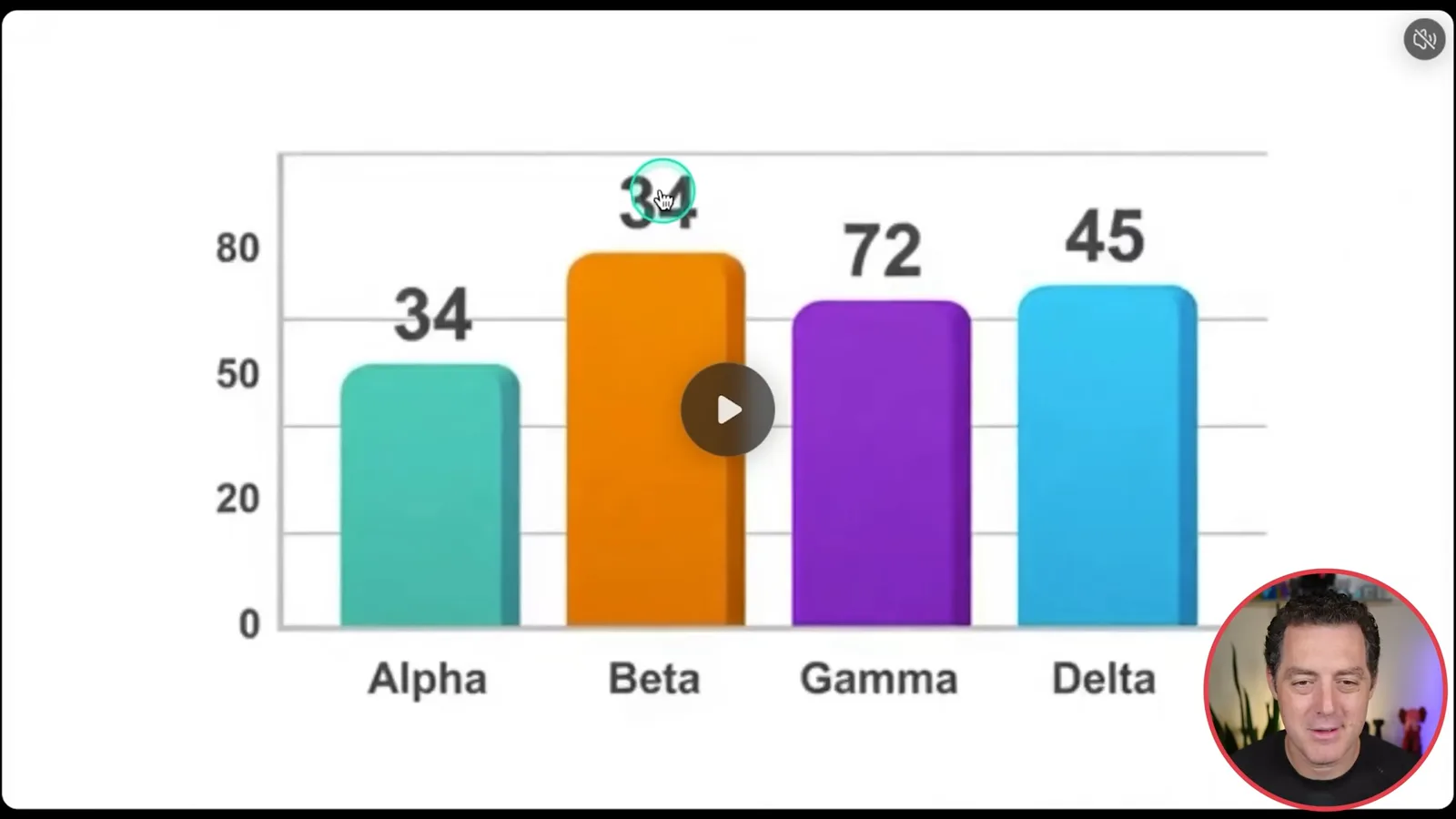
- 5Graphics can misleadA generated chart has bar heights that do not match its numeric labels.
- 6The 2025 workflowBerman demonstrates recording a likeness, tagging cameos and choosing orientation; OpenAI later discontinued the Sora product.
Conclusiones
- Sora 2 generated video with audio and supported a likeness feature using a short recording and user-controlled permissions at launch.
- Likeness and voice varied across generations; Berman found examples where two people’s features blended.
- The clips showed convincing camera effects and some liquids but also failures with hands, cards, physical interaction and continuity.
- Text can be legible while associated numerical graphics or narration are inconsistent.
- Berman’s selected clips illustrate possibilities and failure modes rather than measured reliability or legal permission to use copyrighted characters.
- OpenAI says the Sora product was no longer available as of April 26, 2026.
Lee el texto editado por capítulos
Creative examples and likenesses
Berman begins with fictional crossovers and his own cameo. He then examines how closely generated people resemble their sources.
Sora 2 is a video and audio generation model, and I have been exploring what people can create with it. In this October 2025 review I look at playful crossovers, generated likenesses and more systematic prompts for motion, camera work and visual consistency. The selected clips illustrate my experience, not a controlled benchmark.
I start with fictional characters placed in unexpected scenes, including a rap performance and a retro-game-style sequence. The resemblance and generated audio are striking to me. I describe the situation as a “copyright wild west,” but a generated example is not evidence that the use is authorized or that copyright restrictions do not apply.
The 2025 app also lets users make a cameo from a recording of their own appearance and voice. I say that I have allowed others to use my own cameo at that moment, and show a generated podcast featuring several people. The resulting dialogue is synthetic, not a recording of those people saying those words.
I show more imagined crossover clips involving recognizable game and animation characters, as well as a cameo of myself. The point is creative range and entertainment, but the output is invented footage. Whether a likeness or character may be used depends on permissions and applicable rules, not just what the tool generates.
I look more closely at people. One generated clip places my scanned likeness behind a tinted visor, and I find the face, lighting and reflections convincing. My estimate that it looks accurate most of the time is an informal impression from my examples, not a measured error rate.
People, movement and hands
More cameo examples show both convincing faces and blended identities. Fine object manipulation and some body interactions expose errors.
A second cameo of my teammate Jonah also looks close in one clip, but I see changing skin and hair textures. Different runs of the same prompt can vary, and my voice is sometimes accurate and sometimes noticeably off. Rerunning a prompt may produce a different result rather than a guaranteed correction.
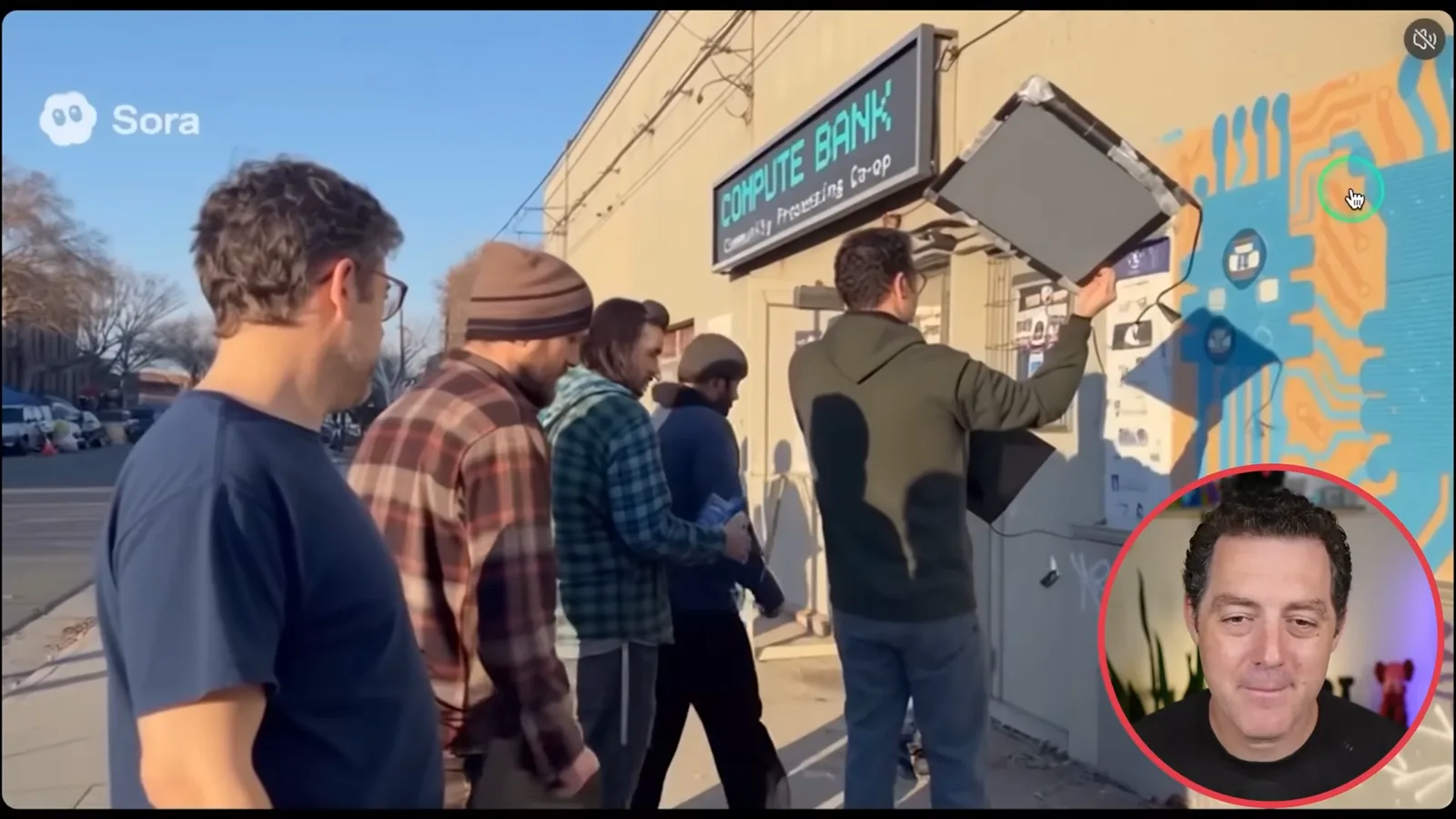
In a scene about a fictional “compute bank,” the model blends my features and Jonah’s. My generated figure has an earring associated with him, and his face appears to mix elements of both of us. It is a useful example of identity consistency failing when multiple cameos appear together.
In another imagined scene, I play an archaeologist discovering a data center beneath the pyramids. The face is fairly close, but I notice morphing and digital artifacts in the voice. The scene and narration are generated fiction, not a historical discovery.
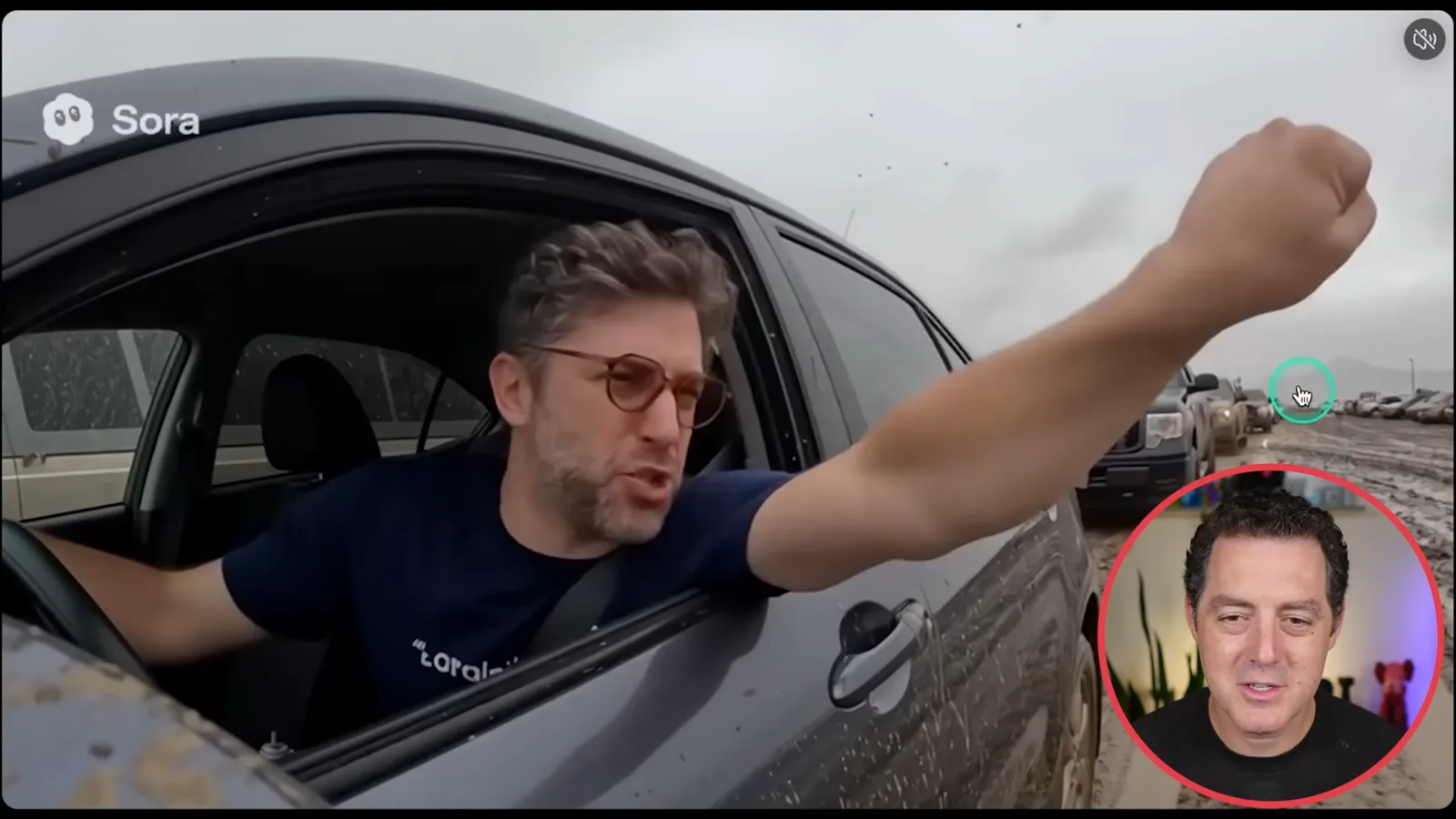
A scene of Jonah in traffic shows further problems: hands morph, cars appear to move backward, and vehicles change shape. His face remains reasonably recognizable to me, illustrating how an individual element can look good even when the rest of the scene is inconsistent.
A dance-class cameo and a dog-contest clip are entertaining, and the dogs look convincing in isolation. Yet I notice a leash that seems to be held by nobody. A separate cereal-catching clip lands a comic pause well, while a rap-battle scene fails to preserve our likenesses.
For physics, a ball stops and appears to spin the other way, even though the setting around it looks convincing. That contrast matters: attractive textures and a familiar background do not guarantee a physically coherent action.
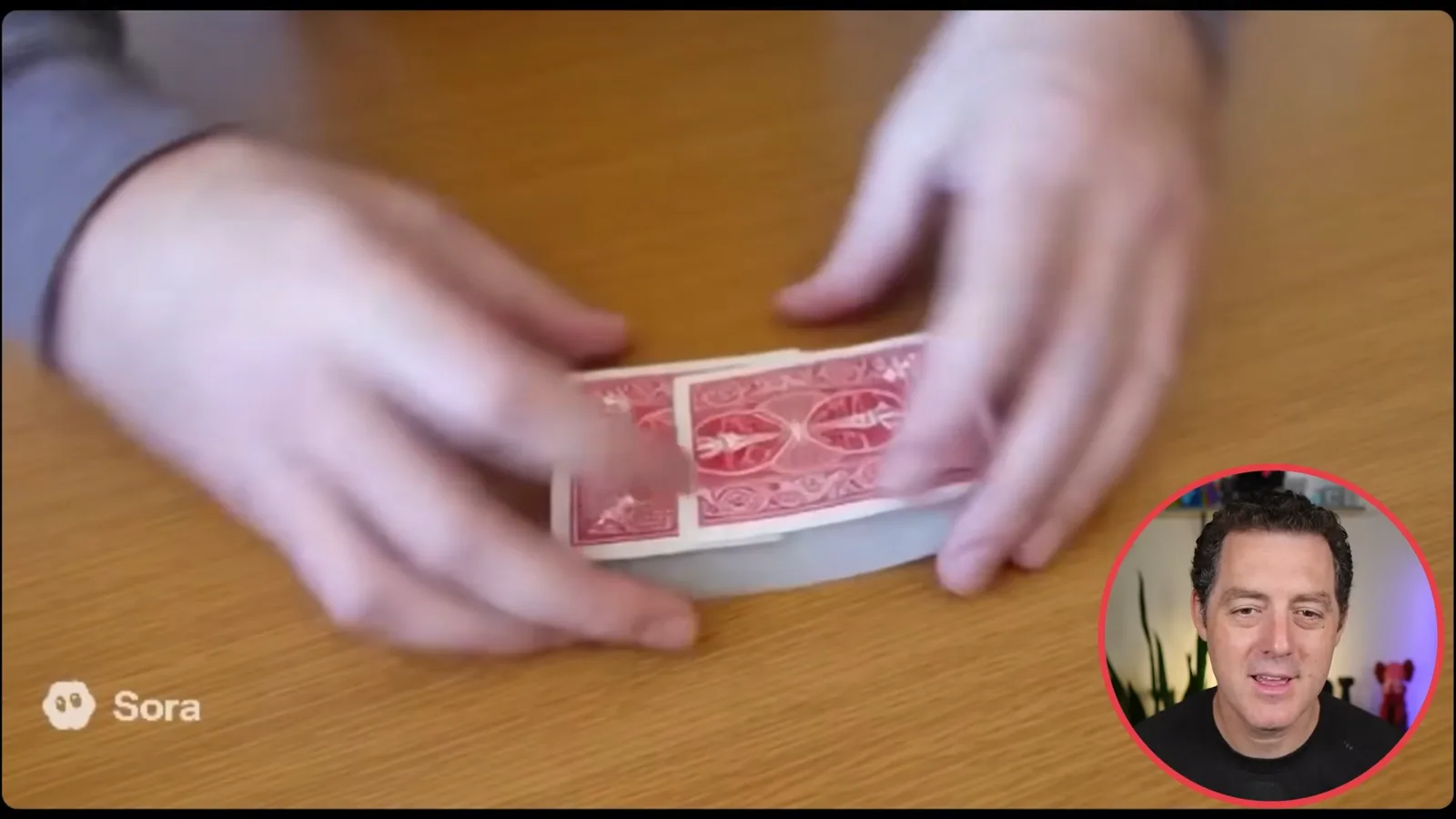
I test fine hand movements with a keyboard trill and card shuffle. The fingers do not always connect naturally to the keys; in the card sequence, cards merge, morph or appear unexpectedly. The hands sometimes look plausible as still images, but manipulating small objects remains difficult in these examples.
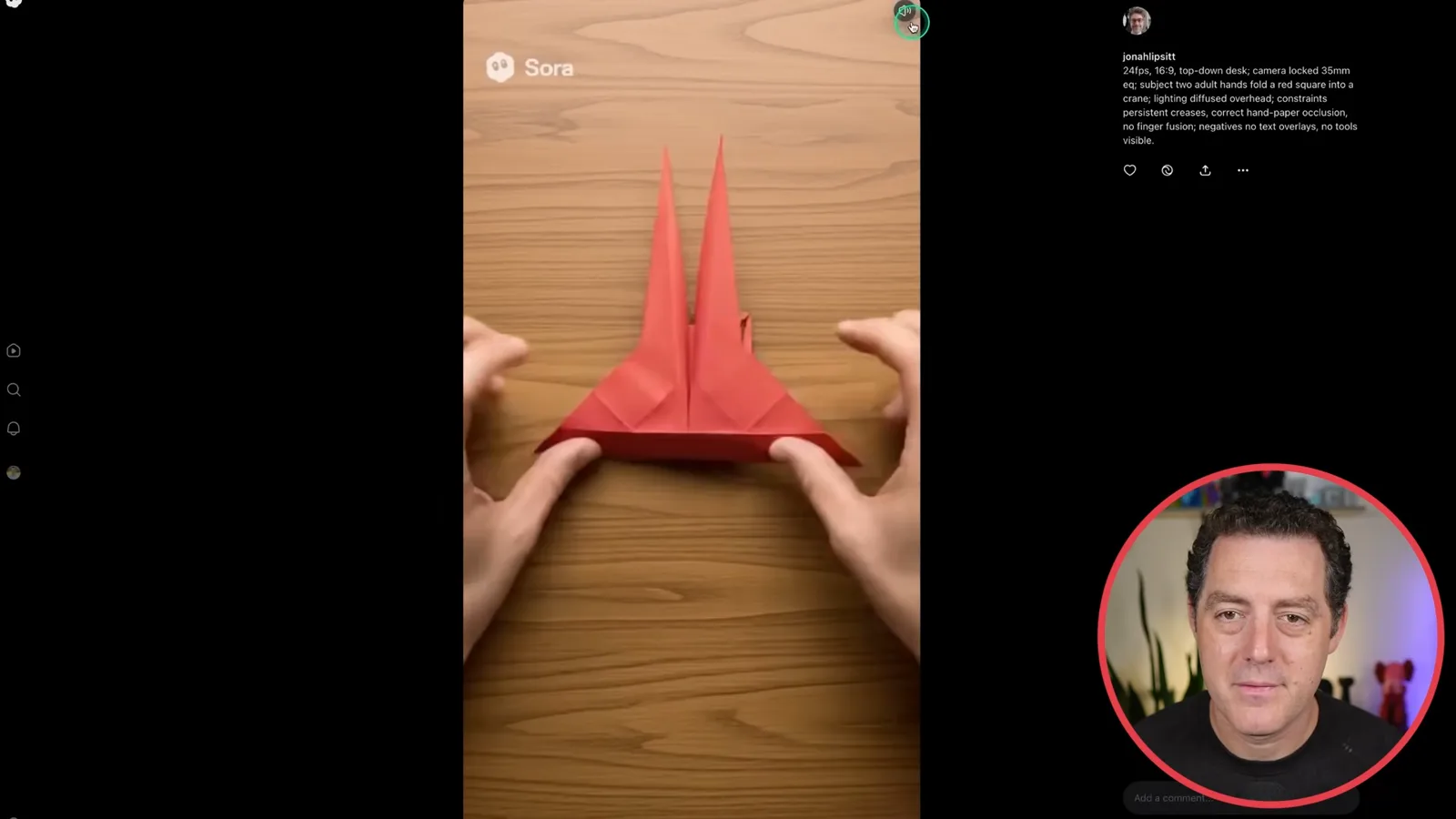
A fictional jiu-jitsu scene with a frog produces mixed body parts, including a green hand emerging from my clothing. By contrast, an origami prompt makes a red paper crane with hands that look better than I expected, even though the fold itself is awkward.
A kitchen prompt produces appealing food in still moments, but I notice transitions, an unexpected burst of flame and ingredients appearing. A stylized contemporary dance clip looks strong to me, though its silhouetted presentation makes subtle body distortions harder to inspect.
Directing the camera and simulating physics
Berman tests camera moves, focus, fluids and light. The results range from persuasive visuals to inconsistent interactions.
To test direction, I ask for a camera move over rooftop vents to a sunset skyline with restrained lens flare. The result follows much of the instruction, although I notice small visual morphs. A fast pan from a desk toward a city window also appears to settle into focus as requested.
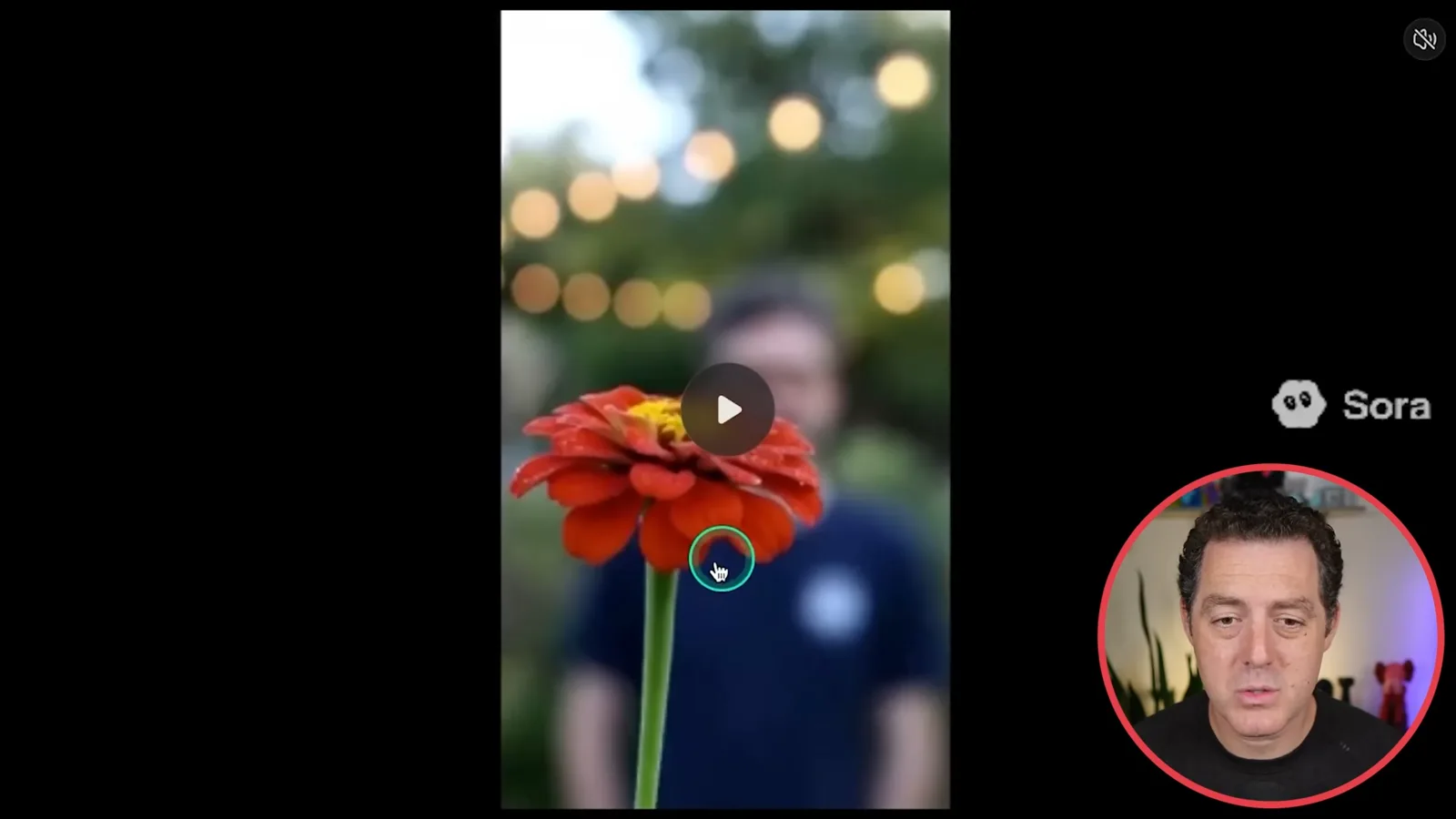
A focus-pull prompt shifts attention from a foreground flower to Jonah in the background. Another shot moves from a dark hallway into a bright room with a gradual exposure adjustment. I find the direction effective in these examples, while noticing that some clips look low in resolution.
I then test liquids, smoke and particles. Honey and espresso look persuasive to me, and a horse running through water produces splashes, perhaps exaggerated. Incense smoke looks convincing by itself even though a fan in the background does not appear to affect it.
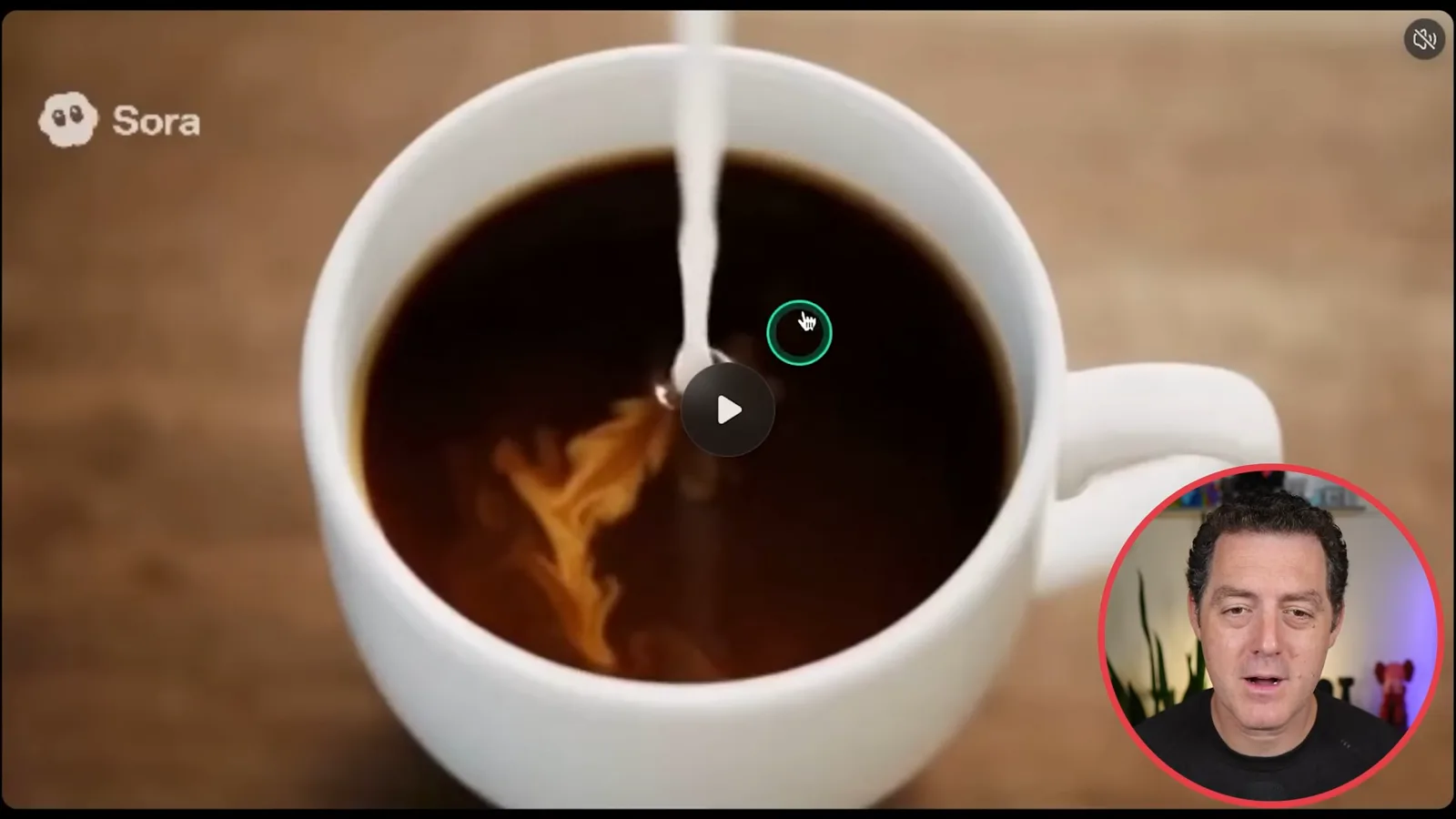
The failures are just as revealing. Milk poured into coffee does not form the visible plume I expect, and tomatoes in a pan remain static despite surrounding bubbles. A soda clip and fog flowing around a glass look better to me, but attractive samples do not establish accurate fluid simulation in general.
A prism produces a rainbow and convincing velvet texture, though I am less sure about the behavior of the light. I also examine a mesh over a patterned card and a fire illuminating hands. These are visual observations, not physical measurements.
A rotating ring and a reflective metal sphere look convincing in the selected clips, particularly their reflections. That impression is based on viewing the outputs; it is not proof that the reflection geometry is accurate in all circumstances.
Graphics and the historical workflow
Generated text and charts produce mixed results. Berman demonstrates the 2025 interface for prompts and cameos.
For motion graphics, simple animated phrases appear legible and a plan-build-launch sequence works. A handwriting effect looks like text appearing rather than being written accurately. A timeline repeats dates and mismatches narration, showing that readable elements can still be semantically inconsistent.
A generated bar chart is especially misleading: bars with the same number have different heights, while other labels do not match the visual ordering. A chart can look polished and still represent the numbers incorrectly, so its labels and geometry need checking.
A noodle-cooking clip looks consistent to me, though it has no sound. A bus-window sticker reading “Next Stop Lakeside” stays in front of the moving background without obvious letter morphing. These are successful examples within a varied set, not a reliability rate.
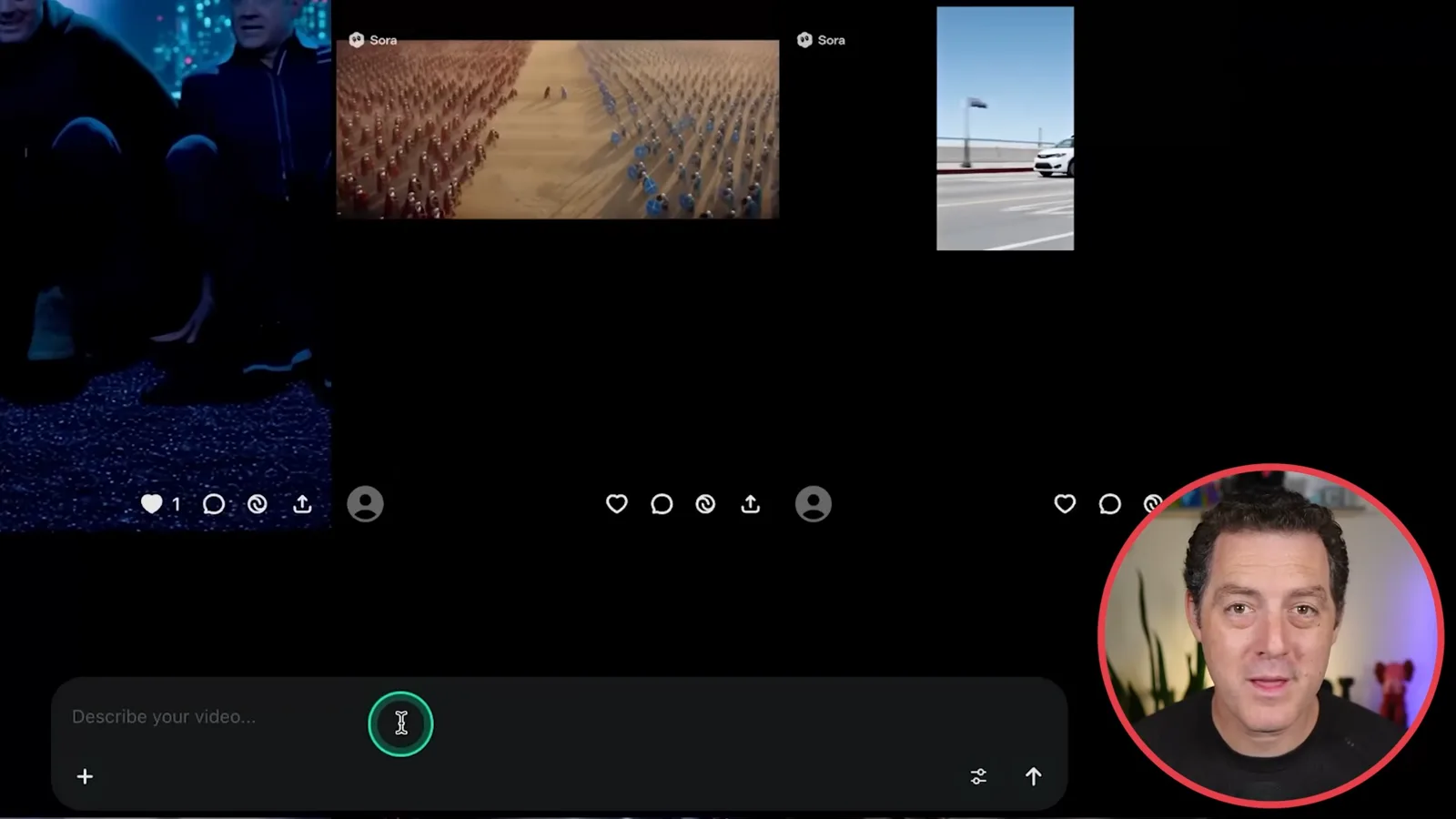
I demonstrate the 2025 workflow: after access is granted, a user records a short face-and-voice scan, writes a prompt, tags available cameos and chooses portrait or landscape orientation. OpenAI described likeness permissions as user controlled. This is historical guidance: OpenAI later said the Sora product was unavailable as of April 26, 2026.
Complex scenes, style and weather
Crowds, illustration styles and natural phenomena show strengths and limitations. The video ends with playful crossover clips.
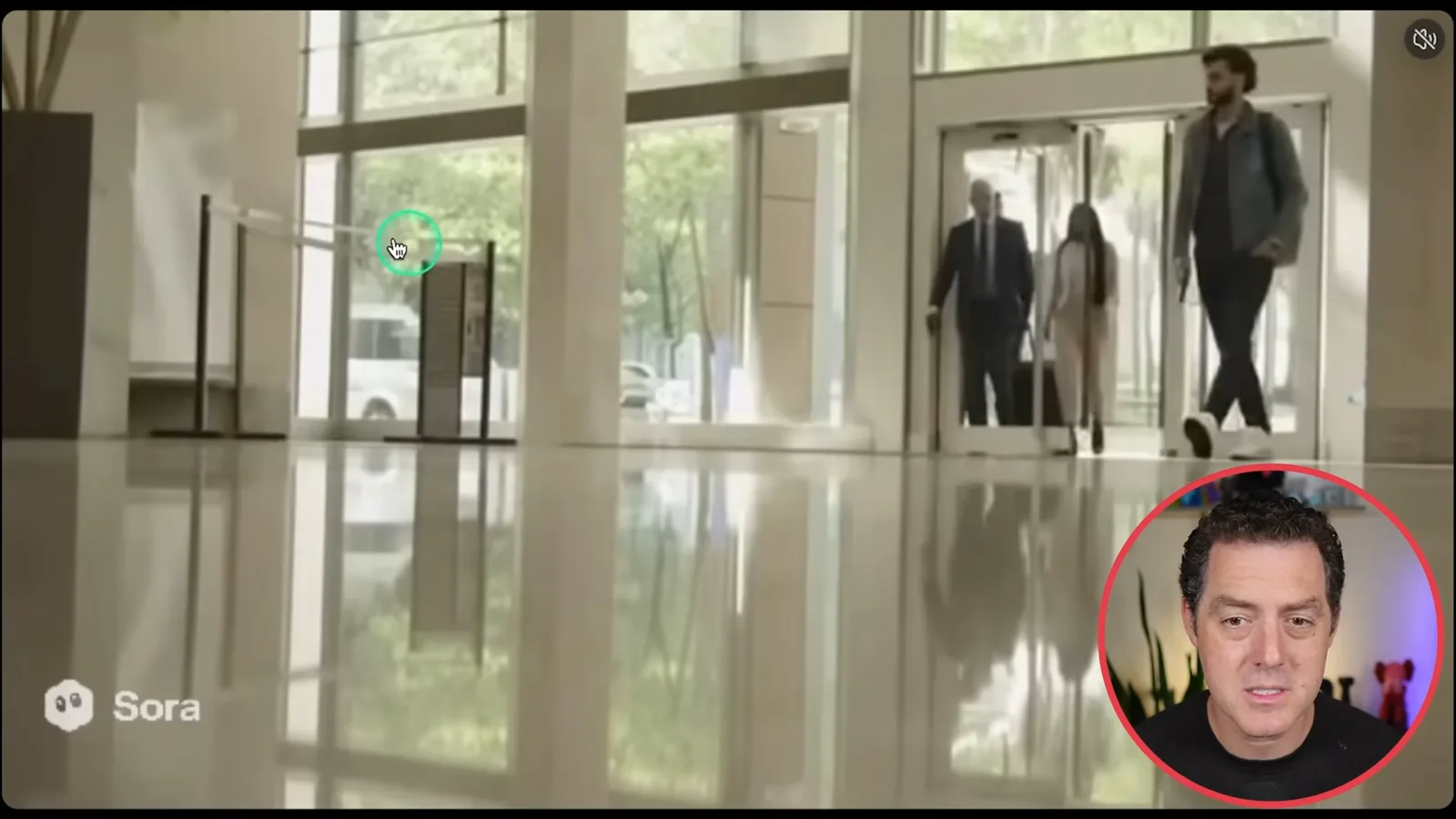
A crowded outdoor market maintains many objects and people well in the clip I show, but another crowd entering a building has people clipping through doors or merging with barriers. A crosswalk scene fares better, with some umbrella clipping. Complex scenes can therefore vary substantially even when reflections look good.
For nonphotorealistic output, I show a watercolor boat, animated robots and a stop-motion-like scene. I think stylization can make the results appealing and may make some realistic-looking errors less conspicuous; preference still depends on the viewer.
Weather and environmental examples include a flock of birds at dusk, falling snow and waves striking a wall. Some birds disappear, and a little steam appears unexpectedly, but the snow illuminated by a lamp and the waves look impressive to me. These are subjective observations of individual generated clips.
I finish with playful generated scenes, including yoga and fictional racing crossovers. I notice that some named properties are accepted while other requests are refused. Inconsistent results in my tests do not establish what any rights holder permits or what the platform’s policies guarantee.
The final clip imagines me as a 1990s rapper. Overall I had fun experimenting, while the examples show why likeness, motion, numerical accuracy and physical interactions still need close inspection.
Más de este canal
 34:21EN
 Matthew Berman· 27 oct 2026Matthew Berman Examines Anthropic’s IPO Filing, AI Growth and GovernanceMatthew Berman, Sam Altman · Forward FutureThe presenter reviews the S-1’s financial metrics, compute strategy and voting structure while questioning the tension between rapid AI development and safety.
 0:26ENMatthew Berman· 25 oct 2026Sam Altman on Human Values and Problem-Solving in an AI WorldSam Altman · OpenAIIn a short interview excerpt, Altman considers the enjoyment of solving hard problems and the human role in interpreting results.
 0:36ENMatthew Berman· 25 oct 2026Kimi K3.1 and a Rubik’s Cube Solver DemonstrationMatthew Berman · Forward FutureMatthew Berman shows a scrambled virtual cube being solved and gives the Kimi K3.1 test a favorable assessment.
 0:21ENMatthew Berman· 24 oct 2026An AI-Generated Kimi Benchmark Chart Used Invented ScoresMatthew Berman · Forward FutureMatthew Berman asks for a graph of Kimi K3.1 Pro benchmarks, then discovers that the displayed figures are illustrative placeholders.
 25:50ENMatthew Berman· 24 oct 2026Kimi K3.1 Pro Tested: Strong 3D Demos, Uneven Results and Competitive PricingMatthew Berman · Forward FutureMatthew Berman tests the open-weight model on coding, 3D rendering and visual explanations, then compares benchmark results and prices.
 32:20ENMatthew Berman· 23 oct 2026Who Is Local AI For? The Costs, Trade-offs and a Hybrid FutureMatthew Berman · Forward FutureMatthew Berman weighs data control and independence against hardware cost, setup complexity and inference speed.