En 30 segundos
Matthew Berman explores Gemini 2.5 Pro Experimental soon after its March 2025 release, demonstrating generated programs for a configurable cube, Lego builder, games, a 3D knot, an ant farm and toy biological simulations. Some are presented as one-shot results; others receive follow-up feature requests. He also examines Google’s reported benchmarks, the model’s million-token context window and AI Studio settings. His positive assessment is based on selected demonstrations and the launch-era model landscape, not an independent current ranking.
- 1Configurable cubeBerman demonstrates 4×4 and 10×10 cubes. The video does not inspect how the generated solve function works.
- 2Launch benchmarksBerman reviews Google’s model comparison; results vary by task and testing setup.
- 3Interactive Lego builderThe generated app allows brick placement and stacking, with some visual defects.
- 4Iterating on an ant farmBerman uses a follow-up request to add adjustable controls to the simulation.
- 5Toy bloodstream simulationThe two- and three-dimensional versions animate simplified rules; they are not validated biological models.
Conclusiones
- Google introduced Gemini 2.5 Pro Experimental in March 2025 with a one-million-token context window.
- Google reported 63.8% on SWE-bench Verified using a custom agent setup; benchmark comparisons depend on their test conditions.
- A configurable cube appears to scramble and return to a solved state, but the video does not establish its algorithm or ability to solve arbitrary states.
- The Lego builder supports stacking and positioning, though Berman observes missing studs.
- Some examples use follow-up prompts, including adding controls to the ant farm and requesting a 3D bloodstream view.
- The bloodstream and surgery examples are toy simulations, not validated biological or medical tools.
Lee el texto editado por capítulos
Cube simulation and the 2025 release
Berman shows a configurable cube and reviews the launch of Gemini 2.5 Pro Experimental. He places its early ranking in the context of contemporary models.
In March 2025, Matthew Berman tests Google’s newly announced Gemini 2.5 Pro Experimental with a series of generated programs. He calls it the most impressive coding model he has tried, while the examples are informal demonstrations rather than a controlled, comprehensive comparison.
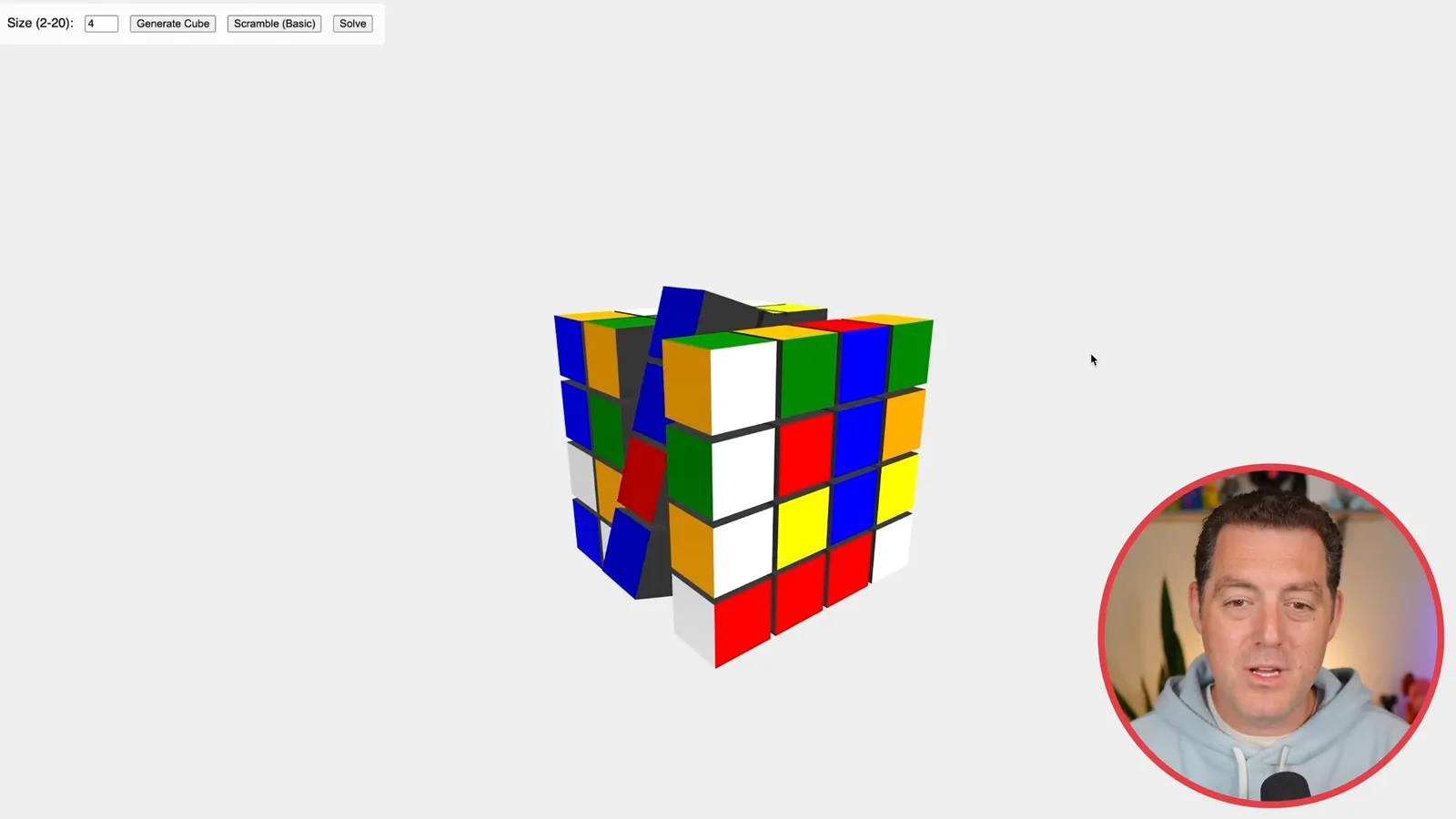
The first demo is a 3D Rubik’s Cube with a configurable size. Berman scrambles a 4×4 cube, watches it return to a solved appearance, and starts a 10×10 example. He says earlier models he tried struggled with the visualization. The video does not inspect the solving algorithm or establish that it can solve arbitrary unseen cube states.
Berman describes the experimental release as a thinking model available in Google AI Studio and says he was able to use it for free at the time. He points to a contemporaneous LMArena human-preference ranking, where the displayed scores place Gemini 2.5 Pro ahead of Grok 3 Preview. Availability, pricing and rankings are historical snapshots, not current guidance.
Benchmarks and model interface
Google’s published table compares reasoning and coding tests under specific conditions. Berman notes the long context window and shows AI Studio settings.
He explains thinking models as generating intermediate work before a final answer and says he finds this useful for coding, mathematics and logic. He then reviews Google’s published model comparison, including Humanity’s Last Exam, GPQA Diamond, AIME, LiveCodeBench and Aider Polyglot. Results depend on the benchmark and test setup; the chart does not show Gemini winning every category.
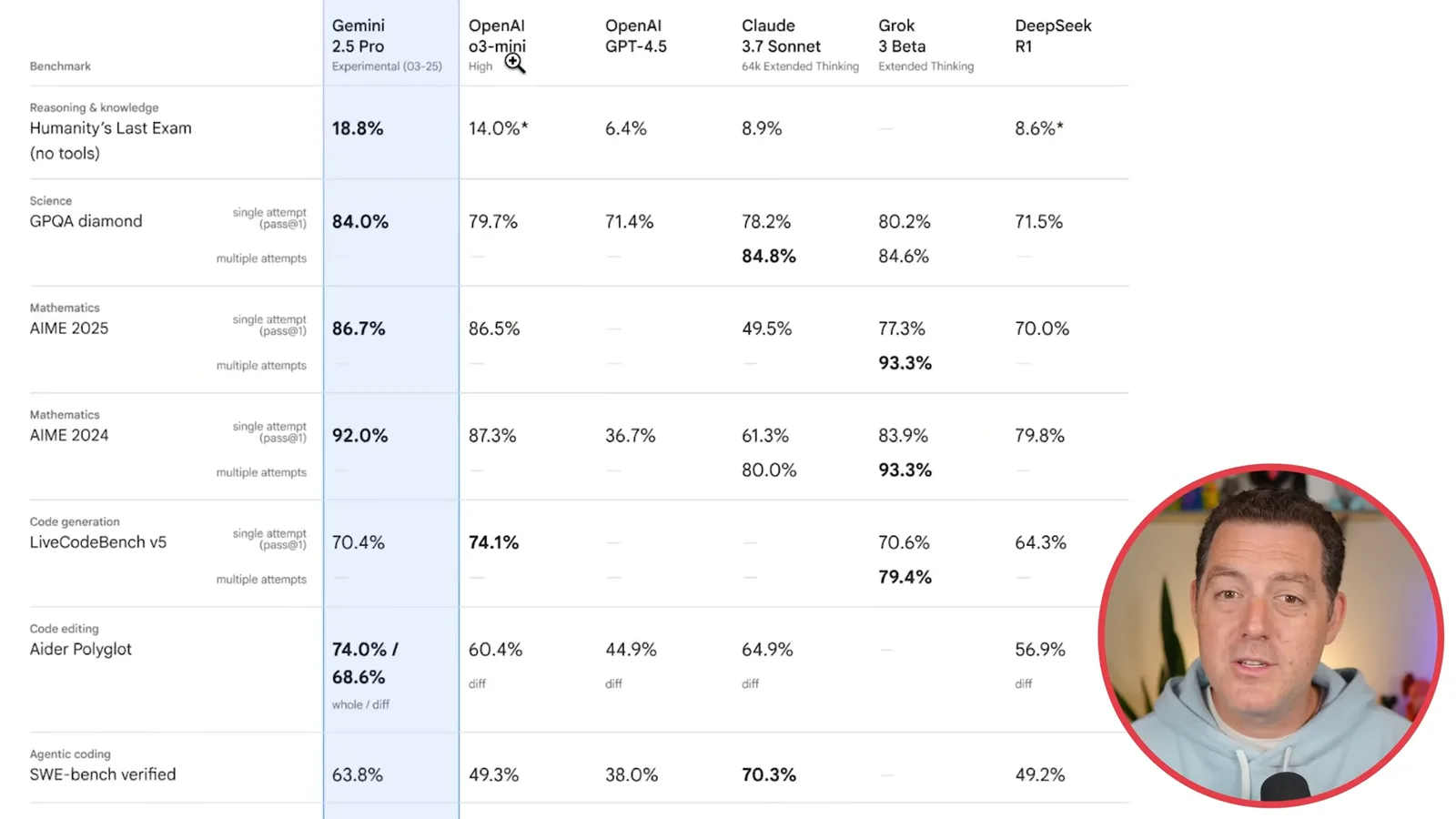
The March 2025 chart gives Gemini 18.8% on Humanity’s Last Exam without tools and 86.7% on AIME 2025 in a single attempt, while the same chart lists higher competing results in some other settings. Google reports 63.8% on SWE-bench Verified using a custom agent setup. These are provider-reported results, not a direct guarantee of real-world software quality.
Berman highlights the one-million-token context window announced at launch, suggesting it can accommodate large amounts of code. Once the 10×10 cube animation finishes, he shows the AI Studio interface with a January 2025 knowledge cutoff and options including structured output, code execution, function calling and search.
Lego, snake games and flight
The model generates an interactive brick builder, two snake games and a simple flight simulation. The demos include visual imperfections and limited testing.
The next prompt requests an interactive Lego builder using Three.js in a single HTML file. It specifies brick shapes, colors, grid snapping, collision detection, controls and visual feedback. Berman shows bricks being placed and stacked, an invalid position marked in red, and camera and rotation controls.
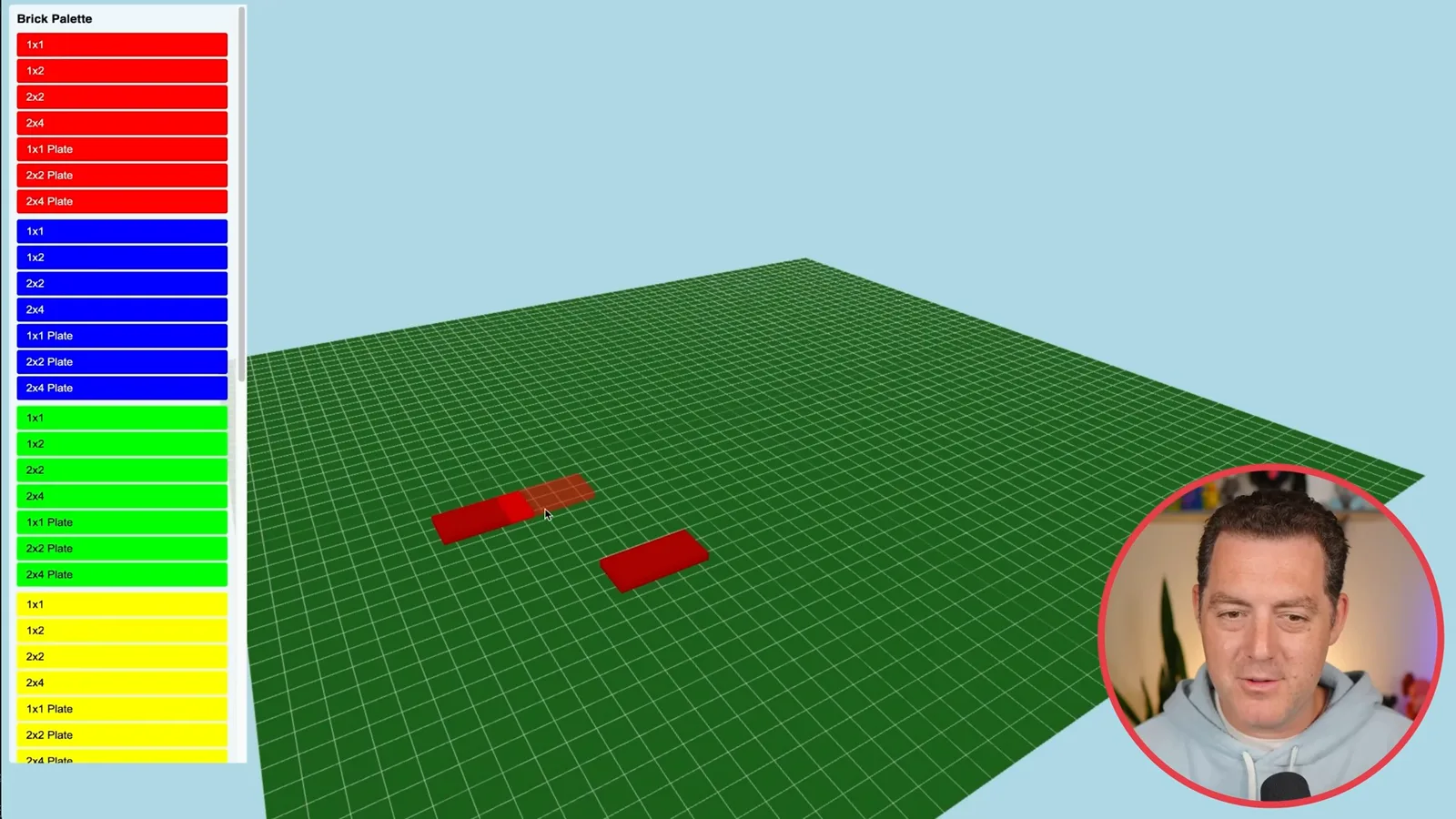
He notes that studs sometimes fail to appear. In his personal comparison, a DeepSeek V3 version shows odd cylinders and does not stack bricks correctly; he says the Gemini version was generated in one shot without a follow-up. These observations concern the runs shown and do not establish a general ranking across models or prompts.
Berman asks for a more elaborate Python and Pygame snake game with fading trails, particle effects, power-ups, changing snake visuals, obstacles and an AI opponent. The resulting game displays effects such as time slowdown and speed boost before his snake collides. He describes this example as a one-shot generation.
A simple flight simulator follows from a short prompt. Berman can accelerate, turn and slow almost to a stop; he notices terrain, shadows and fog, but also calls the result basic and says a richer prompt would be needed for more detail.
He generates another snake game with a temperature setting of one and watches a different version with glowing food and a trail. He says he could keep adding rules, obstacles and power-ups. The clip shows a short play session rather than a comprehensive check that every requested feature works.
Website, torus knot and ant farm
Berman experiments with a Reddit-like page and a configurable 3D knot. A second ant-farm version follows an extra request for controls.
For a Reddit-like page, Berman asks the model to recreate the site in one file and turns on Google Search grounding. The result includes posts, comments and community controls but resembles an older layout; he is unsure whether search was actually used.
A Three.js torus-knot prompt requests a WebGL object with geometry, material, lighting and animation controls. Berman demonstrates changing the radius, tube thickness, mesh segments and the P and Q winding values. He also changes color and switches to a wireframe.
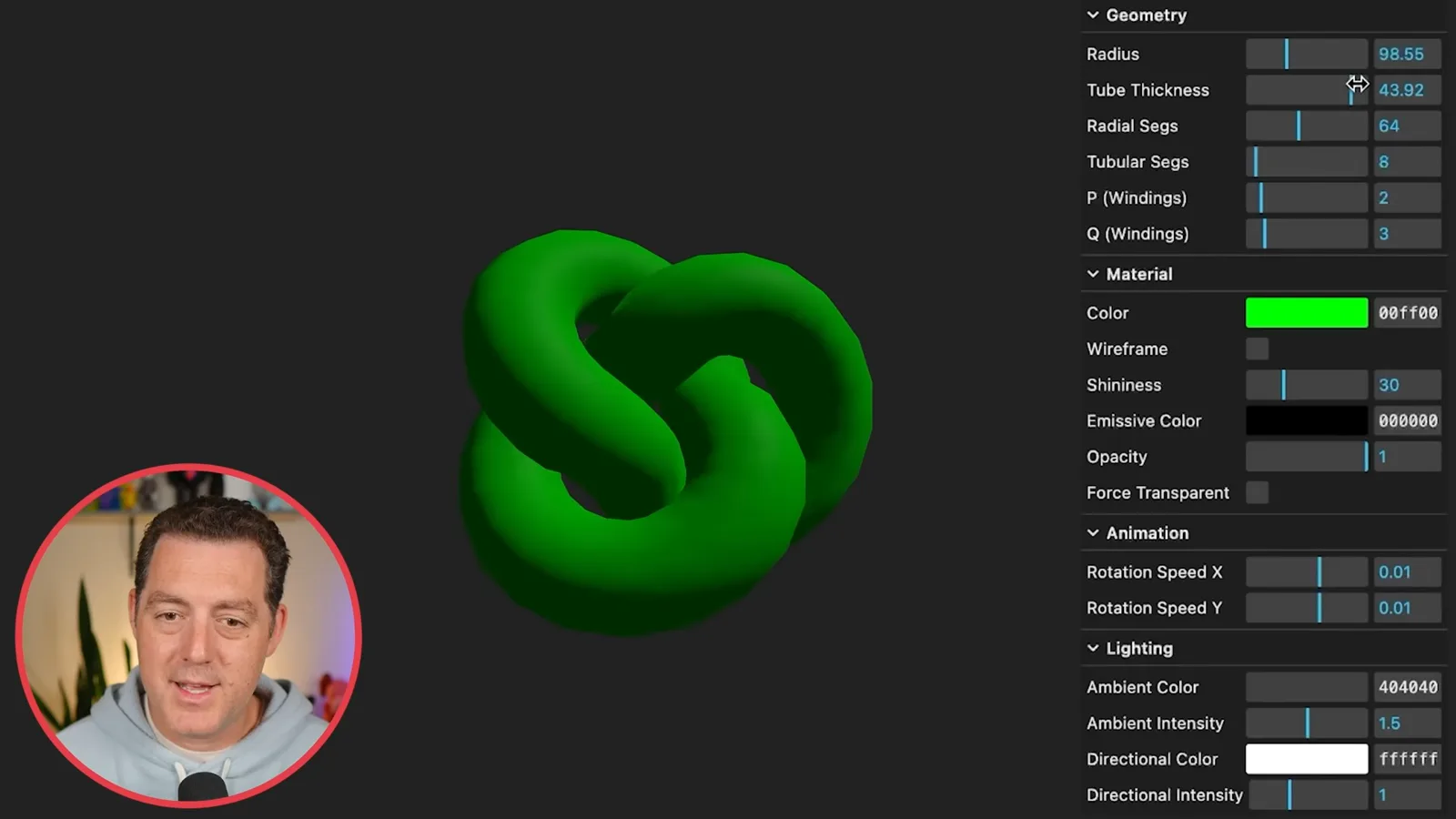
He continues through controls for shininess, transparency, emissive color, rotation speed and lighting. The demonstration illustrates how a generated interface can expose parameters for experimentation; Berman suggests prompting for further features.
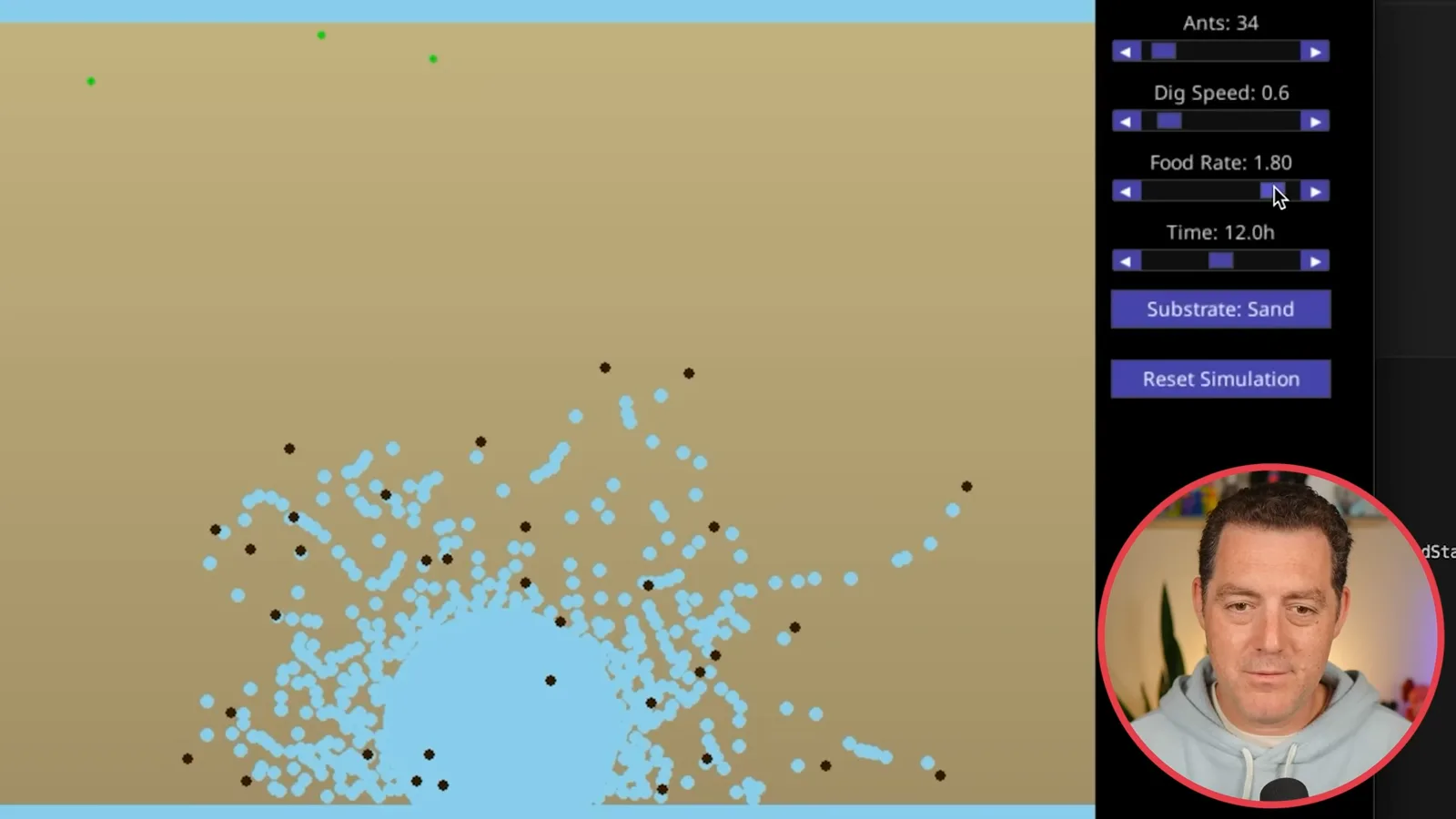
The ant-farm prompt requests a transparent side view with ants digging tunnels and moving food. Berman says he often starts with a short idea and asks ChatGPT to expand it into a detailed prompt. He also says he ultimately requested a Python version.
The first ant simulation looks interesting but lacks controls. After a follow-up request, a second version lets him change ant count, digging speed, food rate, time of day and the sand-or-gel substrate. This example therefore includes iteration to add features despite his broader description of many demos as one-shot.
Toy biological and surgery simulations
Two- and three-dimensional bloodstream animations and a toy surgery game conclude the demo. Their simulated behavior is not validated biology or clinical training.
Berman requests a bloodstream visualization with red and white blood cells and simulated viruses, plus controls for virus type and replication. In the two-dimensional version he changes the number of viruses, white-cell speed and detection range, blood flow and simulation speed. These are toy rules for an interactive coding demo, not a validated biological model.
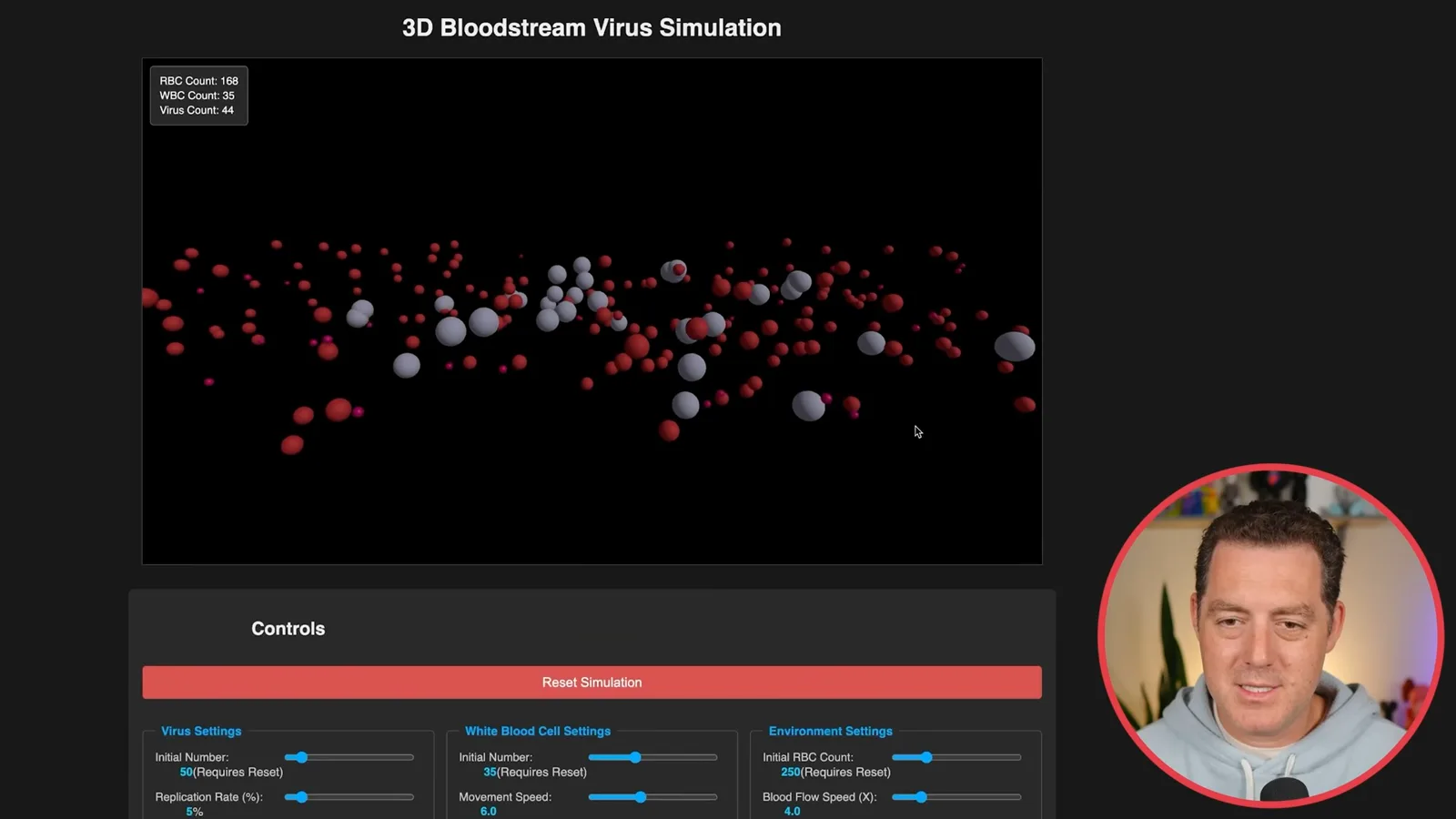
He then asks for a 3D version and adjusts cell counts, virus settings, turbulence and flow. The animation depicts viruses attacking red blood cells and white cells pursuing viruses under its programmed rules. The visuals do not establish that this is an accurate representation of how real infections work.
The final example is a toy surgery simulator created by producer Alex. Berman uses a virtual scalpel and sutures while the interface shows precision and stability scores. It is a game demonstration, not a clinical training or medical tool.
Berman concludes that the examples are largely one-shot, while clarifying that he sometimes requested additional features and says he did not ask for code fixes. He considers Gemini 2.5 Pro the strongest coding model he had personally tried at that point; the conclusion reflects his selected prompts and experience in March 2025.
Más de este canal
 34:21EN
 Matthew Berman· 27 oct 2026Matthew Berman Examines Anthropic’s IPO Filing, AI Growth and GovernanceMatthew Berman, Sam Altman · Forward FutureThe presenter reviews the S-1’s financial metrics, compute strategy and voting structure while questioning the tension between rapid AI development and safety.
 0:36ENMatthew Berman· 25 oct 2026Kimi K3.1 and a Rubik’s Cube Solver DemonstrationMatthew Berman · Forward FutureMatthew Berman shows a scrambled virtual cube being solved and gives the Kimi K3.1 test a favorable assessment.
 25:50ENMatthew Berman· 24 oct 2026Kimi K3.1 Pro Tested: Strong 3D Demos, Uneven Results and Competitive PricingMatthew Berman · Forward FutureMatthew Berman tests the open-weight model on coding, 3D rendering and visual explanations, then compares benchmark results and prices.
 32:20ENMatthew Berman· 23 oct 2026Who Is Local AI For? The Costs, Trade-offs and a Hybrid FutureMatthew Berman · Forward FutureMatthew Berman weighs data control and independence against hardware cost, setup complexity and inference speed.
 1:03:37ENMatthew Berman· 23 oct 2026Matthew Berman’s Team Tests Kimi K3.1 on Animation, Games, and ChartsMatthew Berman, Alex, Brian · Forward FutureA live team AMA turns into an informal test of Kimi K3.1, from personal-agent workflows to motion graphics, a browser game, and a benchmark chart.
 0:53ENMatthew Berman· 22 oct 2026Sam Altman on AI and the Discovery of New KnowledgeSam Altman · OpenAIAltman expects progress in mathematical discovery to extend to biology, materials and energy.