En 30 segundos
In a June 2025 news roundup, Matthew Berman discusses Gemini 2.5 Flash-Lite, Oakley Meta glasses, Midjourney video, image-editing tools and browser automation. He also comments on Meta hiring reports, OpenAI–Microsoft negotiations and OpenAI’s government initiative. Subsequent developments clarify the Windsurf deal and the partnership’s corporate terms.
- 1A generated interfaceThe Flash-Lite demo builds desktop-like screens as the user navigates; its changing layout illustrates the limits of the proof of concept.
- 2Image-to-videoMidjourney V1 animated still images, including uploaded start frames.
- 3Partnership negotiationsBerman discusses reports and his interpretation of OpenAI and Microsoft’s negotiations; later terms differ from June proposals.
- 4Government pilotOpenAI announced a Defense Department pilot with a $200 million contract ceiling.
Conclusiones
- The Flash-Lite interface is a demonstration of generation speed, not a stable conventional application.
- Midjourney V1 animated both generated and externally uploaded starting images.
- Meta hiring and OpenAI negotiation details were reported or attributed at the time, and should not be treated as settled facts.
- OpenAI did not complete the proposed Windsurf acquisition; Cognition announced an acquisition in July 2025.
- The Defense Department pilot had a $200 million ceiling, not necessarily $200 million in spending.
Lee el texto editado por capítulos
Flash-Lite and wearable devices
A generated interface illustrates Gemini 2.5 Flash-Lite. Berman also discusses Oakley Meta glasses.
Google has introduced Gemini 2.5 Flash-Lite, and a demonstration shows an interface generated as a user clicks around a desktop-like environment. A notepad, folders and buttons appear in real time; returning to a folder can produce a different layout. I find it a fascinating proof of concept, though that instability would make it a poor conventional interface.
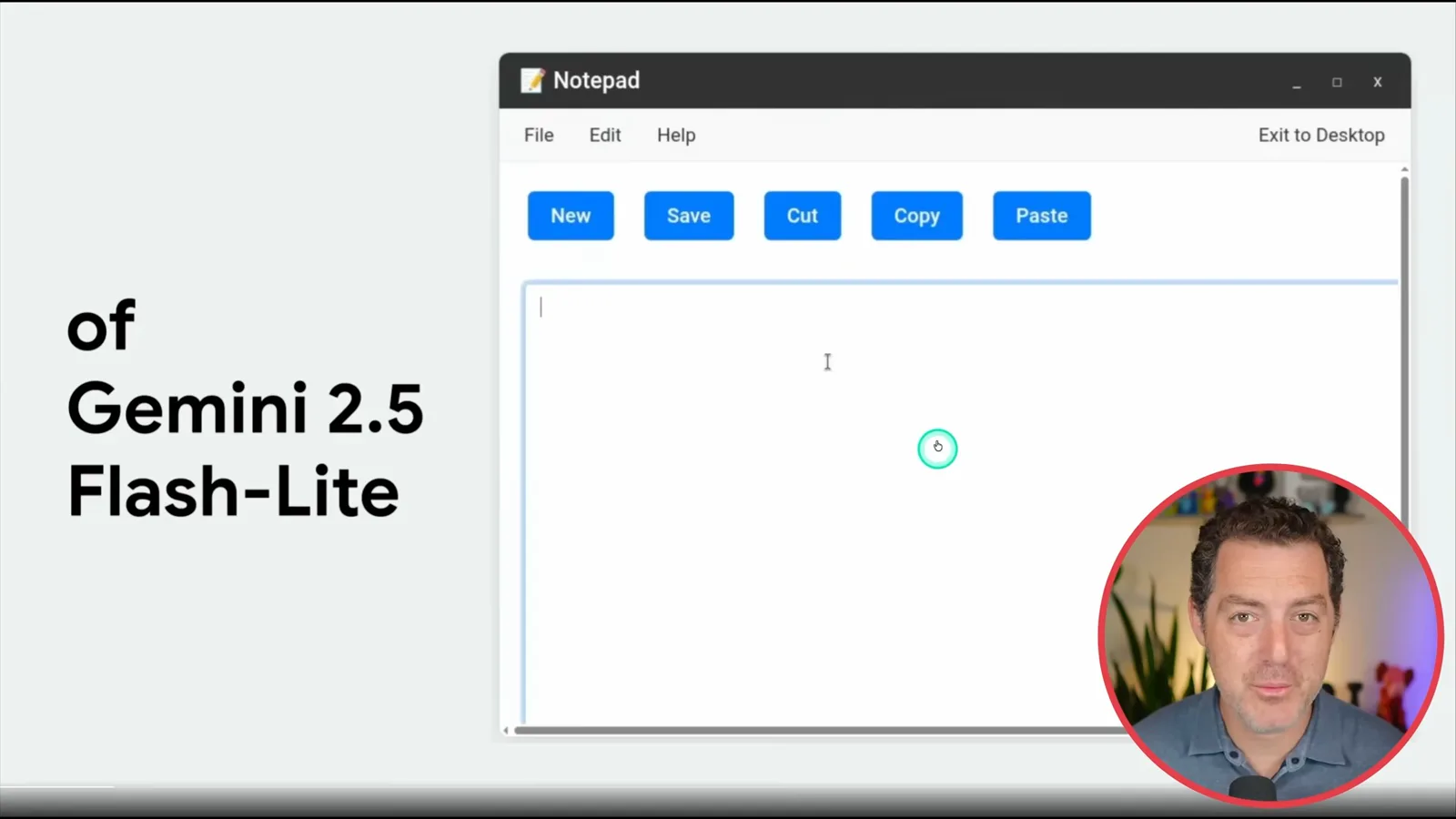
The demo displays a rate of 461 tokens per second. That is a figure for the shown demonstration, not a universal speed guarantee. Google announced Flash-Lite as a preview on June 17, 2025, alongside the general availability of Gemini 2.5 Flash and Pro.
Meta and Oakley have announced sports-oriented smart glasses. I like my Ray-Ban Meta glasses for the camera, video, calls and music, even though I do not use the AI features much. The Oakley version offers a sportier style and lets users ask questions, listen to audio and take calls; Meta's announcement describes a built-in camera.
Video and image generation
He reviews Midjourney V1, Krea 1 and Higgsfield Canvas. Their demos show particular examples, not comprehensive reliability.
Midjourney's first video model animates an image, and I had trouble finding the workflow at first: generate an image and use Animate to add motion. The examples range from a spaceship and water scene to fantasy and an astronaut. I like the visual quality, though curated examples do not settle how consistently the model performs.

I initially suggest that a Midjourney image must be generated first, but the company's V1 announcement also says users can upload an outside image as a start frame. Each job produced four five-second clips at launch, and pricing depended on plan and usage. I also mention Hunyuan Video and Wan 2.1 as other models worth exploring.
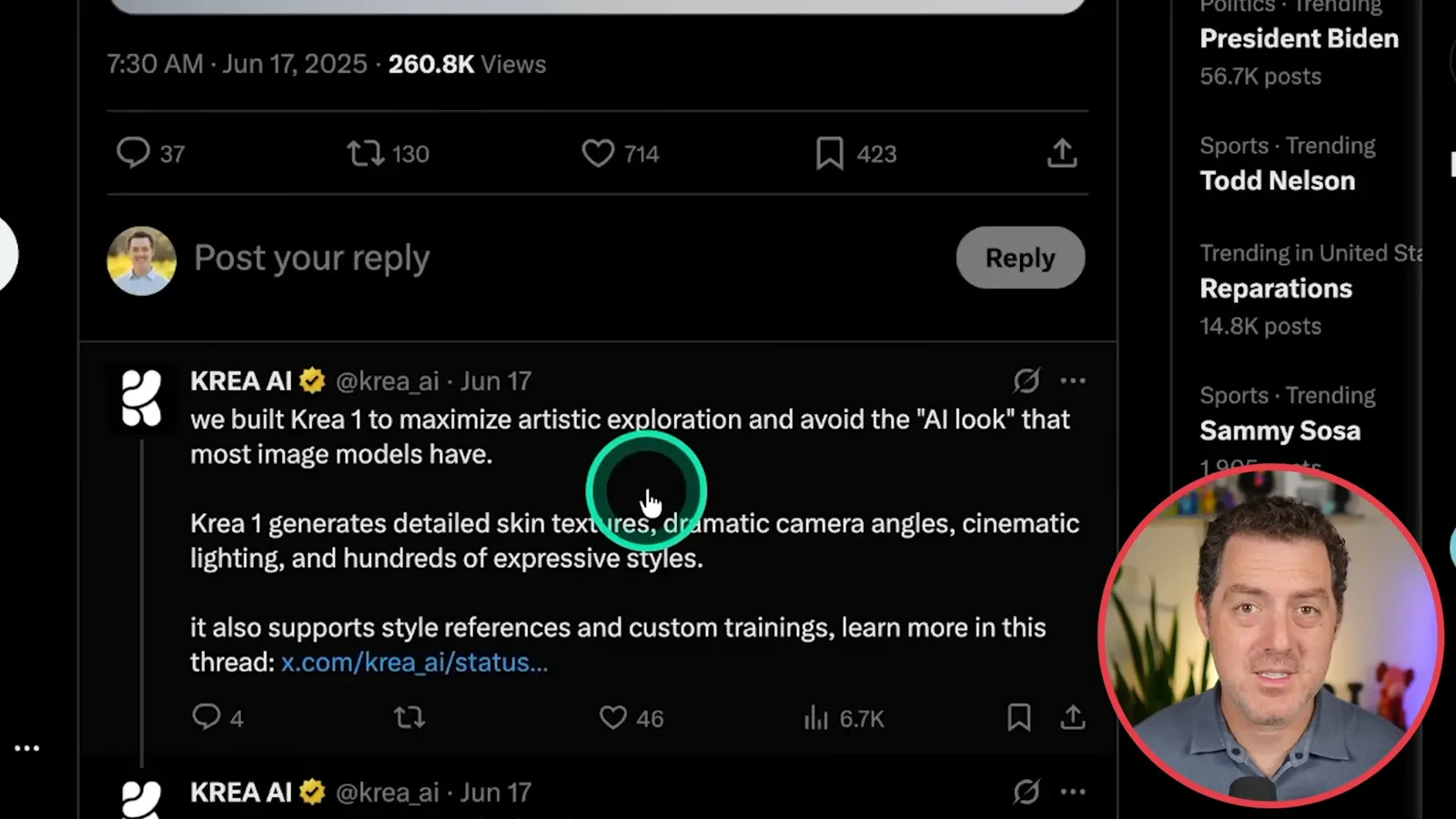
Krea 1 is a text-to-image model made with Black Forest Labs. The developers say they designed it to avoid a stereotypical AI look, an aesthetic goal that users will need to judge for themselves. At the time of this video I say it can be tried for free.
Higgsfield Canvas demonstrates selecting an area of an image and placing a product or making other edits, such as changing clothing. I can imagine marketing and virtual try-on uses. Some examples look convincing to me, although one with cheeseburgers does not; a product demonstration is not a measurement of pixel-perfect reliability.
AI hiring and corporate negotiations
Berman discusses reports of Meta recruiting and OpenAI–Microsoft talks. Later developments clarify the ownership and Windsurf claims.
Meta's AI hiring has become a major story. It invested about $14 billion in Scale AI and brought its CEO Alexandr Wang into its AI efforts. I interpret the hiring activity as a sign that top research talent is a major competitive resource alongside computing infrastructure.
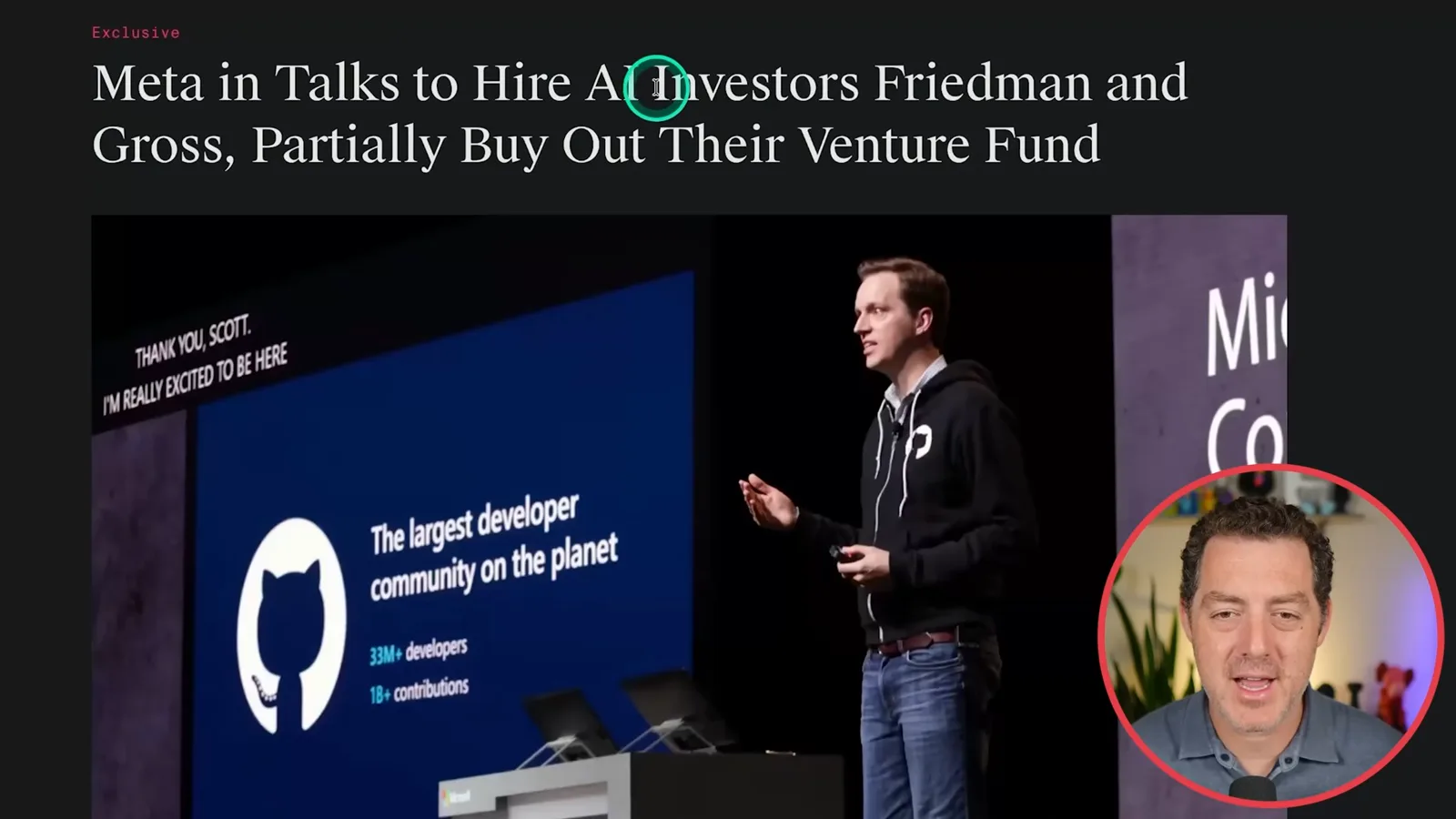
I discuss reports that Meta sought to bring Ilya Sutskever or his company Safe Superintelligence into its orbit, and that it was in talks to hire Nat Friedman and Daniel Gross and partially buy out their venture fund. Those were reported negotiations at the time, not confirmed outcomes; Gross was a co-founder of Safe Superintelligence.
Sam Altman has said Meta made extremely large offers to some OpenAI staff, including signing bonuses he described as reaching $100 million. I cite his account to illustrate competition for talent. It is a statement by one participant in the competition, not independent confirmation of the details of every offer.
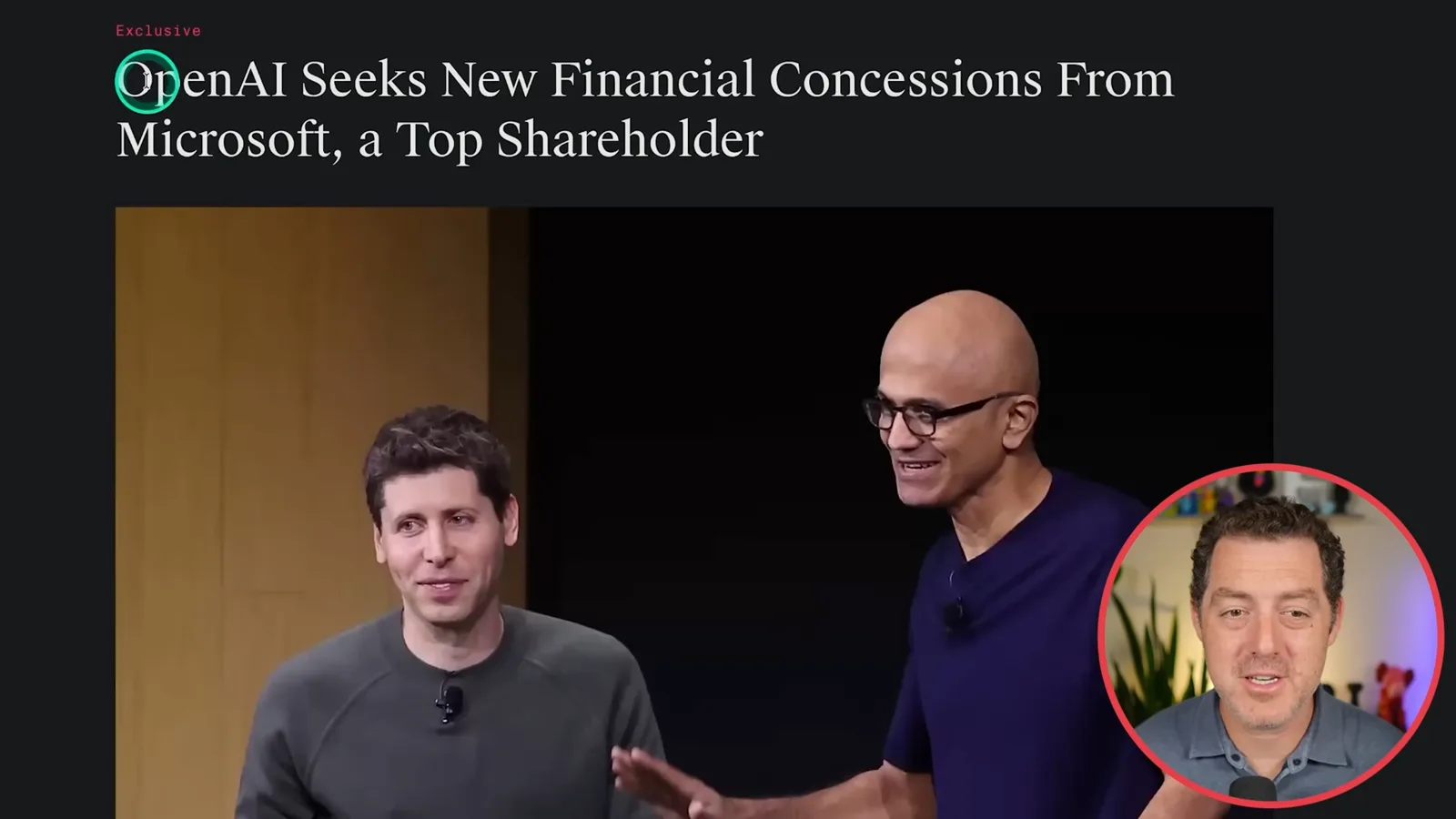
OpenAI and Microsoft were negotiating changes to their relationship and OpenAI's corporate structure. I discuss a report that OpenAI sought concessions on equity, cloud hosting and intellectual-property rights. My interpretation of the parties' incentives and the reasons for OpenAI's structural decisions is commentary, not established fact.
I say Microsoft owns 49% of OpenAI, but that shorthand should not be read as a verified 49% ordinary equity stake in the entire organization: the earlier capped-profit arrangements were complex. In October 2025, the companies announced a recapitalization under which Microsoft held roughly 27% of OpenAI Group on an as-converted diluted basis. That later figure does not describe the June negotiations as if their outcome were already known.
The report discussed a proposed roughly 33% stake for Microsoft in a reshaped unit, alongside changes to future financial rights, and possible changes to hosting exclusivity. I question why Microsoft would accept such terms, but the negotiations were private and the full package was not public. The announced October 2025 agreement ultimately established different terms.
I also say OpenAI bought Windsurf, but in June 2025 a reported acquisition was still pending, not completed. The proposed OpenAI deal later fell apart; Cognition announced its acquisition of Windsurf in July 2025. This distinction matters to the discussion of which intellectual-property rights were being negotiated.
Jailbreaks, browser agents and government
He discusses a reported jailbreak, Browserbase Director and OpenAI’s public-sector initiative. The government contract figure is a ceiling.
A researcher known as Pliny the Liberator reports jailbreak results against a preview of Gemini 2.5 Flash-Lite. I interpret the examples as a reminder that model safeguards can be bypassed and compare that problem to social engineering. My prediction that jailbreaks will always exist is speculation; these examples do not establish a complete failure rate or the model's overall safety.
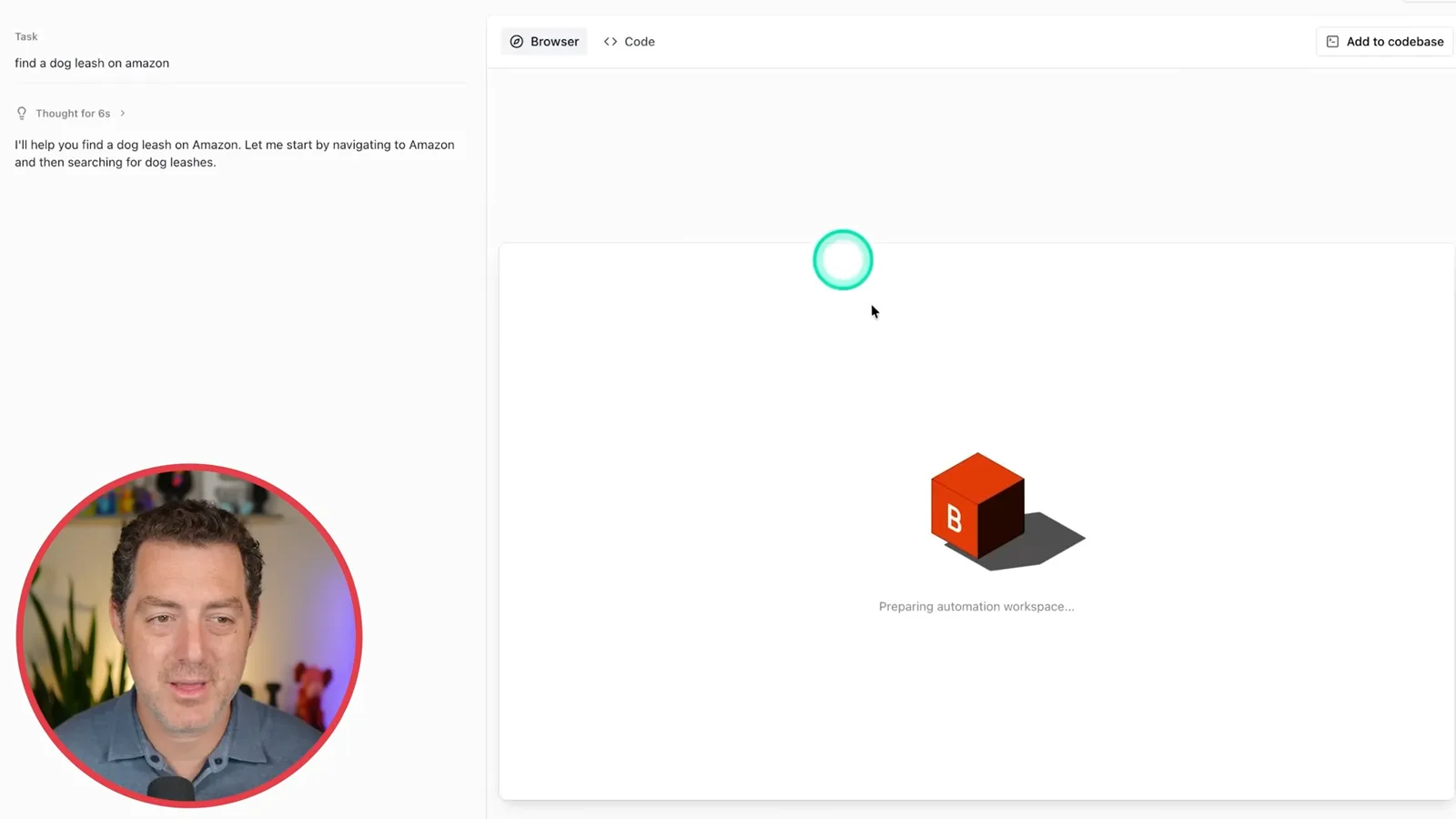
Browserbase's Director offers a no-code way to describe a browser task. In the example shown, the agent navigates to an online store and searches for a dog leash while a code tab shows steps based on Stagehand. The visible automation and reusable code are useful illustrations, not proof that every browser task will work reliably.
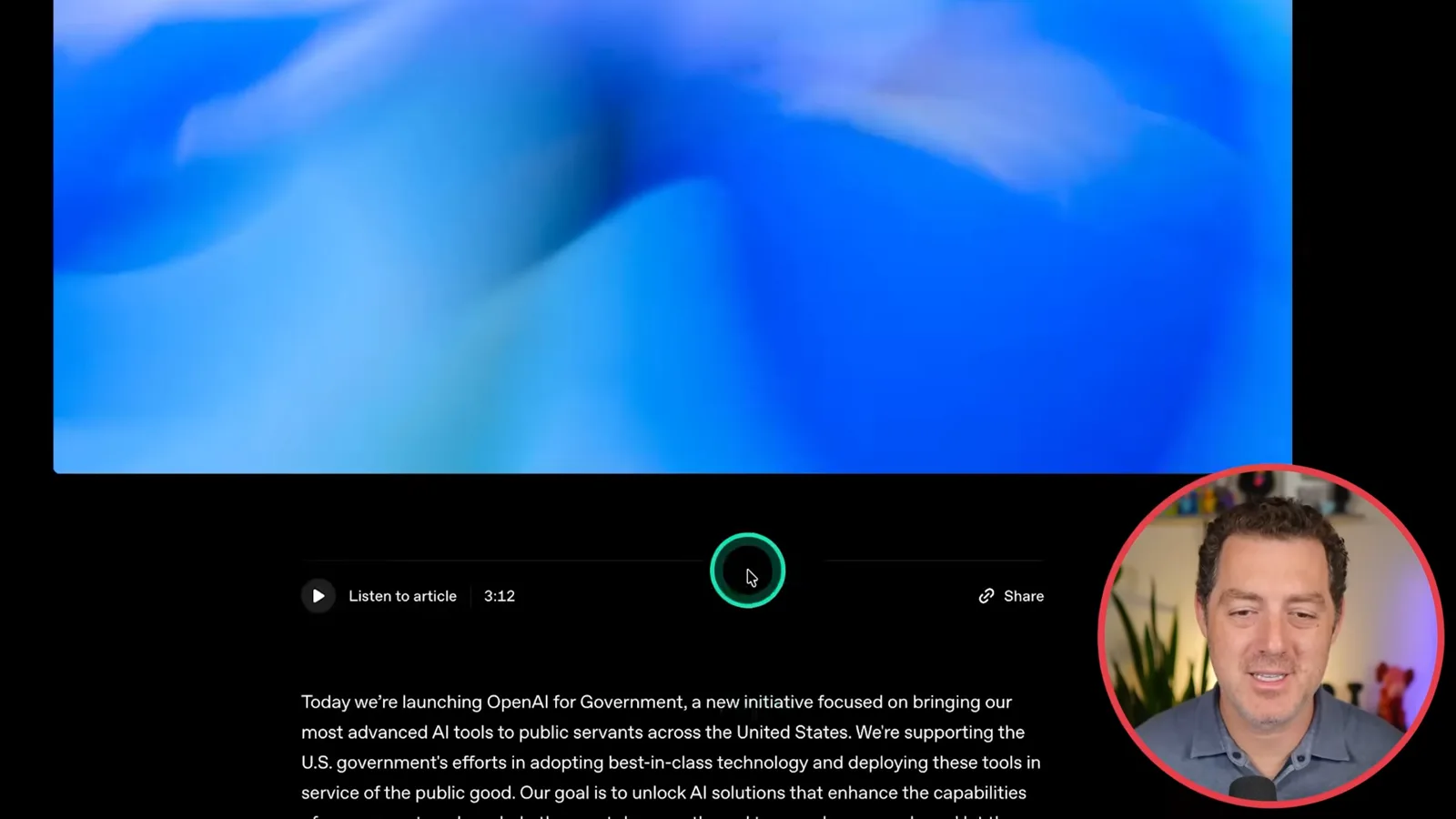
Finally, OpenAI announced OpenAI for Government, bringing existing public-sector collaborations under a common initiative. Its first partnership under the initiative was a US Department of Defense pilot with a $200 million contract ceiling. The ceiling is the maximum contractual amount, not a statement that the full amount had already been spent or paid.
Más de este canal
 34:21EN
 Matthew Berman· 27 oct 2026Matthew Berman Examines Anthropic’s IPO Filing, AI Growth and GovernanceMatthew Berman, Sam Altman · Forward FutureThe presenter reviews the S-1’s financial metrics, compute strategy and voting structure while questioning the tension between rapid AI development and safety.
 0:36ENMatthew Berman· 25 oct 2026Kimi K3.1 and a Rubik’s Cube Solver DemonstrationMatthew Berman · Forward FutureMatthew Berman shows a scrambled virtual cube being solved and gives the Kimi K3.1 test a favorable assessment.
 25:50ENMatthew Berman· 24 oct 2026Kimi K3.1 Pro Tested: Strong 3D Demos, Uneven Results and Competitive PricingMatthew Berman · Forward FutureMatthew Berman tests the open-weight model on coding, 3D rendering and visual explanations, then compares benchmark results and prices.
 32:20ENMatthew Berman· 23 oct 2026Who Is Local AI For? The Costs, Trade-offs and a Hybrid FutureMatthew Berman · Forward FutureMatthew Berman weighs data control and independence against hardware cost, setup complexity and inference speed.
 1:03:37ENMatthew Berman· 23 oct 2026Matthew Berman’s Team Tests Kimi K3.1 on Animation, Games, and ChartsMatthew Berman, Alex, Brian · Forward FutureA live team AMA turns into an informal test of Kimi K3.1, from personal-agent workflows to motion graphics, a browser game, and a benchmark chart.
 0:53ENMatthew Berman· 22 oct 2026Sam Altman on AI and the Discovery of New KnowledgeSam Altman · OpenAIAltman expects progress in mathematical discovery to extend to biology, materials and energy.