En 30 segundos
In a 2025 launch-period video sponsored in part by Dell Technologies, Matthew Berman examines Sora 2’s generated video and synchronized audio, then tries its feed and Cameo workflow. He praises selected examples but notices visual morphing and a mobile playback problem. Product availability and generation times are historical observations from his session, not current guarantees.
- 1Launch claimsOpenAI describes improved realism, controllability and synchronized audio; Berman is impressed by a generated likeness.
- 2World simulationA researcher proposes simulated environments for robot training, but video realism alone does not verify a physics simulator.
- 3Visible artifactsBerman identifies awkward wrist movement, morphing and subtle facial instability in examples.
- 4A social feedThe web interface shows generated clips, including one with Berman’s likeness and generated audio.
- 5Creating a cameoThe mobile workflow selects available likenesses and generates a fictional scene; Berman reports a playback issue.
Conclusiones
- Sora 2’s launch examples combine generated video with dialogue and sound effects.
- Cameo captures a person’s likeness for use in generated scenes, as demonstrated in the early app.
- Berman sees realistic motion but also notices awkward wrists, morphing and facial movement.
- Selected examples do not establish physical accuracy or reliability for all prompts.
- His reported five-to-ten-minute generation time and invite-only access reflect the launch-period experience.
Lee el texto editado por capítulos
Launch and world simulation
Berman watches the generated launch video and reviews OpenAI’s claims about sound and realism. A researcher discusses simulated environments as a possible tool for robotics.
OpenAI’s launch video for Sora 2 presents generated scenes and voices, including a likeness of Sam Altman. The announcement introduces synchronized sound and a Cameo feature that lets people place participating likenesses into generated videos. These are illustrative launch examples, not a controlled evaluation of every output.
I am struck by the generated Altman’s face and voice. At the time I first discuss the announcement, access is invite-only, although I obtain a code later in the video. OpenAI describes Sora 2 as more realistic, physically accurate and controllable than prior systems, with synchronized dialogue and sound effects; these are the company’s launch claims.
OpenAI connects video generation to world simulation. In an excerpt from my interview, a Google DeepMind researcher suggests simulated environments could let robots experiment before costly physical deployment. This is a proposed use for simulation, not proof that a generated video is an accurate physics simulator or suitable for robot training.
Motion examples and limitations
He watches sports, animation and realistic scenes. He praises the results while noticing morphing and other artifacts.
I watch generated motion examples: a skateboarder, a backflip, someone jumping into a pool, a horse on another horse and volleyball. The motion and splashes look impressive to me, although I notice a problem with movement through water. Selected showcase clips do not measure reliability across all scenes.
OpenAI contrasts older examples that might distort a scene to satisfy a prompt with a basketball shot that rebounds after a miss. I also review animation, a dragon and a scene with wind and speech. Synchronized sound and visual consistency are compelling, though a plausible result should not be confused with verified physical accuracy.
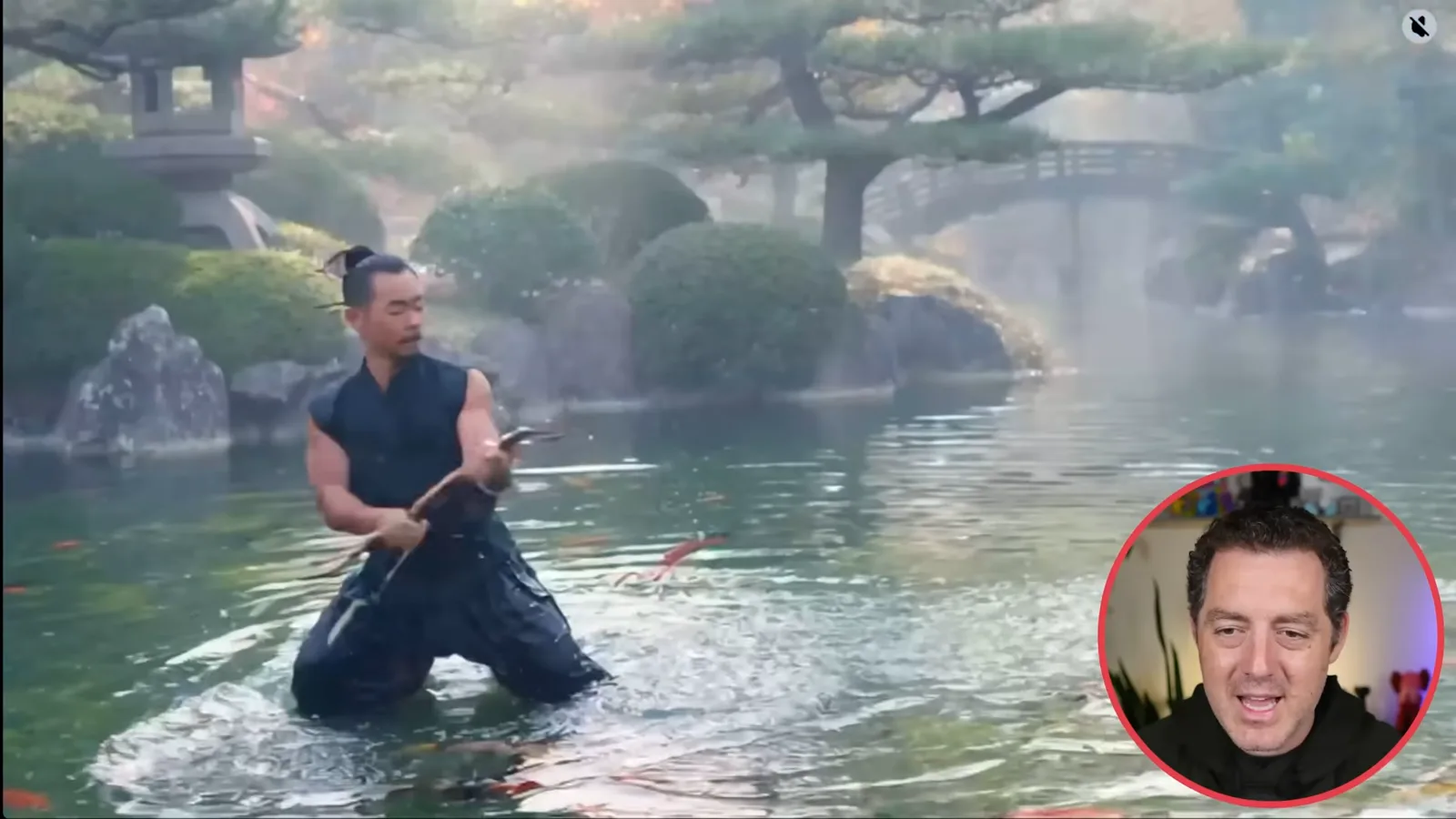
Closer inspection reveals weaknesses: a person moving a stick has awkward wrist movement and some morphing, and a generated speaker’s forehead shifts unexpectedly. Another clip has speech with an echo that seems suited to a lecture hall. These artifacts show why individual outputs still need review.
Trying the web and mobile apps
After obtaining access, Berman explores the feed and creates a scene using Cameos. He describes capture, notifications and an apparent playback issue.
After obtaining access, I show the web app’s feed of generated videos, which resembles a social video platform. One clip uses my likeness and generated audio; other examples include a commercial and a Bigfoot scene. I am excited by the realism, but these are selected examples and my reaction is subjective.
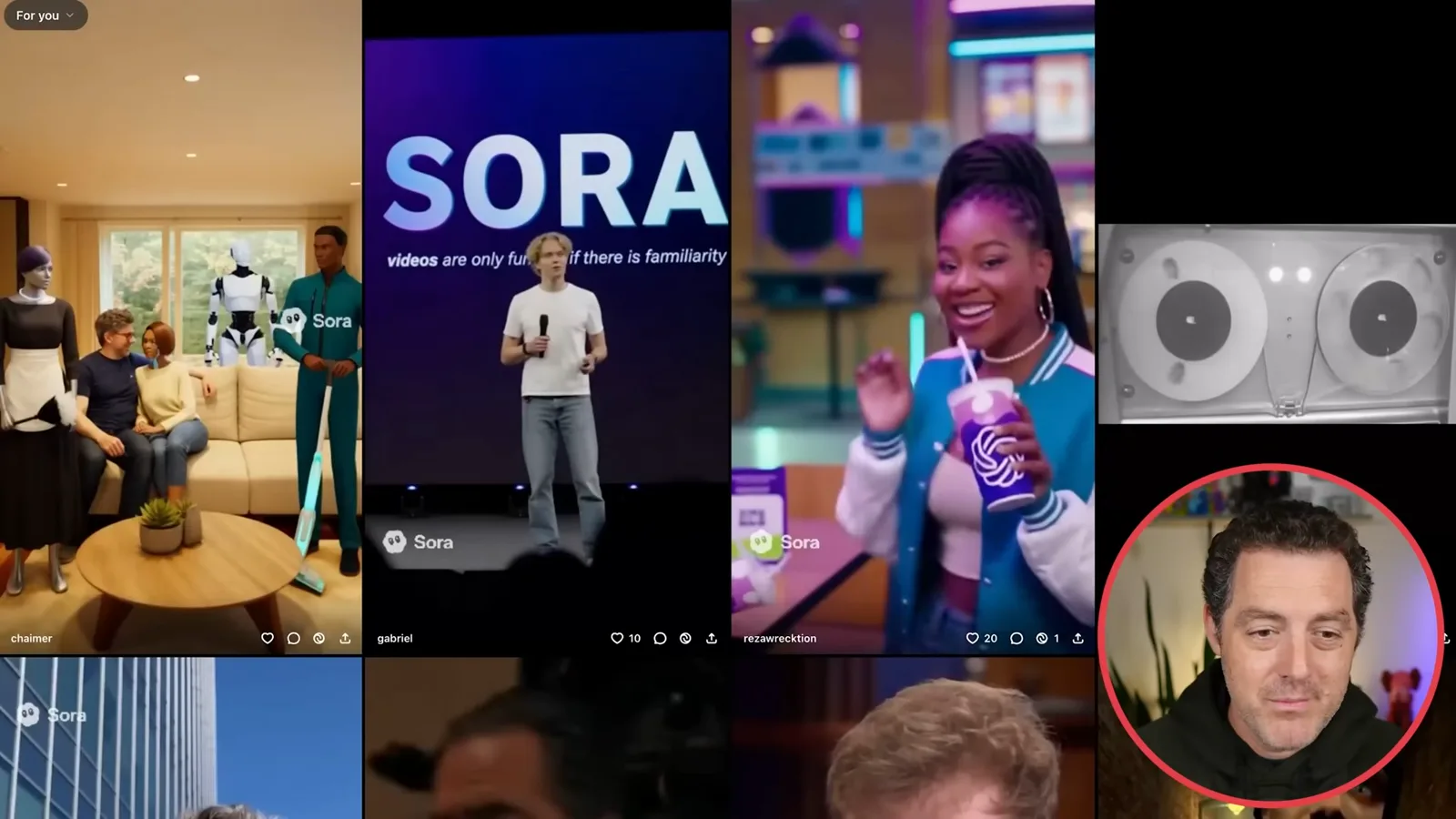
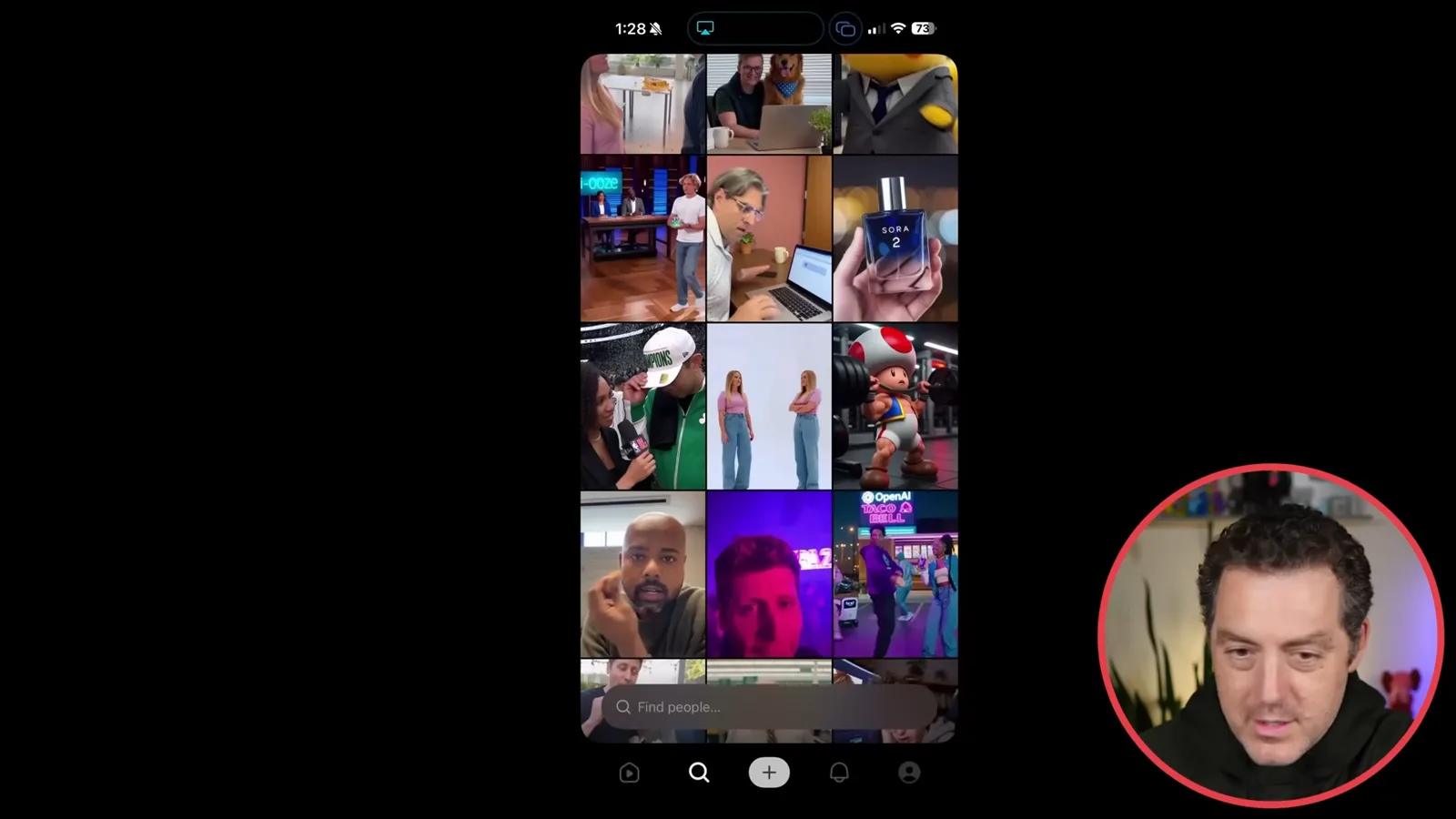
The mobile app presents a grid of clips, although I cannot stream an individual video in my recording and suspect a bug. I use the creation flow to select myself and other available Cameos and request a fictional three-person fight. The result includes generated commentary. In my experience the videos take roughly five to ten minutes, which is not a guaranteed turnaround.
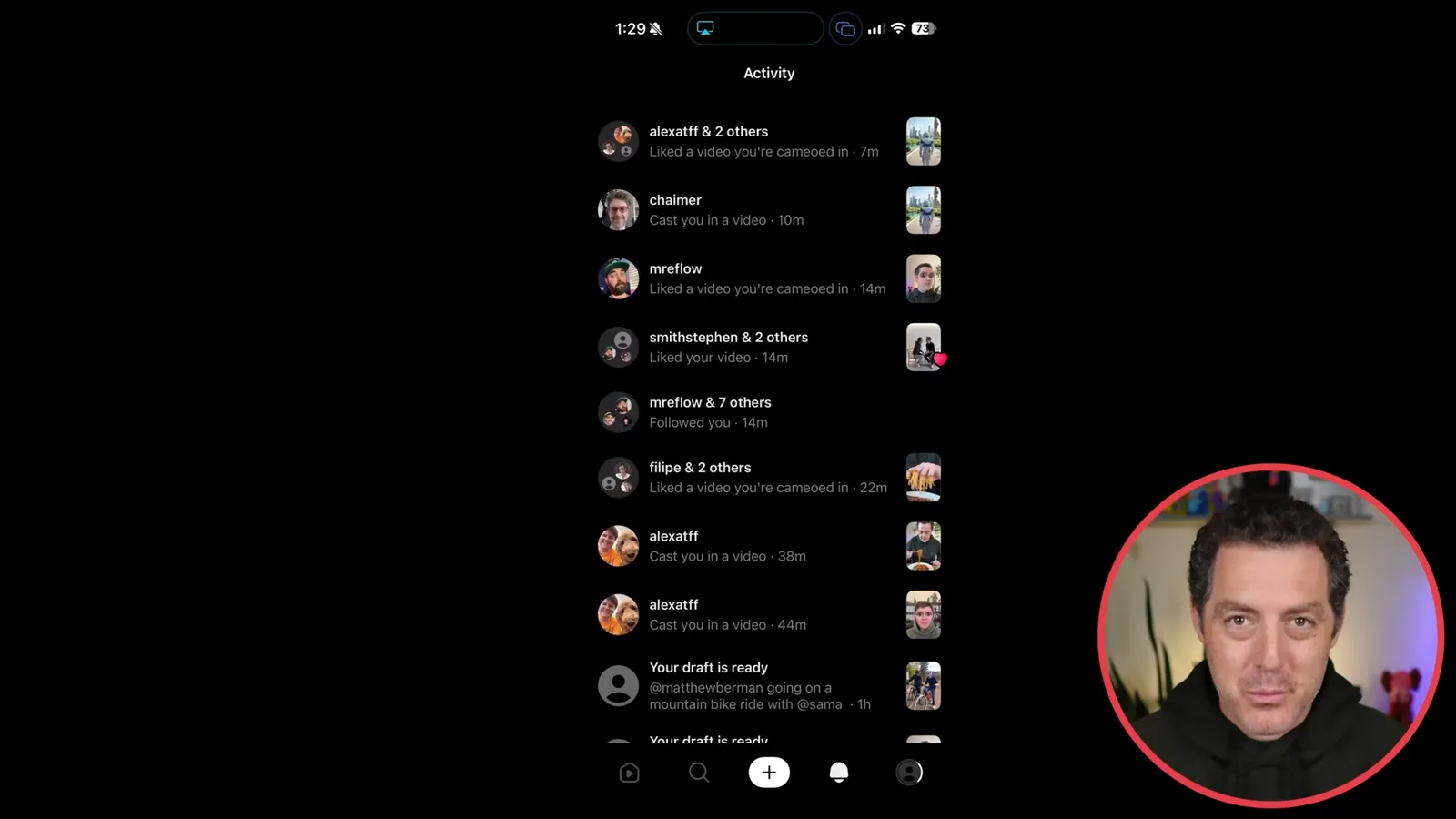
The app tags people appearing in generated videos and shows related notifications. To create my likeness, I am asked to say three numbers and move my face in different directions. One generated clip reproduces my hoodie, lighting and background; I captured the reference material in that same setting, which helps explain the resemblance.
Más de este canal
 34:21EN
 Matthew Berman· 27 oct 2026Matthew Berman Examines Anthropic’s IPO Filing, AI Growth and GovernanceMatthew Berman, Sam Altman · Forward FutureThe presenter reviews the S-1’s financial metrics, compute strategy and voting structure while questioning the tension between rapid AI development and safety.
 0:36ENMatthew Berman· 25 oct 2026Kimi K3.1 and a Rubik’s Cube Solver DemonstrationMatthew Berman · Forward FutureMatthew Berman shows a scrambled virtual cube being solved and gives the Kimi K3.1 test a favorable assessment.
 25:50ENMatthew Berman· 24 oct 2026Kimi K3.1 Pro Tested: Strong 3D Demos, Uneven Results and Competitive PricingMatthew Berman · Forward FutureMatthew Berman tests the open-weight model on coding, 3D rendering and visual explanations, then compares benchmark results and prices.
 32:20ENMatthew Berman· 23 oct 2026Who Is Local AI For? The Costs, Trade-offs and a Hybrid FutureMatthew Berman · Forward FutureMatthew Berman weighs data control and independence against hardware cost, setup complexity and inference speed.
 1:03:37ENMatthew Berman· 23 oct 2026Matthew Berman’s Team Tests Kimi K3.1 on Animation, Games, and ChartsMatthew Berman, Alex, Brian · Forward FutureA live team AMA turns into an informal test of Kimi K3.1, from personal-agent workflows to motion graphics, a browser game, and a benchmark chart.
 0:53ENMatthew Berman· 22 oct 2026Sam Altman on AI and the Discovery of New KnowledgeSam Altman · OpenAIAltman expects progress in mathematical discovery to extend to biology, materials and energy.