In 30 seconds
Zhang Xiaojun and Wu Yi discuss Operator’s continuous interaction, foundation models, data and product design through a reinforcement-learning lens, then explore collaboration and startup opportunities. Undisclosed details and future capabilities are presented as speculation.
- 1Closed-loop interactionThe system cycles through observation, action and feedback.
- 2Three technical ingredientsThe guest highlights foundation models, interaction data and reinforcement-learning systems.
- 3Supervision and handoffWhen to involve a person in sensitive operations is an important design question.
- 4Startups and competitionVertical opportunities coexist with expanding platform capabilities.
- 5The physical-world gapScreen-use progress does not automatically deliver safe, reliable robot control.
Takeaways
- Web agents cycle through observation, action and feedback.
- Foundation models, interaction data and reinforcement-learning training all affect capability.
- Sensitive actions require appropriate human supervision and handoff.
- Benchmark progress does not guarantee reliability on every real task.
- The move from screen interaction to the physical world adds challenges.
Read the edited text by chapter
Operator and continuous interaction
Zhang Xiaojun invites reinforcement-learning researcher Wu Yi to discuss Operator, released in early 2025. They distinguish product demonstrations, known technical information and speculation about the future.
Zhang Xiaojun invites reinforcement-learning researcher Wu Yi to discuss Operator, released in early 2025. They distinguish product demonstrations, known technical information and speculation about the future.
Wu introduces his research at Tsinghua’s Institute for Interdisciplinary Information Sciences and his background in reinforcement learning, the perspective from which he considers web-using agents.
He focuses on demonstration details: the system must handle pop-ups, observe page changes and continue a task after acting rather than merely produce an answer.
He sees continuous multimodal interaction as a significant change: the model observes images, understands instructions, acts and adjusts to feedback. A demonstration does not prove reliability across all settings.
The guest speculates that stronger internal systems may exist and discusses generalization. These judgments draw on public demonstrations and experience, not confirmation of internal models.
He compares backtracking in reasoning models with sequential web decisions: a system may need to check its state and next step repeatedly rather than generate an entire action sequence at once.
They discuss why the product had a separate entry point. Wu suggests a new interaction mode and existing chat habits may call for different design; this is speculation.
Models, data and reinforcement learning
He outlines three research ingredients: a capable foundation model, high-quality interaction data and reinforcement-learning infrastructure that supports interaction at scale.
He outlines three research ingredients: a capable foundation model, high-quality interaction data and reinforcement-learning infrastructure that supports interaction at scale.
Interaction data includes not only tasks and answers but observed states, actions and subsequent feedback. Collecting, filtering and evaluating those trajectories matters.
They discuss the Computer-Using Agent. Wu describes a loop in which a model sees a screen, chooses an action, receives the new screen state and decides what to do next.
He says foundation-model capabilities and training for interaction can work together. The specific training data and internal implementation are not fully public, so his explanation is not a complete technical disclosure.
He discusses the models, data and training infrastructure other teams would need for similar capabilities. Resource requirements depend on methods and goals and cannot be inferred directly from a demo.
Wu sees the combination of multimodal models and reinforcement learning as important to agent development at the time. Technical progress and a reliable, broadly useful product are different stages.
Early web agents and a five-stage framework
He recalls early OpenAI exploration of web agents and says earlier reinforcement-learning work was constrained by the models and data available then. This reflects his experience and interpretation.
He recalls early OpenAI exploration of web agents and says earlier reinforcement-learning work was constrained by the models and data available then. This reflects his experience and interpretation.
The interview uses a five-stage framework covering chat, reasoning, agents, innovation and organizations. The guest treats it as a way to discuss development, not a validated timetable.
He distinguishes reactive dialogue from systems that plan, then discusses agents interacting with external environments. Later stages involve more complex creation and coordination.
He says action-and-feedback loops let systems discover problems and revise plans during execution, while errors, permissions and reliability remain challenges in long tasks.
As tasks become more complex, how people set goals, supervise execution and take over key steps may change. This is a directional discussion, not a claim that supervision can be omitted.
The host asks about the significance of moving from abstract reasoning to environmental interaction. Wu says real tasks expose different uncertainties and require plans to connect with actual observations.
Autonomy, collaboration and feedback
On autonomy and user instructions, he observes points in the demos that require human intervention. When to pause for a person to handle payments or sensitive information is a product-design question.
On autonomy and user instructions, he observes points in the demos that require human intervention. When to pause for a person to handle payments or sensitive information is a product-design question.
He sees language, vision and action as a combination of foundation-model capability and interaction training: a system must interpret the screen and translate intent into actions.
Asked about multi-agent collaboration, Wu says a task does not necessarily require several models, though new interactions may emerge among services and agents.
He imagines websites adding interfaces for agents and potentially enabling transactions between agents and services. These are future scenarios, not descriptions of existing features.
On exploration and correction, he says example data can guide initial behavior before reinforcement learning improves it. The interview does not publicly establish the precise training of a particular system.
The host asks whether interaction can help models learn from human activity. Wu thinks stronger capabilities may produce more long-tail task data, while data quality, permission and evaluation remain important.
Web operation is more complex and costly than a simple chat. It may generate feedback about task completion, but that feedback does not always capture what the user actually needs.
Research, products and user needs
They discuss the division between research and product work. Researchers may focus on capabilities and training methods, while product teams must also understand users, interfaces, reliability and operations.
They discuss the division between research and product work. Researchers may focus on capabilities and training methods, while product teams must also understand users, interfaces, reliability and operations.
He argues benchmark tasks and actual user needs do not completely overlap. A method that works on mathematics evaluations has not necessarily solved every product task.
Commercialization can support continued investment, and real use can reveal needs; whether data can be used for training depends on product permissions and policies.
On the “year of agents,” Wu says progress in multimodality, model capability and reinforcement learning opened opportunities to build previously difficult products. His timing is a prediction from the interview.
Defining agents and startup opportunities
He recalls the term agent in game theory and reinforcement learning: an agent observes, acts and receives feedback in an environment, without necessarily using a language model.
He recalls the term agent in game theory and reinforcement learning: an agent observes, acts and receives feedback in an environment, without necessarily using a language model.
In the language-model context, the term often means a model can use external tools through APIs or screen actions. The definitions are related but not identical.
He makes optimistic predictions about capabilities not yet released. Coverage estimates and dates are subjective forecasts, not established subsequent outcomes.
On startup opportunities, he says many websites and vertical use cases remain unsolved, allowing small teams to build around specific customer needs and workflows.
He also notes that large companies’ foundational capabilities may expand, so small teams must consider differentiation, distribution and platform competition.
The mouse and keyboard are action interfaces for computer use. He compares them to hands, illustrating how a system can act on software through existing human interfaces.
He discusses staffing and compute for research and products, acknowledging that exact scale is hard to judge; estimates should not be treated as facts without public data.
From screens toward the physical world
He distinguishes text and visual information on web pages from the more complex perception of the physical world. He sees extending screen interaction to physical action as a long-term research direction.
He distinguishes text and visual information on web pages from the more complex perception of the physical world. He sees extending screen interaction to physical action as a long-term research direction.
The analogy does not mean a web agent can already safely control a robot: the physical world adds real-time control, contact, hardware and safety constraints.
Human–AI collaboration and research
For human–AI collaboration, he hopes future agents can learn individual preferences through longer interaction, reducing the need to explain everything repeatedly.
For human–AI collaboration, he hopes future agents can learn individual preferences through longer interaction, reducing the need to explain everything repeatedly.
Personalization also raises questions about memory, permissions and privacy. He is discussing possibilities, not an already reliable capability.
If more people use software through agents, websites and product interfaces may need to adapt. The pace and form of that change remain uncertain.
Facing large companies’ resource advantage, he considers how academia and small teams might choose problems: find different goals, methods or collaboration structures rather than simply replicate a scale race.
He is interested in genuinely multi-agent problems, where participants have their own goals and must collaborate or compete; he distinguishes this from having multiple models click the same web page.
The conversation closes by inviting further discussion. The episode records observations and predictions about agent technology from early 2025.
More from this channel
 1:59:52ZH → English
 Zhang Xiaojun Podcast· Oct 21, 2026Podcast · 2 speakersEcovacs CEO David Qian on Operations, Succession and Home RobotsGuest 钱程 · Host 张小珺From overseas markets to the CEO role, a conversation about organizational learning, family and robotics.
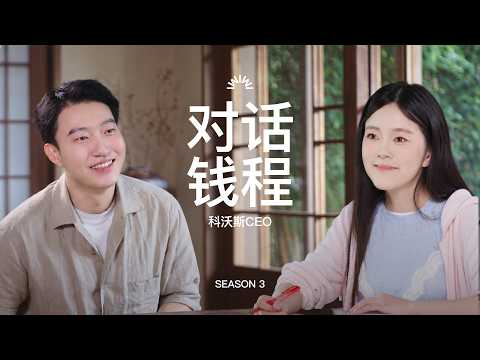 1:59:52ENZhang Xiaojun Podcast· Oct 21, 2026Podcast · 2 speakersDavid Qian on Succession, Robotics, and Finding His Own AmbitionGuest David Qian (Qian Cheng) · Host 张小珺Ecovacs CEO David Qian reflects on inheriting a founder-built company, learning to lead through mistakes, and choosing a patient path in robotics. His account treats succession as an ongoing effort to build the company for a new era, not a finish line.
 2:51:18ENZhang Xiaojun Podcast· Oct 15, 2026Podcast · 2 speakersLindon Gao on Building Dyna Robotics and Finding a Path Through the FogGuest Lindon Gao · Host 张小珺Dyna Robotics CEO Lindon Gao explains why his company builds intelligence through real workflows, how hardware and research must evolve together, and how a founder can find clarity by letting go of the need to be right.
 2:51:18ZH → EnglishZhang Xiaojun Podcast· Oct 15, 2026Podcast · 2 speakersDyna Robotics Founder Lindon Gao on Moving From Robot Tasks to WorkflowsGuest Lindon Gao · Host 张小珺From cashierless retail to robotics, Gao discusses product research, deployment challenges and finding a direction in uncertainty.
 2:34:18ENZhang Xiaojun Podcast· Sep 3, 2026Podcast · 2 speakersZeng Ming on AI’s New Era: Why Great Companies and New Organizations EmergeGuest Zeng Ming · Host 张小珺Zeng Ming argues that AI is changing the foundations of business: models will become infrastructure, while new Agent-native applications and organizations create the next wave of value. His advice to founders is to embrace uncertainty, rethink strategy continuously, and build around meaningful work rather than inherited structures.
 2:34:18ZH → EnglishZhang Xiaojun Podcast· Sep 3, 2026Podcast · 2 speakersMing Zeng on AI’s Three Stages of Industrialization and the Decline of the Corporate FormGuest 曾鸣 · Host 张小珺Strategist Ming Zeng draws on the histories of the internet, the Industrial Revolution and electrification to argue that AI is moving from infrastructure to agent applications and eventually to native applications. He believes the old corporate hierarchy will struggle to survive a paradigm shift; next-generation organizations will be rebuilt around tasks, creativity and human–AI collaboration.