







Results
26 articlesSort
 1:59:52EN
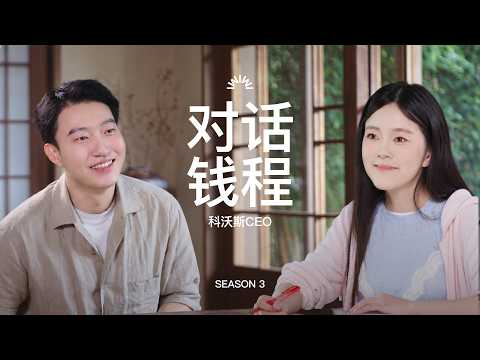
 Zhang Xiaojun Podcast· Oct 21, 2026Podcast · 2 speakersDavid Qian on Succession, Robotics, and Finding His Own AmbitionGuest David Qian (Qian Cheng) · Host 张小珺Ecovacs CEO David Qian reflects on inheriting a founder-built company, learning to lead through mistakes, and choosing a patient path in robotics. His account treats succession as an ongoing effort to build the company for a new era, not a finish line.
 2:51:18ENZhang Xiaojun Podcast· Oct 15, 2026Podcast · 2 speakersLindon Gao on Building Dyna Robotics and Finding a Path Through the FogGuest Lindon Gao · Host 张小珺Dyna Robotics CEO Lindon Gao explains why his company builds intelligence through real workflows, how hardware and research must evolve together, and how a founder can find clarity by letting go of the need to be right.
 2:34:18ENZhang Xiaojun Podcast· Sep 3, 2026Podcast · 2 speakersZeng Ming on AI’s New Era: Why Great Companies and New Organizations EmergeGuest Zeng Ming · Host 张小珺Zeng Ming argues that AI is changing the foundations of business: models will become infrastructure, while new Agent-native applications and organizations create the next wave of value. His advice to founders is to embrace uncertainty, rethink strategy continuously, and build around meaningful work rather than inherited structures.
 2:34:18ZH → EnglishZhang Xiaojun Podcast· Sep 3, 2026Podcast · 2 speakersMing Zeng on AI’s Three Stages of Industrialization and the Decline of the Corporate FormGuest 曾鸣 · Host 张小珺Strategist Ming Zeng draws on the histories of the internet, the Industrial Revolution and electrification to argue that AI is moving from infrastructure to agent applications and eventually to native applications. He believes the old corporate hierarchy will struggle to survive a paradigm shift; next-generation organizations will be rebuilt around tasks, creativity and human–AI collaboration.
 3:36:13ENZhang Xiaojun Podcast· Aug 13, 2026Podcast · 2 speakersNVIDIA’s Ming-Yu Liu on Cosmos, Physical AI, and Creating New MarketsGuest Ming-Yu Liu · Host 张小珺NVIDIA research VP Ming-Yu Liu explains how a decade of generative-model research led to Cosmos 3, a world foundation model for Physical AI. He also shares what he learned from Jensen Huang about long-term bets, teamwork, and building markets instead of fighting over existing ones.
 2:59:03ENZhang Xiaojun Podcast· Jul 28, 2026Podcast · 2 speakersYou Kaichao on How vLLM Grew from Open-Source Project to AI Infrastructure CompanyGuest You Kaichao · Host 张小珺Inferact co-founder You Kaichao traces vLLM’s path from Berkeley research to a company, then explains why model, inference, hardware and agent design increasingly have to move together.
 3:46:12ENZhang Xiaojun Podcast· Jul 16, 2026Podcast · 2 speakersKay Ke on Physical Intelligence, Robot Learning, and the Future of RoboticsGuest Kay Ke · Host 张小珺Physical Intelligence researcher Kay Ke traces the field's research lineages and explains Pi's progression from π₀ to π*₀.₆. She also reflects on education, fiction, ambition, and what it means to build robots that work beyond a demo.
 46:26ZH → EnglishZhang Xiaojun Podcast· Dec 9, 2025Podcast · 2 speakersXiaohu Zhu: No Bubble in Sight for Three Years — When Consensus Is Too Concentrated, Offset by Fifteen DegreesGuest 朱啸虎 · Host 张小珺At the end of 2025, Xiaohu Zhu of GSR Ventures sat down with Zhang Xiaojun for the third time: AGI is off the table, and the fight for the entry point has begun. He skips humanoid robots and writes checks to companies that actually do the work — ship cleaning, massage.
 2:06:16ZH → EnglishZhang Xiaojun Podcast· Nov 28, 2025Podcast · 2 speakersTan Jie on Data Bottlenecks, Generalist Robots, and the Road to Real-World RoboticsGuest 谭捷 · Host 张小珺Google DeepMind robotics researcher Tan Jie traces his path from computer graphics to robotics and from reinforcement learning to Gemini Robotics. He argues that data scale and coverage, cross-embodiment transfer, real-time reasoning, and safety remain key to bringing robot foundation models into the real world.
 1:48:46ZH → EnglishZhang Xiaojun Podcast· Nov 18, 2025Podcast · 2 speakersLiu Xianming: Removing Language to Bring Physical AI Back to Data and ActionGuest 刘先明 · Host 张小珺Liu Xianming, head of autonomous driving at XPeng, explains why language supervision in VLA training can become an efficiency bottleneck and how he is helping XPeng shift from an autonomous-driving team to a physical AI company. The conversation also covers scaling data, organizational change, production safety, and what comes next for autonomous driving.
 1:09:11ZH → EnglishZhang Xiaojun Podcast· Aug 18, 2025Podcast · 2 speakersGuang Mi on the Diverging Paths of Large Models, AI Products, and the Startup WindowGuest 广密 · Host 张小珺Guang Mi reviews how model companies are splitting into different strategies, the brand moat around ChatGPT, and new opportunities opened by products such as Claude Code. He believes the window for AI startups is shrinking, but great product experiences, sound team judgment, and non-consensus innovation can still create room to win.
 2:57:07ZH → EnglishZhang Xiaojun Podcast· Jul 7, 2025Podcast · 2 speakers余凯: From AI Research to a Decade Building 地平线Guest 余凯 · Host 张小珺地平线 founder 余凯 looks back on 30 years of research and entrepreneurship, from choosing a technology direction and focusing on cars to his predictions for AI.
 1:32:16ZH → EnglishZhang Xiaojun Podcast· Jun 20, 2025Podcast · 2 speakersWang Xin on Mercedes-Benz China R&D: Redefining Luxury and Safety Through TransformationGuest 王忻 · Host 张小珺Wang Xin, who leads R&D at Mercedes-Benz China, looks back on two decades of technology cycles in China’s auto industry and how the local team moved from testing support into product development. As intelligent features intensify competition, he argues that speed, data, and localization must rest on safety and user experience.
 34:07ENZhang Xiaojun Podcast· Apr 26, 2025Podcast · 3 speakersOla Källenius on Mercedes-Benz’s Next Transformation: EVs, AI, and Modern LuxuryGuest Ola Källenius · Host 张小珺Mercedes-Benz CEO Ola Källenius describes a century-scale shift driven by zero-emission powertrains, software, and AI. He explains why the company is expanding electric models while protecting the craftsmanship, safety, and desirability that define its luxury position.
 2:29:41ZH → EnglishZhang Xiaojun Podcast· Apr 7, 2025Podcast · 4 speakersChen Jianyu: How Robot Foundation Models Can Become General-Purpose VLA SystemsGuest 陈建宇 · Host 张小珺From SayCan and RT-2 to Diffusion Policy, Tsinghua assistant professor and Epoch Robotics founder Chen Jianyu traces the path from borrowing language models to end-to-end VLA. The hard problems remain diverse data, cross-embodiment generalization, and high-frequency action control.
 2:36:13ZH → EnglishZhang Xiaojun Podcast· Feb 24, 2025Podcast · 2 speakersSonglin Yang on New Attention Papers from DeepSeek, Kimi, and MiniMaxGuest Songlin Yang(松琳) · Host 张小珺From dynamic sparse attention to hybrid linear-attention architectures: how three approaches to long context balance training, inference, and hardware efficiency.
 53:07ZH → EnglishZhang Xiaojun Podcast· Feb 17, 2025Podcast · 2 speakersZhang Yaqin on the AGI Roadmap: Information, Physical, and Biological IntelligenceGuest 张亚勤 · Host 张小珺Zhang Yaqin divides AGI’s development into information, physical, and biological intelligence. Information intelligence may approach human levels within five years, general-purpose robots may take about ten, and biological intelligence could expand human memory and health in twenty. He also discusses how large models can give autonomous vehicles and robots more data, common sense, and ability to act.
 2:49:35ZH → EnglishZhang Xiaojun Podcast· Feb 4, 2025Podcast · 2 speakersPan Jiayi on R1, o1, and Kimi K1.5: How Reinforcement Learning Teaches Models to ReasonGuest 潘嘉怡 · Host 张小珺Pan Jiayi, a Berkeley PhD student, walks through reasoning-model reports from DeepSeek, OpenAI, and Kimi, unpacking long chains of thought, GRPO, reward design, and distillation. R1-Zero’s “aha moment” shows how reasoning strategies can emerge through reinforcement learning.
 1:27:13ZHZhang Xiaojun Podcast· Dec 29, 2024Podcast · 2 speakers李想:汽车将从交通工具进化为空间机器人Guest 李想 · Host 张小珺理想汽车 CEO 李想谈公司为何从造车走向人工智能:基座模型是 AI 时代的操作系统,汽车是进入物理世界的重要载体。对他而言,技术路线最终要落实为更好的用户体验、能力与长期价值。
 1:27:02ZH → EnglishZhang Xiaojun Podcast· Sep 5, 2024Podcast · 3 speakersGuangmi: Self-Play RL Could Open a New Scaling Law for AGIGuest 广密 · Host 张小珺Guangmi believes the marginal gains from scaling language pretraining alone may be fading, making self-play reinforcement learning a more promising path. Whether it generalizes to coding, video, robotics, and beyond may determine the next stage of the AGI race.
 1:13:06ZH → EnglishZhang Xiaojun Podcast· Aug 17, 2024Podcast · 2 speakersShi Hongjun: Bringing Charlie Munger to China—and Starting His Life Over Through MungerGuest 施宏俊 · Host 张小珺The Poor Charlie's Almanack has sold more than 1.15 million copies in China. Publisher Shi Hongjun reflects on the judgment behind that success, the golden age of publishing, and shifts in distribution. He also explains how Charlie Munger's ideas led him to leave management and start Munger Academy.
 1:08:29ZH → EnglishZhang Xiaojun Podcast· Aug 17, 2024Podcast · 2 speakersColin on Corporate Infighting: When Competition Becomes a DrainGuest Colin · Host 张小珺Colin and Zhang Xiaojun examine strategy, rules, culture and individual choices to distinguish useful competition from internal waste.
 1:33:07ZH → EnglishZhang Xiaojun Podcast· Aug 17, 2024Podcast · 2 speakersLi Guangmi on a Year in Global LLMs: Scaling Law, the AGI Bet, and the US–China LandscapeGuest 李广密 · Host 张小珺Drawing on his front-row view from Silicon Valley, Shixiang Capital founder Li Guangmi looks back at the competition among OpenAI, Anthropic, Google, and Chinese model companies. He argues that model capability and cost together will shape the next wave of applications, while today’s enormous investments are bets on whether intelligence can keep scaling and how AI will reshape the economy and industry over the long term.
 1:14:56ZH → EnglishZhang Xiaojun Podcast· Aug 17, 2024Podcast · 2 speakersWang Yajun on Jensen Huang’s Organizational System: Using Distributed Decision-Making to Drive InnovationGuest 王亚军 · Host 张小珺Wang Yajun, former chief strategy officer at Longfor Group, examines how strategy, products, and organization fit together through Nvidia’s practices: no layoffs, 60 direct reports, and little long-term planning. The point is not to copy the forms, but to build candor, trust, and lateral collaboration so more people have the information they need to make decisions.
Load moreShowing 24 of 26