In 30 seconds
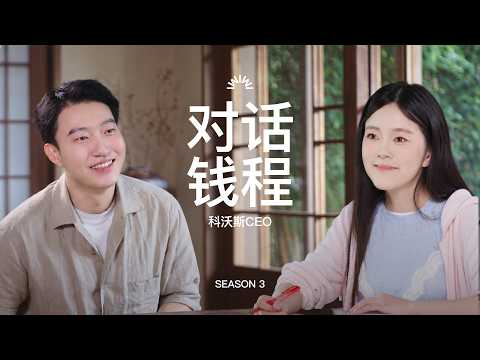
Zhang Xiaojun interviews Ecovacs CEO David Qian about joining the company, managing overseas operations and succession, and discusses household robotics, AI and personal growth. Company figures, product visions and timelines reflect the guest’s account.
- 1Learning through overseas operationsThe guest learned to analyze problems and coordinate resources across markets.
- 2Understanding an existing organizationA successor sees the present organization and must understand its history.
- 3Deployment takes timeThe guest distinguishes technical demonstrations from meeting household needs.
- 4Succession is more than a titleTrust, decisions and organizational adaptation all affect succession.
Takeaways
- Overseas operations taught Qian to coordinate resources and understand local markets.
- Succession requires understanding how an existing organization developed.
- Individual insight does not automatically create durable organizational capability.
- Robotics needs validation between demonstrations and household use.
- Family succession involves trust, responsibility and decisions.
Read the edited text by chapter
Growing up and joining the company
Zhang Xiaojun interviews Ecovacs CEO David Qian about family-business succession, overseas operations, household robots and personal growth. The episode reflects his experiences and judgments at the time of recording.
Zhang Xiaojun interviews Ecovacs CEO David Qian about family-business succession, overseas operations, household robots and personal growth. The episode reflects his experiences and judgments at the time of recording.
Qian distinguishes founding a company from joining an existing organization as a successor. He acknowledges the opportunity he received and the need to establish his own sense of responsibility.
He recalls a childhood in which his father was often working or traveling, and the understanding he gradually developed of family and business.
While studying abroad, he considered internet products and other career paths. Exposure to the company after returning showed him both the complexity and appeal of operations.
Qian recalls joining the company after graduation and working in areas including e-commerce. Once inside the organization, he says, the rhythm of the work differed from his earlier expectations.
Learning overseas operations
He later took responsibility for overseas business, learning to analyze problems, coordinate resources and build teams amid losses and competition. He sees this period as the beginning of understanding operations.
He later took responsibility for overseas business, learning to analyze problems, coordinate resources and build teams amid losses and competition. He sees this period as the beginning of understanding operations.
He discusses channels, consumers and organizational demands across markets, arguing that overseas expansion requires understanding local needs and sustained investment rather than simply copying domestic practices.
He recalls seeking an initial breakthrough in Europe, especially Germany, before advancing in the United States. Conditions differ across markets, so lessons cannot be applied mechanically.
Qian says the team achieved a substantial share in Germany over a short period. This is his recollection of a particular time and segment; the episode does not establish the full measurement definition.
From business leader to CEO
He describes excitement at becoming CEO and then discovering that the role demanded much more than running a regional business. A larger platform also brought different responsibilities.
He describes excitement at becoming CEO and then discovering that the role demanded much more than running a regional business. A larger platform also brought different responsibilities.
He compares succession to entering an existing building: a successor sees its current state but may not understand how the founder gradually built its supports.
Qian reflects that he once measured organizational problems against an ideal, then came to see how systems are tied to key people, history and constraints. Change requires understanding those relationships.
He says hearing advice differs from bearing consequences oneself, and that many management insights emerge through actual work.
He discusses setbacks in company development: results based on individual insight do not automatically mean the organization has built a sustainable ability to identify and solve problems.
Ambition, restraint and organization
The host asks about ambition and restraint. Qian says he has had to consider personal growth, company development and existing resources rather than judging achievement by title alone.
The host asks about ambition and restraint. Qian says he has had to consider personal growth, company development and existing resources rather than judging achievement by title alone.
He describes a goal of making the company more international over the coming years and expanding beyond floor cleaning into other home and outdoor uses. These are business goals, not guarantees.
Qian compares the company’s traditional operating style to farming: sustained investment, capability building and waiting for products to mature. He contrasts this with quickly entering a new market.
He says new competitors bring different resources and experience, so a company cannot set strategy only around the competitive landscape it already knows.
He sees company development as a series of choices rather than a straight line. Leaders must preserve accumulated strengths while deciding when to change course.
Discussing brands, he argues that consumer trust must be supported by each subsequent product experience; past reputation cannot replace future performance.
AI and robotics use cases
The conversation turns to AI and robotics. Qian says enthusiasm is high but moving from demonstrations to household needs may take time; his timeline is a personal forecast.
The conversation turns to AI and robotics. Qian says enthusiasm is high but moving from demonstrations to household needs may take time; his timeline is a personal forecast.
He compares general-purpose humanoids with existing specialized robots, arguing that sustainable use cases matter more than demonstrating hardware form alone.
He discusses the distance between promoting technologies such as autonomous driving and everyday consumer use, saying adoption depends on reliability, cost and use context.
Using robotic lawn mowers as an example, he suggests different uses may lead to different robot forms rather than one general machine replacing every specialized tool.
The host asks about life and business culture in Suzhou. Qian describes valuing a quieter, practical environment while remaining unsure how much personality and place shaped each other.
Family and succession
Discussing his relationship with his father, he acknowledges that succession brings resources and choices as well as expectations and questions about his own abilities.
Discussing his relationship with his father, he acknowledges that succession brings resources and choices as well as expectations and questions about his own abilities.
He says the founder’s experience cannot be copied wholesale. Succession involves more than a change of title: trust, decision-making and how the organization adapts to new leadership also matter.
Qian likens his relationship with the company to that of a sibling: it is a venture his father built over many years, and he must find his own way to take responsibility.
At the close, he says business leaders can learn from everyday situations, while personal aspirations and company goals both require continual adjustment through practice.
More from this channel
 1:59:52EN
 Zhang Xiaojun Podcast· Oct 21, 2026Podcast · 2 speakersDavid Qian on Succession, Robotics, and Finding His Own AmbitionGuest David Qian (Qian Cheng) · Host 张小珺Ecovacs CEO David Qian reflects on inheriting a founder-built company, learning to lead through mistakes, and choosing a patient path in robotics. His account treats succession as an ongoing effort to build the company for a new era, not a finish line.
 2:51:18ENZhang Xiaojun Podcast· Oct 15, 2026Podcast · 2 speakersLindon Gao on Building Dyna Robotics and Finding a Path Through the FogGuest Lindon Gao · Host 张小珺Dyna Robotics CEO Lindon Gao explains why his company builds intelligence through real workflows, how hardware and research must evolve together, and how a founder can find clarity by letting go of the need to be right.
 2:51:18ZH → EnglishZhang Xiaojun Podcast· Oct 15, 2026Podcast · 2 speakersDyna Robotics Founder Lindon Gao on Moving From Robot Tasks to WorkflowsGuest Lindon Gao · Host 张小珺From cashierless retail to robotics, Gao discusses product research, deployment challenges and finding a direction in uncertainty.
 2:34:18ENZhang Xiaojun Podcast· Sep 3, 2026Podcast · 2 speakersZeng Ming on AI’s New Era: Why Great Companies and New Organizations EmergeGuest Zeng Ming · Host 张小珺Zeng Ming argues that AI is changing the foundations of business: models will become infrastructure, while new Agent-native applications and organizations create the next wave of value. His advice to founders is to embrace uncertainty, rethink strategy continuously, and build around meaningful work rather than inherited structures.
 2:34:18ZH → EnglishZhang Xiaojun Podcast· Sep 3, 2026Podcast · 2 speakersMing Zeng on AI’s Three Stages of Industrialization and the Decline of the Corporate FormGuest 曾鸣 · Host 张小珺Strategist Ming Zeng draws on the histories of the internet, the Industrial Revolution and electrification to argue that AI is moving from infrastructure to agent applications and eventually to native applications. He believes the old corporate hierarchy will struggle to survive a paradigm shift; next-generation organizations will be rebuilt around tasks, creativity and human–AI collaboration.
 2:04:20ZH → EnglishZhang Xiaojun Podcast· Aug 26, 2026Podcast · 2 speakersSun Yutao Reads the Kimi K3 Report: Architecture, Training and InfrastructureGuest 孙宇涛 · Host 张小珺Connecting linear attention and expert models to pretraining, distillation and distributed systems.