In 30 seconds
Zhang Xiaojun speaks with Rokid founder Zhu Mingming about his startup experience: from raising funding and joining Alibaba with his first company to starting again, shifting toward AR and reorganizing. He discusses different smart-glasses product paths, competing with large companies, developer ecosystems and responsibility for capital. Market timelines and product trends are his personal judgments in 2025.
- 1The move to ARThe team reassessed its direction and resources.
- 2Two paths for glassesContent-focused devices and everyday glasses start with different priorities.
- 3ReorganizingHe recalls compensation for layoffs and funding to test the new direction.
- 4Competing with giantsStartups need to find opportunities suited to their strengths.
- 5Independent useHardware and interaction still need refinement.
Takeaways
- A hardware pivot requires attention to cash, people and time for validation.
- Wearable products need to combine comfort with useful functions.
- Startups and large firms have different organizational and resource conditions.
- Mature hardware supply chains can help later entrants compete.
- Product decisions should evolve with experience and feedback.
Read the edited text by chapter
First startup and Alibaba
He recalls funding, acquisition and an AI lab.
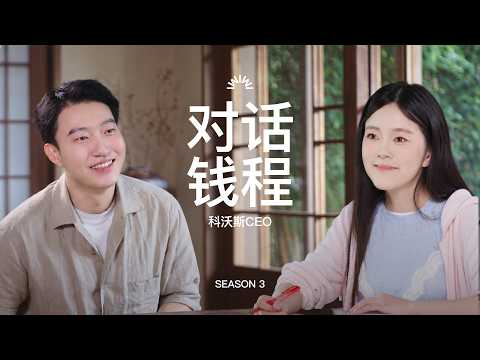
Zhang Xiaojun interviews Rokid founder Zhu Mingming about his two startup ventures, smart-glasses products, hardware competition and organizational choices.
Zhu recalls that his first company was later acquired by Alibaba. He sees the opportunities and help he received as important elements of luck in his startup journey.
He describes meeting Jack Ma, Joe Tsai and Wang Jian and seeking investment when the company was short of cash. These details are his personal recollections.
He recalls that at the most difficult point payday was two weeks away and funds were limited. Subsequent investment gave the team more time to continue operating.
He says his first company continued after receiving support and later joined Alibaba, giving him an opportunity to understand platforms and organizational operations.
During his time at Alibaba, he recalls that Wu Yongming proposed exploring AI; M Lab was then formed to focus on inputs such as cameras and microphones and related capabilities.
He explains leaving a large company to start again: the direction he wanted to pursue was highly uncertain, required talent and patience, and might not fit an established company’s pace.
Discussing Rokid’s early fundraising and advice he received, he says capital should serve a long-term product direction and founders have responsibilities to investors and the team.
Rokid’s shift to AR
They discuss direction, resources and product paths.
He recalls a major decision around 2019 to move from the existing AI hardware direction toward AR, requiring the team to reassess markets, technical maturity and resource allocation quickly.
He had followed virtual and augmented reality but preferred to pursue AR and made a judgment at the time about when the technology might mature.
He says the team weighed continued spending against potential value and chose to direct limited funds toward what he considered a stronger long-term opportunity.
He distinguishes two kinds of glasses products: one emphasizes rich content and interaction; the other must first work as comfortable glasses while offering audio, camera and assistant functions.
He expects the paths might converge as content-focused devices become lighter and everyday glasses gain capabilities. This is a product forecast, not an accomplished outcome.
On phones and glasses, he discusses different wearable-device use cases. Sustained adoption of glasses also depends on weight, appearance, functions, privacy and user experience.
He imagines voice and AI helping users complete some tasks more directly, reducing navigation through graphical menus; actual usefulness still depends on recognition and execution reliability.
He is optimistic that people who already wear glasses will accept AI features and that this may change phone habits. His timetable is a 2025 prediction, not a guarantee.
Transition and market validation
They discuss organizational change and product-market fit.
The transition involved layoffs. He recalls wanting to compensate departing employees while preserving enough cash to test the new direction.
He discusses searching for product-market fit after the pivot: a team must not only build a device but observe whether people will buy and keep using it.
He compares smart glasses to the period between BlackBerry and the first iPhone, arguing that the category is still seeking a more mature form. This is his industry judgment.
He divides AI hardware applications into embodied systems interacting with the environment and devices carried by users; both must bring model capabilities into practical settings.
Competition and ecosystems
They discuss major firms, supply chains and developers.
On competing with giants, he says startups should look for opportunities large firms may not want, cannot quickly pursue or struggle to accommodate organizationally, rather than imitate their scale.
He discusses how smart-glasses definitions differ across markets, emphasizing the influence of ecosystems, use cases and supply chains.
He argues a developer ecosystem requires joint investment in technology, product experience and partnerships, and that a small company must consider how to attract outside participants.
He sees hardware competition as different from software: as supply chains mature, later entrants can use existing capabilities, so early movers must keep improving.
Culture, product and capital
They discuss decisions, user experience and responsibility to investors.
Discussing culture, he values curiosity and playfulness and says he will correct decisions based on product experience or data, while someone must bear the consequences.
He wants a product that does more than showcase technology: users should understand and use it without an engineer beside them. That requires further work on hardware and interaction.
On fundraising, he says capital can support capacity and research but also brings responsibility; the appropriate amount depends on the company’s plans and needs.
More from this channel
 1:59:52EN
 Zhang Xiaojun Podcast· Oct 21, 2026Podcast · 2 speakersDavid Qian on Succession, Robotics, and Finding His Own AmbitionGuest David Qian (Qian Cheng) · Host 张小珺Ecovacs CEO David Qian reflects on inheriting a founder-built company, learning to lead through mistakes, and choosing a patient path in robotics. His account treats succession as an ongoing effort to build the company for a new era, not a finish line.
 2:51:18ENZhang Xiaojun Podcast· Oct 15, 2026Podcast · 2 speakersLindon Gao on Building Dyna Robotics and Finding a Path Through the FogGuest Lindon Gao · Host 张小珺Dyna Robotics CEO Lindon Gao explains why his company builds intelligence through real workflows, how hardware and research must evolve together, and how a founder can find clarity by letting go of the need to be right.
 2:51:18ZH → EnglishZhang Xiaojun Podcast· Oct 15, 2026Podcast · 2 speakersDyna Robotics Founder Lindon Gao on Moving From Robot Tasks to WorkflowsGuest Lindon Gao · Host 张小珺From cashierless retail to robotics, Gao discusses product research, deployment challenges and finding a direction in uncertainty.
 2:34:18ENZhang Xiaojun Podcast· Sep 3, 2026Podcast · 2 speakersZeng Ming on AI’s New Era: Why Great Companies and New Organizations EmergeGuest Zeng Ming · Host 张小珺Zeng Ming argues that AI is changing the foundations of business: models will become infrastructure, while new Agent-native applications and organizations create the next wave of value. His advice to founders is to embrace uncertainty, rethink strategy continuously, and build around meaningful work rather than inherited structures.
 2:34:18ZH → EnglishZhang Xiaojun Podcast· Sep 3, 2026Podcast · 2 speakersMing Zeng on AI’s Three Stages of Industrialization and the Decline of the Corporate FormGuest 曾鸣 · Host 张小珺Strategist Ming Zeng draws on the histories of the internet, the Industrial Revolution and electrification to argue that AI is moving from infrastructure to agent applications and eventually to native applications. He believes the old corporate hierarchy will struggle to survive a paradigm shift; next-generation organizations will be rebuilt around tasks, creativity and human–AI collaboration.
 1:09:50ZH → EnglishZhang Xiaojun Podcast· Aug 19, 2026Podcast · 2 speakersJonathan Su on AI Research, Education and Happiness as a High-School StudentGuest 苏庭灏 · Host 张小珺From learning Transformers and publishing a paper to thinking about motivation, uncertainty and human connection.