In 30 seconds
Matthew Berman draws on his Codex experience to explain how he selects models and reasoning effort, coordinates threads, maintains AGENTS.md instructions and uses browser tools, skills and goals. He demonstrates remote control and discusses hooks and approval settings after recounting a reported file-deletion incident. The video is sponsored by Zapier. Model rankings, pricing, interface steps and product availability reflect the video’s date and configuration; hooks and automated approvals do not guarantee safety.
- 1Match model and taskBerman compares GPT-5.6 Sol, Terra and Luna with different reasoning efforts and explains his personal tradeoff between cost and capability.
- 2Delegate across threadsHe demonstrates a separate project thread and proposes using one thread to monitor others, subject to available controls and permissions.
- 3Revisit instructionsReview AGENTS.md for outdated rules after model changes rather than accumulating guidance indefinitely.
- 4Browser and skillsBerman demonstrates organizing files in a browser and explains how reusable skills add workflows.
- 5Iterate toward a goalHis example repeatedly runs a private benchmark and fixes failures until a specified score is reached.
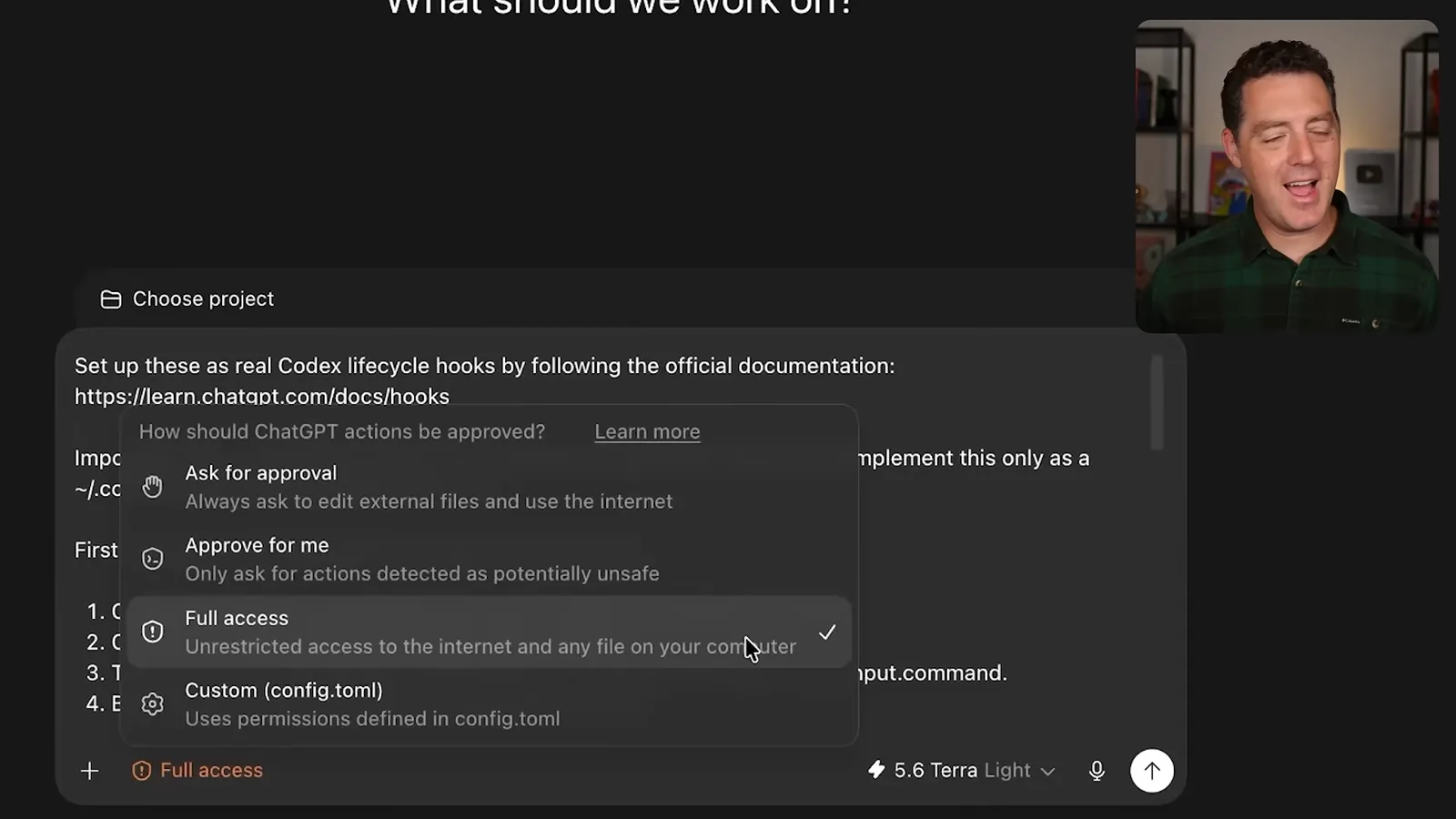
- 6Hooks and approvalsHe recommends pre-tool checks for dangerous operations and an approval mode for most users, while emphasizing the risks of unrestricted access.
Takeaways
- Berman selects models and reasoning effort by task difficulty, informed by a particular cost-and-score chart rather than a universal ranking.
- Separate threads and project instructions can support delegation, but their availability and permissions depend on the environment.
- Review AGENTS.md and reusable skills to keep instructions relevant to the current project.
- Goals can pursue a durable objective across iterations, such as improving a private benchmark to a target.
- Remote access lets a phone steer work on a connected host, with the actual work still running there.
- Hooks and approval review are useful layers of protection, but neither blocks every destructive action.
Read the edited text by chapter
Choosing models and reasoning effort
Berman uses a cost-versus-score graph to explain his preferred GPT-5.6 configurations. He also discusses the historical speed and cost tradeoff of fast mode.
After more than a thousand hours using Codex, I have gathered techniques that can help both beginners and experienced users. The video reflects my July 2026 setup and preferences; product interfaces, available models and prices can change.
The GPT-5.6 family offers Sol, Terra and Luna, different reasoning efforts and a fast option. I use a cost-versus-score chart from Artificial Analysis to compare configurations: higher scores and lower costs are attractive. On that particular chart, Luna at maximum effort scores above Terra at high effort for less money; this is a benchmark-specific comparison, not proof of superiority on every task.
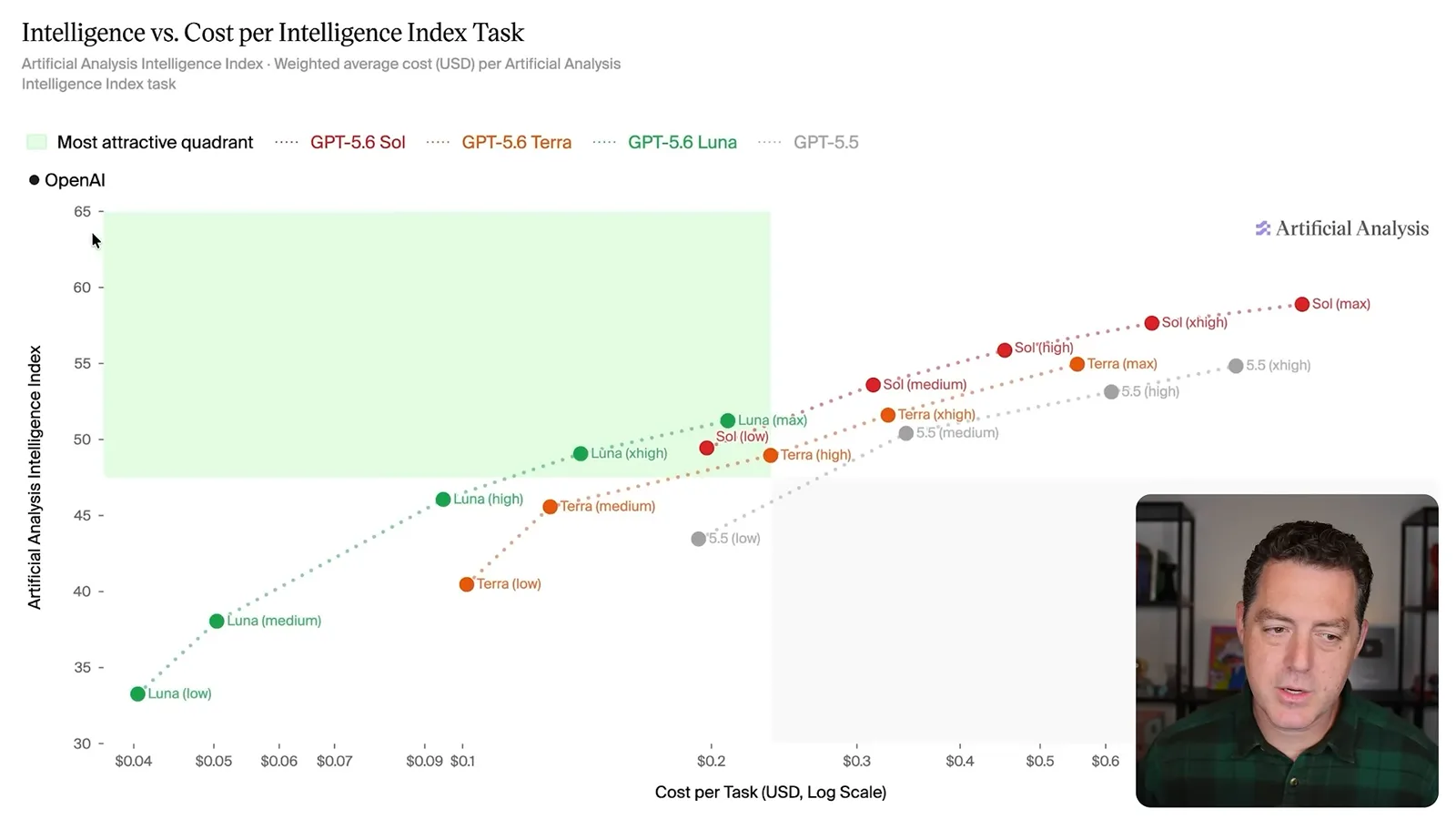
For my hardest problems I usually choose Sol, often at high effort; for easier tasks I favor Luna at high or extra-high effort. I generally avoid fast mode when I have time, saying it cost about 2.5 times as much for roughly 1.5 times the speed in my context. Those are my historical observations, not a guarantee for other plans or workloads.
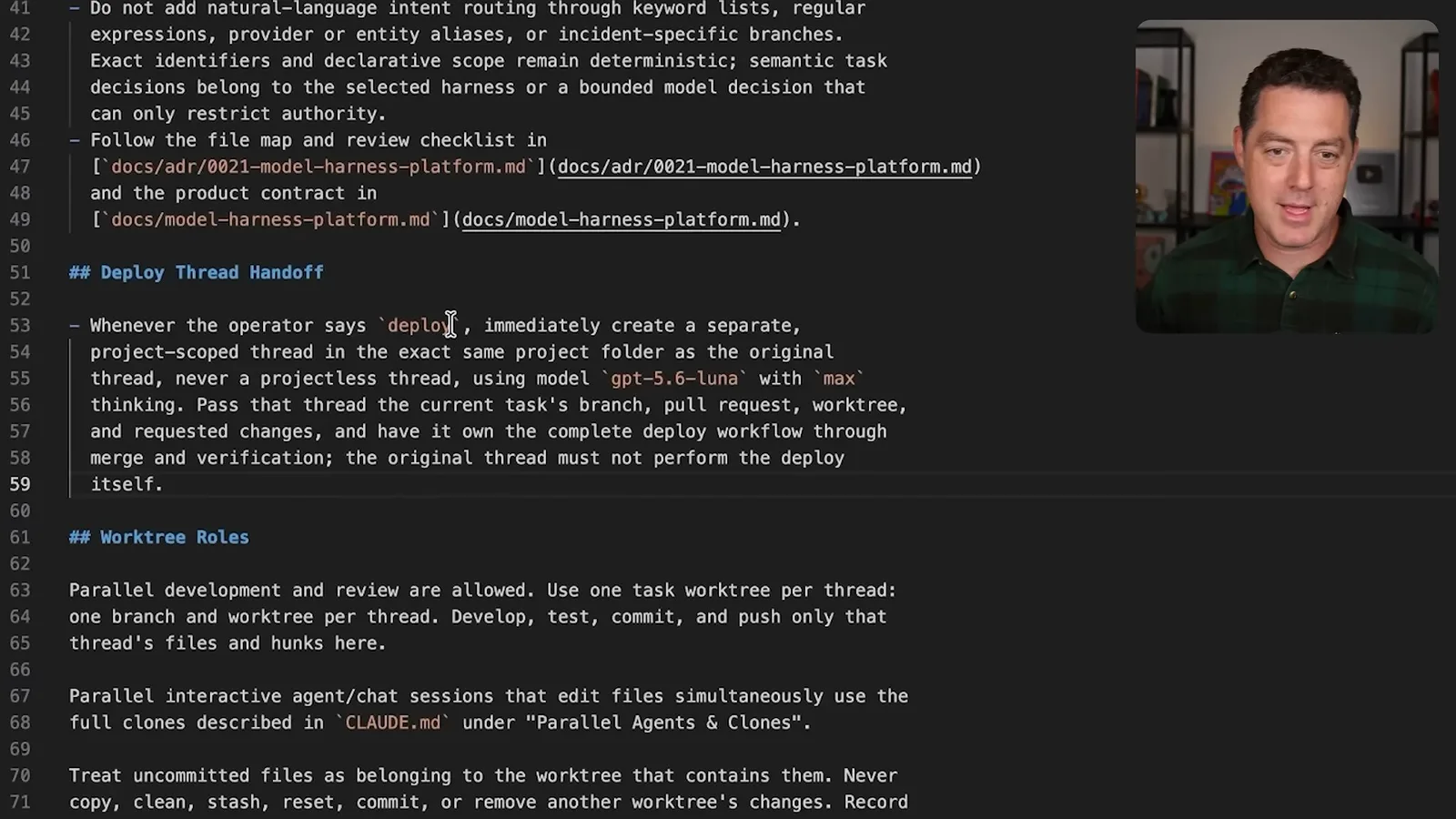
I show an AGENTS.md instruction that hands deployment to a separate project-scoped thread using a specified model and effort. The idea is to choose a less expensive model for a bounded task while the original thread handles coordination. Such delegation depends on the tools, project permissions and user instructions in the environment.
Threads, delegation and AGENTS.md
He demonstrates a project-scoped thread and describes coordinating multiple tasks. He recommends reviewing stale project instructions.
In my demonstration, I ask one thread to start another with a simple greeting prompt, then open the new task and see its response. I also suggest using a coordinating thread to monitor parallel work and follow up when a task stalls. Access to other conversations and permission to message them are product- and context-dependent.
After a model release, I recommend reviewing AGENTS.md for old rules that may no longer be useful. I ask Codex to identify stale instructions and then clean them up. Keep durable project requirements while removing obsolete guidance: these files shape the context agents receive.
Zapier sponsorship and browser use
Berman identifies Zapier as the video’s sponsor and describes its MCP integration. He then demonstrates browser-based file organization.
Zapier sponsors this video. I show its MCP integration in Codex’s plugin settings and describe connecting services such as Gmail, Trello, Asana and Google Docs. Zapier says its platform connects thousands of applications; available actions, permissions and reliability depend on the integration and configuration.
I increasingly use the Codex browser for more than testing sites. In the example, I ask it to create an archive folder and move two documents into it; I also mention having used it for tasks such as DNS changes and scaling a Supabase instance. Browser availability and import options vary by version, and access to signed-in accounts should be considered when granting permissions.
Skills and persistent goals
Berman recommends reusable skills and shows a loop library. His example uses a goal to improve a private benchmark over repeated iterations.
Skills package reusable instructions and resources for an agent. I recommend useful coding skills and demonstrate asking Codex to install one from its repository URL. A skill can improve a repeated workflow, but its instructions and source should be reviewed before installation.
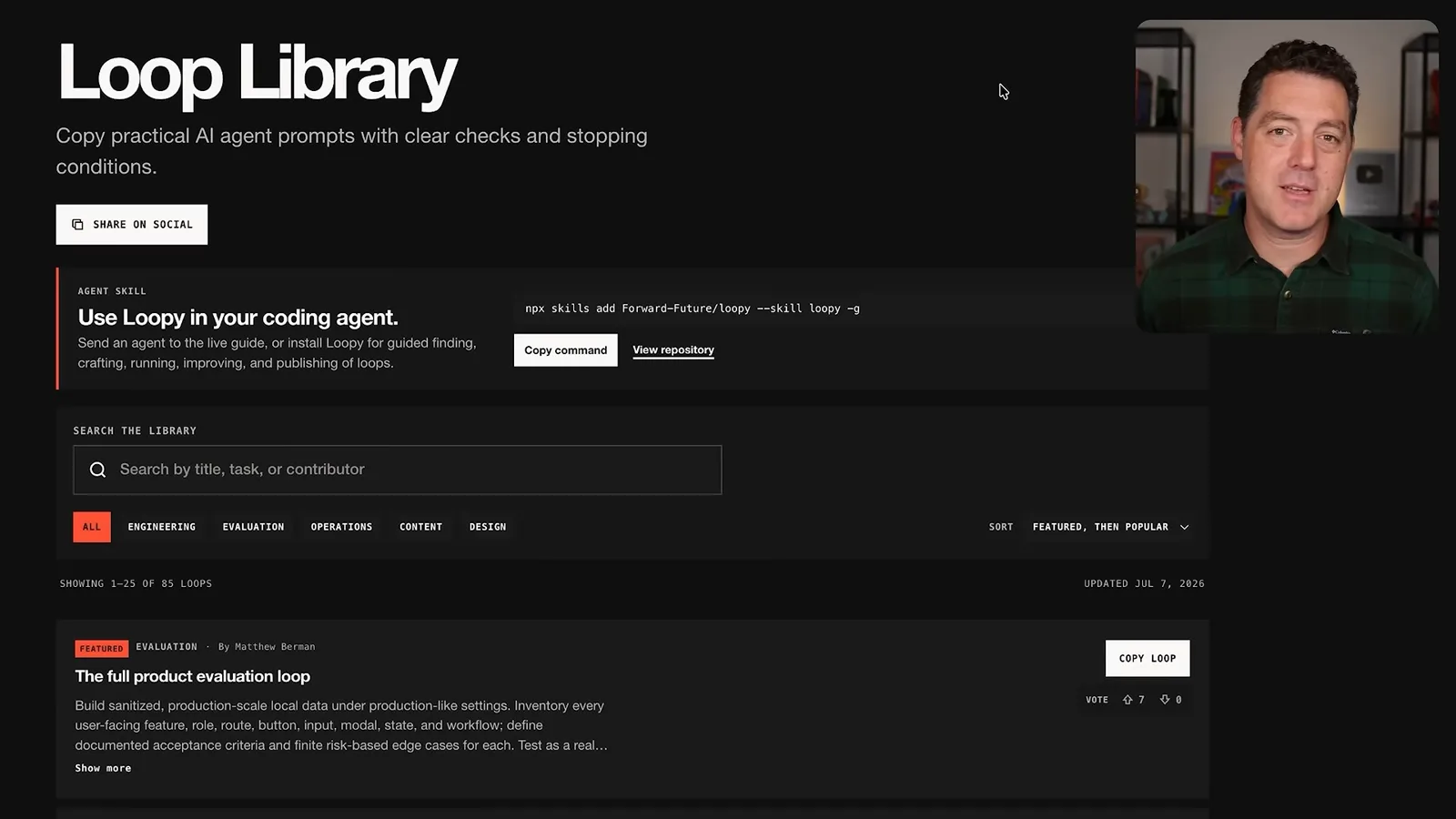
Codex goals support ongoing work toward a defined outcome. I show a loop library containing example prompts and my Loopy skill for finding or drafting loops. Rather than issuing one isolated prompt at a time, I can specify an objective and let the agent continue through multiple iterations, subject to its constraints and any required input.
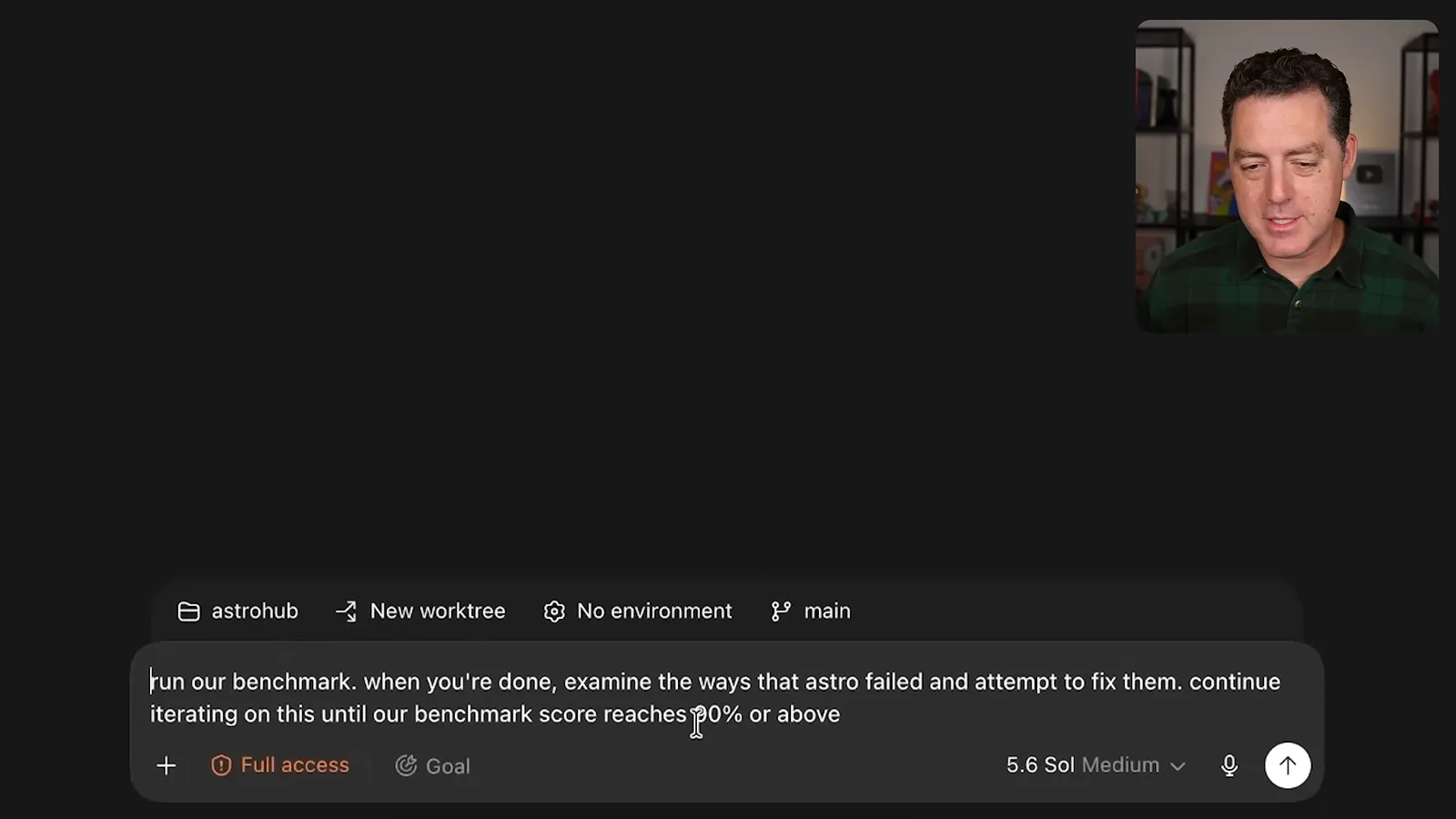
My example goal asks Codex to run a private benchmark, inspect failures and keep iterating until it reaches 90%. I report runs lasting up to twelve hours and improvements from roughly 70% to 90% in my project. That is my experience with a private benchmark, not a promise that every goal will converge or that a higher score covers every real-world case.
Remote control and safety
He demonstrates a phone connection to a local computer. He closes with a reported deletion incident, pre-tool hooks and approval settings.
I demonstrate connecting a phone to the Codex app on my Mac through its connection settings. After pairing, the mobile interface can start or steer work on the connected host; the work itself runs on that computer. OpenAI’s [Remote guide](https://developers.openai.com/blog/mastering-codex-remote-for-engineering) describes host selection and review as part of that workflow.
Berman cites Matt Shumer’s report that an agent accidentally deleted many files, then turns to safety. His suggested pre-tool hook checks commands before execution and blocks certain destructive patterns, such as deleting critical directories or erasing disks. This is a layer of defense, not a complete security boundary: simple pattern checks can miss alternate commands and execution paths.
Hooks can be customized to a project’s needs and should be tested in the environment where they run. Berman says he personally uses unrestricted access but does not recommend it for most people; he suggests an approval mode that reviews potentially unsafe actions. Automated review can make mistakes, so appropriate permissions, human review and recoverable backups remain important.
More from this channel
 34:21EN
 Matthew Berman· Oct 27, 2026Matthew Berman Examines Anthropic’s IPO Filing, AI Growth and GovernanceMatthew Berman, Sam Altman · Forward FutureThe presenter reviews the S-1’s financial metrics, compute strategy and voting structure while questioning the tension between rapid AI development and safety.
 0:26ENMatthew Berman· Oct 25, 2026Sam Altman on Human Values and Problem-Solving in an AI WorldSam Altman · OpenAIIn a short interview excerpt, Altman considers the enjoyment of solving hard problems and the human role in interpreting results.
 0:36ENMatthew Berman· Oct 25, 2026Kimi K3.1 and a Rubik’s Cube Solver DemonstrationMatthew Berman · Forward FutureMatthew Berman shows a scrambled virtual cube being solved and gives the Kimi K3.1 test a favorable assessment.
 0:21ENMatthew Berman· Oct 24, 2026An AI-Generated Kimi Benchmark Chart Used Invented ScoresMatthew Berman · Forward FutureMatthew Berman asks for a graph of Kimi K3.1 Pro benchmarks, then discovers that the displayed figures are illustrative placeholders.
 25:50ENMatthew Berman· Oct 24, 2026Kimi K3.1 Pro Tested: Strong 3D Demos, Uneven Results and Competitive PricingMatthew Berman · Forward FutureMatthew Berman tests the open-weight model on coding, 3D rendering and visual explanations, then compares benchmark results and prices.
 32:20ENMatthew Berman· Oct 23, 2026Who Is Local AI For? The Costs, Trade-offs and a Hybrid FutureMatthew Berman · Forward FutureMatthew Berman weighs data control and independence against hardware cost, setup complexity and inference speed.