In 30 seconds
In this September 29, 2023 news roundup, Matthew Berman discusses OpenAI's image and voice features, Meta's assistants and hardware, Mistral 7B, and Amazon's planned investment in Anthropic. He also covers robots, creator tools, government technology and the then-unreleased Gemini. Product access, prices and reports in the video reflect that historical moment rather than current availability.
- 1OpenAI's image and voice announcementsBerman describes DALL·E 3, restored browsing and ChatGPT's new image and voice interfaces. These were being introduced or rolled out in 2023.
- 2Meta's assistants and hardwareMeta announced its assistant, character chats, image tools and smart glasses; Berman also discusses privacy and Quest 3.
- 3Mistral 7B's benchmarksThe model's publisher reported competitive benchmark results and released it under Apache 2.0. The comparisons do not establish performance across every real-world task.
- 4Amazon and AnthropicAmazon announced a strategic partnership and an investment of up to $4 billion, with AWS as Anthropic's primary cloud provider.
- 5Security, creators and GeminiBerman discusses quantum computing, new YouTube creator tools and reports about Google's forthcoming Gemini models.
Takeaways
- OpenAI announced image and voice features for ChatGPT with a gradual rollout, alongside the introduction of DALL·E 3 and the return of browsing.
- Meta introduced an AI assistant, character chats and creative features, plus new smart glasses and the Quest 3 headset.
- Mistral published its 7B model and benchmark comparisons; Berman cautioned that benchmarks may not predict real-world performance.
- Amazon announced an investment of up to $4 billion in Anthropic, rather than a completed $4 billion investment at the time.
- Berman's discussion of AI hardware, future Gemini features and quantum computing includes reports or predictions, not established outcomes.
Read the edited text by chapter
OpenAI's September announcements
Berman reviews DALL·E 3, browsing, image input, voice and voice translation. He also discusses an AGI joke and unconfirmed hardware talks.
After a week away, I return to a crowded week of AI news in September 2023. OpenAI and Meta have announced new capabilities, Amazon has a major AI investment plan, Tesla has shown Optimus, and Microsoft is bringing Copilot to Windows.
OpenAI introduced DALL·E 3, its next image generator. Based on the initial samples, I think the variety of styles and apparent improvement over DALL·E 2 are impressive, particularly the legible text. OpenAI also described ChatGPT as a partner for developing image prompts; my comparison with Midjourney is an early impression, not a controlled test.
OpenAI said it had worked with red teamers and introduced measures addressing public figures, harmful biases and other risks. The rollout schedule matters: although I describe DALL·E 3 as already available to Plus and Enterprise users, OpenAI announced its ChatGPT availability on October 19, 2023, after this video.
Browsing is returning to ChatGPT after OpenAI had disabled an earlier version. I speculate that exposure to full-page content may have raised copyright concerns; that is my interpretation, not the company's stated explanation. Site owners can signal crawler access preferences through robots.txt, though browsing does not mean unrestricted access to every site.
OpenAI also announced that ChatGPT could accept images and conduct voice conversations. In its bike example, a user shares photos and asks how to lower the seat; the assistant responds and helps identify a tool. OpenAI described a gradual rollout to Plus and Enterprise users, not an immediate release to everyone.
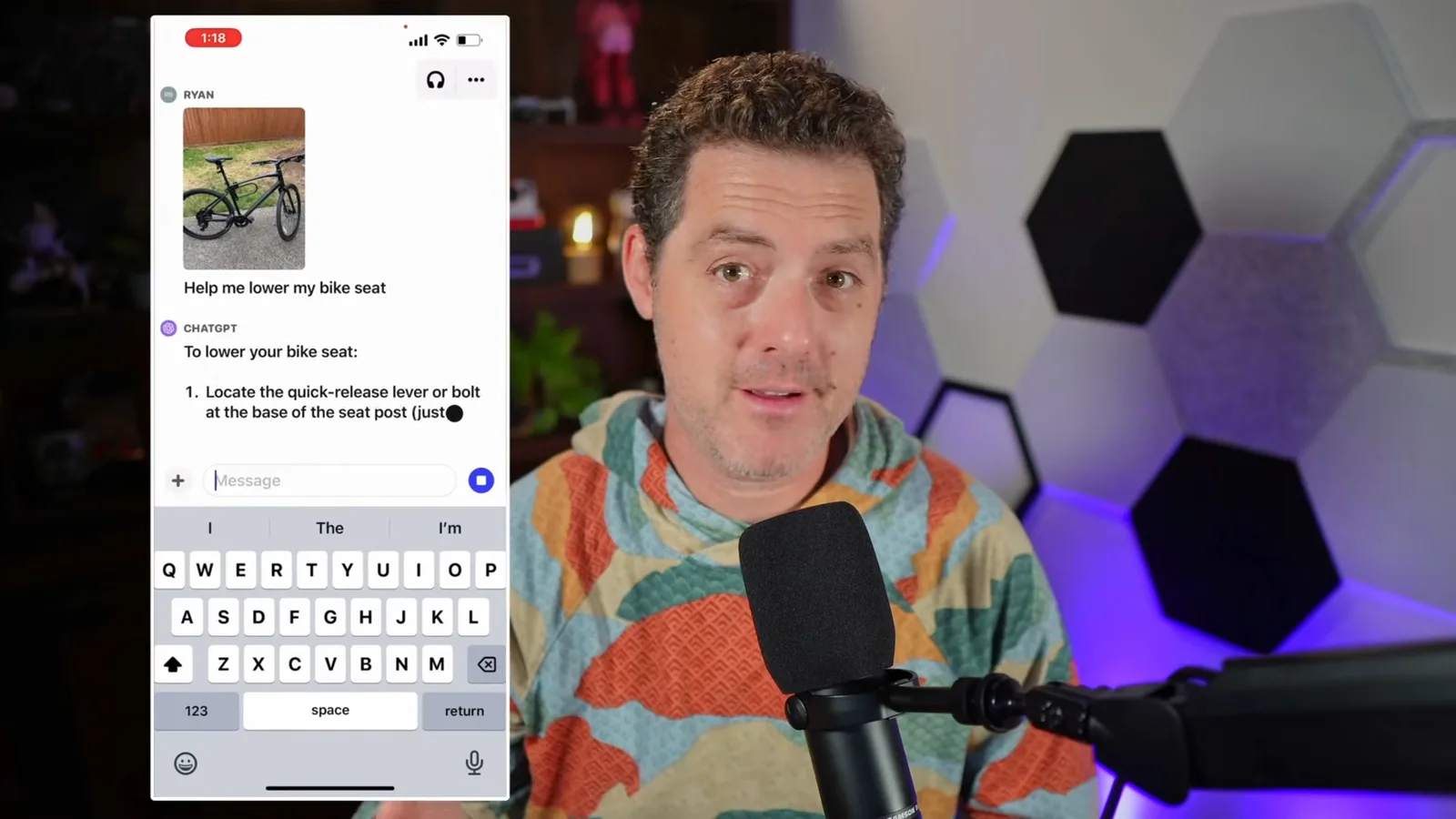
The mobile app's voice mode can answer aloud using voices developed with actors. Spotify was also piloting translated podcast speech in the original speaker's synthetic voice. I imagine how this could let a creator reach audiences in other languages, while recognizing that the example is a pilot rather than universal availability.
Sam Altman appeared to claim on Reddit that OpenAI had achieved AGI, then clarified that he was joking. I think it was an ill-judged joke because readers could have mistaken it for a real announcement; it was not evidence that AGI had been achieved.
There were also reports of designer Jony Ive discussing an AI hardware project with Altman and SoftBank's Masayoshi Son. I mention a billion dollars, but contemporary reports described possible funding under discussion, not money already raised. The device and the parties' eventual commitments were unconfirmed at the time.
Robots and Meta's AI products
Tesla demonstrates Optimus, while Meta announces assistants, creative tools, smart glasses and Quest 3. Berman reflects on privacy and headset pricing.
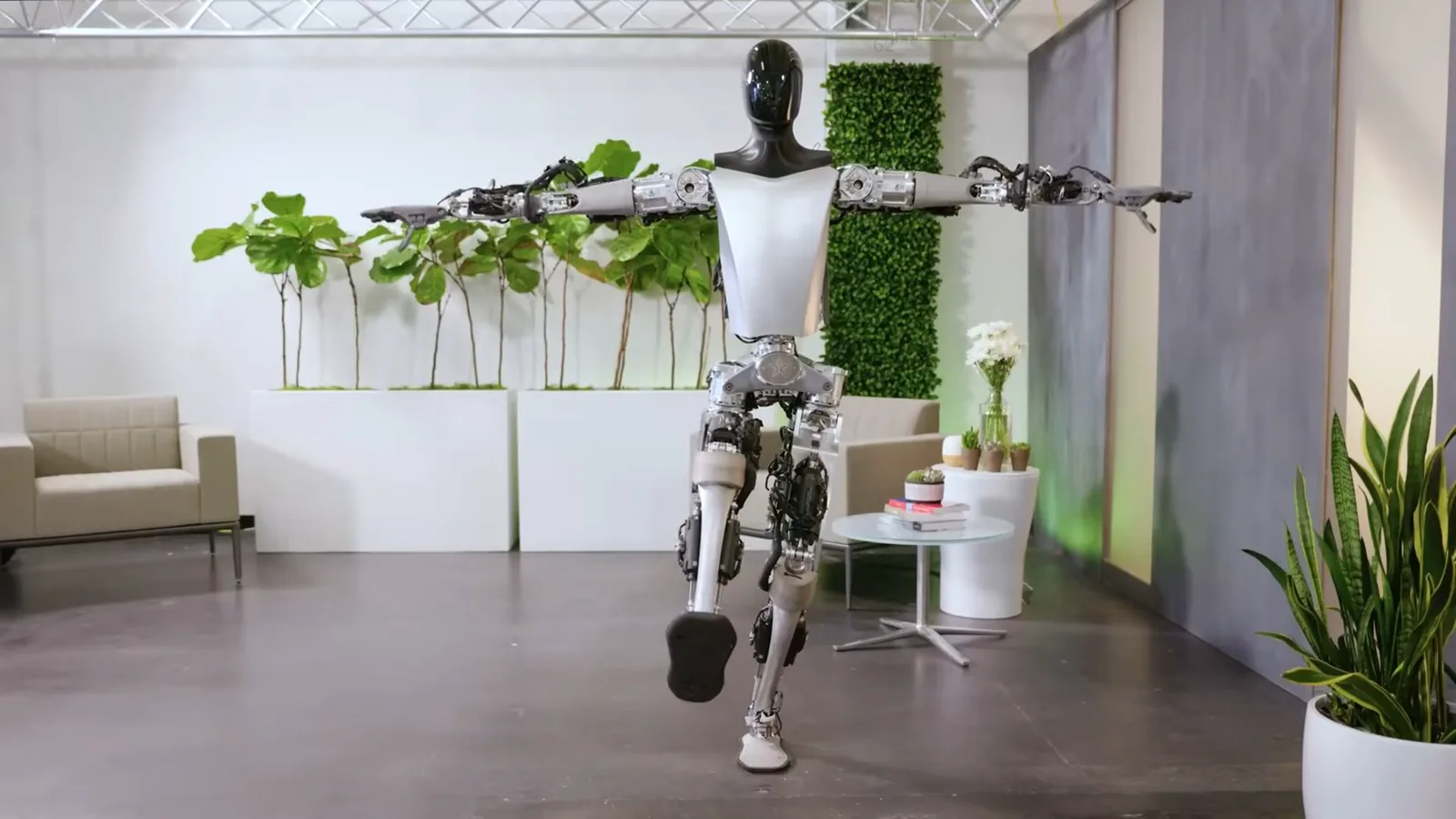
Tesla showed an updated Optimus video with arm and leg calibration, block sorting and balancing on one leg. I find the progress impressive relative to the project's short history, while Boston Dynamics has worked on robotics much longer. The edited company demonstration does not establish the robot's performance in unrestricted settings.
Meta announced a beta assistant for WhatsApp, Messenger and Instagram, with plans for Quest and smart glasses. Meta said its model drew on Llama 2 technology and could use a Bing search partnership for timely information as well as generate images. It also described 28 character-based AI experiences using celebrity likenesses and distinct personas.
Meta introduced its Emu image-generation technology for features including stickers, and described Instagram image editing such as changing a backdrop. It also discussed labeling AI-generated or edited images. I support clear labeling because people should be able to recognize synthetic content.
The new Ray-Ban Meta smart glasses were presented as a way to take photos, livestream, listen to music, make calls and use Meta AI. I like their ordinary appearance but worry about privacy when cameras become wearable, even if phones already put cameras in many people's pockets.
Meta also introduced Quest 3 with improvements in processing, resolution, sound and form factor. I am excited about Apple's forthcoming Vision headset, though I have not found a daily use for VR. The Quest 3 starting price was $499, about one-seventh of the announced $3,499 Vision Pro price; I see different market strategies in those prices.
Mistral, Amazon and creative software
The roundup turns to Mistral 7B's reported benchmark results, Amazon's Anthropic partnership and Alexa plans. Leonardo's Elements and Windows Copilot follow.
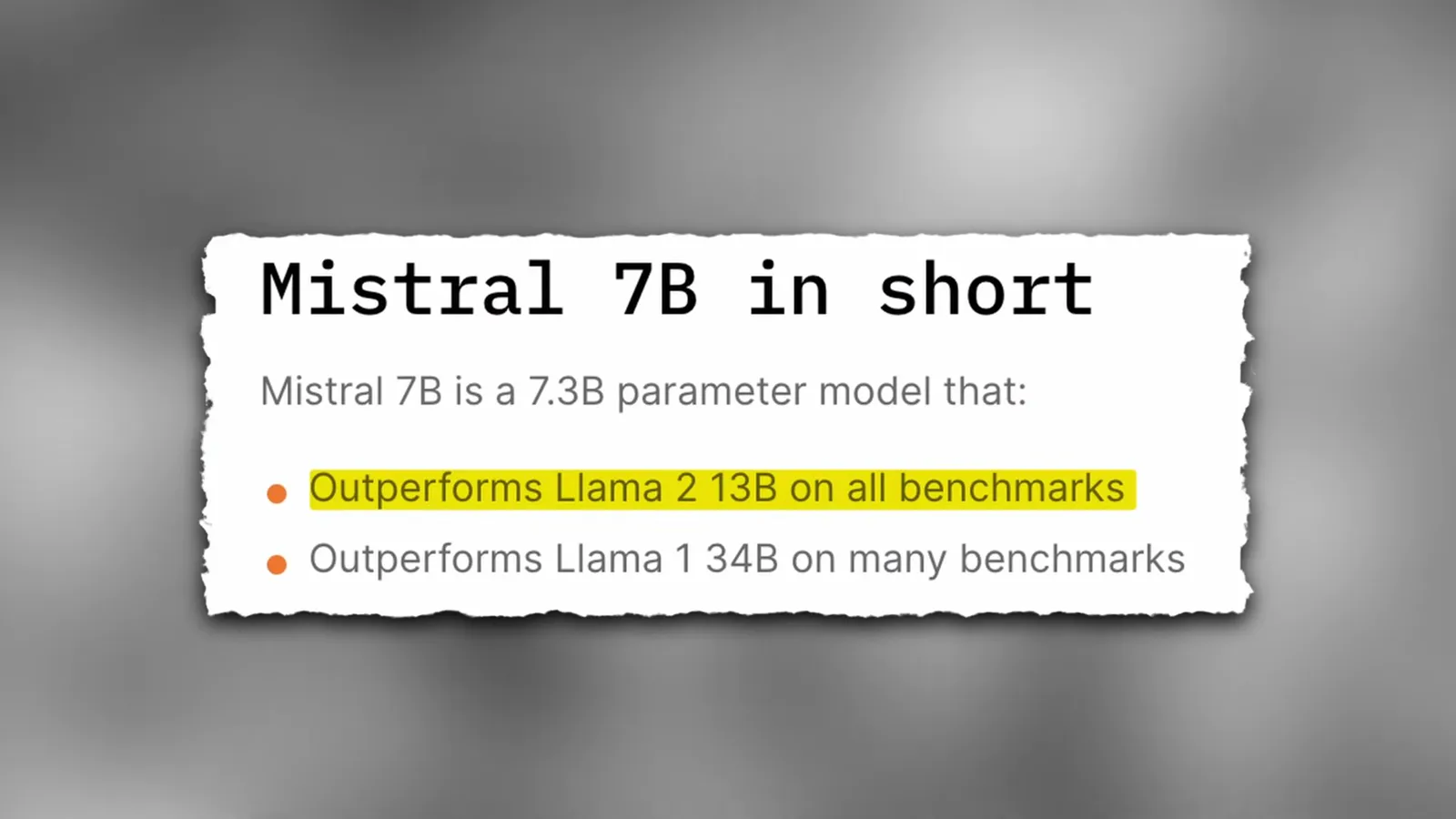
Mistral released Mistral 7B under Apache 2.0. Its launch report said the 7.3-billion-parameter model outperformed Llama 2 13B on its reported benchmarks and Llama 1 34B on many, while approaching Code Llama 7B on coding. Those are the developer's comparisons on selected evaluations; I caution that benchmarks do not always translate to real-world use.
Amazon and Anthropic announced a strategic collaboration: Amazon would invest up to $4 billion for a minority stake, and AWS would become Anthropic's primary cloud provider. Claude was available through Amazon Bedrock, with customization and deployment plans. My description of a $4 billion investment should be read as the announced maximum, not an amount already fully invested at that time.
Amazon also described a new generative AI model for Alexa, optimized for voice, real-time information and smart-home use. The company discussed more conversational interaction and contextual signals, including visual cues in supported settings; these were product plans rather than proof that all capabilities were already broadly available.
Leonardo.Ai launched Elements, which it described as a way to combine styles and models, including LoRA-based effects, within image generation. I have followed the smaller competitor since early on and like its interface; the examples include styles such as glass, steel and Baroque.
Microsoft was rolling out Copilot in Windows 11 as an assistant for web answers, creative work and aspects of the Windows environment. I had not yet tried it myself and planned to do so, so my account here relies on the announcement rather than a hands-on evaluation.
Government technology and creator tools
Berman discusses Starshield, a reported CIA AI tool, quantum computing and YouTube's creator announcements. He introduces an AI concert visual.
Outside AI, SpaceX won a US Space Force contract for Starshield services, including satellite communications and related equipment and network management. I also mention reporting that the CIA was developing an AI tool to help analysts work with public information; details and a launch date were limited.
Quantum computing could eventually affect areas such as logistics, medicine and cybersecurity, including some forms of encryption. My description of qubits as calculating unlimited outcomes is an oversimplification: quantum algorithms exploit quantum effects for particular problems, not an unlimited ability to evaluate and read out every answer.
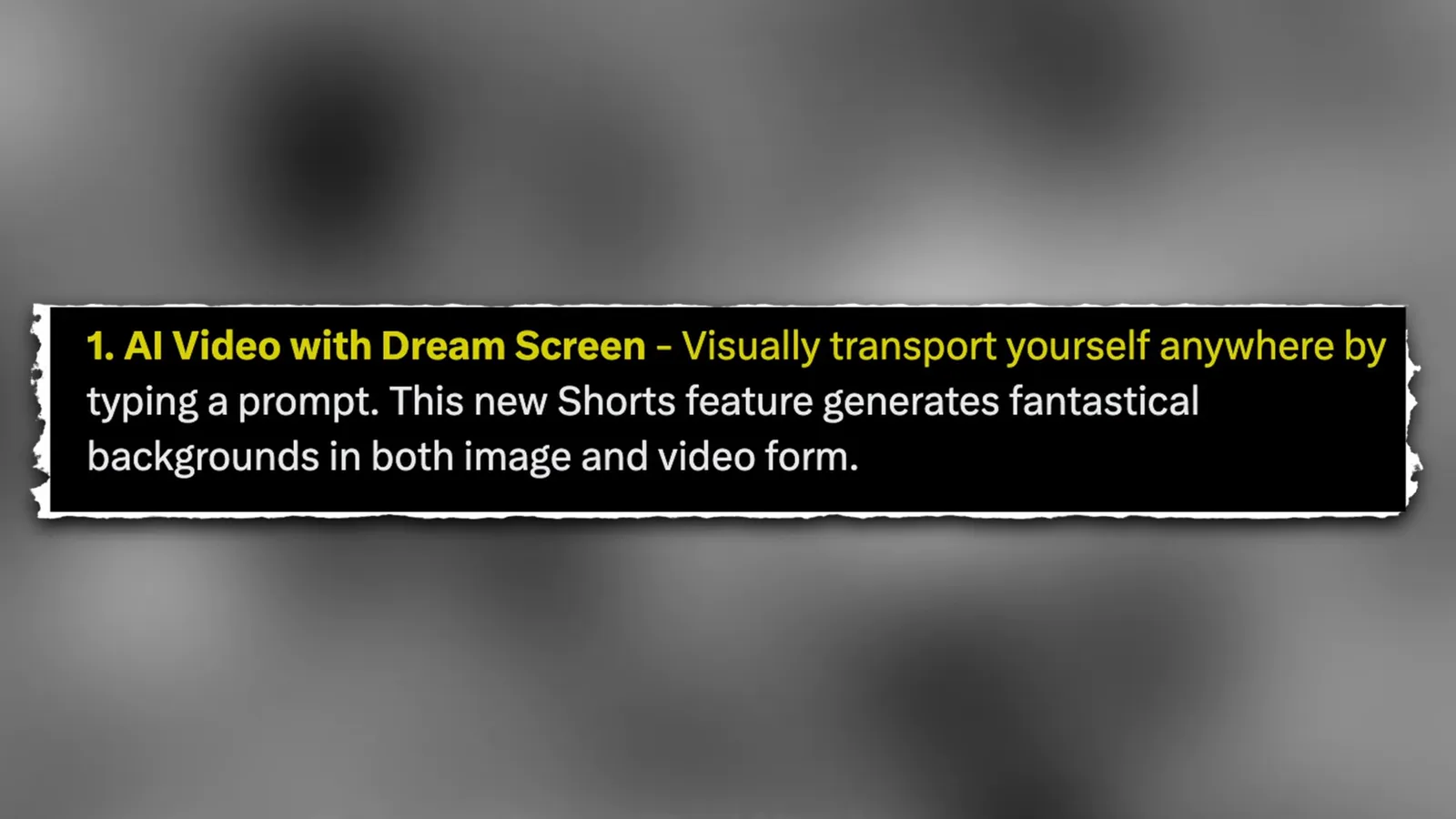
YouTube announced creator tools including Dream Screen backgrounds for Shorts, the YouTube Create editing app, AI-assisted ideas, dubbing and music search. I am eager to try these features as a creator. My suggestion that AI-generated music might also be included was speculation, not an announced feature in this account.
For the AI video of the week, I highlight a concert visual featuring a rapidly evolving skeleton on a giant screen. I am struck by the scale of the imagery and imagine the experience of watching it with the music and crowd.
The Gemini reports
Berman closes with reports and expectations for Google's then-unreleased Gemini models. The anticipated capabilities were not yet verified product features.
Finally, reports suggested Google was nearing the release of Gemini and testing it with a small group of companies. I discuss rumored multimodal features and possible connections to Google services, coding and image generation, but these were expectations in September 2023, not verified capabilities of a released product. I also note Google's role in the transformer research that helped start the current wave of AI.
More from this channel
 34:21EN
 Matthew Berman· Oct 27, 2026Matthew Berman Examines Anthropic’s IPO Filing, AI Growth and GovernanceMatthew Berman, Sam Altman · Forward FutureThe presenter reviews the S-1’s financial metrics, compute strategy and voting structure while questioning the tension between rapid AI development and safety.
 0:26ENMatthew Berman· Oct 25, 2026Sam Altman on Human Values and Problem-Solving in an AI WorldSam Altman · OpenAIIn a short interview excerpt, Altman considers the enjoyment of solving hard problems and the human role in interpreting results.
 0:36ENMatthew Berman· Oct 25, 2026Kimi K3.1 and a Rubik’s Cube Solver DemonstrationMatthew Berman · Forward FutureMatthew Berman shows a scrambled virtual cube being solved and gives the Kimi K3.1 test a favorable assessment.
 0:21ENMatthew Berman· Oct 24, 2026An AI-Generated Kimi Benchmark Chart Used Invented ScoresMatthew Berman · Forward FutureMatthew Berman asks for a graph of Kimi K3.1 Pro benchmarks, then discovers that the displayed figures are illustrative placeholders.
 25:50ENMatthew Berman· Oct 24, 2026Kimi K3.1 Pro Tested: Strong 3D Demos, Uneven Results and Competitive PricingMatthew Berman · Forward FutureMatthew Berman tests the open-weight model on coding, 3D rendering and visual explanations, then compares benchmark results and prices.
 32:20ENMatthew Berman· Oct 23, 2026Who Is Local AI For? The Costs, Trade-offs and a Hybrid FutureMatthew Berman · Forward FutureMatthew Berman weighs data control and independence against hardware cost, setup complexity and inference speed.