In 30 seconds
Matthew Berman presents Anima Playground in a sponsored video, describing how a Figma design link can be turned into an application, edited with prompts and published. The short is a promotional demonstration rather than an independent evaluation of generated code or current product terms.
- 1A sponsored workflowBerman identifies Anima as the sponsor and introduces its design-to-application workflow.
- 2From design to applicationHe says users paste a Figma design link and use prompts to modify the generated result.
- 3Publish and shareBerman describes one-click web publishing and says users can share code through GitHub; the clip does not establish terms or quality for every project.
Takeaways
- Berman describes importing a Figma design through a link and generating an application.
- He says users can choose UI tooling and request features or logic in natural language.
- The promotional video describes publishing to the web and sharing generated code through GitHub.
- Anima sponsored the video, and the clip does not independently test production readiness.
Read the edited text by chapter
Generate from a design
Berman introduces the sponsored tool and describes starting from a Figma link.
Matthew Berman introduces Anima, the sponsor of this video, as a way to turn a Figma design into an application. He describes copying a design link into Anima and having it generate the initial result. The short is a promotional presentation rather than an independent test of every generated application.
Iterate, publish and share
He describes prompting for changes, choosing UI tools, publishing and sharing code. The short is a product promotion.
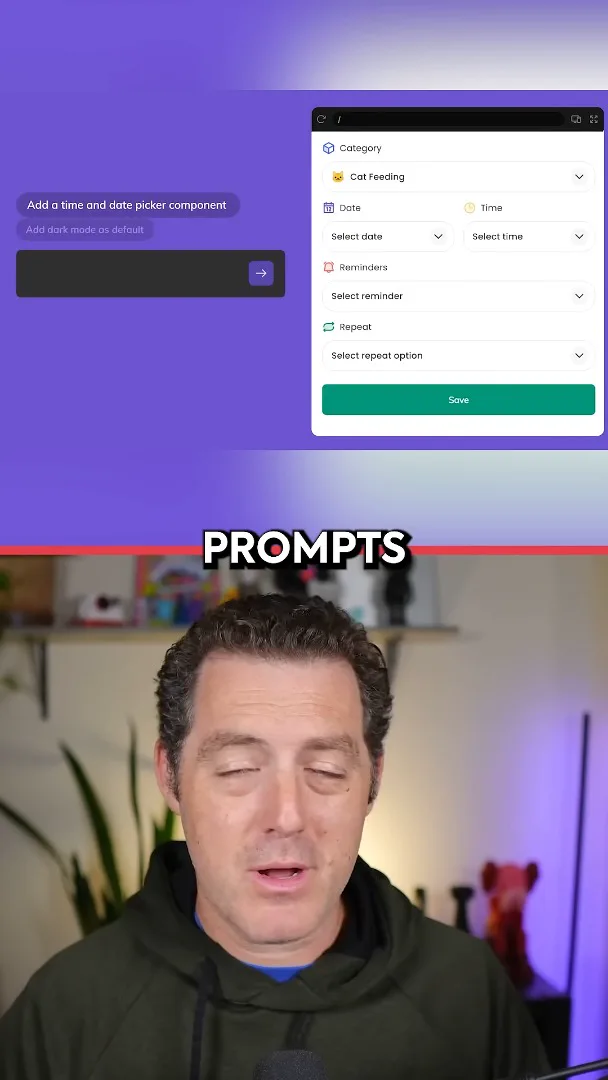
Berman says users can choose UI tools such as Tailwind and use natural-language prompts to add or revise features and logic. The on-screen illustration shows a prompt adding a date and time picker to an example form.
He describes publishing to the web with one click and says users own the code and can push it to GitHub to collaborate. These are the claims in the 2025 promotion; available features, terms and the suitability of generated code depend on the product and project.
More from this channel
 34:21EN
 Matthew Berman· Oct 27, 2026Matthew Berman Examines Anthropic’s IPO Filing, AI Growth and GovernanceMatthew Berman, Sam Altman · Forward FutureThe presenter reviews the S-1’s financial metrics, compute strategy and voting structure while questioning the tension between rapid AI development and safety.
 0:26ENMatthew Berman· Oct 25, 2026Sam Altman on Human Values and Problem-Solving in an AI WorldSam Altman · OpenAIIn a short interview excerpt, Altman considers the enjoyment of solving hard problems and the human role in interpreting results.
 0:36ENMatthew Berman· Oct 25, 2026Kimi K3.1 and a Rubik’s Cube Solver DemonstrationMatthew Berman · Forward FutureMatthew Berman shows a scrambled virtual cube being solved and gives the Kimi K3.1 test a favorable assessment.
 0:21ENMatthew Berman· Oct 24, 2026An AI-Generated Kimi Benchmark Chart Used Invented ScoresMatthew Berman · Forward FutureMatthew Berman asks for a graph of Kimi K3.1 Pro benchmarks, then discovers that the displayed figures are illustrative placeholders.
 25:50ENMatthew Berman· Oct 24, 2026Kimi K3.1 Pro Tested: Strong 3D Demos, Uneven Results and Competitive PricingMatthew Berman · Forward FutureMatthew Berman tests the open-weight model on coding, 3D rendering and visual explanations, then compares benchmark results and prices.
 32:20ENMatthew Berman· Oct 23, 2026Who Is Local AI For? The Costs, Trade-offs and a Hybrid FutureMatthew Berman · Forward FutureMatthew Berman weighs data control and independence against hardware cost, setup complexity and inference speed.