In 30 seconds
Hall argues that practitioners should identify the most important principles before refining small details, while continuing to explore new techniques.
- 1SearchA search can teach even if its goal is elusive.
- 2HierarchyHall recommends identifying key factors.
- 3Advanced detailDetails matter after fundamentals are in place.
- 4DiscoveryHall distinguishes discovery from invention.
Takeaways
- Search for principles.
- Prioritize posture and balance.
- Refine details when the fundamentals support them.
Read the edited text by chapter
Searching for principles
Lex Fridman asks Brazilian jiu-jitsu instructor Ryan Hall whether grappling can be understood through a few unifying principles. Hall says searching for such principles can be useful even if no complete theory exists.
Lex Fridman asks Brazilian jiu-jitsu instructor Ryan Hall whether grappling can be understood through a few unifying principles. Hall says searching for such principles can be useful even if no complete theory exists.
Hall argues that an ambitious search can produce useful discoveries even when the original goal is not achieved.
Prioritize what matters
Asked how he learns, Hall says he tries to filter out extraneous details and identify which factors are most important.
Asked how he learns, Hall says he tries to filter out extraneous details and identify which factors are most important.
He uses a debate about capital punishment as an analogy for distinguishing foundational questions from details. This is his personal argument, not a complete account of the debate.
Hall argues that public debates often emphasize secondary issues while overlooking larger questions such as errors or abuse of authority.
From details to fundamentals
He relates the idea to grappling and striking: small differences in grip or hand position may matter, but their usefulness depends on the broader situation.
He relates the idea to grappling and striking: small differences in grip or hand position may matter, but their usefulness depends on the broader situation.
Hall recommends identifying the most important components of a technique before focusing on a long list of refinements.
He compares the hierarchy to basic human needs: food, water and shelter come before more abstract concerns. In grappling, balance and posture similarly precede fine grip details in his teaching.
When details matter
Hall says fine details become important at advanced levels, but only when a practitioner already has the positioning that makes them relevant.
Hall says fine details become important at advanced levels, but only when a practitioner already has the positioning that makes them relevant.
He expects practitioners to continue discovering new positions and techniques while remaining subject to the same physical principles.
Context and evolution
Hall distinguishes the physical mechanics of grappling from differences in rules, context and psychology between sport and other settings. This is his framing of a complex subject.
Hall distinguishes the physical mechanics of grappling from differences in rules, context and psychology between sport and other settings. This is his framing of a complex subject.
He predicts that the sport will keep evolving as athletes adapt and develop approaches that fit its rules.
Hall prefers the word “discover” to “invent” for a technique someone independently finds, since another practitioner may already have used it.
More from this channel
 3:34:27EN
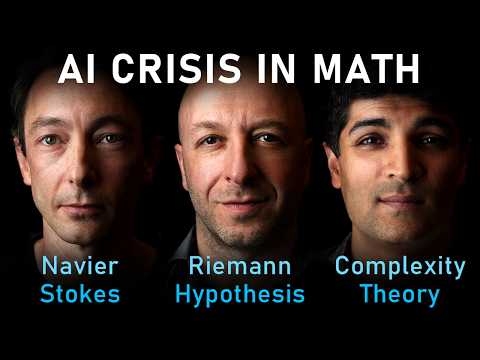
 Lex Fridman· Oct 26, 2026Podcast · 4 speakersAI, Mathematics, and the Meaning of a ProofGuest Steven Brunton, Ankur Moitra, Alex Kontorovich · Host Lex FridmanLex Fridman and three mathematicians discuss recent AI-generated research, hard open problems and what human understanding contributes.
 3:36:56ENLex Fridman· Sep 16, 2026PodcastPsychiatry Has Never Found Its PenicillinHost Lex FridmanHistorian Andrew Scull tells Lex Fridman why the field can ease symptoms, has never cured a major mental illness, and keeps paying for overconfidence with patients' lives.
 5:15:51ENLex Fridman· Aug 26, 2026Podcast · 2 speakersDHH Did Not Write a Line of Omarchy QuattroGuest DHH · Host Lex FridmanThirteen months after a skeptical conversation with Lex Fridman, the Rails creator describes how Opus 4.5, a swarm of coding agents, and a one-minute Linux installer ended his era of hand-chiseled Ruby.
 3:12:58ENLex Fridman· Aug 12, 2026Podcast · 2 speakersOne Cold Shower, Twenty Champions: How Khabib Nurmagomedov Was ForgedGuest Khabib Nurmagomedov · Host Lex FridmanIn a Makhachkala school gym, seventy men shared one shower, and the water was only cold.
 3:46:18ENLex Fridman· Jul 28, 2026Podcast · 2 speakersIf You Take Slavery Out of the Picture, There Is No Civil WarGuest Gary Gallagher · Host Lex FridmanIn 1860, enslaved people were worth more than every railroad and factory in the United States combined.
 3:51:47ENLex Fridman· Jun 30, 2026Podcast · 2 speakersForty-Six Percent of Emperors Were Overthrown. The Empire Lasted AnywayGuest Anthony Kaldellis · Host Lex FridmanHistorian Anthony Kaldellis walks Lex Fridman through 2,200 years of Roman history and argues that what we call Byzantium was Rome itself.