In 30 Sekunden
Peter Yang walks through a podcast production system built around reusable AI skills. He maps 15 manual steps, creates skills for preparation, editing and production, and connects tools to draft an interview guide, editor handoff, newsletter, show notes and clips. He estimates that the system saves him at least five hours a week but shows repeated human review and revisions. The tutorial is sponsored by Riverside.
- 1Map the actual workList every manual step and group related tasks before deciding what an assistant can help with.
- 2Build skills around repeatable stagesYang separates preparation, editor handoff and production, then routes specific output tasks to smaller skills.
- 3Keep review in the loopHe chooses intro moments, checks clip boundaries and revises drafts before sharing with his editor.
- 4Learn from manual editsSnapshot the draft, compare it with the edited version and review proposed skill changes before applying them.
- 5Connect tools around the workflowRiverside, Linear, YouTube and Typefully support different steps in his example; the tools do not remove the need for judgment.
Das Wichtigste
- List the real steps in a recurring workflow before deciding what to automate.
- Group related work into reusable skills, with clear instructions and routing between stages.
- Review transcripts, clip boundaries, factual details and drafts; Yang’s first newsletter draft needed corrections.
- Compare AI drafts with manual edits, then review suggested skill improvements before updating them.
- The reported time savings are Yang’s estimate for his own workflow; substantial human work remains.
Den bearbeiteten Text nach Kapiteln lesen
The three-step method
Map a workflow, build reusable skills and connect them.
Peter Yang explains how he uses a chain of AI skills to produce his weekly podcast. He estimates the system saves at least five hours a week, while acknowledging that he still spends time reviewing and editing. The tutorial is sponsored by Riverside, which he uses in the demonstrated workflow.
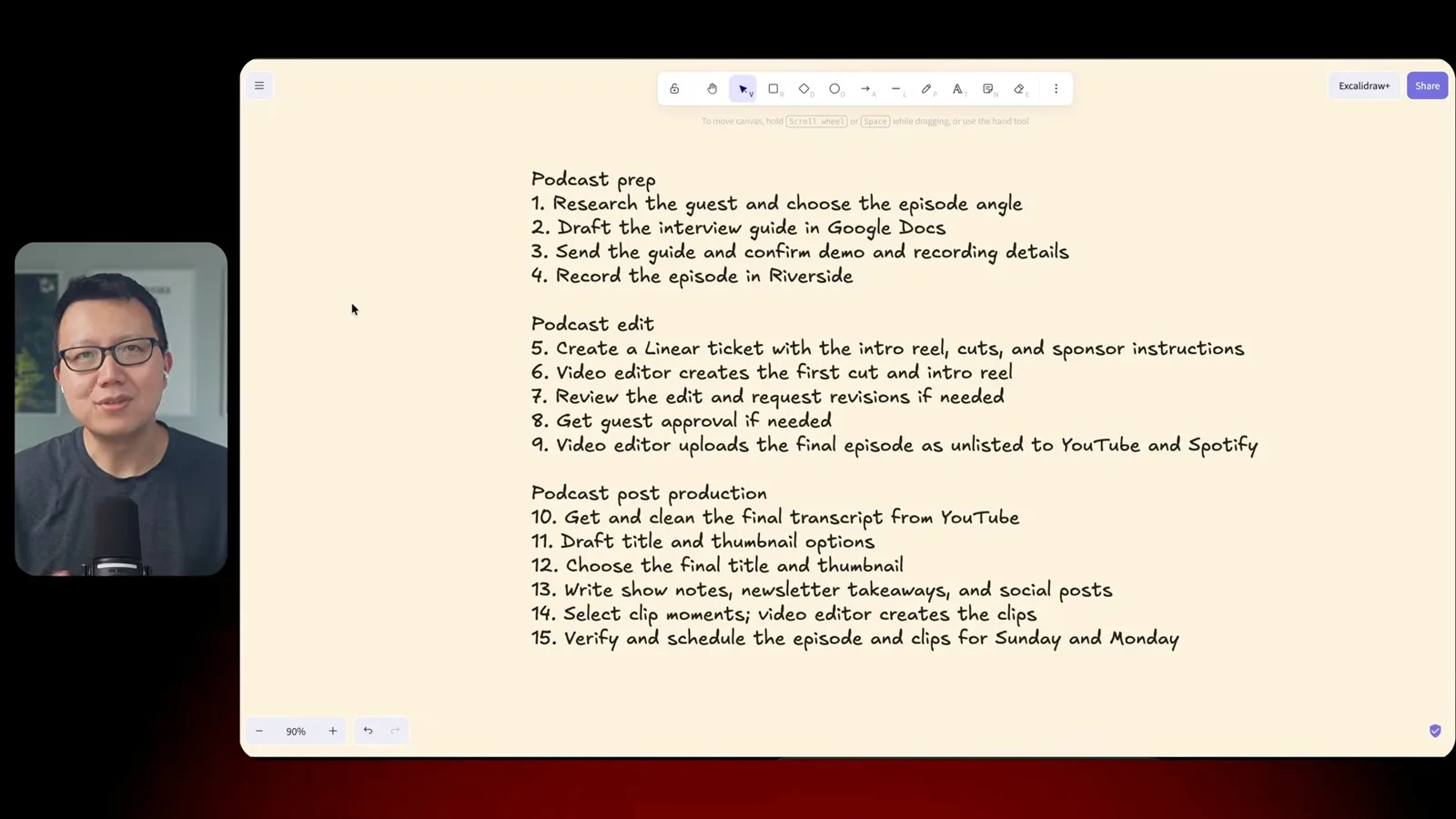
First, he maps the manual process in detail: guest research, an interview guide, recording, an editor handoff, review, publication, show notes, newsletter, social posts and clips. His list has 15 steps grouped into preparation, editing and post-production. He asks AI which steps it can assist with.
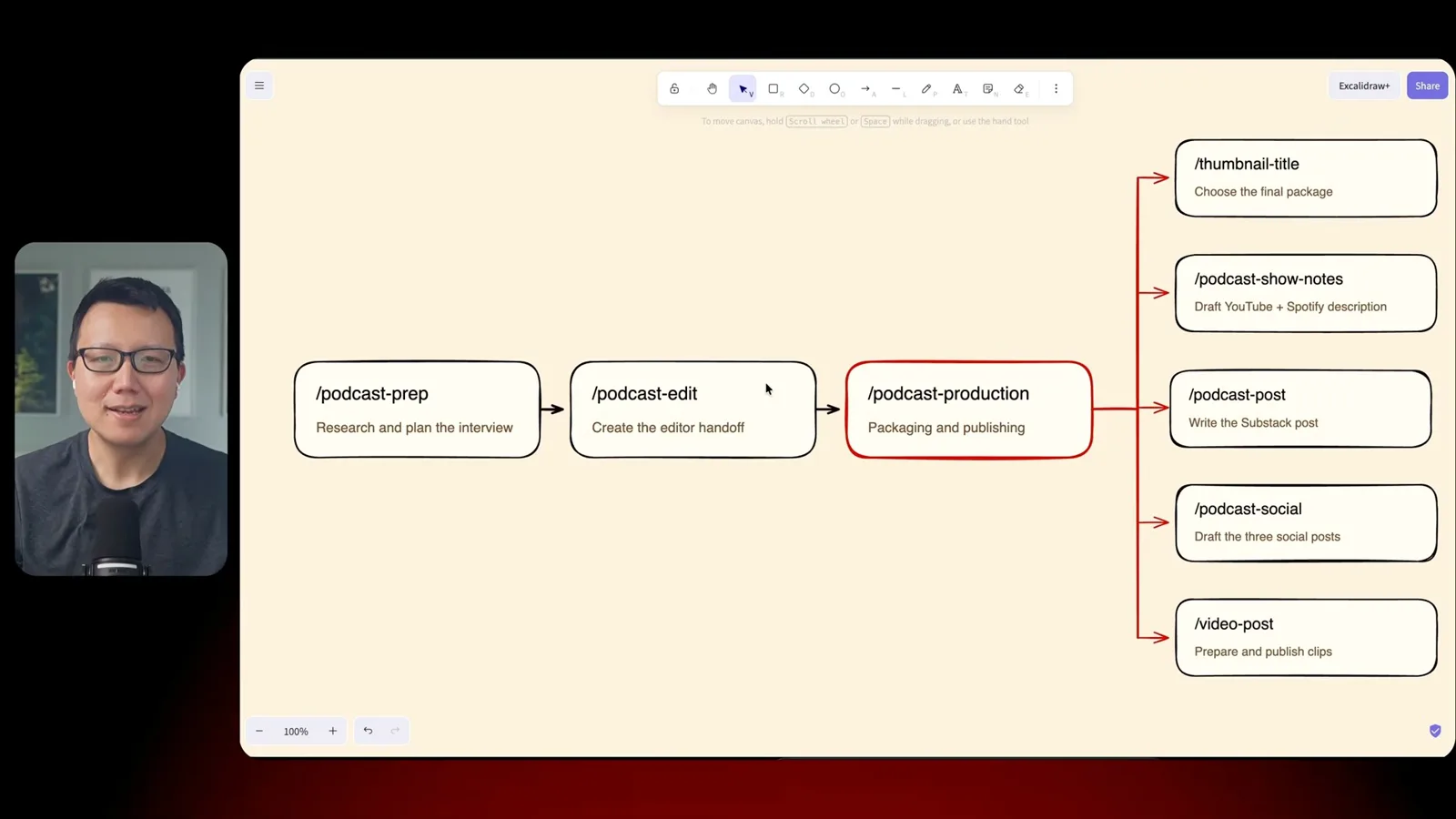
Second, he creates reusable skills for those stages. A preparation skill researches and structures the interview; an editing skill prepares instructions for the video editor; a production skill coordinates specialist skills for titles, show notes, the newsletter, social posts and clips.
Prepare the interview
Research, select an angle and revise the guide.
For an interview with ChatGPT Finances product lead Ethan Bloch, Yang asks the preparation skill to research the guest, scan related videos and propose an angle, questions and packaging. He rejects some suggested topics, asks for more practical use cases and revises the interview guide before sharing it.
Create an editor handoff
Use the recording transcript to propose cuts and clips for review.
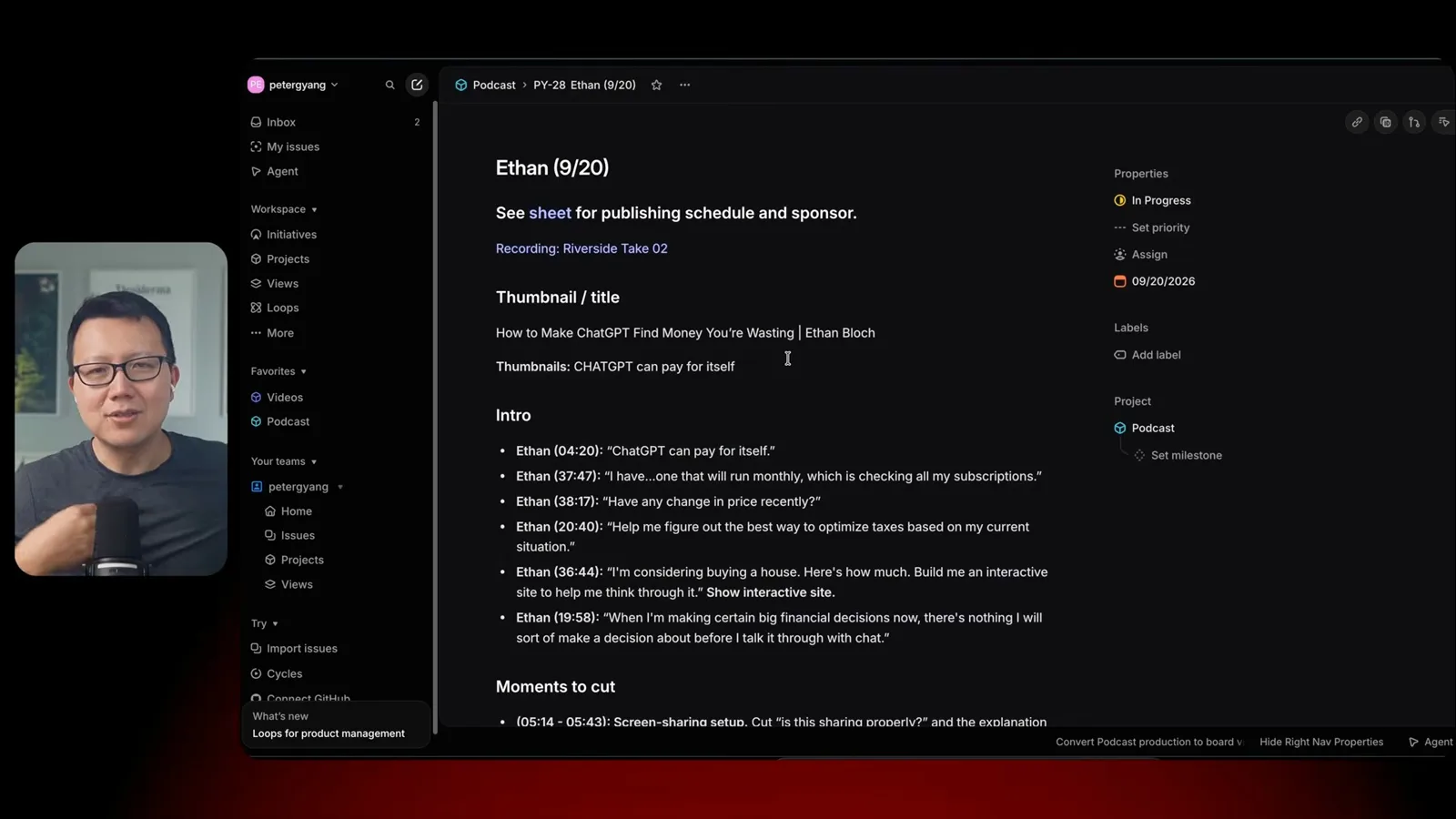
After recording in Riverside, Yang uses a Riverside MCP connection and his editing skill to prepare a Linear ticket. The assistant proposes intro-reel selections, cuts and clips from the transcript. Yang combines alternatives, adjusts clip boundaries and reviews the instructions for the human editing team.
Produce and package the episode
Draft a newsletter, thumbnails and show notes with feedback.
In post-production, a newsletter skill drafts the episode write-up. The initial version misses or distorts some prompts, so Yang supplies the six prompts he wants and requests a revision. His example shows that the first draft still requires fact and content review.
A thumbnail-and-title skill analyzes the transcript and researches comparable videos, then proposes several combinations. Yang chooses and refines options for testing. He says a repeatable thumbnail template and a Figma connection can also reduce manual work.
A show-notes skill drafts descriptions with timestamps, sponsor information and links. Yang asks for more specific chapter labels and uses browser automation to place the approved description and configure the YouTube upload. He still checks the result.
Improve skills and distribute clips
Compare manual edits, prepare social content and review clips.
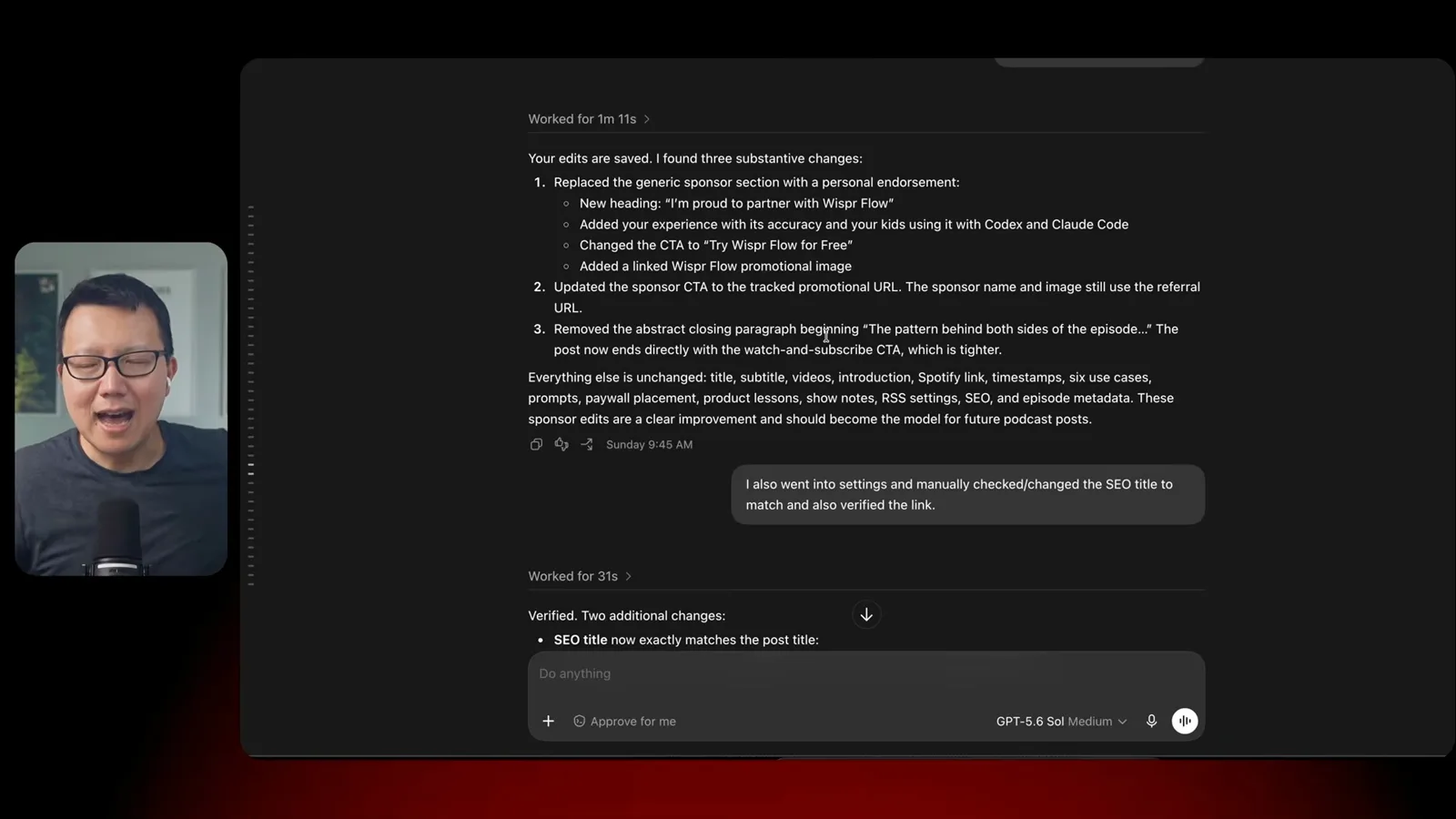
To improve the newsletter skill, he snapshots the draft before making manual edits. He then asks the assistant to compare the before and after versions and propose numbered skill changes. Yang reviews the proposed changes and gives feedback before asking for updates.
A social skill uses examples of his previous writing to draft teasers and posts. Yang edits the opening and chooses a suitable screenshot before scheduling a post. The examples and his review are part of the workflow, not an assurance that the first output will match his style.
For clips, the assistant suggests moments from the interview. Yang selects one, uses Riverside to create and review the clip, checks the accompanying copy and schedules it through Typefully. The workflow combines connected tools with decisions by the host and editor.
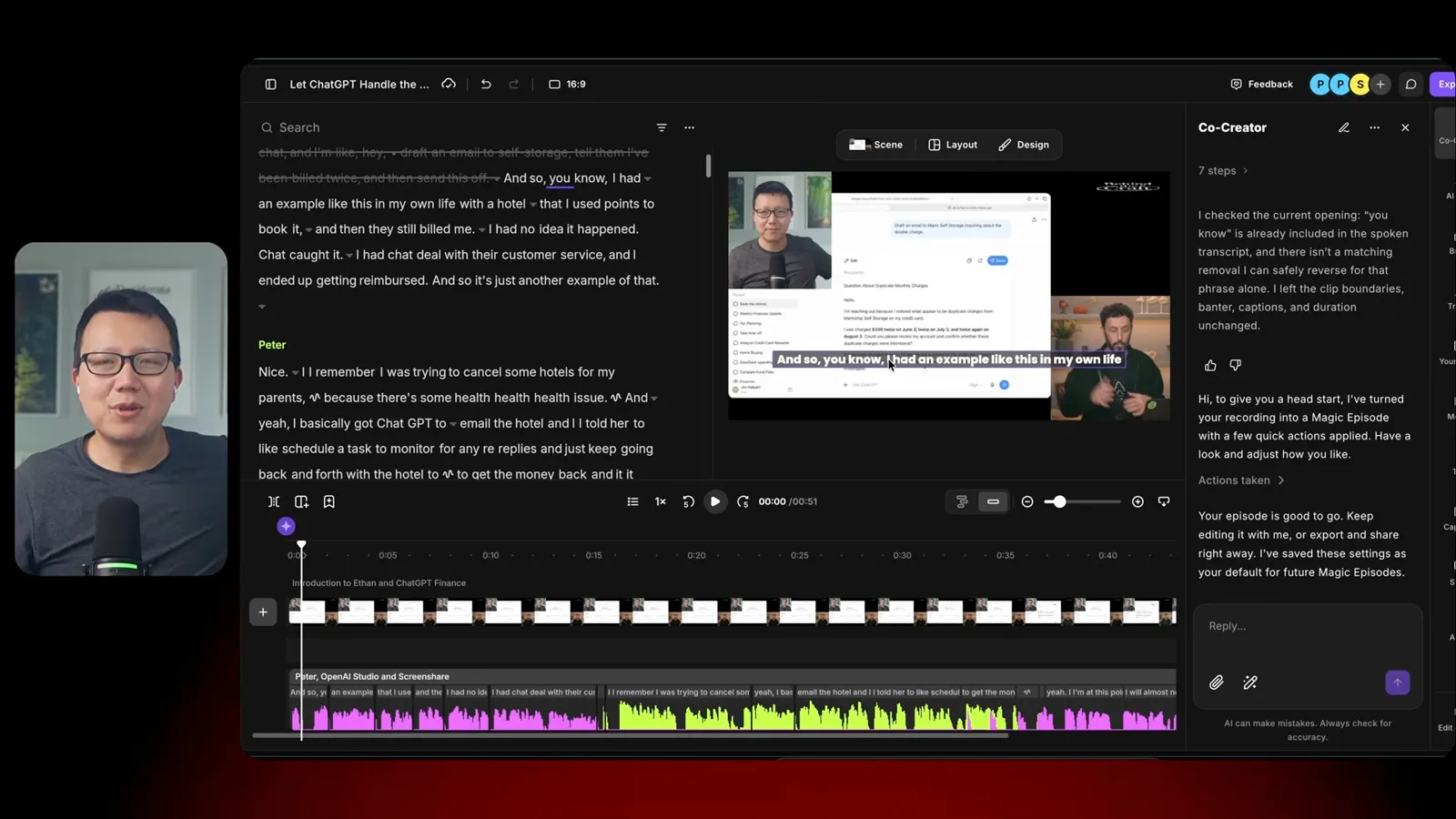
To adapt the method, Yang recommends choosing one or two time-consuming workflows, listing each manual step, creating reusable instructions for recurring stages and connecting them in sequence. A skill should explain when to use it and how to perform its steps.
He closes by noting that even this system still takes substantial time and that he may need a person to help operate it. His claimed time savings are specific to his own process and do not imply that every workflow can be automated to the same degree.
Mehr aus diesem Kanal
 46:40EN
 Peter Yang· 8. Nov. 2026Podcast · 2 StimmenAshley Alexander: How AI Helps Me Care for My Parents With CancerGast: Ashley Alexander · Moderation: Peter YangA caregiver uses AI to prepare for appointments, organize records and ask better questions—while keeping doctors at the center of treatment.
 17:50ENPeter Yang· 4. Nov. 2026PodcastPeter Yang’s Five Steps for Using AI to Help Care for His MotherYang uses a shared care brief and organized records to navigate appointments, while making time for family.
 15:03ENPeter Yang· 3. Nov. 2026PodcastHow Peter Yang Used an AI Phone Agent to Negotiate His Internet BillAn AI call negotiated a lower price and faster service, but Yang still had to approve the change himself.
 33:09ENPeter Yang· 1. Nov. 2026Podcast · 2 StimmenJaclyn Konzelmann: When AI Can Build More, Choose What Deserves to ExistGast: Jaclyn Konzelmann · Moderation: Peter YangGoogle Labs pairs short strategy documents with prototypes, user co-creation and lessons from experiments that end.
 13:05ENPeter Yang· 28. Okt. 2026PodcastPeter Yang Tests Genie 4: Convincing Worlds, Unfinished GameplayFive live demonstrations show scenes that respond to prompts and sound, alongside inconsistent actions and limited game mechanics.
 1:06ENPeter Yang· 26. Okt. 2026PodcastPeter Yang on Setting Up Payroll for a One-Person BusinessIn a paid partnership, Yang describes the paperwork he encountered and a payroll product integrated with a business account.