In 30 Sekunden
Matthew Berman shows how Soundraw can arrange instrumental tracks, experiments with vocals in Synthesizer V and plays Google Research’s MusicLM samples. The availability and pricing described are historical and the vocal demo includes mistakes and limitations.
- 1Generated arrangementsSoundraw offers mood, genre and section-energy controls.
- 2Editable synthetic singingBerman assigns lyrics and notes to a voice and adjusts its characteristics.
- 3Text-to-music researchMusicLM examples include text, sequential prompts and melody conditioning.
Das Wichtigste
- Soundraw’s demonstrated controls include mood, arrangement, tempo and instrumentation.
- Synthesizer V allows notes, lyrics and vocal characteristics to be edited.
- The host’s first vocal example has pronunciation and musical-quality issues.
- MusicLM was presented as research with sample outputs at the time of the video.
- The tools provide different forms of control rather than identical workflows.
Den bearbeiteten Text nach Kapiteln lesen
Soundraw arrangements
Berman explores instrumental generation and historical pricing.
In this February 2023 video I explore three approaches to AI music: arranging generated instrumental tracks, synthesizing vocals and research on generating music from descriptions. The products and prices I mention reflect that time.
Soundraw generates instrumental options from selected moods and genres. I choose several mood tags and preview tracks, then adjust the energy of different sections to create a buildup.
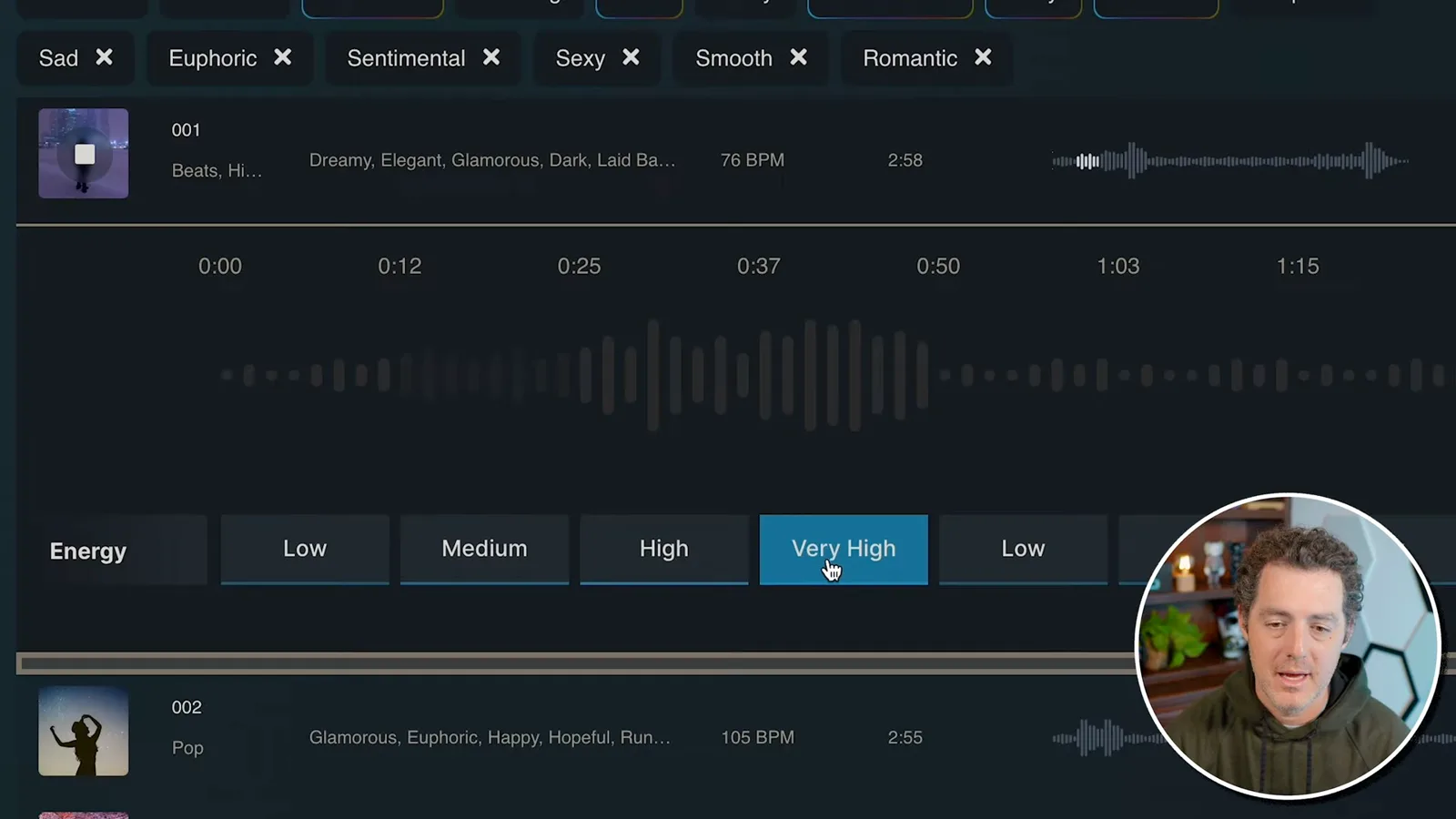
In the demonstrated pro mode, the arrangement can be adjusted by component, including melody, backing, bass, drums and fills. Tempo, duration, key and instruments offer further control over the result.
I try different genres and themes, including tutorial and technology, to show how selections produce different tracks. The interface also offers a way to find similar music and preview a track under a video.
I describe a free generation and bookmarking tier and a paid download plan then listed around $16.99 per month. Those are historical terms from 2023 and should not be assumed to be current.
Synthesizer V vocals
He experiments with notes, lyrics and synthetic voice settings.
Next I demonstrate Dreamtonics’ Synthesizer V, a desktop application for assigning lyrics and notes to a synthetic singing voice. I used ChatGPT to draft lyrics and chose the Natalie voice for my experiment.
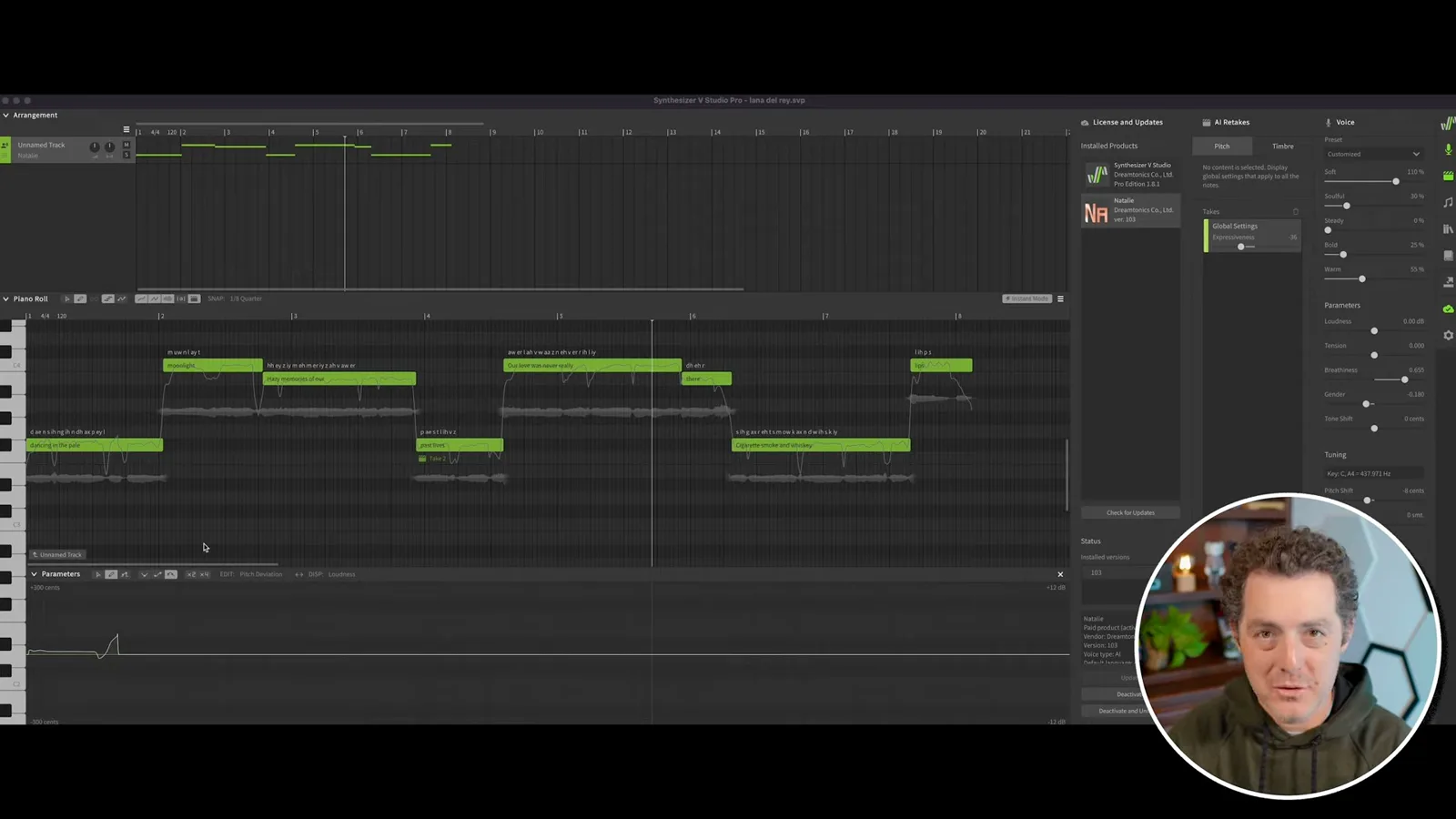
I describe my own musical knowledge as limited and am not satisfied with the first result; I notice a pronunciation problem in the vocal. The example illustrates both the possibility and the need for editing.
The editor lets me place notes, enter lyrics and adjust voice parameters such as softness, breathiness, pitch and key. Moving notes and lining up syllables changes the synthesized performance.
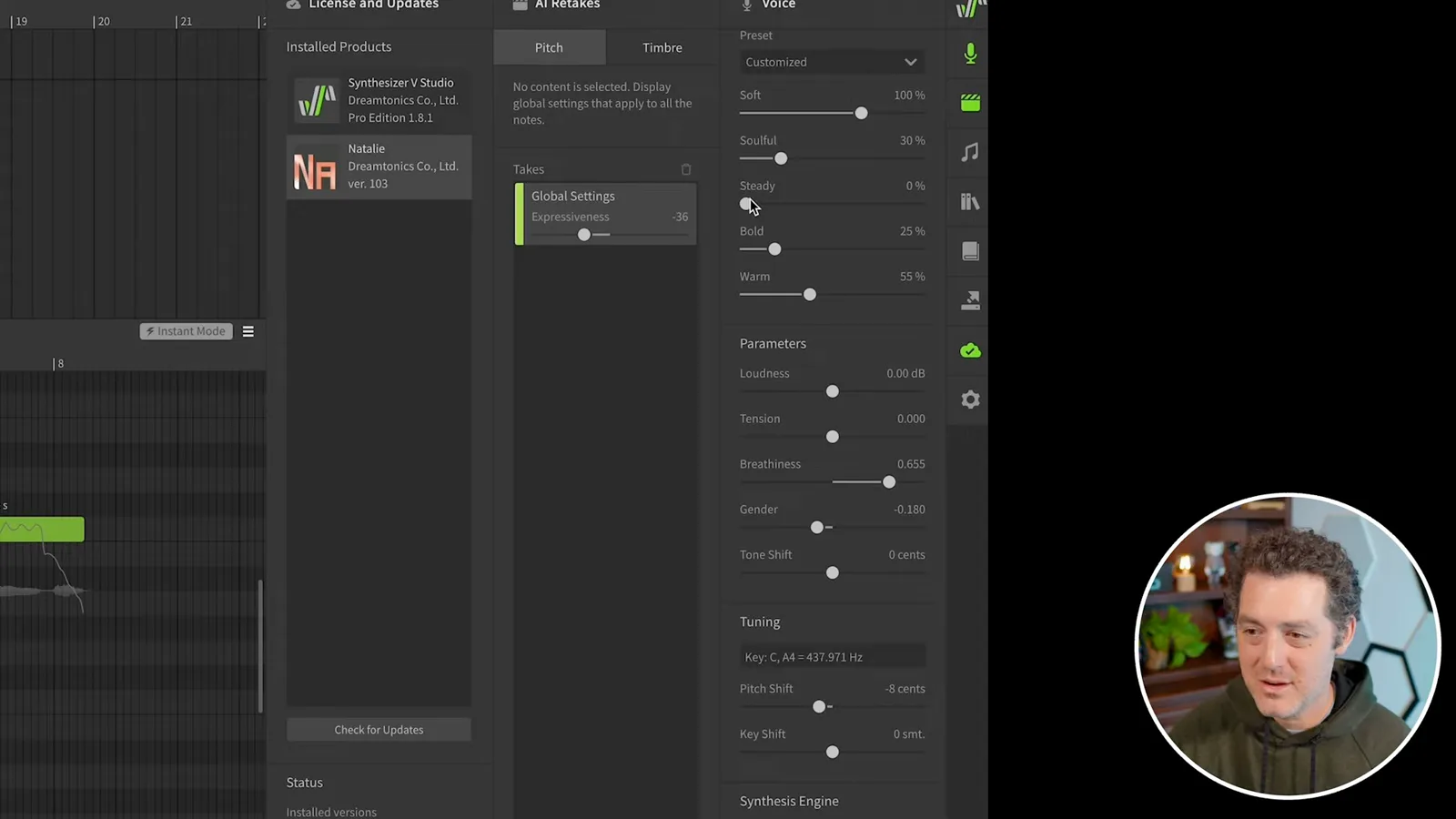
I suggest combining an instrumental track with synthesized vocals and show the available voice options from Dreamtonics. Some voices and the fuller product version were paid offerings in the demonstration.
MusicLM research
He listens to text-to-music examples and shows different conditioning methods.
The final example is Google Research’s MusicLM, which generates music from text descriptions. At the time of this video Berman could only play research examples, not use it as a publicly available interactive product.
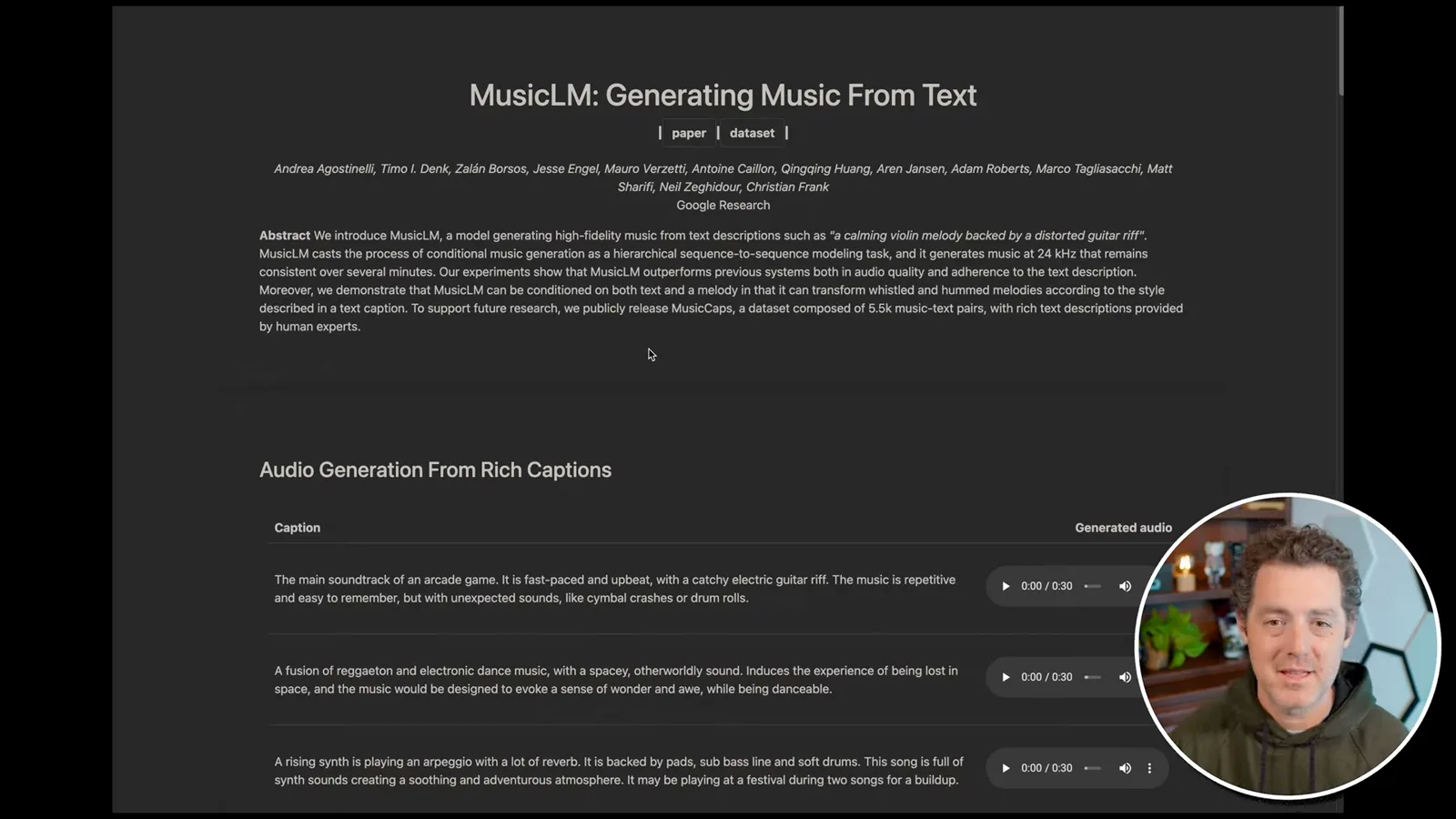
I listen to examples prompted as an arcade soundtrack and a fusion of electronic dance music with reggaeton. The examples demonstrate the research direction, but listening to a few samples is not a broad evaluation of quality or originality.
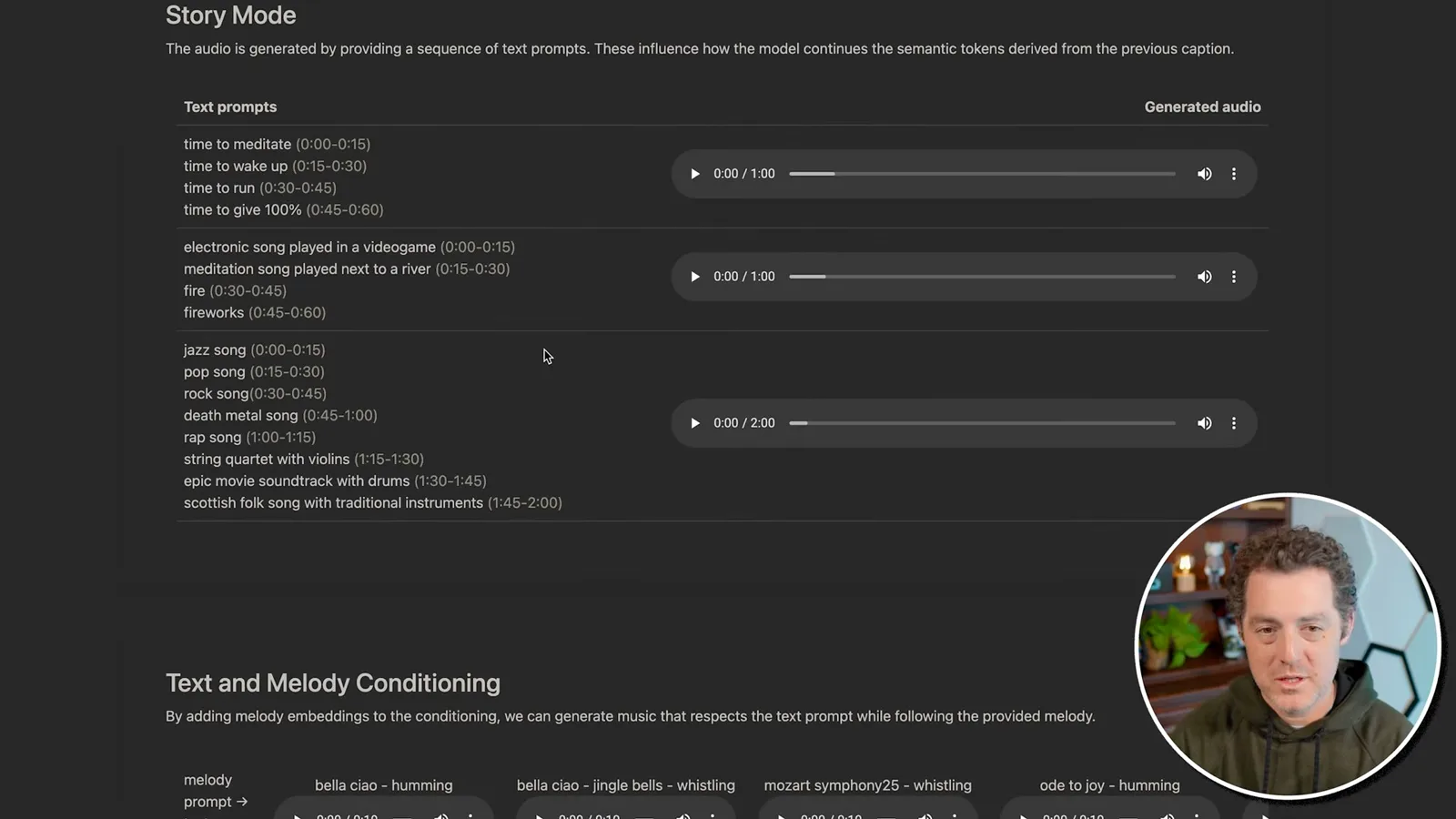
The research page also demonstrates sequences of prompts that change the music over time and conditioning on a supplied melody as well as text. I show examples of humming or whistling as melodic inputs.
I play an example connected to a visual artwork and look at instrument-specific samples. I anticipate that text-to-music tools will become more accessible, a prediction made from the research state visible in 2023.
I conclude by comparing the accessible arrangement and vocal tools with the then research-only text-to-music demonstration. Each offers a different degree of control and requires different creative input.
Mehr aus diesem Kanal
 25:50EN
 32:20EN
 0:22EN
 45:08EN
 0:32EN
 1:02EN