YoutuBlog (HackerTube): YouTube-Vorträge und Podcasts lesen




Neueste Artikel
7.027 ArtikelSortieren
 31:23EN
 PragerU· 25. Nov. 2026Jill Simonian and Richard Lim Debate How to Teach ThanksgivingJill Simonian, Richard Lim · PragerU KidsThe PragerU hosts defend teaching gratitude while discussing Wampanoag history, uncertain legends and the Plymouth colony.
 31:49EN
 How I AI· 25. Nov. 2026PodcastGemini 4 Neon leads Claire Vo’s 25-task AI benchmarkModeration: Claire VoNeon won on creative work and prototypes, but a separate look at user frustration favored Claude Opus 5.5.
 30:50EN
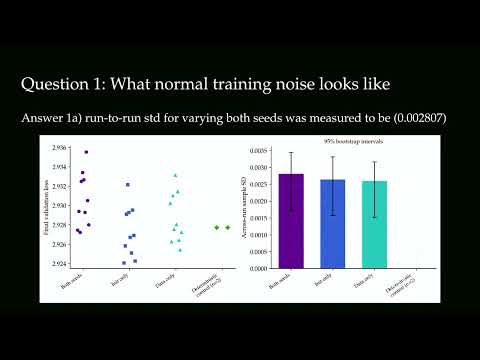
 Stanford Online· 25. Nov. 2026Suhas Kotha: Measure Training Noise Before Trusting a Model ImprovementSuhas Kotha · Stanford UniversityIn a Stanford quiz review, small-model experiments show how random seeds, batch size and learning-rate schedules affect results.
 14:54EN
 Reid Hoffman· 25. Nov. 2026Podcast · 2 StimmenReid Hoffman: AI Makes Entrepreneurship a Career SkillModeration: Aria Finger, Reid HoffmanAs jobs change, Hoffman sees AI as a resource for building businesses and learning, including for people without college degrees.
 1:50:45EN
 The Pragmatic Engineer· 25. Nov. 2026Podcast · 2 StimmenKatelyn Lesse: How Anthropic Rebuilt Its API With Coding AgentsGast: Katelyn Lesse · Moderation: Gergely OroszA Rust rewrite relied on shadow traffic and fallback paths, while agents increasingly handle routine reviews and on-call triage.
 2:30:55EN
 PowerfulJRE· 25. Nov. 2026Podcast · 2 StimmenJocko Willink: The Cost of Guessing How a War Will EndGast: Jocko Willink · Moderation: Joe RoganWillink draws on combat experience to warn against assuming an adversary will react as predicted, and argues for more training in civilian life.
 26:57ENPragerU· 25. Nov. 2026Dennis Prager: Gratitude Needs a Ritual to SurviveAllen Estrin, Dennis Prager · PragerUPrager argues that Thanksgiving preserves gratitude for America, and advises families to keep peace when politics comes up.
 1:17:43ENStanford Online· 24. Nov. 2026Tune the baseline before trusting a deep-learning resultTatsunori Hashimoto · Stanford UniversityTatsunori Hashimoto explains how hyperparameters, scaling, randomness and matched controls shape reliable experiments.
 30:38EN
 Sequoia Capital· 24. Nov. 2026Noam Brown: why poker AI led him beyond game theoryNoam Brown, Alfred Lin · OpenAIDiplomacy forced Brown to model human behavior; poker remains his test for whether AI can plan and build on its own.
 54:47EN
 GOTO Conferences· 24. Nov. 2026Lu Wilson: What happens when everyone can change the codeLu WilsonA music-coding community lets anyone edit, delete or deploy. Its experiments reveal both the power and the strain of giving up control.
 53:28EN
 All-In Podcast· 24. Nov. 2026Podcast · 2 StimmenCrowdStrike's George Kurtz on faster attacks and the patching dilemmaGast: George KurtzKurtz says rapid vulnerability discovery leaves organizations balancing the risk of disruption from a patch against exposure from delay.
 31:53EN
 Every· 24. Nov. 2026Podcast · 3 StimmenWhy The Atlantic draws a line at AI-written storiesGast: Nicholas Thompson, Kevin Roose · Moderation: Kate LeeNicholas Thompson and Kevin Roose see AI helping media businesses while readers seek relationships with human creators.
 1:04:44EN
 Invest Like The Best· 24. Nov. 2026Podcast · 2 StimmenCognition's Scott Wu warns of a difficult AI security transitionGast: Scott Wu · Moderation: Patrick O'ShaughnessyWu expects fast-moving attacks to pressure large organizations, even as he argues that defensive agents and modernized systems can improve protection.
 56:30EN
 Silicon Valley Girl· 24. Nov. 2026Vlad Tenev: AI Investing Needs Clear Limits, Not a Vague GoalGast: Vlad Tenev · Moderation: Marina MogilkoRobinhood’s CEO explains how he sees AI trading permissions, private-market access and measuring AI work by results.
 22:12EN
 Google Cloud Tech· 24. Nov. 2026Question an AI-built app before asking the agent to fix itDevin Chasanoff · GoogleDevin Chasanoff uses a tutor-style conversation to uncover a failed-sync edge case and document it for a later session.
 22:29EN
 AI Engineer· 24. Nov. 2026Jarred Sumner: Independent Tests Made Millions of Agent-Written Lines ShippableJarred Sumner · AnthropicBun’s creator explains why existing tests, three-way comparisons and repeated measurement mattered more than code volume.
 21:22ENAI Engineer· 24. Nov. 2026Steve Yegge's software factory hit a human bottleneckSteve Yegge · Gas TownHis game-building agents produced more changes than players could absorb, while cost, accumulated context and stalled tasks demanded active management.
 19:41EN
 Matthew Berman· 24. Nov. 2026What an AI-generated math proof would mean for human understandingMatthew Berman, Alex Kontorovich · Forward FutureMatthew Berman reports a claimed Riemann hypothesis proof and asks how people verify and use mathematical arguments they cannot easily read.
 43:11EN
 Google DeepMind· 24. Nov. 2026AI can propose brain models, but prediction does not prove a mechanismHannah Fry, Maria Eckstein, Kim Stachenfeld · Google DeepMindTwo researchers compare interpretable reward-learning models with AI-generated programs and explain what still needs testing.
 1:08:38ENStanford Online· 24. Nov. 2026Stanford’s deep-learning course teaches students to predict experimentsTatsunori Hashimoto, Suhas Kotha · Stanford UniversityA small language model and repeated quizzes test intuition; one demonstration shows why a component can look broken until its learning rate is tuned.
 25:51EN
 Hard Fork· 24. Nov. 2026Podcast · 3 StimmenHow Trump helped restore Jensen Huang to Nvidia's top jobGast: Stephen Witt, Jonathan Swan · Moderation: Max ReadStephen Witt and Jonathan Swan examine the board's reversal, White House intervention and the questions they expect Congress to pursue.
 1:24:37ENStanford Online· 24. Nov. 2026Agents need practice environments as well as web textJohn Yang · Stanford UniversityJohn Yang explains how to collect trajectories and tasks, verify results and avoid training on shortcuts.
 19:56EN
 Masters of Scale· 24. Nov. 2026Podcast · 2 StimmenMatch Group measures conversations to get daters off its appsGast: Spencer Rascoff · Moderation: Maya ShankarSpencer Rascoff explains the company’s six-exchange “spark” metric and why it draws a line at AI writing messages.
 44:01EN
 SemiAnalysis· 24. Nov. 2026Podcast · 2 StimmenNaveen Rao’s bet: AI chips built around energy per tokenGast: Naveen Rao · Moderation: Dylan PatelA prototype used far less energy for small images; Rao says the next challenge is scaling a different kind of AI hardware.
Mehr laden24 von 7.027 angezeigt