In 30 Sekunden
Matthew Berman reports that an Anthropic mathematician and Claude produced a purported proof of the Riemann hypothesis, saying it spans 17 million lines in the Lean proof language. The central question he raises is whether a machine-checkable result can give people the understanding they seek when its reasoning is too large to read. He compares that gap with receiving a working aircraft before learning to fly, and speculates about both scientific discovery and the difficulty of overseeing more capable AI.
- 1The question is how to understand an answer after receiving itBerman contrasts incremental discovery with a long AI-generated result that people may have to analyze in reverse.
- 2Berman reports a claimed proof of a longstanding problemHe introduces the Riemann hypothesis through its relationship to prime-number distribution and says an Anthropic mathematician worked with Claude on a proof.
- 3His account attributes the result to combining existing toolsBerman says the approach links known mathematical ideas in a chain too complex to hold easily in one person's mind.
- 4The reported Lean argument is 17 million lines longBerman says the formal proof would be hard for a person to read in full and distinguishes getting an output from understanding its reasoning.
- 5The mathematicians in the clips still want an explanationThey question whether a huge, unreadable argument would satisfy their desire to understand how the result works.
- 6Encryption is presented as a hypothetical riskBerman asks what would happen if future AI could break widely used encryption; he does not demonstrate such an attack.
Das Wichtigste
- Berman reports a claimed proof; its correctness should not be inferred solely from his account or from the length of the generated argument.
- Formal checking and a human understanding the argument are distinct goals in the discussion.
- A future system that produces useful but hard-to-interpret results would raise questions about verification, safety and oversight.
- Berman's encryption scenario is a concern about possible future capability, not a demonstrated attack.
Den bearbeiteten Text nach Kapiteln lesen
A claimed proof and the gap between answers and understanding
Berman reports a claimed AI-assisted proof of the Riemann hypothesis. He asks how humans might understand reasoning produced at a scale they cannot easily inspect.
Matthew Berman says an Anthropic mathematician working with an internal Claude model has produced a proof of the Riemann hypothesis. He cites reactions from mathematicians and technology figures, including one that explicitly depends on the result being correct.
Berman thinks the method matters at least as much as the reported result. He asks what happens when AI provides an answer whose reasoning is too long or unfamiliar for people to understand immediately, and how people can verify and use it safely.
He contrasts that situation with his account of human discovery as trial and error: people build a mental model as they gradually improve an idea. With an AI-generated result, he says, researchers may first receive an answer and only later work backward to understand the reasoning.
His analogy is aviation. Instead of progressing from the Wright brothers' short flights to modern airliners, imagine receiving a working Boeing 747 before anyone had learned to fly. It might work, but people would still have to understand and operate it.
The longstanding problem and the reported approach
Berman introduces the problem via prime numbers and describes the reported use of existing mathematical tools. He argues that AI can combine ideas across a long chain.
Berman introduces the Riemann hypothesis through prime numbers and their distribution. He says mathematicians have worked on the problem since 1859 and that many other mathematical results depend on assuming it is true.
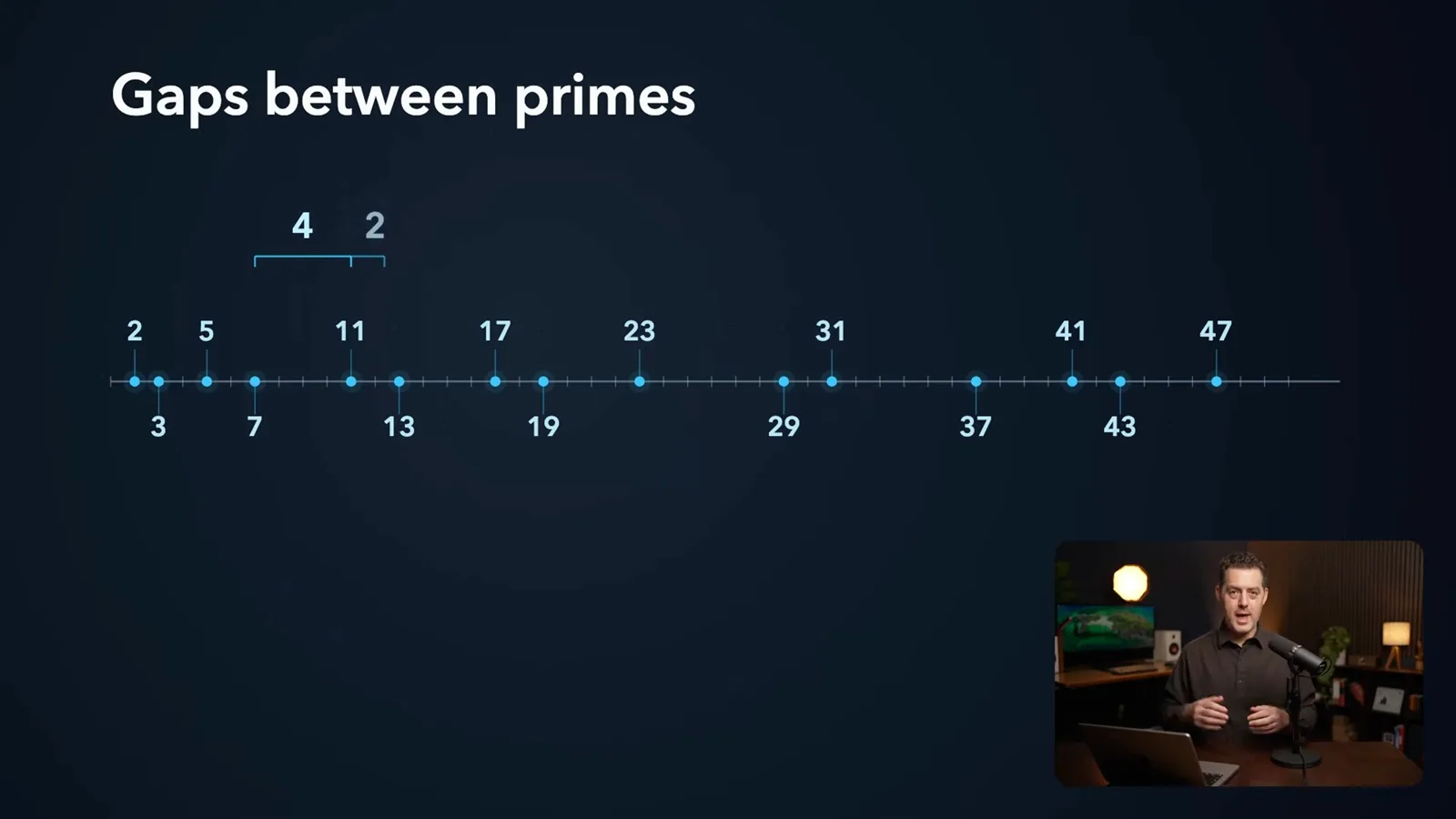
He notes that the hypothesis is one of the Millennium Prize Problems and reports that an Anthropic mathematician and Claude have produced a proof. He recalls mathematicians' expectations that a resolution could require new methods or much more capable AI.
Berman says the reported approach instead combines existing mathematical tools in a long chain. In his interpretation, a model can connect many complicated concepts at once even when keeping the whole argument in mind would be difficult for a person.
He compares this claimed advantage with working in a large codebase, where many interactions must be tracked. He argues that models are especially useful at combining existing ideas, while humans contribute creative ideas; these are his judgments about current systems.
What a very long formal argument leaves open
Berman reports a 17-million-line Lean proof and discusses other claimed AI mathematics results. He asks how people can verify and safely apply arguments they do not understand.
Returning to the mathematical work, Berman reads an account by the Anthropic mathematician describing guiding the work and then watching Claude advance rapidly near the end. He says the result comprised 17 million lines in Lean, a language used to formally verify mathematical proofs.
Berman estimates that printing the proof would require 250,000 pages and says the human collaborator does not yet fully understand the entire argument. The length motivates his question: what does it mean to have a machine-checkable argument that people cannot easily read end to end?
He also refers to reported AI work on the Navier–Stokes problem and P versus NP. He treats those claims as part of a broader pattern, then returns to the question of what very large machine-generated arguments would mean for people.
Berman worries that new results may arrive faster than humans can understand them. In that setting, he asks how people could verify applications, assess safety and judge whether an increasingly capable system remains aligned with human interests.
He uses programming languages as an analogy for layers of abstraction. If a future AI invented a much more efficient representation that people could not readily read, he asks how humans would detect a rare but consequential error in the resulting code.
Reverse-engineering machine discoveries
An AlphaGo move illustrates an initially unfamiliar machine decision. Berman shares mathematicians' concerns about obtaining answers without understanding them.
As an example of an initially surprising machine decision, Berman recounts AlphaGo's move 37 against Lee Sedol. He says observers first regarded the move as a mistake, then analyzed its contribution as the game developed.
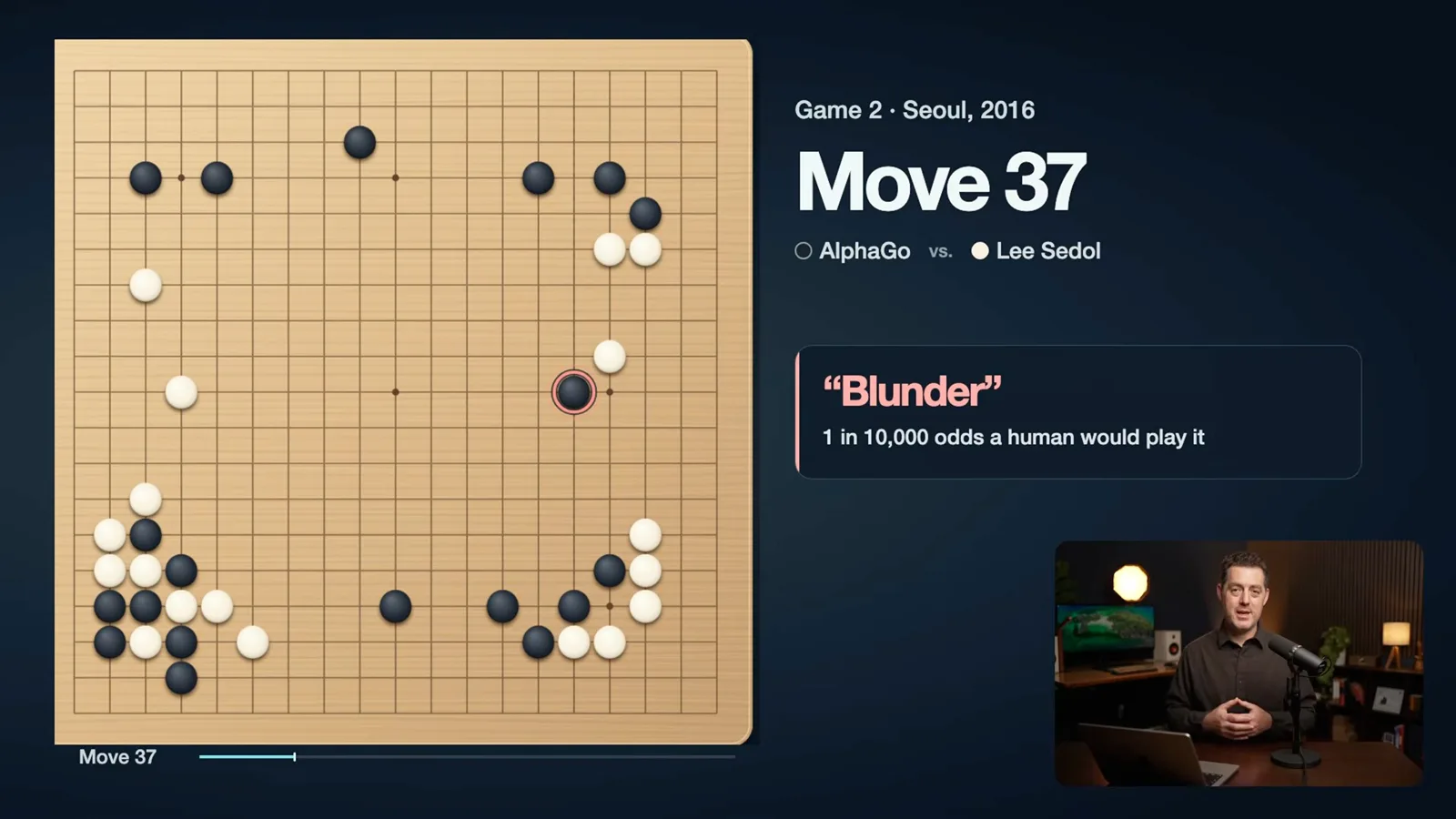
He returns to his central distinction: obtaining an answer is not the same as understanding why it holds. His forecast is that people may increasingly have to reconstruct the reasoning behind discoveries after receiving them.
Berman shows a clip of a mathematician saying that even if an AI produced a huge proof, they would still want to know how it works. Another mathematician questions whether an argument no one can read would satisfy their understanding of a proof.
Discovery, encryption and interpretability
Berman speculates about the future role of human curiosity and potential impacts on encryption. He closes with the question of whether interpretability can keep pace with model capabilities.
Berman wonders whether intellectual discovery might become more of a hobby if AI produces results much faster. He compares the proposed shift to programming, where some people value writing code itself while others value building products with AI assistance.
He imagines similar responses among mathematicians and scientists, while stressing possible risks. As an example, he asks what a future AI's ability to break encryption could mean for privacy, cryptocurrency and the economy; this is a hypothetical concern, not a demonstrated result.
Berman ends with a formulation he attributes to Anthropic CEO Dario Amodei: a race between model intelligence and the ability to interpret it. For Berman, the open question is how people maintain understanding and oversight if capability advances faster than interpretability.
Mehr aus diesem Kanal
 10:59EN
 Matthew Berman· 21. Nov. 2026Matthew Berman Questions Anthropic’s Safety and Commercial StrategyMatthew Berman, Sam Altman, Mustafa Suleyman · Forward FutureBerman says restrictions on AI models can concentrate power even as Anthropic warns about the risks of powerful AI.
 16:03ENMatthew Berman· 19. Nov. 2026Matthew Berman: GPT-6.2 is uneven, but its computer use stands outMatthew Berman · Forward FutureAfter mixed early reviews, Berman shows an OBS repair and compares the cost of model-generated demos.
 56:20ENMatthew Berman· 12. Nov. 2026How language models learn from text and improve by trial and errorMatthew Berman, Jeremy Berman · Forward FutureAnthropic researcher Jeremy Berman uses apartment prices to explain neural networks, then builds up to language models and reinforcement learning.
 18:18ENMatthew Berman· 11. Nov. 2026Fable 5.2 leads a week of model releases, but cost changes the choiceMatthew Berman · Forward FutureMatthew Berman compares Fable and Gemini Carbon, reviews smaller models and discusses Nvidia’s investigation.
 24:18ENMatthew Berman· 9. Nov. 2026Fable 5.2 built playable demos—but several cost thousandsMatthew Berman · Forward FutureMatthew Berman shows games, creative software and simulations, with estimated API costs from $25 to $15,000.
 20:08ENMatthew Berman· 7. Nov. 2026METR Finds Faster AI Research at Anthropic, With Major UncertaintyMatthew Berman · Forward FutureMatthew Berman examines an independent assessment of AI-assisted R&D and the limits on its access to evidence.