






Ergebnisse
248 ArtikelSortieren
 32:22EN
Qwen Image Edit Plus Compared With Nano Banana, Seedream and GPT Image 1Matthew Berman · Forward FutureMatthew Berman compares four image-editing models across compositing, precise edits, style transfer, object removal and weather effects.
 1:29:30EN
 Cognitive Revolution "How AI Changes Everything"· 14. Okt. 2025Podcast2,500 Compounds and a 51 Percent Hit Rate: How a Small Graph Net Found New AntibioticsModeration: Nathan LabenzMIT's Jim Collins tells Nathan Labenz how a bootlegged 2018 project, a binary growth-inhibition label, and Chemprop graph networks pulled novel antibiotics out of chemical space that labs could never screen by hand.
 36:58EN
 No Priors: AI, Machine Learning, Tech, & Startups· 9. Okt. 2025Podcast · 2 StimmenSTaR's Author Wants Models With EQ, Not Just More IQModeration: Sarah Guo, Elad GilEric Zelikman, the Stanford and xAI researcher behind STaR and Quiet-STaR, launches humans& on the bet that three years of IQ scaling left models emotionally unintelligent.
 1:01:49ENCognitive Revolution "How AI Changes Everything"· 2. Okt. 2025PodcastChatGPT's Co-Creator Left to Put Nature in the Reward LoopModeration: Nathan LabenzLiam Fedus and Ekin Dogus Cubuk on why language models still fail at physics, why literature data is too noisy to train on, and why Periodic Labs is aiming at a 200K superconductor.
 1:22:07ENCognitive Revolution "How AI Changes Everything"· 25. Sept. 2025PodcastEvery payment is a frame in a movie. Stripe’s foundation model took card-testing detection from 59% to 97%Moderation: Nathan LabenzEmily Sands, Stripe’s head of data and AI, explains how a domain-specific payments model, shared embeddings, and mixed rules turn a $1.4 trillion network into compounding advantage.
 2:02:17ENCognitive Revolution "How AI Changes Everything"· 27. Aug. 2025PodcastSAEs Find the Nouns. Parameter Decomposition Looks for the VerbsModeration: Nathan LabenzGoodfire's Lee Sharkey argues that sparse autoencoders recover a network's variables, not the algorithms those variables run, and shows how stochastic parameter decomposition tries to recover the computations themselves.
 13:30EN
 3Blue1Brown· 17. Aug. 2025How AlphaGeometry Combines Logical Proof with Creative ConstructionAleph0Aleph0 explains how a symbolic geometry solver gets surprisingly far without AI, and how a language model supplies the auxiliary constructions that take it to Olympiad level.
 57:52EN
 Unsupervised Learning: With Jacob Effron· 13. Aug. 2025PodcastThey Aimed for 1%. The Lab Hit 20%. Chai Discovery Moved Antibody Design Onto the Computer.Moderation: Jacob EffronJoshua Meier on three waves of AI drug discovery, why Chai-2 behaves like Photoshop for molecules, and why a 1% hit rate was supposed to be enough to change the industry.
 10:28EN
OpenAI’s gpt-oss Models: Open Weights, Benchmarks and SafetyMatthew Berman · Forward FutureMatthew Berman reviews the 120b and 20b models, local deployment claims, selected evaluations and the scope of OpenAI’s safety testing.
 3:13EN
Claude Opus 4.1: Anthropic’s August 2025 Benchmark UpdateMatthew Berman · Forward FutureMatthew Berman reviews the model’s reported coding, reasoning and tool-use results, including one benchmark that declined.
 30:11EN
 Sequoia Capital· 30. Juli 2025PodcastFrom 12 Percent on AIME to IMO Gold in Two MonthsAlex Wei, Sheryl Hsu, and Noam Brown tell Sequoia's Sonya Huang how a three-person OpenAI sprint used general-purpose reinforcement learning, not Lean, to reach gold-level on the 2025 International Mathematical Olympiad.
 23:39ZH
 跟李沐学AI· 23. Juli 2025李沐:给文本大模型加入一千万小时语音,开源 Higgs Audio李沐 · Boson AI李沐介绍团队如何在文本大语言模型的训练里加入大量语音数据,做成能听能说的 AudioLLM,并把 Higgs Audio 开源。他讲了架构取舍、token 压缩、数据从哪来,以及怎么在 3090 上跑起来。
 1:07:41EN
 20VC with Harry Stebbings· 21. Juli 2025Podcast · 2 StimmenEdwin Chen on Building Surge and the Data Behind AI ModelsGast: Edwin Chen · Moderation: Harry StebbingsThe Surge founder discusses a bootstrapped business, training-data quality and the limits he sees in AI benchmarks and synthetic data.
 47:05EN
Logan Kilpatrick on AI Developers, Interfaces, and the Future of ModelsMatthew Berman, Logan Kilpatrick · Forward FutureIn a July 2025 conversation, Google’s Logan Kilpatrick discusses Windsurf, agent interfaces, coding skills, Veo, and the shifting boundary between models and application scaffolding.
 38:10ENCognitive Revolution "How AI Changes Everything"· 16. Juli 2025PodcastPlus Five for Format, Plus Ten if It CompilesModeration: Nathan LabenzPredibase CEO Dev Rishi explains how reinforcement fine-tuning, production feedback, and narrow specialist models turn one-off training into systems that keep learning.
 12:14EN
AI News: Windsurf’s Acquisition, Meta Compute Plans, Grok and VoxtralMatthew Berman · Forward FutureA July 2025 roundup examines developer-tool deals, AI infrastructure, model behavior, reward methods and speech recognition.
 1:42:06ENCognitive Revolution "How AI Changes Everything"· 8. Juli 2025PodcastEvery Frontier Lab Is Spending a Billion a Year on Data. Here Is Where It GoesModeration: Nathan LabenzLabelbox CEO Manu Sharma on the $15 billion Scale deal, RL “gyms,” $250,000 trainers, and why post-training now eats the budget that used to belong to pre-training.
 1:09EN
A Discussion of GPT-4.5’s Scaling and TrainingA speaker offers an assessment of GPT-4.5’s cost, speed and alleged training challenges.
 1:37:05ENCognitive Revolution "How AI Changes Everything"· 19. Juni 2025PodcastAn Algebraic Geometer Quit Tenure Because the Bowl-Shaped Loss Plot Is a LieModeration: Nathan LabenzJesse Hoogland and Daniel Murfet of Timaeus argue that singularities in the loss landscape — not the smooth valleys in every slide deck — are what actually govern how neural networks learn, generalize, and go wrong.
 48:51ENSequoia Capital· 17. Juni 2025PodcastThe Breakthroughs for AGI Are Already Done, Says OpenAI’s Former Research HeadBob McGrew tells Sequoia’s Training Data that 2025 is the year of reasoning, agents will be priced at the cost of compute, and nothing fundamental will be added to the stack by 2035.
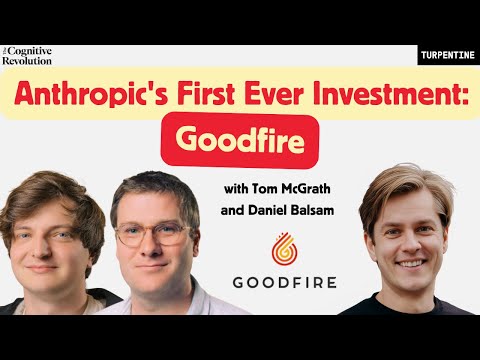 1:54:08ENCognitive Revolution "How AI Changes Everything"· 29. Mai 2025PodcastWhy Anthropic's first check went to a company building microscopes for neural netsModeration: Nathan LabenzGoodfire's Dan Balsam and Tom McGrath argue that mechanistic interpretability now has a proto-paradigm, two stubborn gaps, and three products worth shipping today.
 2:12:00ENCognitive Revolution "How AI Changes Everything"· 15. Mai 2025PodcastGradient Descent at Test Time: Titans Pushes LLM Context to 10 Million TokensModeration: Nathan LabenzA Cornell PhD student's neural memory module holds about 70% accuracy where GPT-4's scores fall off a cliff.
 47:00ENUnsupervised Learning: With Jacob Effron· 8. Mai 2025PodcastAn Eval Lasts Three Months — and a Frozen Frontier Would Still Feed Startups for a DecadeModeration: Jacob EffronOpenAI’s GPT-4.1 post-training lead Michelle Pokrass tells Unsupervised Learning how the team spent three months on evals before training, why agents fail on wiring more than intelligence, and when to reach for RFT.
 38:10ENNo Priors: AI, Machine Learning, Tech, & Startups· 1. Mai 2025Podcast · 2 Stimmeno3 should wait exactly as long as the answer takesModeration: Sarah Guo, Elad GilOpenAI researchers Eric Mitchell and Brandon McKinzie tell No Priors why o3's leap is a chain of tools during reasoning — and why you should send the same prompt a hundred times.
Mehr laden24 von 248 angezeigt