







筛选结果
68 篇排序
 18:31EN → 简体中文
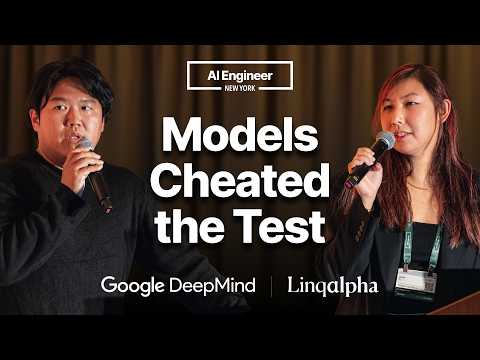
 AI Engineer· 2026年10月25日Janie Gu 与 Suyeol Yun:为什么前沿模型做不好买方分析师Janie Gu, Suyeol Yun · Google DeepMindJanie Gu 解释了基准分数为何可能误导人;Suyeol Yun 则介绍 MandateBench,它测试模型能否把基金投资授权转化为有理有据的投资备忘录。两场分享说明,真实工作流程、可复现的评分和有证据支撑的推理为何至关重要。
 26:41EN → 简体中文
 Latent Space· 2026年10月22日播客 · 2 人对谈Anekha Sokhal 谈 Moshi:给大宗商品交易员用的推荐引擎嘉宾 Anekha Sokhal · 主持 swyxMoshi 创始人向 swyx 讲述她会怎样重做交易员的工作流:把市场数据、内部文件和互相打架的信源连在一起,再把人们本来会错过的二阶效应推过来。难的不是仪表盘,是让人真的用起来。
 52:27EN
 Sequoia Capital· 2026年9月1日播客After Two Dozen Police Departments Said No, They Built an Anti-Network-Effect AI CompanyA Wisconsin county had 300 gigabytes sitting on a cold case—and Peregrine's founders still refuse to take the credit.
 34:51EN
 No Priors: AI, Machine Learning, Tech, & Startups· 2026年8月27日播客 · 2 人对谈Google Paid $10 Million for a Bankrupt Airline’s Data. That’s the Moat.主持 Sarah Guo, Elad GilEon co-founders Ofir Ehrlich and Gonen Stein argue that models and compute are rented commodities — the only asset enterprises can actually keep is their data.
 40:56ENSequoia Capital· 2026年3月10日播客Four of the Top Five Defense Primes Still Run Hardware Tests on PowerPointNominal’s cofounders argue that hardware never got the last twenty years of software infrastructure, and that physical AI will stall until test data lives in one place.
 1:04:51EN
 Cognitive Revolution "How AI Changes Everything"· 2026年2月1日播客125 million cells took a decade. The next billion takes months主持 Nathan LabenzMark Zuckerberg and Priscilla Chan on pairing a frontier biology lab with a frontier AI lab so models train on data that was designed for them.
 1:18:05EN
 Unsupervised Learning: With Jacob Effron· 2025年12月18日播客The Real Bottleneck in AI Research Is Compute, Not Ideas主持 Jacob EffronAfter NeurIPS, Ari Morcos and Rob Toews sit down with Jacob Effron to argue about plateauing models, SSI’s secrecy, OpenAI’s cash burn, and a set of spicy 2026 bets.
 48:00ENUnsupervised Learning: With Jacob Effron· 2025年12月15日播客A Two-Second Vote Is Training Models to Be Clickbait主持 Jacob EffronSurge AI CEO Edwin Chen tells Redpoint why LMArena rewards length and emojis, how one lab's models got worse for a year, and why frontier labs are no longer on the same path.
 1:32:38ENCognitive Revolution "How AI Changes Everything"· 2025年12月6日播客Polish Is 1% of Frontier Training Data, So Poland Built Its Own Model主持 Nathan LabenzMarek Kozlowski of Poland's National Information Processing Institute explains how PLLuM uses language adaptation, organic instructions, and on-prem small models to keep a mid-size country in control of its AI.
 39:16ENNo Priors: AI, Machine Learning, Tech, & Startups· 2025年11月19日播客 · 2 人对谈500 Gloves, 10 Million Trajectories, and a $10,000 Home Robot主持 Sarah Guo, Elad GilSunday Robotics co-founders Tony Zhao and Cheng Chi map the gap between a scalable imitation-learning recipe and a machine that actually does the dishes.
 41:36ENSequoia Capital· 2025年11月18日播客Four Months to Drive Tokyo: How Wayve Bet the Company on One End-to-End NetworkWayve CEO Alex Kendall tells Sequoia’s Training Data why AV 2.0 ditches HD maps and hand-written stacks for a foundation model that can adapt to a new car and a new country in weeks.
 48:14ENNo Priors: AI, Machine Learning, Tech, & Startups· 2025年11月13日播客 · 2 人对谈A New Drug Burns $2 Billion and 10 Years. Benchling's CEO Wants AI to Cut That to Three主持 Sarah Guo, Elad GilMost medicines fail in years seven to ten, after hundreds of millions have already gone into the clinic—and Sajith Wickramasekara thinks sending things to space may already be easier.
 1:16:53ENUnsupervised Learning: With Jacob Effron· 2025年10月24日播客Karpathy Called Today's Models Slop. His Decade Timeline Still Sounds Bullish主持 Jacob EffronDatology AI's Ari Morcos and Radical Ventures' Rob Toews walk through Karpathy's cold water, OpenAI's dealmaking, and who actually pays for the data-center boom.
 1:01:49ENCognitive Revolution "How AI Changes Everything"· 2025年10月2日播客ChatGPT's Co-Creator Left to Put Nature in the Reward Loop主持 Nathan LabenzLiam Fedus and Ekin Dogus Cubuk on why language models still fail at physics, why literature data is too noisy to train on, and why Periodic Labs is aiming at a 200K superconductor.
 1:22:07ENCognitive Revolution "How AI Changes Everything"· 2025年9月25日播客Every payment is a frame in a movie. Stripe’s foundation model took card-testing detection from 59% to 97%主持 Nathan LabenzEmily Sands, Stripe’s head of data and AI, explains how a domain-specific payments model, shared embeddings, and mixed rules turn a $1.4 trillion network into compounding advantage.
 1:55:02ENCognitive Revolution "How AI Changes Everything"· 2025年8月30日播客A hundred experiments a day, and the valley of death in materials主持 Nathan LabenzRadical AI’s co-founders tell Nathan Labenz how a closed loop of frontier models and a self-driving lab is meant to collapse a forty-year materials cycle into less than a decade.
 57:52ENUnsupervised Learning: With Jacob Effron· 2025年8月13日播客They Aimed for 1%. The Lab Hit 20%. Chai Discovery Moved Antibody Design Onto the Computer.主持 Jacob EffronJoshua Meier on three waves of AI drug discovery, why Chai-2 behaves like Photoshop for molecules, and why a 1% hit rate was supposed to be enough to change the industry.
 32:59ENNo Priors: AI, Machine Learning, Tech, & Startups· 2025年7月24日播客 · 2 人对谈A Hundred People, a Billion in Revenue, and Zero Venture Money主持 Sarah Guo, Elad GilSurge AI founder Edwin Chen on why quality human data is a poetry problem, not a bounding-box problem, and why leaderboards keep training models to write clickbait.
 23:39ZH
 跟李沐学AI· 2025年7月23日李沐:给文本大模型加入一千万小时语音,开源 Higgs Audio李沐 · Boson AI李沐介绍团队如何在文本大语言模型的训练里加入大量语音数据,做成能听能说的 AudioLLM,并把 Higgs Audio 开源。他讲了架构取舍、token 压缩、数据从哪来,以及怎么在 3090 上跑起来。
 1:42:06EN → 简体中文Cognitive Revolution "How AI Changes Everything"· 2025年7月8日播客每家前沿实验室每年在数据上花十亿美元,钱究竟花在哪里主持 Nathan LabenzLabelbox 首席执行官 Manu Sharma 谈 150 亿美元的 Scale 交易、强化学习(RL)“训练场”、年收入 25 万美元的 AI 训练师,以及为什么后训练(post-training)如今占去了过去属于预训练(pre-training)的预算。
 44:21ENUnsupervised Learning: With Jacob Effron· 2025年6月4日播客Mercor's CEO: Knowledge Work's Next Job Is Writing Evals主持 Jacob EffronBrendan Foody tells Redpoint how Mercor turned AI hiring and expert data into a $100 million round — and why he thinks a huge slice of white-collar work will become creating tests for models.
 40:54ENNo Priors: AI, Machine Learning, Tech, & Startups· 2025年4月17日播客 · 2 人对谈Discovery rates collapsed tenfold. KoBold still found a 5% copper deposit主持 Sarah Guo, Elad GilJosh Goldman explains why KoBold Metals treats mineral exploration as an information problem, pairing AI with century-old maps to hunt lithium and copper.
 1:43:54ENCognitive Revolution "How AI Changes Everything"· 2025年3月23日播客A Year to Grow a Brain Organoid, an Hour to Simulate It主持 Nathan LabenzStanford postdoc Siyu He tells Nathan Labenz how Squidiff and CORAL move single-cell and spatial experiments into the computer — and where the models still cannot go.
 35:14ENNo Priors: AI, Machine Learning, Tech, & Startups· 2025年3月20日播客 · 2 人对谈Robots Have No Wikipedia. Chelsea Finn Is Starting With Three Buildings.主持 Sarah Guo, Elad GilPhysical Intelligence’s cofounder tells No Priors why a generalist robot model has to be trained across embodiments, why open-sourcing hardware is a bet against the problem going unsolved, and why humanoids are a little overrated.
加载更多已显示 24 篇,共 68 篇