








筛选结果
50 篇排序
 1:44:23EN → 简体中文
 Cognitive Revolution "How AI Changes Everything"· 2024年3月16日播客选票可以按议题拆开,还能交给 AI 代投主持 Nathan LabenzTim Reutemann 2018 年的小说 Liquid Reign 勾勒出一个 2051 年的民主制度:它建立在瑞士式公民倡议、液态委托之上,而你还可以把个人 AI 静音。
 1:01:53EN → 简体中文Cognitive Revolution "How AI Changes Everything"· 2024年2月13日播客陪伴类应用的打开频率是 TikTok 的两倍:a16z 只投“怪但能跑通”的消费产品主持 Nathan Labenza16z 消费团队合伙人 Anish Acharya 与 Justine Moore 向 Nathan Labenz 介绍他们面向 AI 原生消费应用的“丰饶议程”。
 1:15:39EN → 简体中文Cognitive Revolution "How AI Changes Everything"· 2023年11月29日播客做了二十年前端,Guillermo Rauch 发现 v0 写的代码比自己的更好主持 Nathan LabenzVercel 首席执行官告诉 Nathan Labenz,为什么每个产品都需要幽灵文本(ghost text),为什么软件 2.0(Software 2.0)会让旧技术栈僵化,以及为什么押注开源仍然是代价高昂的错误。
 1:25:11EN → 简体中文Cognitive Revolution "How AI Changes Everything"· 2023年10月26日播客105 行代码、100 万次曝光,和一位不肯创办公司的风投主持 Nathan LabenzBabyAGI 的作者 Yohei Nakajima 向 Nathan Labenz 讲述,一个周末的原型如何掀起了智能体(Agent)浪潮,以及他为什么又回去做投资了。
 55:13EN → 简体中文Cognitive Revolution "How AI Changes Everything"· 2023年9月7日播客两天做出原型:a16z 如何把一篇斯坦福论文变成 AI Town主持 Nathan Labenz一个名叫 Alice 的陪伴型角色,一次周末用 Phaser 赶出的小项目,以及 Martin Casado 的论断:模型永远不会取代形式化语言。
 1:01:09EN → 简体中文Cognitive Revolution "How AI Changes Everything"· 2023年8月31日播客Hugging Face 融了 2.35 亿美元,社区仍然不是护城河主持 Nathan LabenzNathan Labenz 和 Erik Torenberg 拆解了 Hugging Face 估值 45 亿美元的 D 轮融资,以及一个繁荣的开源平台为什么仍可能难以变成锁定客户的生意。
 1:39:53EN → 简体中文Cognitive Revolution "How AI Changes Everything"· 2023年8月8日播客不到 100 人,2400 万用户:Replit 押注人工开发者智能主持 Nathan LabenzReplit 新任 AI 副总裁 Michele Catasta 提出一个“生成、执行、学习”的循环,他不愿把它称为 AGI;他还描绘了一个从 2 倍到 1000 倍的生产力阶梯,以及精确到击键级别的数据优势。
 5:53EN → 简体中文
 Matthew Berman· 2023年7月18日Petals:将大语言模型推理分布到多台设备Matthew Berman · Forward Future2023 年,Matthew Berman 介绍 Petals 如何通过参与计算机组成的网络使用大模型,而无需在一台设备上加载所有模型层。
 1:32:22EN → 简体中文Cognitive Revolution "How AI Changes Everything"· 2023年6月29日播客一百万字节与 256 个符号:Meta 的 MEGABYTE 想扔掉分词器主持 Nathan LabenzMeta AI 的 Lili Yu 讲解一种多尺度 Transformer:它能预测百万字节的序列,不做分词,目标是把任何文件都当作原始字节来建模。
 7:37EN → 简体中文Matthew Berman· 2023年5月25日Smol Developer:根据提示词生成一个小型 Python 项目Matthew Berman · Forward FutureMatthew Berman 演示一个 2023 年的项目生成工具,从简单的 Ruby 示例到包含多个文件的 ChatGPT API 程序。
 1:26:20EN → 简体中文Cognitive Revolution "How AI Changes Everything"· 2023年3月2日播客四十美元为 Joe Rogan 建索引:Chroma、铲子与机器学习的莱特飞行者时代主持 Nathan LabenzChroma 联合创始人 Anton Troynikov 谈嵌入(embedding)作为语言模型应用存储层的意义、Stable Attribution,以及为什么机器学习仍在靠直觉飞行。
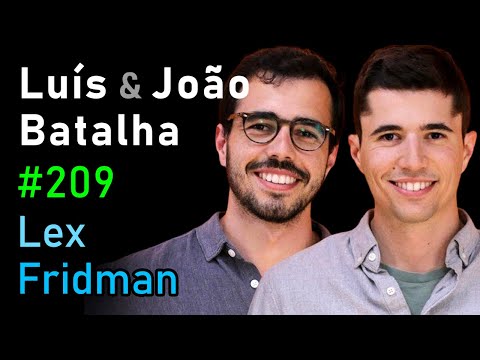 2:54:52EN → 简体中文
 Lex Fridman· 2021年8月8日播客精彩的证明,仍藏在页边的空白里主持 Lex Fridman费马图书馆的两位创始人 Luís 与 João Batalha 与 Lex Fridman 谈论论文背后的隐藏故事、一种把自己的作品买了两次的出版体系,以及如何死磕一篇论文,直到它终于豁然开朗。
 17:19ENLex Fridman· 2020年3月17日播客Money Is a Game of Points: Vitalik Buterin on Coordination, Public Goods, and Quadratic Funding主持 Lex FridmanVitalik Buterin explains money as a social point system, why value can survive without physical backing, and how quadratic funding tries to fix public-good underfunding.
 1:13:51ENLex Fridman· 2020年1月19日播客Answering Questions Without Seeing the Data: Andrew Trask on the Privacy-Preserving AI Stack主持 Lex FridmanA tour of remote execution, differential privacy, secure multiparty computation, and the societal consequences of making private data usable.
 1:06:39EN → 简体中文
 Jane Street· 2016年3月31日Jane Street 为什么使用 OCamlYaron Minsky · Jane StreetJane Street 的一场演讲解释了函数式编程和静态类型如何帮助构建可靠的交易软件,也探讨了选择较冷门语言的代价。
 1:05:22EN
 Unsupervised Learning: With Jacob Effron播客Build First, Optimize Later: Harrison Chase on LangChain, Evals, and the State-Machine Future of Agents主持 Jacob EffronHarrison Chase explains how LangChain grew from an orchestration layer into LangSmith and LangGraph, why evaluation datasets force product clarity, and why reliable agents look more like state machines than autonomous loops.
 1:11:06ENUnsupervised Learning: With Jacob Effron播客Replit's Amjad Masad on Building Your Own Model, Latency, and the Next Billion Software Creators主持 Jacob EffronThe Replit founder explains why AI should be native to the product, why he trained a small in-house model, and why he thinks software engineering is about to split in two.
 40:00ENUnsupervised Learning: With Jacob Effron播客The Winds of Change: How Mistral Plans to Win the Open-Model Era主持 Jacob EffronArthur Mensch explains Mistral's open-source strategy, enterprise distribution, model research, and views on AI regulation and sovereignty.
 1:12:15ENUnsupervised Learning: With Jacob Effron播客The Open-Model Vibe Check: China, Containment, and the Data Moat主持 Jacob EffronJacob Effron and guests debate Chinese open-weight models, distillation, containment policy, the OpenAI–Hugging Face incident, and Cursor's data advantage.
 1:03:25ENLex Fridman播客Theano in an Hour: Symbolic Graphs, Automatic Gradients and a Compiler That Rewrites Your Math主持 Lex FridmanPascal Lamblin of MILA walks through how Theano builds, differentiates, optimizes and runs computation graphs, then trains logistic regression, a convnet and an LSTM.
 50:23ENUnsupervised Learning: With Jacob Effron播客OpenAI’s Platform Bet: Where AI Value Accrues, Why Open Source Trails, and When Superintelligence Arrives主持 Jacob EffronPeter Welinder explains OpenAI’s platform strategy, the case for proprietary frontier models over open source, the enterprise hallucination problem, and his speculative timeline for AGI and superintelligence.
 1:02:06ENLex Fridman播客Learning TensorFlow Hands-On: From a Mystery Line to Handwritten Digits主持 Lex FridmanGoogle Brain's Sherry Moore walks a Deep Learning School audience through how TensorFlow works and two core labs, linear regression and MNIST digit recognition.