30초 요약
Matthew Berman reacts to Brilliant Labs’ February 2024 Frame announcement, comparing its conventional-glasses shape with Apple Vision Pro and examining its display, camera, open code and proposed AI services. He also looks back at the company’s earlier Monocle. The video is a first look at a preorder and promotional material, not a hands-on review. The displayed $349 price and service claims are historical; current availability and terms may differ.
- 1A glasses-shaped AI deviceBerman reacts to Frame’s light, conventional form factor and contrasts it with a larger mixed-reality headset.
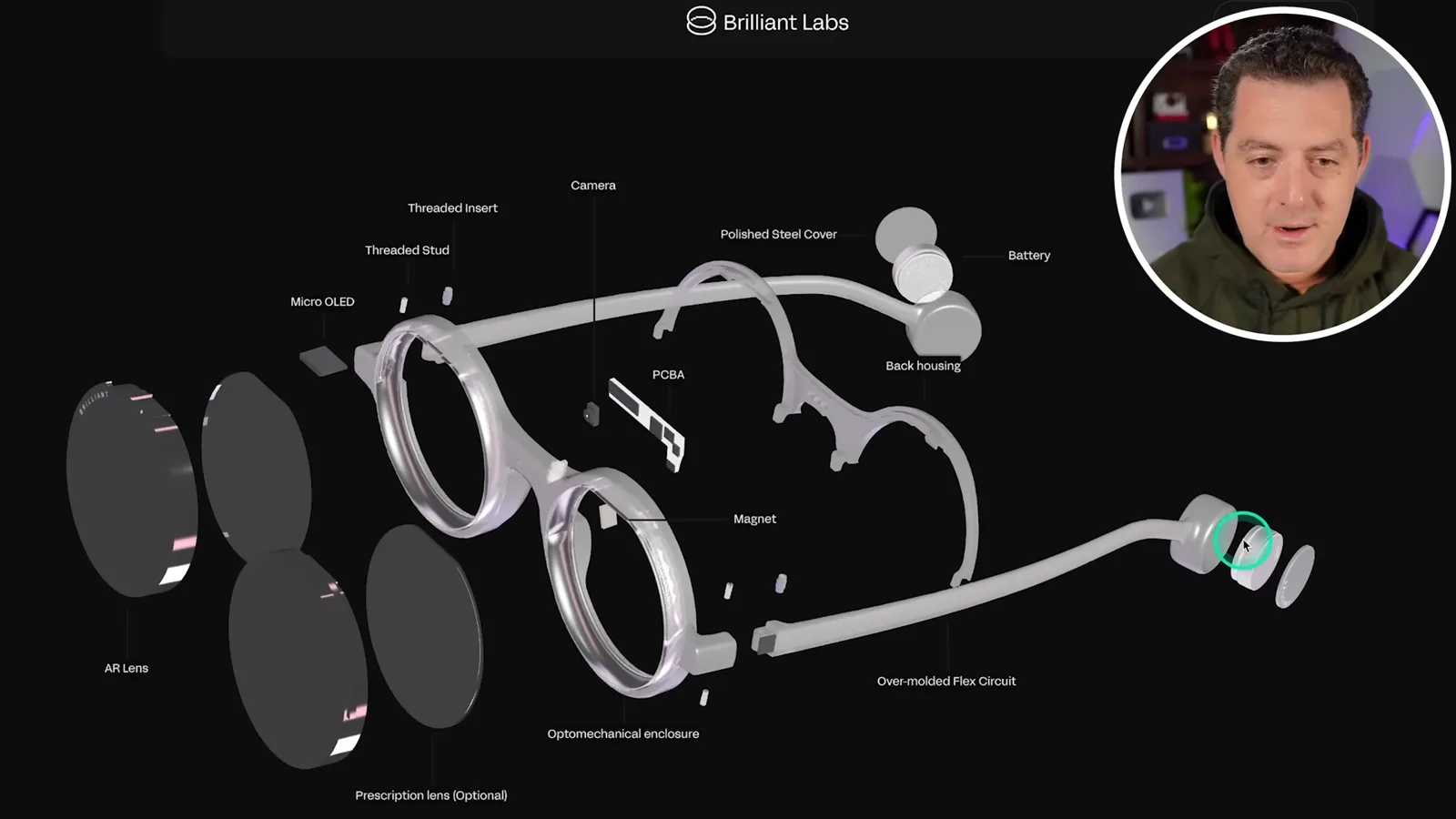
- 2Display and componentsThe exploded illustration shows lenses, a micro-OLED display, camera, electronics and batteries; the imagery is promotional.
- 3Open developmentBerman welcomes published source code. Brilliant Labs also documents Frame’s hardware and SDK, whose component licenses differ.
- 4AI service partnersThe launch material associates Perplexity with answers and OpenAI with visual analysis; account and subscription details were not resolved in the video.
- 5Historical preorder priceThe page shown lists $349 without prescription lenses in 2024, substantially less than Vision Pro but with different capabilities.
- 6The earlier MonocleBrilliant Labs previously made a small single-eye device that could attach to existing glasses.
핵심 정리
- Frame combines a glasses form factor with a small OLED display, camera and optional prescription lenses.
- The 2024 presentation described Perplexity-powered answers and OpenAI-powered visual analysis, but Berman had not confirmed account or service terms.
- The $349 price shown was for a non-prescription preorder in February 2024, not a current price.
- Brilliant Labs publishes Frame firmware and developer resources, with component-specific licenses that should be checked before reuse.
- The earlier Monocle was a separate single-eye device designed to attach to existing eyewear.
챕터별로 다듬은 전문 읽기
Frame’s form factor and components
Berman examines promotional renderings and compares the product with Vision Pro. He discusses lenses, display, camera, power and open development.
Brilliant Labs has opened preorders for Frame, AI-enabled glasses presented in a much more conventional form than a large headset. The images in this February 2024 video appear to be promotional renderings, and I have not yet tested the hardware. I like the idea of glasses that look relatively ordinary while providing AI features.
I compare the approach with Apple Vision Pro and speculate that Frame may rely more on voice than on the headset’s interface. That is a difference in intended form and interaction, not a direct feature-for-feature comparison. The marketing materials do not establish how well the final device works in daily use.
The exploded product illustration shows an AR lens, optional prescription lens, micro-OLED display, a central camera, electronics and batteries. Brilliant Labs’ [hardware documentation](https://docs.brilliant.xyz/frame/hardware/) describes a 640×400 color OLED, a 720p camera, microphone and Bluetooth connectivity. Its page advertised all-day power, but actual battery life depends on usage and was not tested here.
I appreciate that Brilliant Labs publishes source code for the glasses. Its [Frame codebase](https://github.com/brilliantlabsAR/frame-codebase) and developer documentation provide resources for modification and applications. “Open source” does not automatically mean every component or cloud service is covered by the same license; check the applicable terms for each repository and dependency.
AI services and preorder price
He reviews the stated Perplexity and OpenAI integrations, then shows the historical preorder price. He has not yet tested the device.
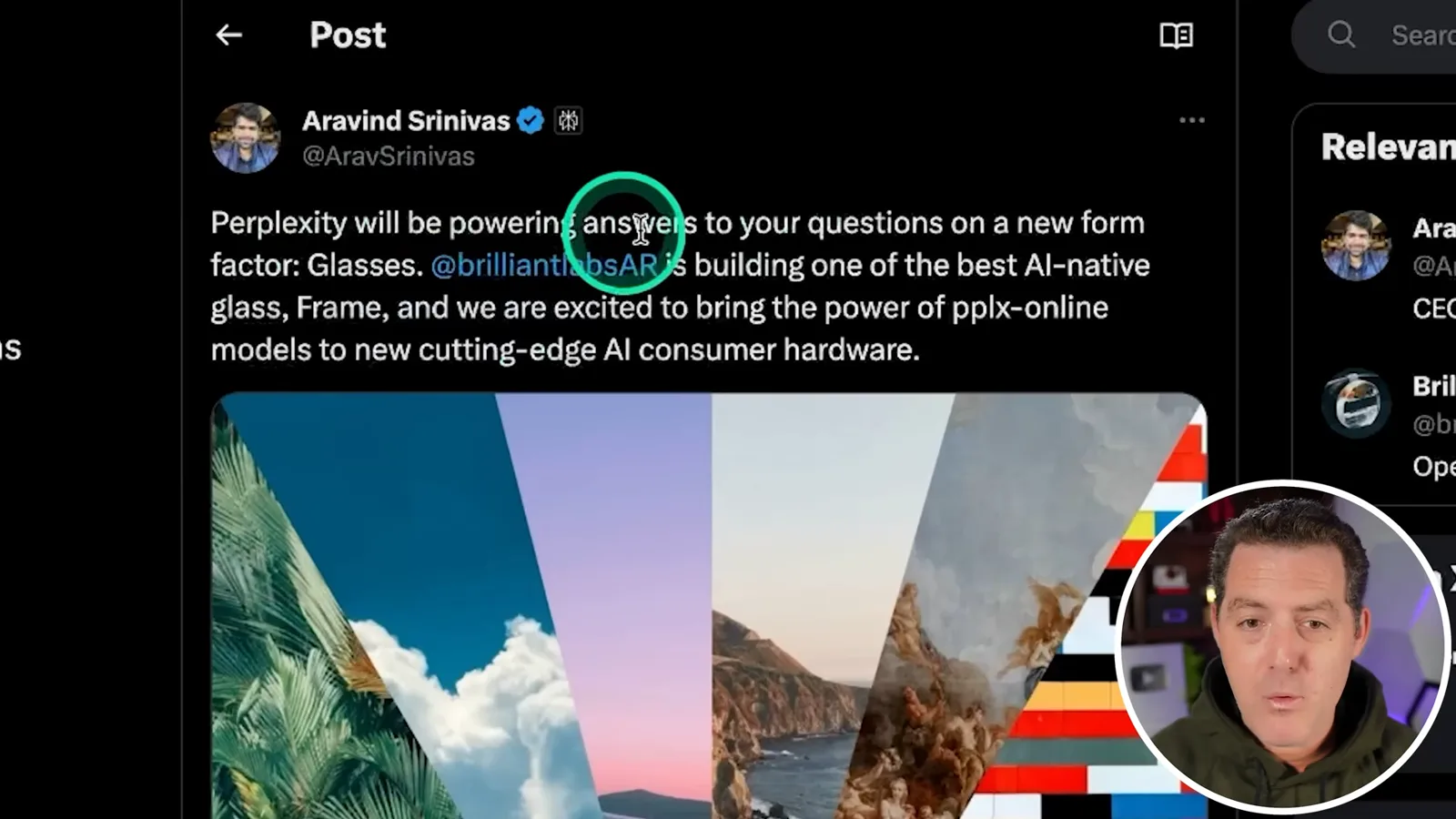
I show a statement from Perplexity CEO Aravind Srinivas saying Perplexity would power answers to questions on Frame. The launch page also describes visual analysis powered by OpenAI. I wonder whether users would need separate accounts; the video does not establish the answer or the later availability, usage limits or pricing of those services.
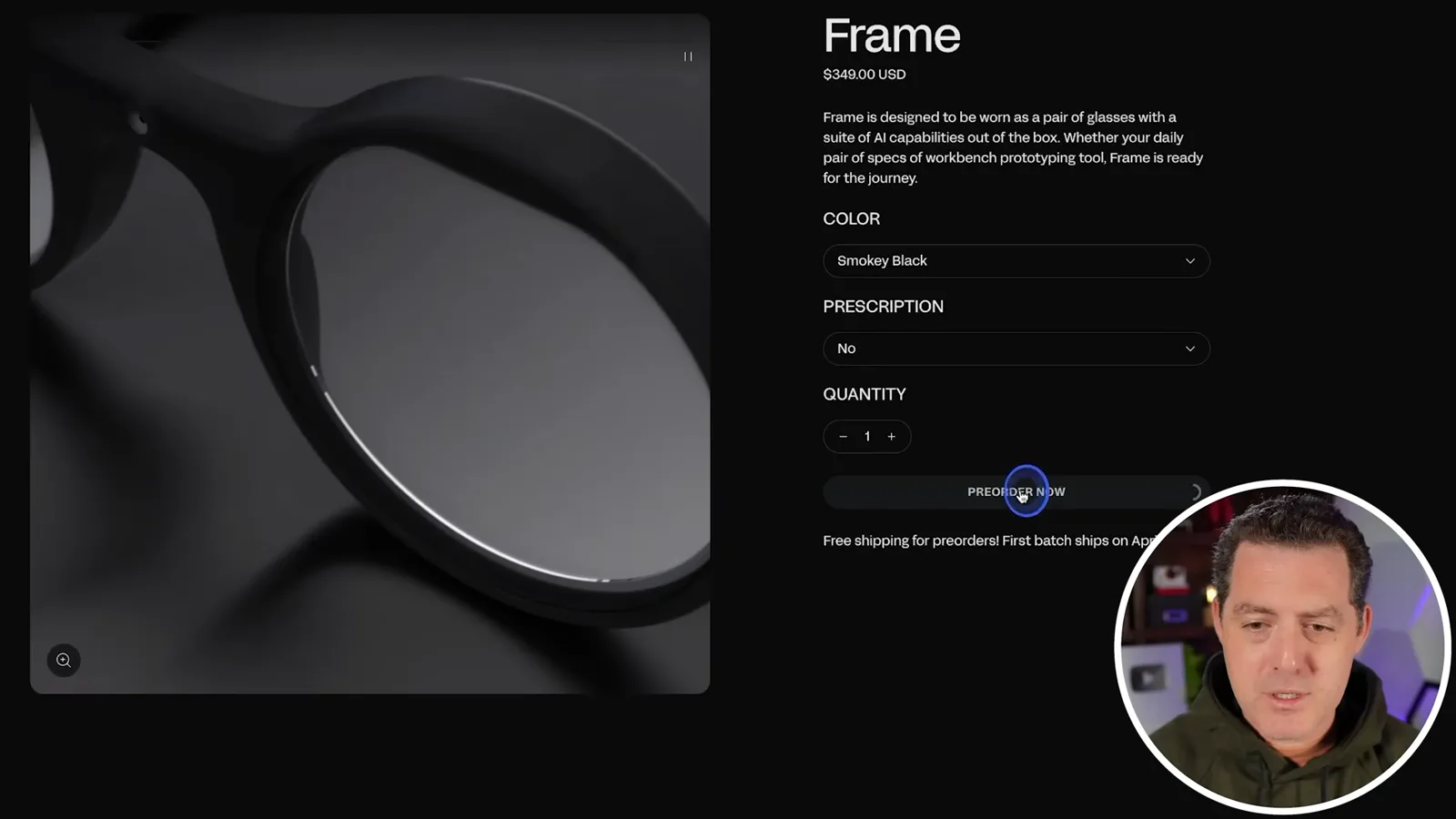
The preorder page shows $349 for a Frame without prescription lenses, about one tenth of the $3,499 starting price of Apple Vision Pro at the time. The two devices have different displays and capabilities, so price alone is not a like-for-like comparison. This is the February 2024 preorder price, not a verified current offer.
I am tempted to buy a pair and test them, although I have already spent a lot on Vision Pro. I play Brilliant Labs’ promotional demo and ask viewers whether they would like to see a hands-on review. The demo should be understood as marketing rather than independent verification of every advertised feature.
Demonstration and Monocle
Berman plays a promotional video and introduces Brilliant Labs’ earlier single-eye product. He invites viewers to say whether they want a hands-on test.
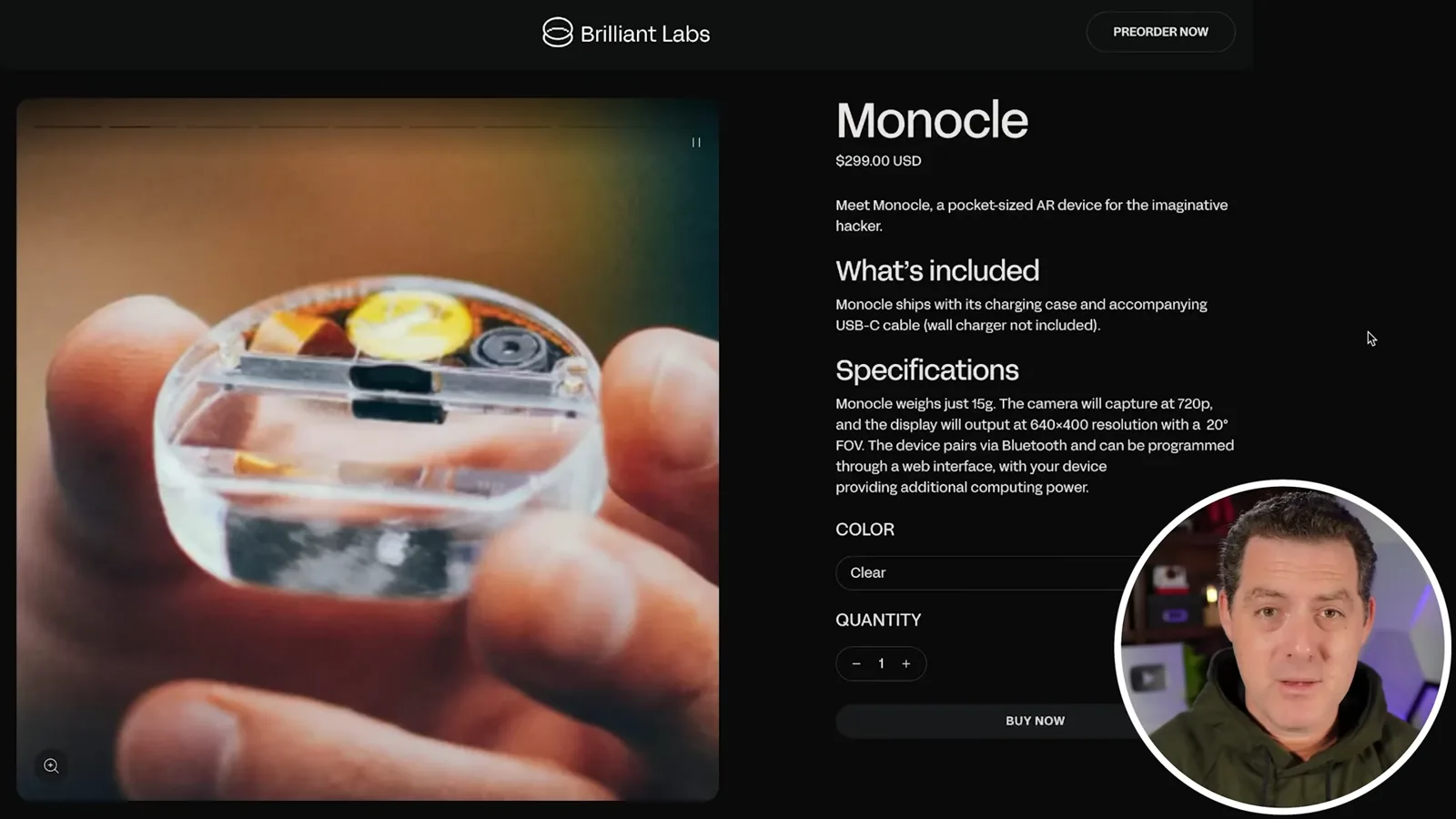
Frame is not Brilliant Labs’ first product. Its earlier Monocle is a single-eye device that can attach to existing glasses. I find the new two-lens glasses form more appealing, although the hardware includes one small display rather than a full headset-style display for both eyes.
같은 채널의 다른 글
 34:21EN
 Matthew Berman· 2026년 10월 27일Matthew Berman Examines Anthropic’s IPO Filing, AI Growth and GovernanceMatthew Berman, Sam Altman · Forward FutureThe presenter reviews the S-1’s financial metrics, compute strategy and voting structure while questioning the tension between rapid AI development and safety.
 0:26ENMatthew Berman· 2026년 10월 25일Sam Altman on Human Values and Problem-Solving in an AI WorldSam Altman · OpenAIIn a short interview excerpt, Altman considers the enjoyment of solving hard problems and the human role in interpreting results.
 0:36ENMatthew Berman· 2026년 10월 25일Kimi K3.1 and a Rubik’s Cube Solver DemonstrationMatthew Berman · Forward FutureMatthew Berman shows a scrambled virtual cube being solved and gives the Kimi K3.1 test a favorable assessment.
 0:21ENMatthew Berman· 2026년 10월 24일An AI-Generated Kimi Benchmark Chart Used Invented ScoresMatthew Berman · Forward FutureMatthew Berman asks for a graph of Kimi K3.1 Pro benchmarks, then discovers that the displayed figures are illustrative placeholders.
 25:50ENMatthew Berman· 2026년 10월 24일Kimi K3.1 Pro Tested: Strong 3D Demos, Uneven Results and Competitive PricingMatthew Berman · Forward FutureMatthew Berman tests the open-weight model on coding, 3D rendering and visual explanations, then compares benchmark results and prices.
 32:20ENMatthew Berman· 2026년 10월 23일Who Is Local AI For? The Costs, Trade-offs and a Hybrid FutureMatthew Berman · Forward FutureMatthew Berman weighs data control and independence against hardware cost, setup complexity and inference speed.