30초 요약
In August 2024, Matthew Berman tests the anonymous sus-column-r model on LMSYS Chatbot Arena, considering a rumor that it might be OpenAI's Strawberry or Q*. It writes a playable Snake game and answers several reasoning prompts, but also miscounts words and gives questionable physical reasoning. Subsequently, xAI identified sus-column-r as an early version of Grok-2. The examples are informal single trials, and lengthy explanations do not establish the model's identity, architecture or general reliability. No paid sponsorship is identified in the video.
- 1The mystery model's identityBerman discusses rumors linking sus-column-r to Strawberry. xAI subsequently identified it as an early Grok-2 version.
- 2Snake in PythonAfter an API error and slow generation, the program runs and provides loss and restart options in Berman's test.
- 3Parallel dryingThe model says 20 shirts can dry in approximately four hours when all are laid out in comparable conditions, and notes space constraints.
- 4A qualified marble answerThe model considers several possible outcomes but includes questionable claims about an inverted glass retaining the marble.
- 5A navigation puzzleThe North Pole wording raises geometric ambiguity; a separate flat-plane version yields a parallel-path explanation.
핵심 정리
- xAI identified sus-column-r as an early Grok-2 model, contradicting the speculation that it was OpenAI's Strawberry.
- A model's verbose reasoning is generated output, not proof of a particular internal reasoning architecture or training method.
- The generated Snake game ran in the demonstration, though the model's output was slow and one request encountered an error.
- The shirt-drying answer depends on whether the shirts can dry simultaneously under similar conditions.
- The marble and North Pole questions leave physical or geometric assumptions unspecified, making simple pass/fail labels incomplete.
- One or two prompts per model do not establish a reliable overall ranking.
챕터별로 다듬은 전문 읽기
An anonymous model and coding tests
Berman introduces rumors about sus-column-r and tests simple Python and Snake. The model was later identified by xAI as an early Grok-2 version.
The anonymous model sus-column-r is available in LMSYS direct chat, and some people think it may be OpenAI's rumored Strawberry or Q*. I test it to see how it behaves. Its identity was not established by these outputs: xAI later identified sus-column-r as an early version of Grok-2 ([xAI's release announcement](https://x.ai/news/grok-2)).
For a simple Python request to print the numbers one through 100, the model provides a step-by-step explanation without being asked and produces an answer I accept. I wonder whether this verbosity signals a built-in reasoning method, but output style alone cannot identify the training procedure, system prompt or model provider.
I next ask for Snake in Python. The first request returns an API error, which I suspect might reflect high demand, although I have no confirmation of its cause. A retry generates slowly and the response appears cut off near the end, but enough code is present for me to run the game.
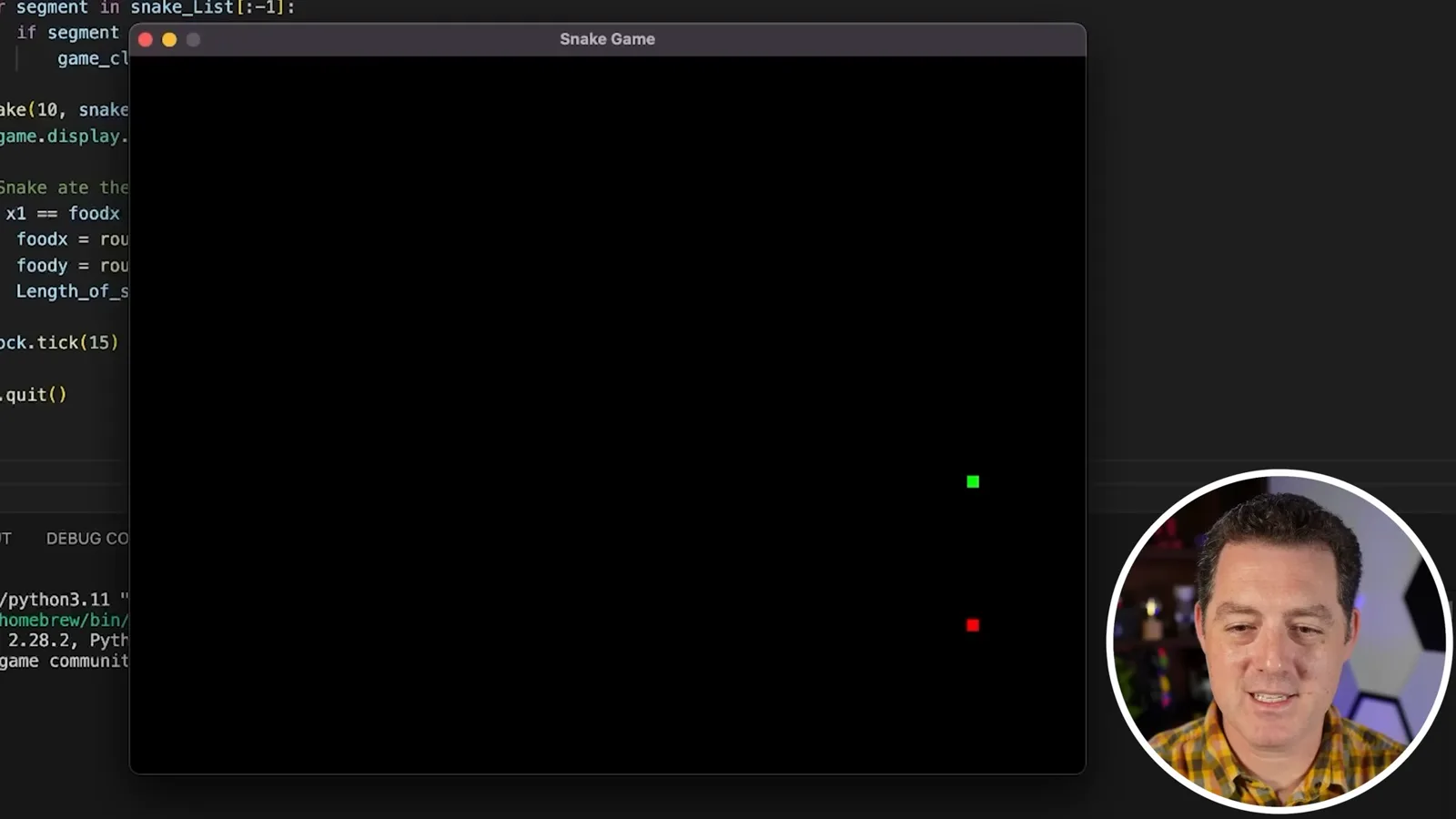
The game opens and plays, and leaving the window produces a loss message with options to quit or play again. It does not show a score. Because output is slow, I do not ask for the usual extra features; I count the initial game as a pass in my informal rubric.
Safety and reasoning puzzles
He probes refusal behavior, then tests drying, word counting, a killer puzzle and a marble scenario. The outputs mix successes with errors and assumptions.
I test how the model handles requests for wrongdoing. It initially refuses one request and later responds differently when the request is reframed historically. A refusal is a safety behavior, not evidence that the model belongs to a particular company; these few prompts do not establish its overall safety or reliability.
The shirt-drying question asks how long 20 shirts take if five dry in four hours. The model explains that if all shirts are laid out separately under similar sunlight and airflow, they can dry in roughly four hours. It also notes that insufficient space or overlapping clothes could change the result. I consider the assumptions and explanation a strong answer.
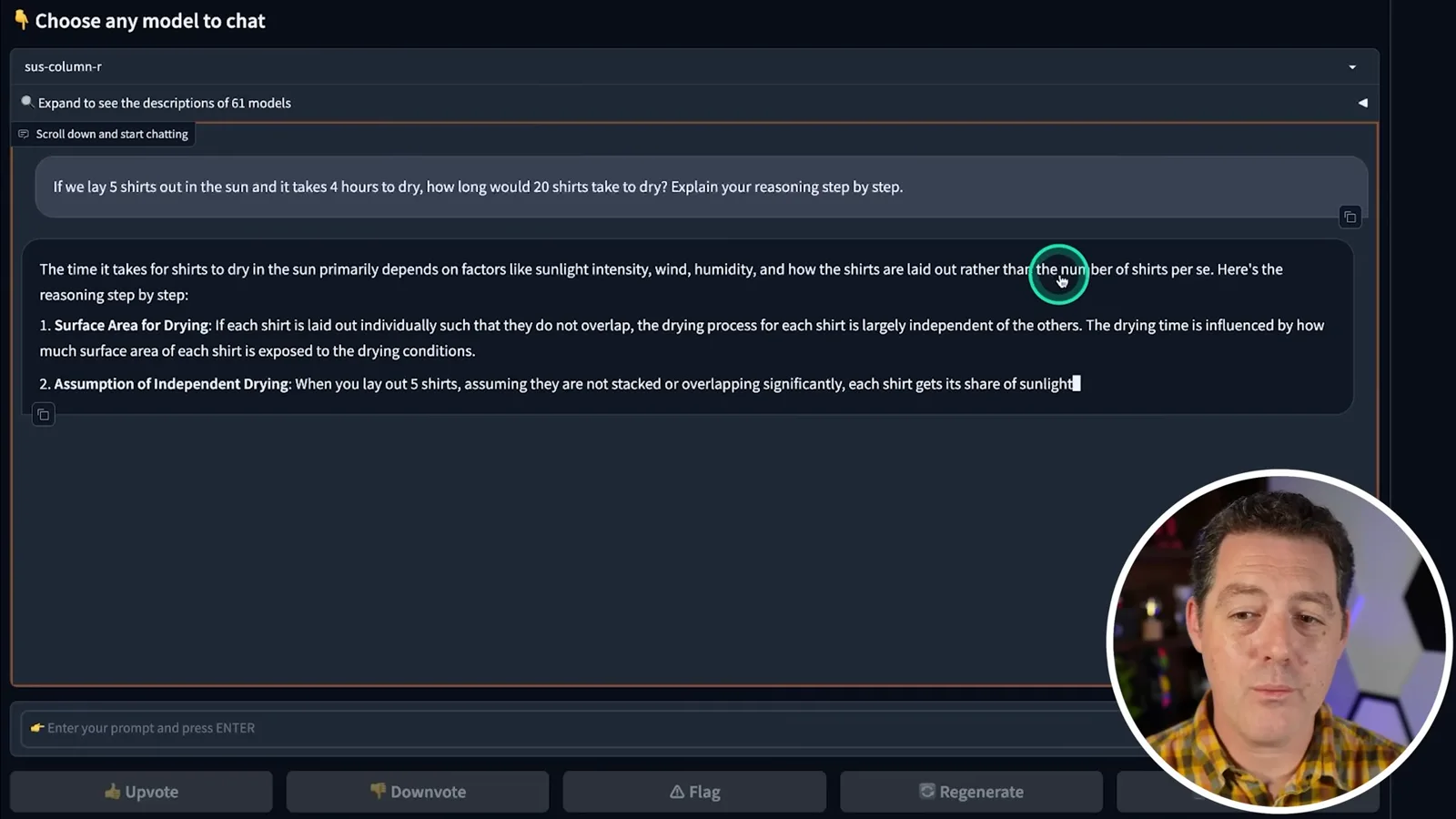
Asked how many words are in its own response, the model gives a count that I find incorrect. It then handles the killer puzzle: three killers are present, a newcomer enters and kills one, and nobody leaves. Counting the two surviving original killers and the newcomer gives three living killers; I accept that answer, while noting that counting the deceased differently changes the wording's interpretation.
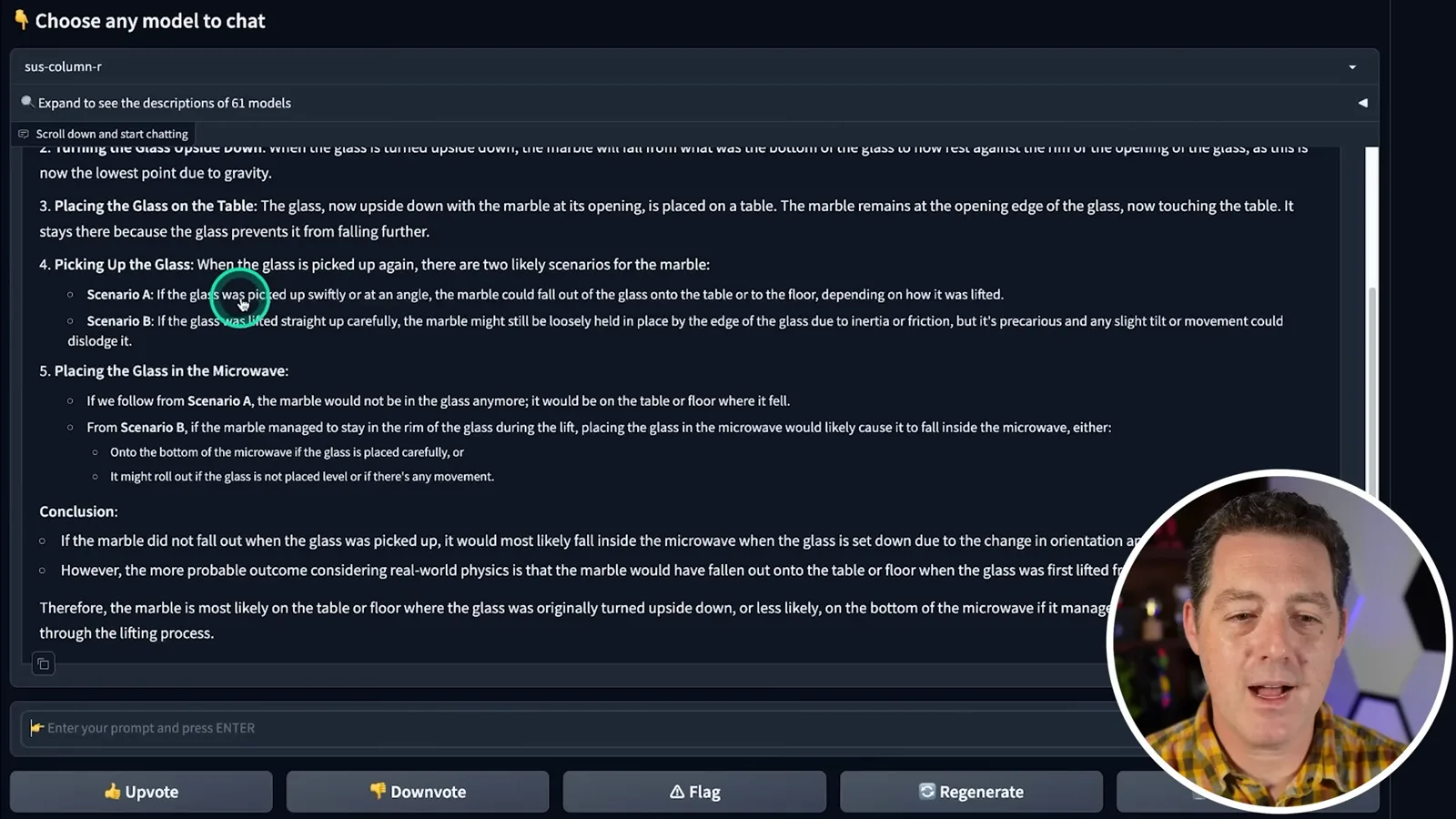
The marble question places a marble in a glass, turns the glass upside down on a table and moves it to a microwave. The model offers multiple outcomes and concludes that the marble is most likely left on the table or floor. It also suggests that an upright lift could leave the marble held at the rim by friction or inertia; that explanation is physically questionable under ordinary assumptions.
I recognize that the prompt does not specify exactly where the glass is inverted or how it is lifted. If a normal open glass is inverted over a table and lifted without retaining the marble, the marble remains on the table; other handling can change the outcome. I call the model's response a pass, while noting that its proposed alternative is unclear.
Formatting, numbers and ethics
The model produces sentence-ending and decimal-comparison examples. It then discusses an ethical hypothetical and gives a qualified answer.
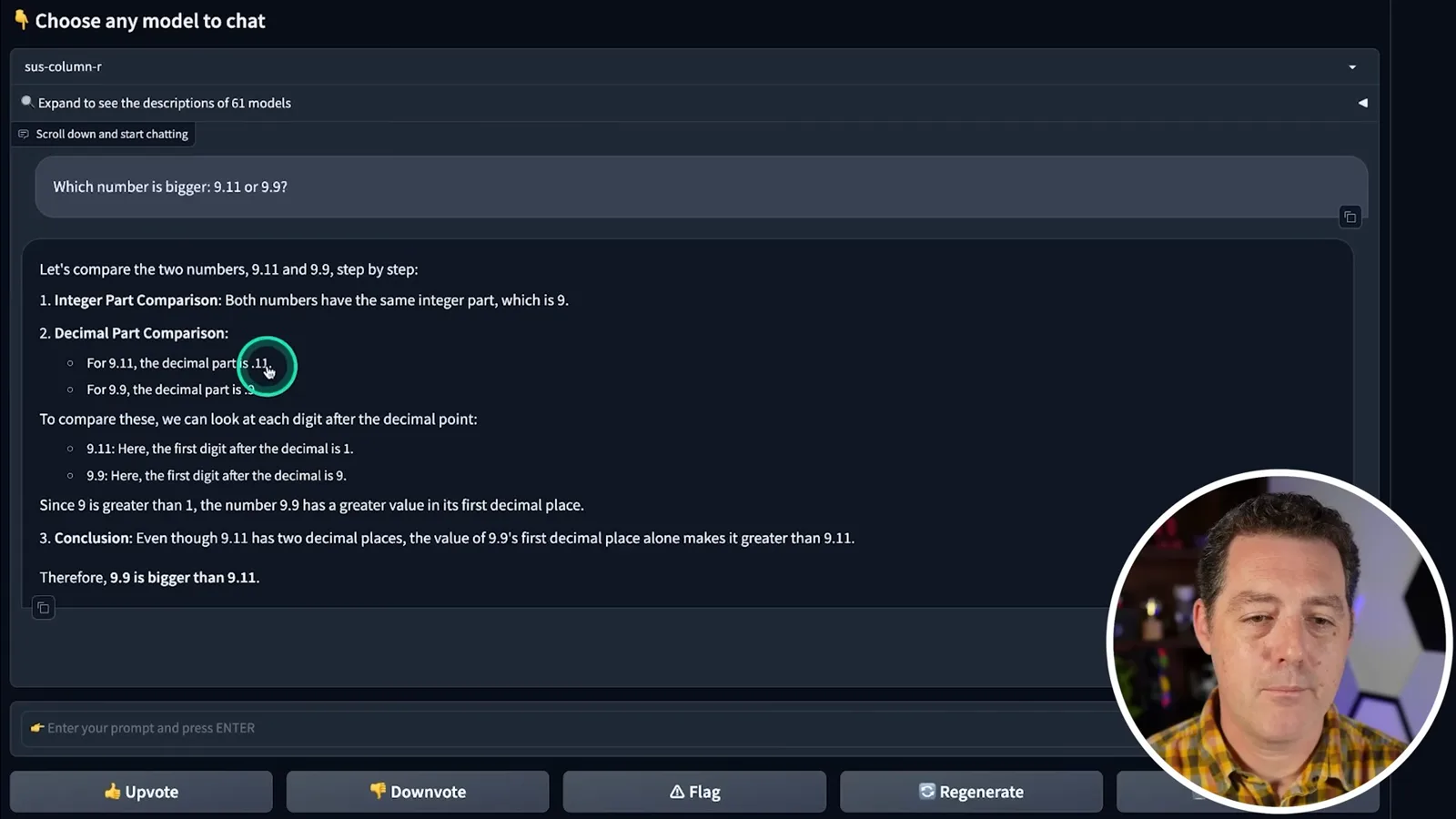
I ask for ten sentences ending in 'apple,' and the displayed completion appears to satisfy the requested format. In a decimal comparison, the model correctly says 9.9 is greater than 9.11 and explains the tenths place. I praise the explanations, but these are individual examples, not proof of a general advantage.
An ethical hypothetical asks whether to gently push a stranger if doing so would save humanity. The model initially discusses consent, uncertainty and alternatives; when pressed for a yes-or-no answer it says no under its stated uncertainty, while allowing that full certainty and other conditions might change its judgment. I accept the response as reasoned even though I would answer differently.
Navigation and a GPT-4o comparison
Berman tries a North Pole question and a revised point-A version, then compares two GPT-4o responses. The geometry depends on how the problem is interpreted.
I then try a navigation question inspired by a discussion of world models: start at the North Pole, walk 500 yards, turn left and walk ten yards, turn left again and continue indefinitely. The model concludes that the walker would not revisit the start, but its discussion of the pole and curvature is confused. The result depends on an explicit surface and rule for continuing a direction; the wording alone does not justify treating a flat-plane argument as a complete answer on a globe.
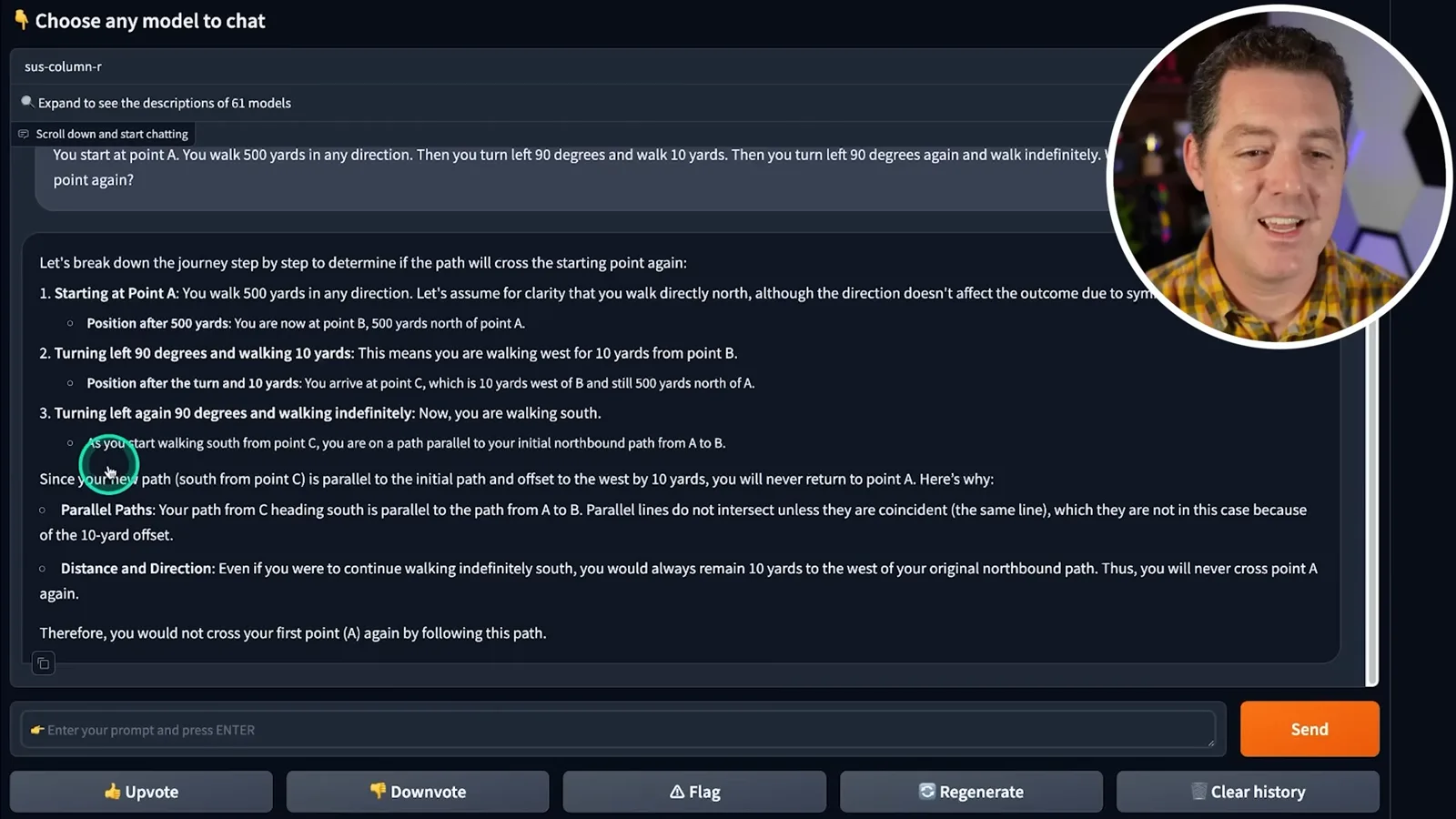
I revise the problem to start at an unspecified point A instead of the North Pole. In the flat-plane interpretation, the second left turn puts the walker on a line parallel to the original path and ten yards away, so it never crosses A. The model explains this correctly under that interpretation; on a curved surface, additional assumptions would be necessary.
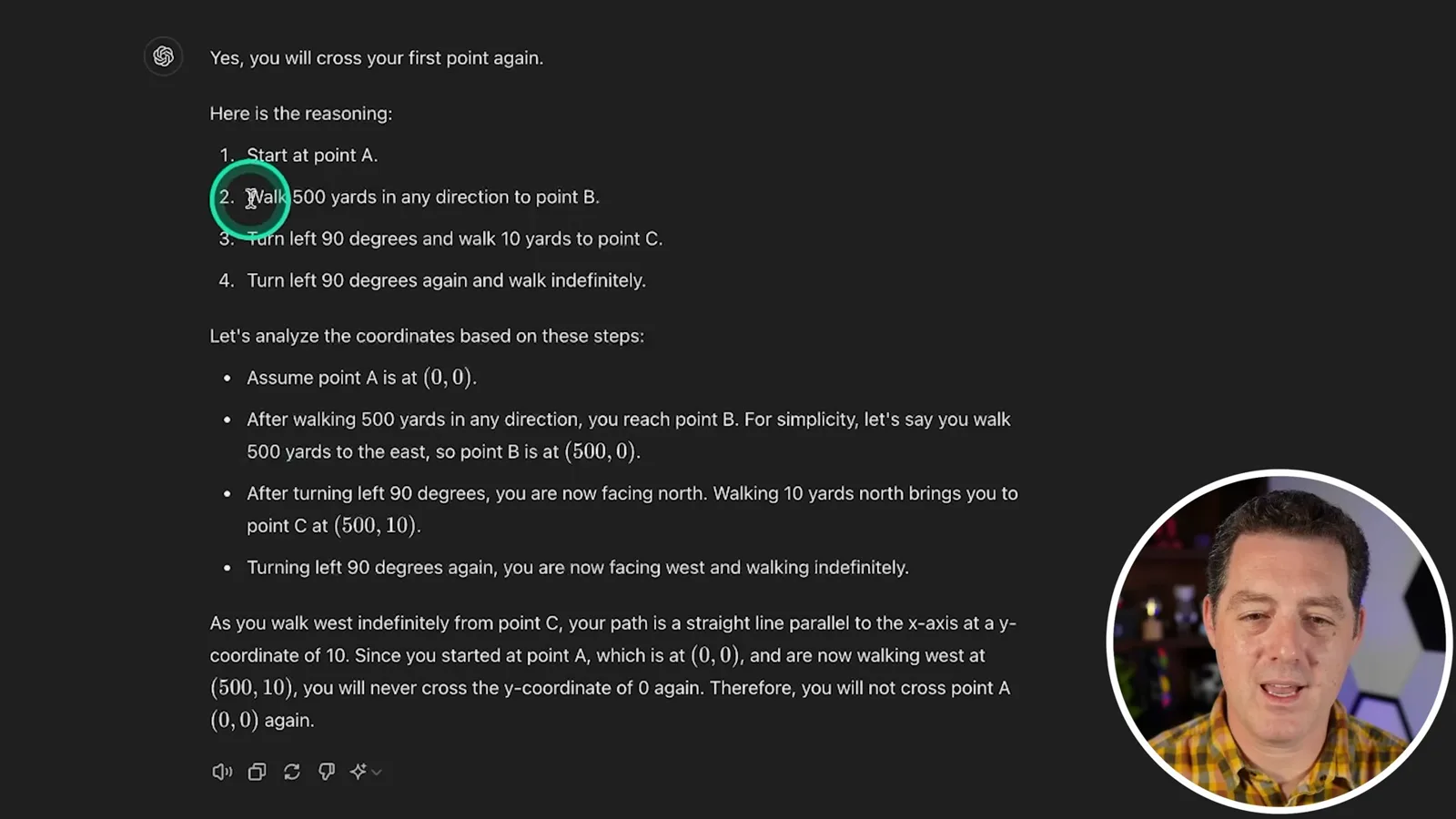
For comparison I ask GPT-4o the revised question. One response begins with yes but its coordinate explanation ends with no; another prompted response reaches yes, which is inconsistent with the flat-plane geometry. These few outputs show variability and internal contradiction, not a controlled comparison of the models' overall abilities.
I encourage viewers to try the anonymous model on the Arena. At the time I was interested in the possibility of a Strawberry connection, but the subsequent Grok-2 identification shows why an anonymous model's identity should not be inferred from a handful of answers. The tests remain a snapshot of model behavior in this session.
같은 채널의 다른 글
 34:21EN
 Matthew Berman· 2026년 10월 27일Matthew Berman Examines Anthropic’s IPO Filing, AI Growth and GovernanceMatthew Berman, Sam Altman · Forward FutureThe presenter reviews the S-1’s financial metrics, compute strategy and voting structure while questioning the tension between rapid AI development and safety.
 0:26ENMatthew Berman· 2026년 10월 25일Sam Altman on Human Values and Problem-Solving in an AI WorldSam Altman · OpenAIIn a short interview excerpt, Altman considers the enjoyment of solving hard problems and the human role in interpreting results.
 0:36ENMatthew Berman· 2026년 10월 25일Kimi K3.1 and a Rubik’s Cube Solver DemonstrationMatthew Berman · Forward FutureMatthew Berman shows a scrambled virtual cube being solved and gives the Kimi K3.1 test a favorable assessment.
 0:21ENMatthew Berman· 2026년 10월 24일An AI-Generated Kimi Benchmark Chart Used Invented ScoresMatthew Berman · Forward FutureMatthew Berman asks for a graph of Kimi K3.1 Pro benchmarks, then discovers that the displayed figures are illustrative placeholders.
 25:50ENMatthew Berman· 2026년 10월 24일Kimi K3.1 Pro Tested: Strong 3D Demos, Uneven Results and Competitive PricingMatthew Berman · Forward FutureMatthew Berman tests the open-weight model on coding, 3D rendering and visual explanations, then compares benchmark results and prices.
 32:20ENMatthew Berman· 2026년 10월 23일Who Is Local AI For? The Costs, Trade-offs and a Hybrid FutureMatthew Berman · Forward FutureMatthew Berman weighs data control and independence against hardware cost, setup complexity and inference speed.