30초 요약
Matthew Berman briefly introduces the Navier–Stokes equations and says OpenAI announced a solution to the associated Millennium Prize problem. OpenAI claims a finite-time singularity under smooth forcing; the Clay Mathematics Institute says the result and credit must undergo its evaluation process.
- 1A fluid curls and breaks apartThe clip shows a moving ring stretching and forming smaller curls.
- 2Equations for fluid motionBerman introduces the Navier–Stokes equations as a way to describe and predict fluid flows.
- 3A million-dollar problemThe Clay Mathematics Institute’s problem asks about existence and smoothness of three-dimensional solutions.
- 4OpenAI’s announcementOpenAI claims a proof of finite-time singularity under smooth forcing; Clay’s review and credit process applies.
핵심 정리
- The Navier–Stokes equations describe fluid motion and are useful in applications including aircraft design.
- The Clay Millennium problem concerns the existence and smoothness of three-dimensional solutions, not simply the ability to forecast every fluid indefinitely.
- OpenAI announced a claimed finite-time singularity for a smoothly forced case in September 2026.
- Clay said the announcement appeared to settle the problem but its evaluation and credit process remains deliberately unhurried.
챕터별로 다듬은 전문 읽기
Fluid motion and the Navier–Stokes equations
A visualization shows a ring stretching and breaking into smaller curls. Berman introduces the equations used to describe flows.
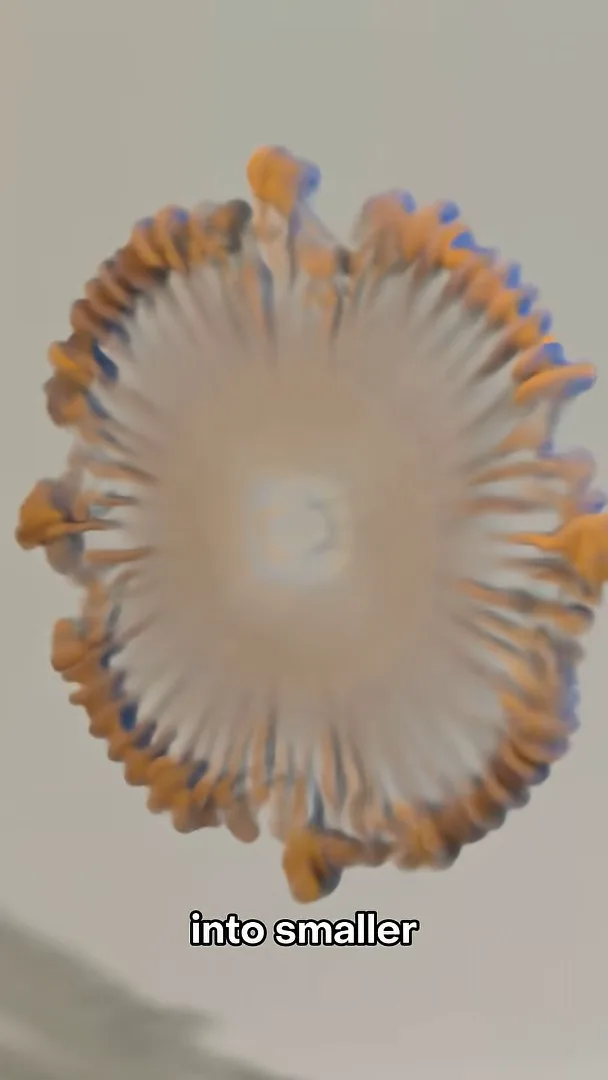
Watch how this fluid moves: the air rolls into a ring, stretches and breaks into smaller curls. The Navier–Stokes equations are a principal tool scientists use to describe and predict the motion of fluids, including air. Understanding these flows matters in applications such as aircraft design.
The Millennium problem and OpenAI’s claim
Berman points to the million-dollar problem and OpenAI’s announcement. The institute’s assessment and credit process continues.
There is a million-dollar Millennium Prize problem connected to these equations. In simplified terms I ask whether we can predict the flow forever; more precisely, the Clay Mathematics Institute asks about the existence and smoothness of solutions in three dimensions.
OpenAI announced in September 2026 that it had solved the problem. It says an internal system produced a proof of finite-time singularity in a case with smooth external forcing. Clay said the problem appeared to have been settled, while explaining that the evaluation and assignment of credit follow a deliberately unhurried process; the announcement itself is not a prize award.
같은 채널의 다른 글
 34:21EN
 Matthew Berman· 2026년 10월 27일Matthew Berman Examines Anthropic’s IPO Filing, AI Growth and GovernanceMatthew Berman, Sam Altman · Forward FutureThe presenter reviews the S-1’s financial metrics, compute strategy and voting structure while questioning the tension between rapid AI development and safety.
 0:26ENMatthew Berman· 2026년 10월 25일Sam Altman on Human Values and Problem-Solving in an AI WorldSam Altman · OpenAIIn a short interview excerpt, Altman considers the enjoyment of solving hard problems and the human role in interpreting results.
 0:36ENMatthew Berman· 2026년 10월 25일Kimi K3.1 and a Rubik’s Cube Solver DemonstrationMatthew Berman · Forward FutureMatthew Berman shows a scrambled virtual cube being solved and gives the Kimi K3.1 test a favorable assessment.
 0:21ENMatthew Berman· 2026년 10월 24일An AI-Generated Kimi Benchmark Chart Used Invented ScoresMatthew Berman · Forward FutureMatthew Berman asks for a graph of Kimi K3.1 Pro benchmarks, then discovers that the displayed figures are illustrative placeholders.
 25:50ENMatthew Berman· 2026년 10월 24일Kimi K3.1 Pro Tested: Strong 3D Demos, Uneven Results and Competitive PricingMatthew Berman · Forward FutureMatthew Berman tests the open-weight model on coding, 3D rendering and visual explanations, then compares benchmark results and prices.
 32:20ENMatthew Berman· 2026년 10월 23일Who Is Local AI For? The Costs, Trade-offs and a Hybrid FutureMatthew Berman · Forward FutureMatthew Berman weighs data control and independence against hardware cost, setup complexity and inference speed.