30초 요약
Clay has about 75 full-time people, more than 4,500 customers, and Anthropic on the roster. On Training Data, founder Kareem Amin argues that today’s models cannot keep a company standing out in a market where everyone is sending the same AI email — so Clay hands the job to technical growth operators and preconfigures the blocks. Magic, he says, lives in the approach: treat sales as a creative act, hold imagination and automation in tension, and ship a high-ceiling tool that agencies can turn into a million-dollar run rate in six months.
- 1AI can automate research and occasionally be clever, but it cannot continuously help a company stand out when everyone is using the same models to write mail — so Clay’s third path is to give the job to a more technical RevOps or growth person.
- 2The CRM can stay the system of record; Clay wants to be the system of action, the place where you decide what to do with customer data.
- 3Users call Clay magic, and Amin’s unorthodox answer is that the moat is the approach: sales and growth are a creative act, not a funnel to process as fast as possible.
- 4Delightful interactions accumulate like heating water; only after they cross an activation-energy threshold does someone phase-shift into a customer.
- 5Claygencies of two to four people are using the product to grow other companies, and some hit more than a million dollars of run rate within six months of starting.
- 6The cost of lying, especially to yourself, is dissociation: you lose the felt compass that tells you what is real, and hedged “I should” bets never teach you why they worked or failed.
챕터별 전체 원고 읽기
AI will not fully automate the SDR — Clay’s third path is a more technical person with better blocks
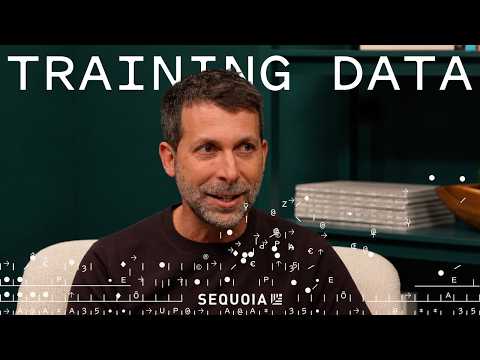
Alfred Lin, a Sequoia partner and early Clay shareholder, hosts Training Data with Kareem Amin, Clay’s co-founder and CEO. Amin studied physics and electrical engineering, worked in product at Microsoft and The Wall Street Journal, and started Clay in 2017 as a creative tool for growth. Lin frames the company as one of the fastest-growing AI applications for business and goes straight to the fight-starting question: will AI completely automate away the SDR?
Amin does not think so. In a traditional B2B shop, an army of SDRs does account research, checks whether a company fits, and pads that work with data bought from vendors. Headcount is the cost center, which is why every vendor is selling SDR efficiency. Path one is tools and copilots. Path two is the magic wand: connect first-party and third-party data, let the model find accounts, send messages, and follow up. Clay’s third path is to take the job to be done and give it to someone more technical — a RevOps person or a growth marketer — who can use AI to invent creative ways to reach people rather than wait for magic to happen.
Full automation fails, he says, for a simple reason. You are selling to people, and you have to stand out. AI can automate a lot of the work and even be creative in spots; it cannot do that continuously with today’s technology, because everyone else has the same models. His picture of the org is already showing up in the market: sales, marketing, and customer success collapse into a go-to-market team, with a GTM ops group underneath supplying data. The system of record can be the CRM or a warehouse. How you act on that data lives in Clay. Clay wants to be the system of action.
Verkada personalizes the homepage; a DevTools vendor watches Clay’s status page; Anthropic triples coverage
Most customers are SMBs who sign up, find companies and people, pull unusual data points, and write personalized outreach — to new logos or to the base they already have. Larger accounts get stranger. Verkada, the security company, uses Clay to generate personalized landing pages so inbound visitors see the value proposition that matters to them. A DevTools customer watches Clay’s own status page, and when the site goes down, messages the team that the outage could have been avoided with their product. It caught Amin’s attention, he says, because he already knew the product was down. Timing beat copy.
Anthropic uses Clay to improve data enrichment. Coverage has roughly tripled at a fraction of the previous cost. Lin is surprised: a foundation-model lab should know how to cleanse and normalize data. They do, Amin says — they even run their own models inside Clay. What Clay adds is the vertical workflow around the intelligence layer: pull from internal stores, run the model iteratively, enrich with a long tail of third-party providers, then generate messages. Plenty of those providers are better and cheaper than the household names, but they have terrible UIs, so people never find them. Clay is the aggregation layer that makes the workflow easy.
AI’s next job inside the product is preconfiguration. On signup, Clay can read a company’s website, logos, case studies, and copy, infer who they sell to, and preset searches and data sources. Connect a wiki, Notion, or sent mail, and it picks up the house language for outreach. Connect the CRM, and it can spot lost accounts against the roadmap — someone who churned for lack of SOC 2 is worth reactivating once you have the certification. It sounds like full automation. Amin insists it is blocks assembled for you, with the tweaks still in your hands.
Claygencies of two to four people are already printing a million-dollar run rate
The community around the product is the part Amin sounds most excited about. More than 17,000 people sit in the Slack channel. Boot camps teach Clay. The mission statement he keeps repeating is that any idea for how to grow the company should translate into Clay quickly. That is the line between worlds. The old world was being good at duct-taping tools and grinding through a spreadsheet enrichment. That work, he says, belongs in automation. The new world is pinpointing who will actually be a good customer, then acting.
Inside the company he repeats a kitchen-versus-studio analogy. A microwave is simple: set a time, press start, food is hot. A guitar has six strings and looks just as simple, but you can spend a lifetime on it, play different kinds of music, and learn music by playing. Clay is aiming at the guitar. Agencies — “Claygencies” — have shown up because they are finding new ways to connect companies with people who might actually want the product. Deeper research beforehand is the only honest way not to send mail nobody asked for.
Those agencies are usually two to four people, sometimes larger, running Clay on behalf of other companies. The reason they exist is money: several are above a million dollars of run rate and started only six months ago. SDRs are upskilling into growth technique for the same reason. There is a gap in the market, and they can see it.
The magic is not in the model — it is in treating growth as a creative act with an activation energy
Claygent, the research agent, is an implementation of the ReAct paper: the model plans, then executes with tools. It is useful for the nuanced, real-time questions that used to need a person — how many pricing tiers a company lists, whether there is an enterprise plan, whether Pro is $500 above Basic. The agent can scrape, summarize, and also call Clay-specific company and people data. Those details become buying signals.
Lin asks the question every customer tees up: people call Clay magic, so where is the magic — in the models, in the workflow, or in the UX? Amin admits the answer is unorthodox. The magic and the competitive advantage are not one feature. They are the approach. The belief is that sales and go-to-market are a creative act. The rest of the category treats them as a funnel to process faster, automate harder, and widen at the top. Necessary, he says, and not sufficient.
The nerdier metaphor comes from his physics background: activation energy. Water bubbles for a while; only at 100°C does it phase-shift to gas. A few moments of delight with a brand work the same way. Cross a threshold, and the person becomes a customer. That frame is why the product is built to turn any idea into a test quickly — so you can manufacture those moments. The company is named Clay because you are putting things together, manufacturing, creating. Lin presses on the tension: scientist and musician, creative tool and “go-to-market engineers.” Amin does not resolve it. He holds two opposing forces on purpose. Hegel’s picture of history, thesis colliding with antithesis into synthesis, is a value they actually believe. You need a creative tool and you need volume automation; the interesting product grows in the pull between them.
Chill high achievers will ship an AI SDR only if every piece unscrews
Culture is how they hold the tension. Amin’s label is “chill high achievers.” Anxiety, fear, and frustration can be named; they are not to be reacted to in the moment. The point is a clear mind, so you can see the pieces and then commit. Interviews are built that way: collect information, share who you are, skip live judgment, decide at the end. Another value is “negative maintenance.” Some people are high maintenance, some are zero; Clay wants people who remove work from others and lower the temperature so thought can stay clear.
A second slogan is “there’s always a way,” which other people render as make it work, then make it great. That fights with craft, and they leave the balance to judgment — with a constraint. Alignment matters. If you are building a rocket, you cannot ship a prototype and polish later. If you are building a go-to-market tool, being first with the tactic is the product, so they ship as soon as they can and keep crafting until it meets their bar for great.
Would Clay build an AI SDR itself? Yes, but only in the Clay way: every component visible and configurable, or it commoditizes. One piece reads company data and infers industry and targets — an AI ICP identifier, already built. A second finds lookalikes on a cadence from the CRM. A third reads internal systems for voice and style. Mix and match, or it is not a Clay AI SDR. An AI CRM is a different question. CRMs exist so SDRs and AEs can type data in and pull it out. If that labor disappears, the CRM becomes a less important piece of the stack. Many CRMs already throttle APIs to keep the data hostage as system of record; companies respond by copying it into warehouses. Amin’s short answer: an AI-era CRM will not look like today’s. Clay starts where the CRM is empty — finding customers and making stored data actionable.
Twice the opens, physical mail, and a seven-year walk through the fog of war
Lin wants a scoreboard: does AI outreach perform like a human when everyone knows it is a campaign? Amin reframes. Outreach works when the data is better and the idea for getting attention is clever. The status-page pitch worked because the timing was real. Customers report that SDRs whose enrichment and automation run through Clay get twice the opens and replies of teammates who do not — a gap that multiplies across a team. The market still files Clay under enrichment and outbound. Sophisticated accounts already use it for inbound and expansion. The Figma-style play: if you are about to ship Dev Mode, find customer companies with five or more designers, then outbound the head of engineering that the design team is already in and engineering should join to cut the back-and-forth. Acquisition and expansion in one motion.
The output is not required to be an email or a CRM field. Some customers send physical mail through mail APIs Clay can call, and Amin says the results have been strong. The ambition is any message — a personalized site, even an ad — composed in Clay from research, then fired down whatever channel. Next year’s center of gravity is first-party data: a Segment connector for product analytics, plus billing, website visits, Gong calls, and email, so outreach can use what the company already knows. Further out, he wants Clay to be the single place a growth idea goes, including a personalized onboarding flow or a website bot that books meetings.
On the public numbers: about 75 full-time people, more than 4,500 customers, on the order of 100,000 users. They have not stated ARR directly. The Information put them on a top-50 list at above $20 million; Amin says that is “in the range of truth.” The company is older than the current AI-app wave. The 2017 ambition was abstract: give the power of programming to an order of magnitude more people. They considered a workflow editor, then a spreadsheet, because a spreadsheet is the world’s most popular programming environment. Business users kept building lists of companies and people to reach. A co-founder tried prospecting with the product and came back saying the process had too many steps — and that they could help. The idea arrived early, by analysis, not accident. Committing took years. Amin describes a video-game fog of war: they walked the whole map, then returned to the right square.
He had never been in sales or marketing, unlike most GTM-tech founders who felt the pain first. What he did have was Ableton Live: components you connect to make music, and a wish to give that power to more people. Early power users were the agencies; the team kept the tool broad anyway. Focus, he says, is a muscle you only get by saying no and by walking down distractions you were sure were the path. When they finally committed and stripped the broad language, the launch resonated immediately. Go-to-market — sales, marketing, customer success — is already half a company, and half a company was enough. The unorthodox product choices are leftovers of that path. Other tools promise one-button leads and an AI SDR that just runs. Clay asks people to invest time, learn growth, and partner. The ceiling is meant to look like Photoshop, Figma, or Ableton: you can keep improving a craft no one else has done yet.
The cost of lying is losing the compass you need in the fog
Rapid fire, then the advice. Favorite startup besides his own: Suno, the music-generation company, aligned with how he thinks about creativity; he also admires Linear’s thoughtfulness about product. Favorite AI app on the phone is ChatGPT, though he has been writing hackathon code in Cursor. The market he would like AI to bother next is expert networks — repetitive information-gathering with old incumbents, “Gong, but not for sales calls.” The best thing AI could do this decade is recursive AI: systems that improve themselves. Otherwise we stick at whatever local maximum current techniques allow.
For founders, alignment sounds soft and is not. Know where you sit on sales-led versus product-led, on every-feature-perfect versus ship-then-polish, and tie those choices to the ambition that makes the hours worth it. The less-repeated piece is an internal compass. If you lie, the punishment may never arrive. The cost is dissociation from yourself. Lie, especially to yourself, and you lose the ability to navigate by feeling. You no longer know what is good or real; you just do things, including things you believe are good.
Clarity, Lin asks, when the fog of war makes even the compass dim? Honesty plus unhedged risk. Amin has taken bets that were hedged: build a feature, even point the company at go-to-market, because a few people said it made sense. The tell is the phrase “I should.” If it fails, you tell yourself it was never your real opinion. If it succeeds, you still do not know why. A real risk is one where you do not know the result and you are willing to fail in public. That is how the compass gets built, and how you walk the map when it is still dark.
같은 채널의 다른 글
 1:08:02EN
 Sequoia Capital· 2026년 10월 13일팟캐스트AlphaGo Took Two Years. AlphaZero Took Hours. Silver Is Making the Same Bet on SuperintelligenceDavid Silver and Lasse Espeholt left DeepMind to build Ineffable Intelligence, a twenty-person lab that wants a superlearner to discover science, math, and language from experience rather than from a pre-training run.
 1:04:26ENSequoia Capital· 2026년 10월 6일팟캐스트At 100,000 Accelerators, Something Fails Every HourGoogle AI infrastructure chief Amin Vahdat tells Sequoia's Sonya Huang why FLOPS is a vanity metric, why the TPU line split in two, and why he would rather wait on a utility than build his own gigawatt.
 1:05:21ENSequoia Capital· 2026년 9월 15일팟캐스트The Bridge From Model to Workflow Is a Trillion-Dollar BusinessBox CEO Aaron Levie argues that the money in this cycle sits in the messy gap between frontier models and real enterprise work — and that coding's overnight diffusion will not repeat for everyone else.
 52:27ENSequoia Capital· 2026년 9월 1일팟캐스트After Two Dozen Police Departments Said No, They Built an Anti-Network-Effect AI CompanyA Wisconsin county had 300 gigabytes sitting on a cold case—and Peregrine's founders still refuse to take the credit.
 55:19ENSequoia Capital· 2026년 8월 25일팟캐스트Human Click Data Is a Bug: Rebuilding Search for a Web of AgentsParag Agrawal, former Twitter CEO and founder of Parallel Web Systems, argues that agents will query the web a thousand times more than people, and that both search infrastructure and the ad-supported internet have to be rebuilt for that customer.
 53:44ENSequoia Capital· 2026년 8월 18일팟캐스트The Biggest Bug in Today’s Models Is That the Weights Never ChangeTuring Award winner Rich Sutton and Khurram Javed founded Oak Lab to build agents that keep learning after they ship — and they call synthetic data a big mistake.