30초 요약
In this July 2024 news roundup, Matthew Berman discusses a reported Apple observer role at OpenAI, Salesforce’s small function-calling model, Moshi voice AI, new media tools, GPT4All 3.0, Anthropic’s evaluation initiative and security concerns. An excerpt from Andrej Karpathy offers an analogy between language models and operating systems. Product claims, reporting and predictions are presented as they stood when the video was recorded. Berman’s disclosure says he is an investor in Nomic AI, the maker of GPT4All.
- 1Reported Apple observer seatBerman discusses a report that Apple executive Phil Schiller would receive an OpenAI board observer role; he treats the report as conditional.
- 2A small function-calling modelSalesforce claimed its xLAM 1B model performed strongly on function-calling benchmarks; Berman sees a role for specialized on-device models.
- 3Moshi voice AIBerman outlines the project’s voice capabilities but reports an uneven experience in his own test.
- 4GPT4All 3.0The local desktop application adds interface improvements and file chat. Berman disclosed an investment in its maker, Nomic AI.
- 5Skeleton Key jailbreakBerman describes Microsoft researchers’ report on a multi-turn attempt to bypass model safeguards; the episode is framed as a security finding.
- 6Two OpenAI security issuesA Mac app stored chats in plaintext until an update added encryption; separately, reporting described an earlier breach of internal messages.
핵심 정리
- The reported Apple position was described as a board observer role, not a voting directorship.
- Small models specialized for tasks such as function calling could complement larger cloud models, in Berman’s view.
- Moshi’s real-time voice demo looked promising, though Berman had trouble using it himself.
- GPT4All 3.0 aimed to make local model use and local file chat easier; Berman disclosed an investment in its maker.
- Static evaluations can be compromised by benchmark overfitting, which motivates fresh independent tests.
- OpenAI’s reported 2023 internal-message breach and the 2024 Mac app’s plaintext chat storage were distinct incidents.
챕터별로 다듬은 전문 읽기
Apple’s reported observer role and Salesforce’s small model
Berman discusses a reported OpenAI board observer seat for Apple and Salesforce’s function-calling claims. He presents a vision of specialized on-device models working alongside cloud models.
A report says Apple could receive an observer seat on OpenAI’s board, with former Apple marketing chief Phil Schiller chosen for the role. I find the reported arrangement remarkable given Apple’s announced integration of ChatGPT and the investment Microsoft made in OpenAI. At the time of this video, I am discussing a report, not confirming that the appointment has taken effect.
Apple’s announced approach keeps much of its own AI processing on device or in its private cloud. For requests that need outside knowledge, the proposed experience asks the user before sending a request to OpenAI. I see this as Apple keeping significant control over the partnership.
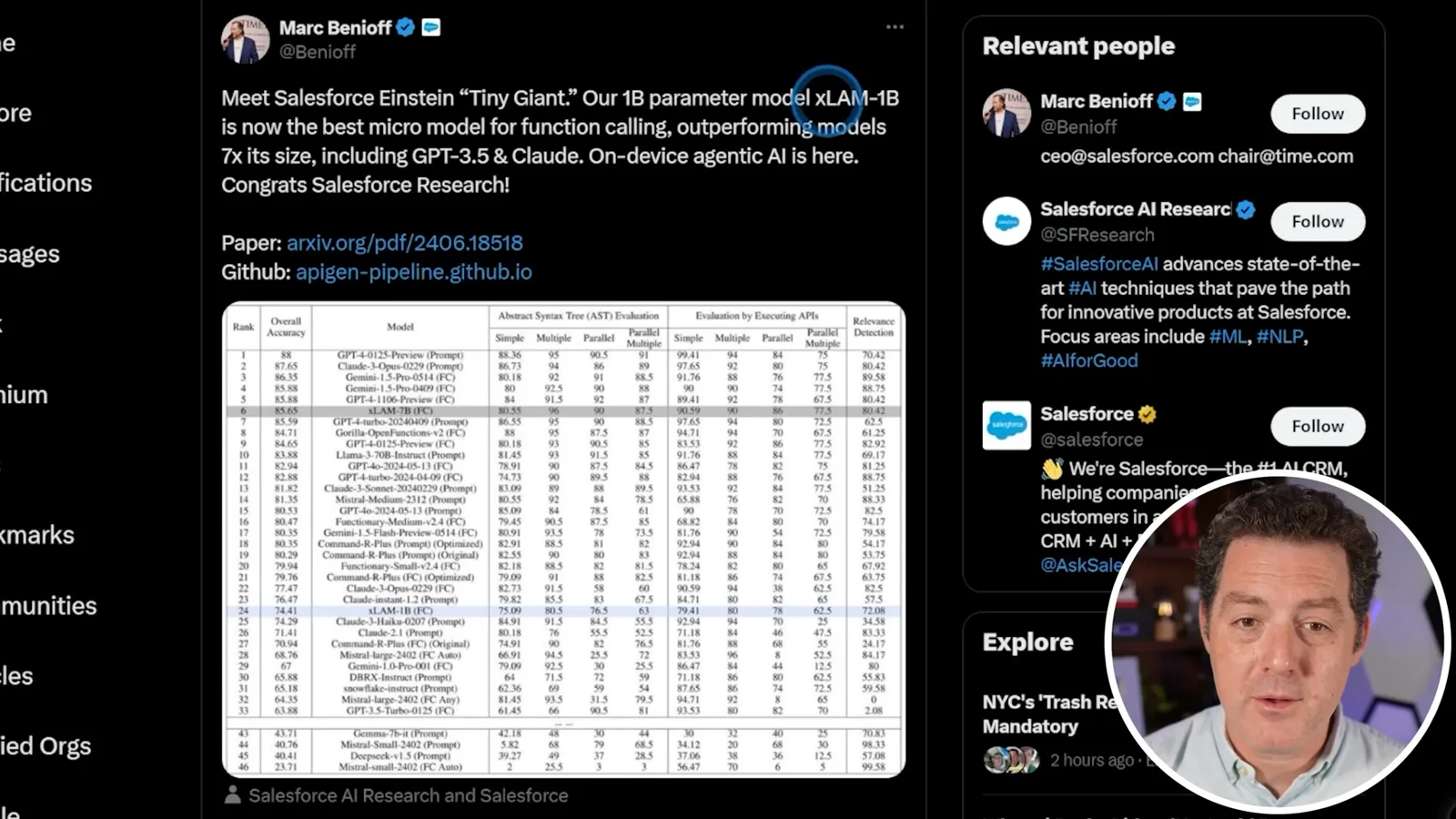
Salesforce CEO Marc Benioff announced Einstein Tiny Giant, also called xLAM 1B, a one-billion-parameter function-calling model. The company claimed strong performance against larger models on its comparison. Such claims concern the evaluated tasks, not every capability of the models named.
I am enthusiastic about on-device AI and agents. My proposed architecture uses multiple small, specialized models orchestrated by a general model, with frontier models in the cloud reserved for more difficult work. I expect potential gains in privacy, latency, cost and efficiency, although those are my projections rather than measured results for every application.
Moshi and a new computing paradigm
Moshi demonstrates real-time voice interaction, though Berman’s own test was uneven. Berman and Andrej Karpathy discuss possible changes to computing and software.
The next project is Moshi, a real-time voice model from Kyutai, an open science lab. The demonstration describes a system that can listen and speak, handle simultaneous audio streams and express emotion. The creators also discussed synthetic speech data, a small version for consumer hardware, and plans for open release.
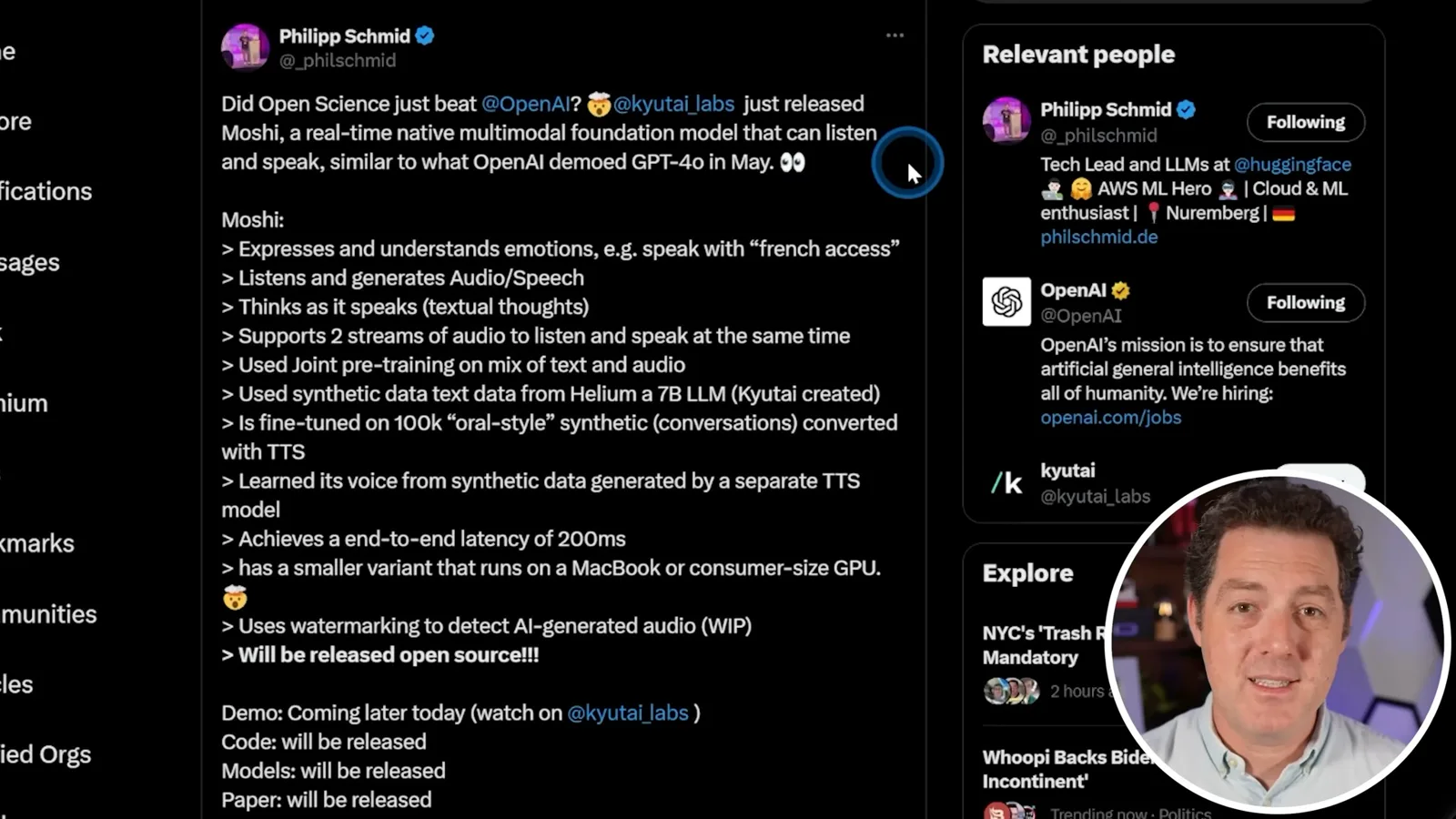
The team cites an end-to-end latency of about 200 milliseconds and discusses watermarking generated audio. I play a short example, but in my own attempt I had difficulty getting the timing and turn-taking to work reliably. Others appeared to have better results, and I intend to try again when I can run it locally.
I believe natural-language interaction with models may eventually change the role of applications and operating systems. I have even predicted that developers will not be needed in ten years. That is a speculative view of a possible future, not a demonstrated outcome.
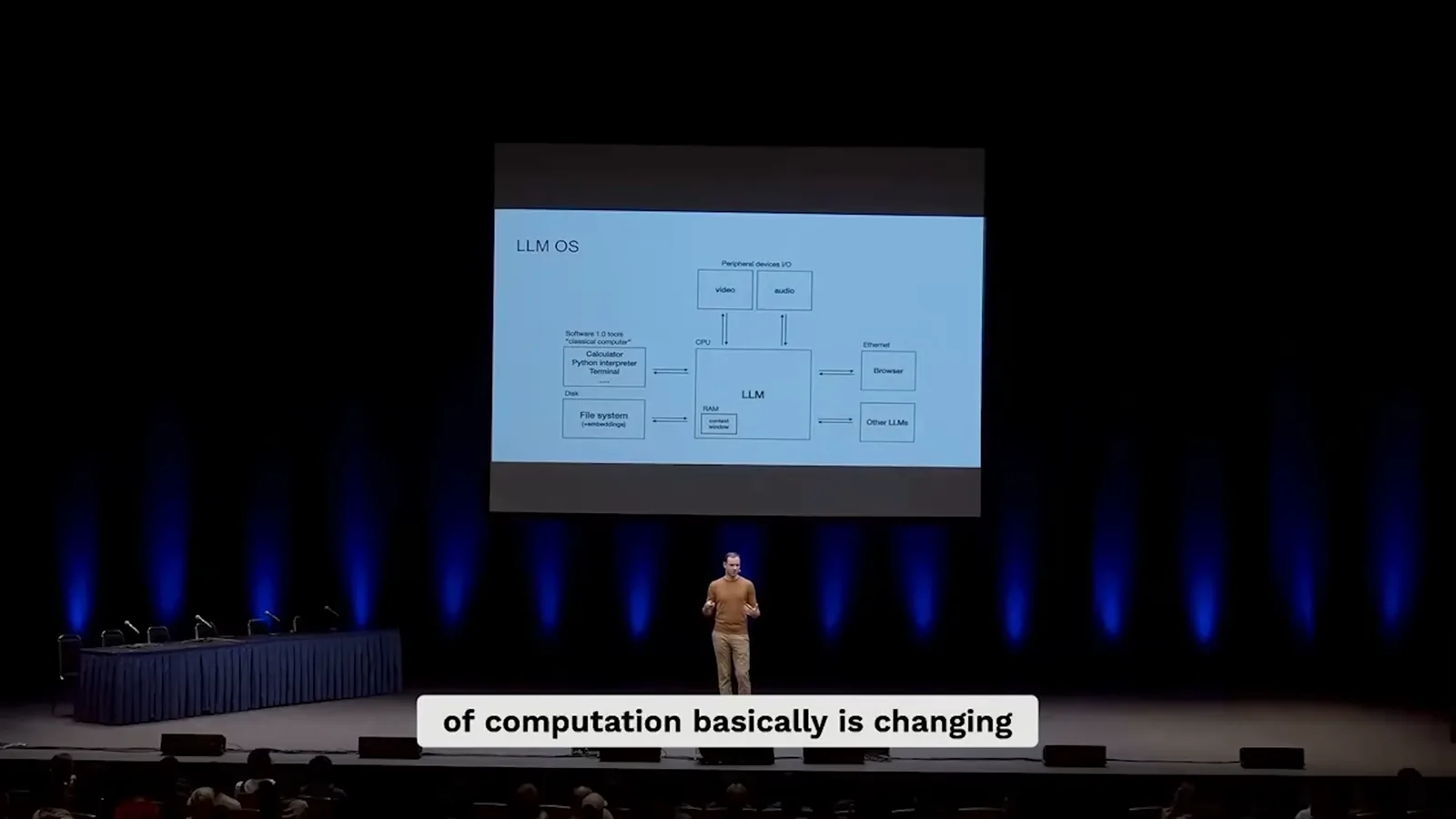
In a clip, Andrej Karpathy compares the emerging model-based computing environment to a new kind of computer. In his analogy, a language model acts like a processor working on tokens, while the context window plays a role analogous to memory. He says people are still learning how to program and use this system effectively.
Voice tools and research search
Berman discusses ElevenLabs voice isolation and licensed celebrity voices. He also reviews Perplexity’s announced Pro Search features.
ElevenLabs introduces a voice-isolation tool intended to extract speech from noisy recordings. I play the company’s example and imagine uses for interviews or calls from noisy places; real-time use in a video call is an idea I raise, not a feature I verify in the demonstration.
The company also announces famous voices for its iOS app, including James Dean, Judy Garland, Burt Reynolds and Laurence Olivier. ElevenLabs says it partnered with their estates. I see this as an early example of estates licensing the use of a person’s voice or likeness for AI media.
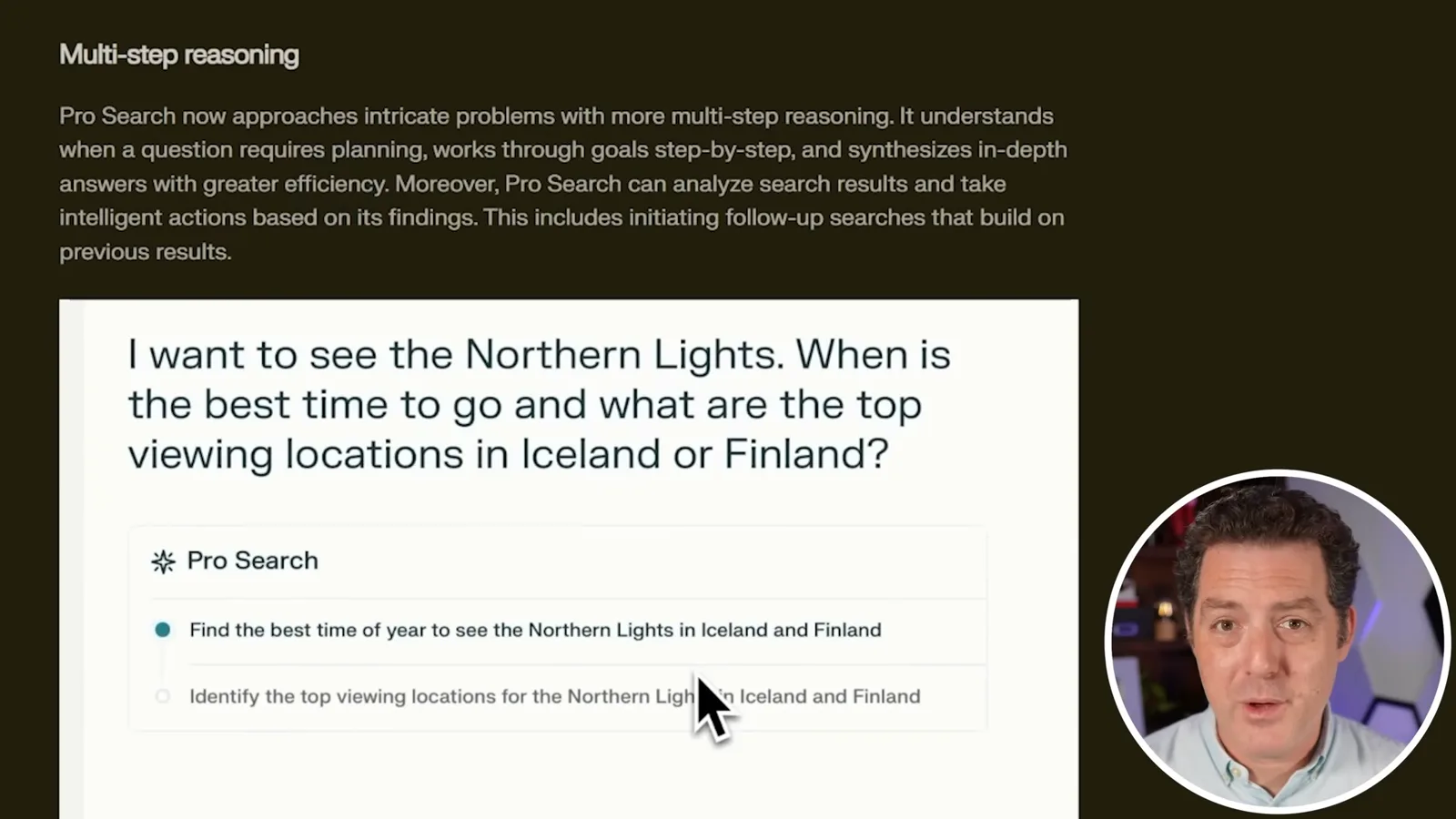
Perplexity announces an updated Pro Search with multi-step reasoning, Wolfram Alpha and code execution for more complex questions. I have not used the paid service much, so I discuss the announcement rather than claim a thorough independent test.
One example breaks a question about the best time and locations to see the Northern Lights into steps. Another tackles a mathematical programming problem using external computation. I speculate that an agent-like framework may coordinate these steps, but the announcement alone does not establish its implementation.
3D generation and GPT4All
Meta announces a text-to-3D research system, and Berman considers possible media applications. He reviews Nomic AI’s updated local-model application and discloses his relationship to its maker.
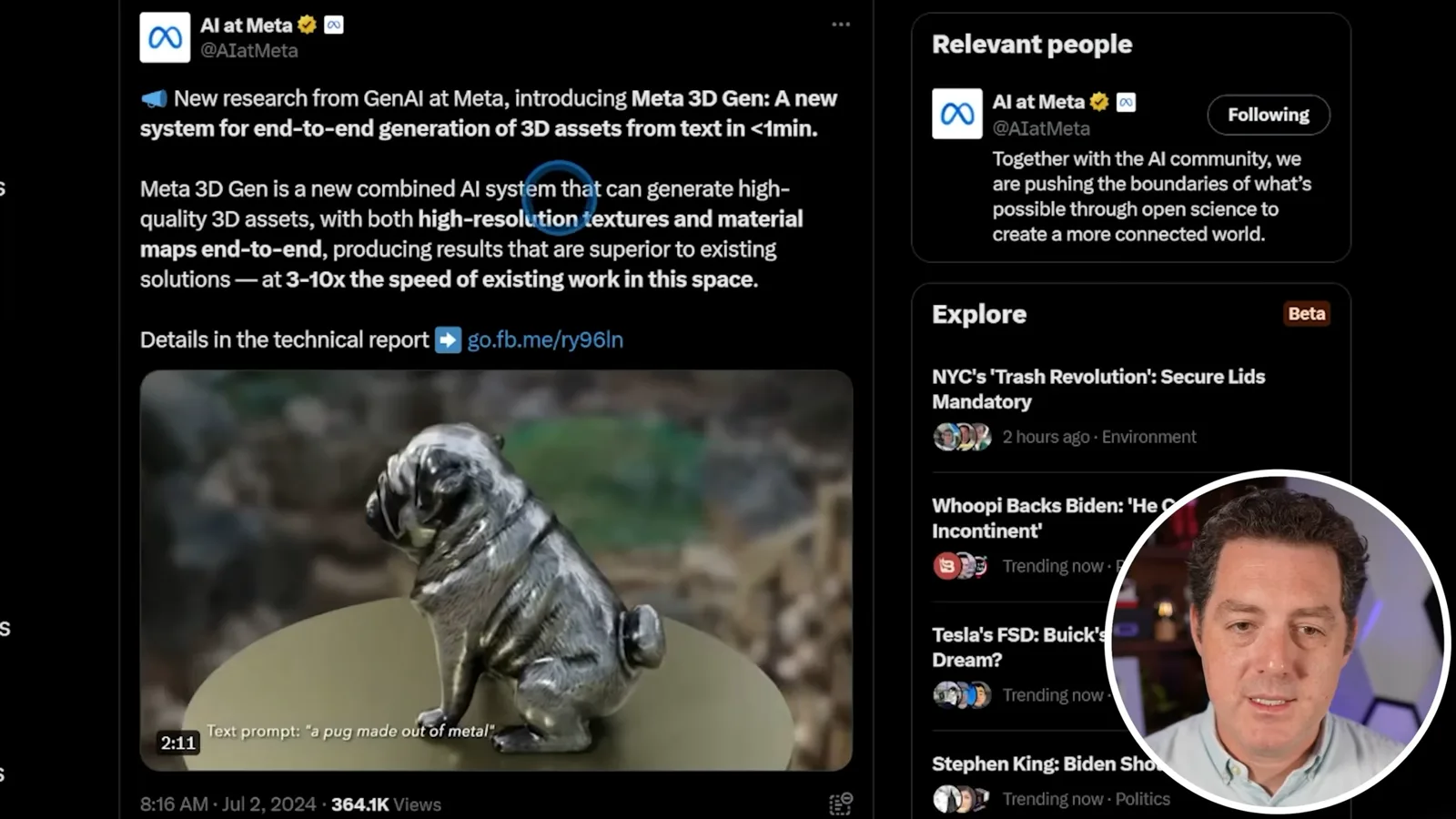
Meta presents Meta 3D Gen, a text-to-3D system described as producing textured assets and material maps in under a minute. The performance and quality comparisons I cite are the project’s claims; I also note that the researchers published papers describing the work.
I imagine future games and other media being generated dynamically for an individual audience. That is a prediction, not a capability demonstrated by this text-to-3D announcement, and it raises questions about the implications for artists.
Nomic AI releases GPT4All 3.0, an open-source desktop application for running language models locally. I recall its early role in making local models accessible after the original Llama leak. I am an investor in Nomic AI, a relationship disclosed with the video.
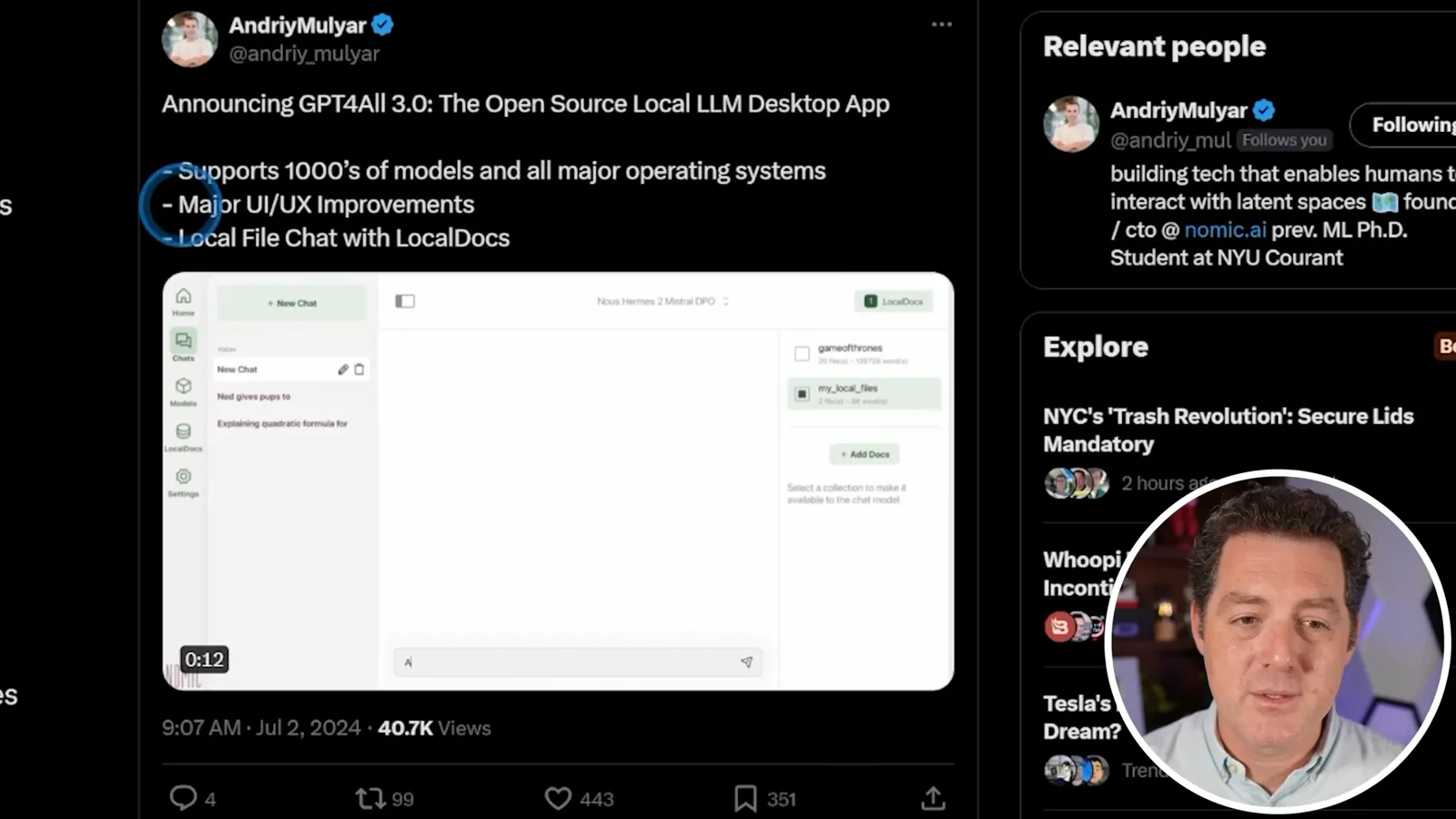
The update includes a redesigned interface, support for many models across major operating systems and local file chat. I have tried it and find the interface approachable for people who do not want to manage all the technical details of local inference. The application itself is MIT licensed.
Third-party evaluation and jailbreak research
Anthropic announces funding for outside model evaluations. Berman reviews Microsoft’s report on the Skeleton Key jailbreak and the importance of safety testing.
Anthropic announces an initiative to fund third-party evaluations of advanced models. Evaluations can help assess capabilities, safety and consistency in business settings, but high-quality safety tests are difficult to develop.
Static benchmarks can also be overfit if model developers train on their questions. I therefore see value in fresh, varied evaluations that test a broad range of capabilities, including safety. Anthropic invites outside organizations to apply for funding.
Microsoft researchers report a jailbreak called Skeleton Key, which uses a multi-turn conversation to try to change a model’s treatment of safety restrictions. I compare it with older attempts to reframe a harmful request as an educational or fictional scenario, and note that the report discusses several model families.
The list of affected models and the state of defenses reflect the report and this 2024 discussion. I speculate that a fix might arrive quickly, but do not verify that every affected service has been patched.
OpenAI security reports
A Mac app’s local plaintext storage is addressed in an update. Separately, Berman discusses reporting on an earlier breach of internal communications and his concerns about security.
A developer found that the Mac ChatGPT application stored conversations locally in plaintext. OpenAI subsequently released an update adding encryption after the issue received press coverage. Local computer access could expose those stored conversations before that change.
I discuss the tradeoff between Apple’s app-store sandboxing requirements and software distributed directly from a website. My broader concern is that software handling personal conversations should protect them appropriately; I credit the researcher who identified the problem.
Separately, The New York Times reported that an attacker accessed OpenAI’s internal messaging system in 2023. According to the report discussed here, company executives did not disclose the incident publicly because no customer or partner information was stolen.
I also refer to former OpenAI employee Leopold Aschenbrenner’s security concerns and his essay Situational Awareness. I describe the dispute and his departure from the company; the video’s account of the reason for his firing is an allegation and is not independently established here.
My concern is that a foreign adversary could steal sensitive AI technology instead of independently developing it. I speculate about what that might mean if a country achieved artificial general intelligence ahead of others; the scenario and my claims about a subsequent intelligence explosion are predictions, not established facts.
같은 채널의 다른 글
 34:21EN
 Matthew Berman· 2026년 10월 27일Matthew Berman Examines Anthropic’s IPO Filing, AI Growth and GovernanceMatthew Berman, Sam Altman · Forward FutureThe presenter reviews the S-1’s financial metrics, compute strategy and voting structure while questioning the tension between rapid AI development and safety.
 25:50ENMatthew Berman· 2026년 10월 24일Kimi K3.1 Pro Tested: Strong 3D Demos, Uneven Results and Competitive PricingMatthew Berman · Forward FutureMatthew Berman tests the open-weight model on coding, 3D rendering and visual explanations, then compares benchmark results and prices.
 32:20ENMatthew Berman· 2026년 10월 23일Who Is Local AI For? The Costs, Trade-offs and a Hybrid FutureMatthew Berman · Forward FutureMatthew Berman weighs data control and independence against hardware cost, setup complexity and inference speed.
 1:03:37ENMatthew Berman· 2026년 10월 23일Matthew Berman’s Team Tests Kimi K3.1 on Animation, Games, and ChartsMatthew Berman, Alex, Brian · Forward FutureA live team AMA turns into an informal test of Kimi K3.1, from personal-agent workflows to motion graphics, a browser game, and a benchmark chart.
 0:53ENMatthew Berman· 2026년 10월 22일Sam Altman on AI and the Discovery of New KnowledgeSam Altman · OpenAIAltman expects progress in mathematical discovery to extend to biology, materials and energy.
 0:22ENMatthew Berman· 2026년 10월 21일A Robot Bodyguard Video Shows Dramatic Rescue ScenariosMatthew Berman · Forward FutureMatthew Berman reacts to a short robot demonstration depicting fighting and vehicle-rescue scenarios.