30초 요약
Matthew Berman surveys AI announcements from late October 2025, including the 1X Neo home robot preorder, Extropic’s proposed thermodynamic computing hardware, MiniMax M2, IBM Granite 4.0 Nano and Cursor 2. He also discusses Nvidia’s Nokia investment, Tesla’s hypothetical distributed inference fleet and Substrate’s lithography claims. On Amazon’s planned corporate job cuts, he separates his suspicion about overhiring from the company’s statements about AI-driven efficiency. Product claims and benchmark comparisons reflect the information presented at the time.
- 1Neo home robot1X opened preorders in 2025; Berman highlights both the proposed home uses and questions about teleoperation.
- 2Thermodynamic computingExtropic describes hardware for sampling probability distributions and claims large efficiency gains at an early stage.
- 3MiniMax M2 benchmarkAn Artificial Analysis snapshot gives the open-weights model a score of 61 on its index.
- 4Cursor 2Cursor introduces Composer and a more agent-centered interface alongside review and browser testing tools.
- 5Amazon job cutsBerman questions whether AI alone explains the cuts while noting Amazon’s statements about efficiency and future roles.
핵심 정리
- 1X promoted Neo for home use, while early demonstrations raised questions about how much work requires teleoperation.
- Extropic’s efficiency figures are claims about an early thermodynamic computing approach, not proof of a production-wide advantage.
- The MiniMax M2 score comes from an October 2025 Artificial Analysis benchmark snapshot.
- Cursor presented faster agentic coding, a new interface and tools for reviewing and testing changes.
- Berman’s account of Amazon’s layoffs distinguishes his speculation from Amazon’s statements about AI and jobs.
챕터별로 다듬은 전문 읽기
Neo, thermodynamic computing and MiniMax M2
Berman discusses the Neo home robot preorder and questions about remote operation. He then covers Extropic’s early TSU claims and MiniMax M2’s benchmark snapshot.
1X has opened preorders for Neo, a humanoid robot intended for the home. Its launch video went viral, and I have already preordered one. In October 2025, the company was offering it for $20,000 with availability planned for early 2026. I hope to test whether it can help with laundry, dishes and tidying when mine arrives.
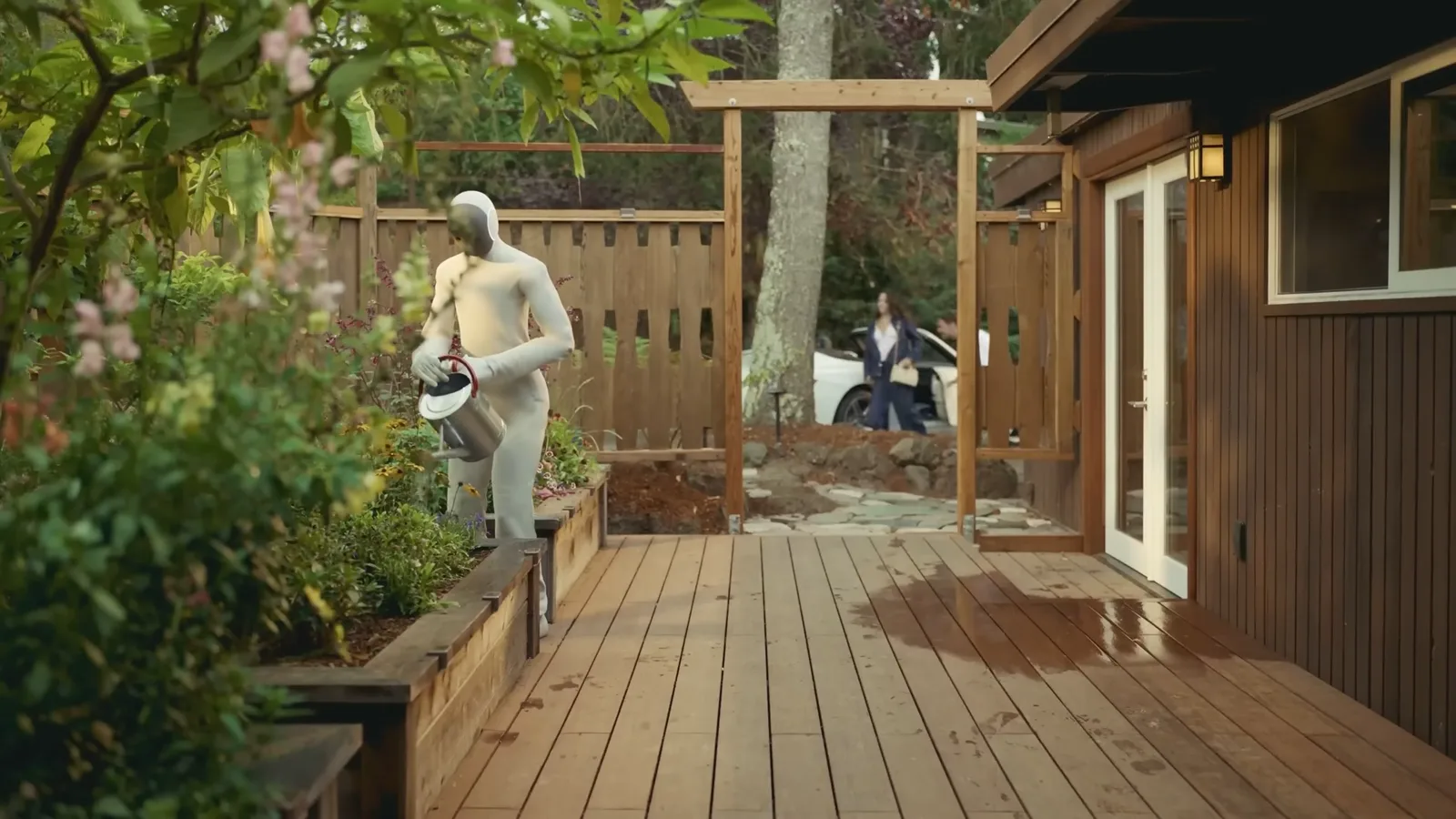
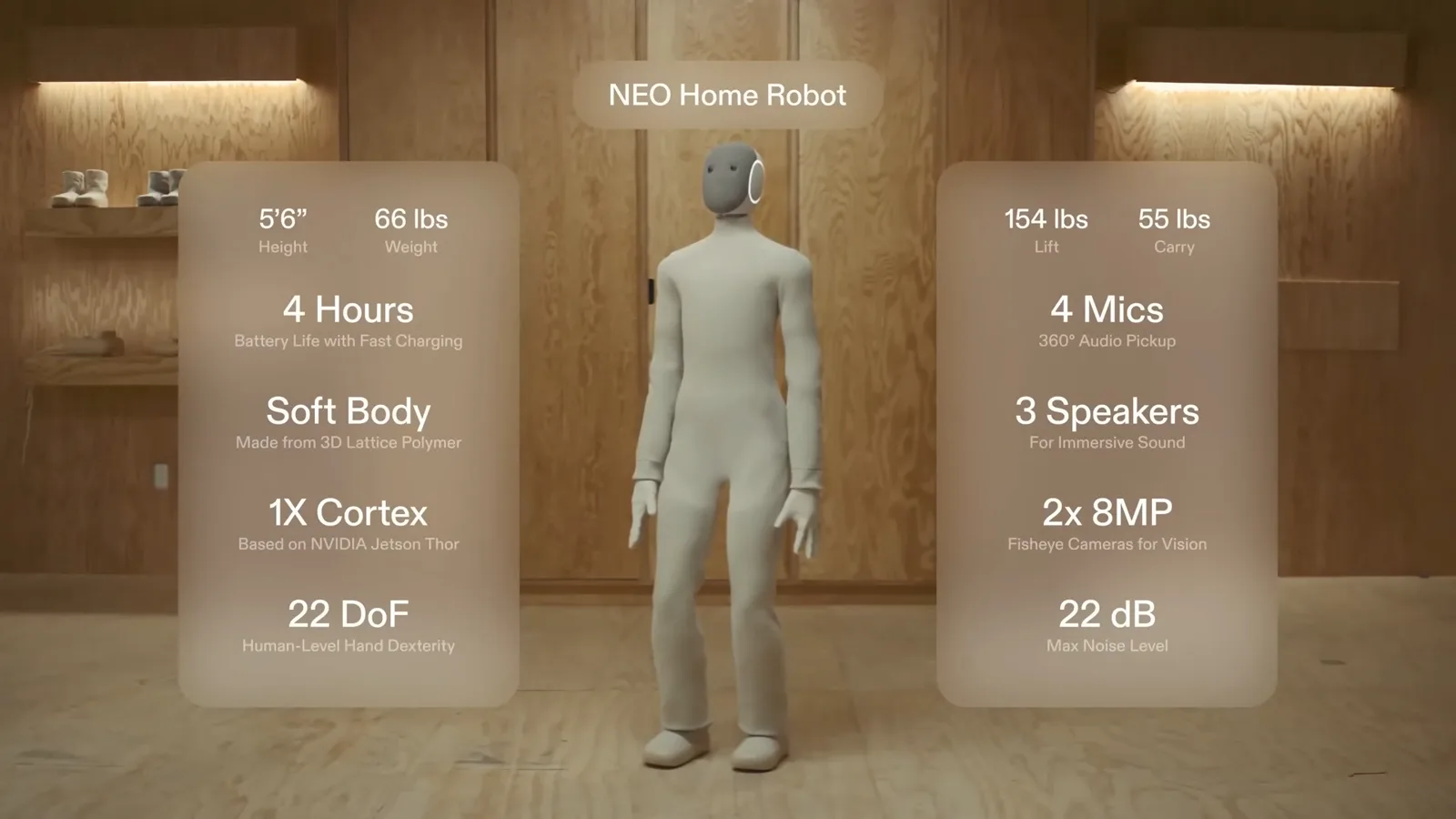
The specifications shown in the launch material list a 66-pound robot, a 154-pound lift capacity, 22 degrees of freedom in its hands and a maximum noise level of 22 dB. These are the company’s specifications, not my own test results. Some initial reviews of the demonstrations say that many tasks still rely on teleoperation; I wonder how many people and how much infrastructure will be needed to provide remote assistance.
Extropic has released more information about its thermodynamic sampling unit, or TSU. Its pitch is that today’s computing uses too much energy, and that new probabilistic hardware and software can improve efficiency. Rather than executing conventional deterministic instructions, the proposed system samples from probability distributions.
Extropic claims the TSU could be up to 10,000 times more efficient than traditional CPUs and GPUs. The work is early: these are prototypes and simulations, not a demonstrated universal advantage in production. I am excited to see a novel computing approach tested, even though the details are difficult to understand.
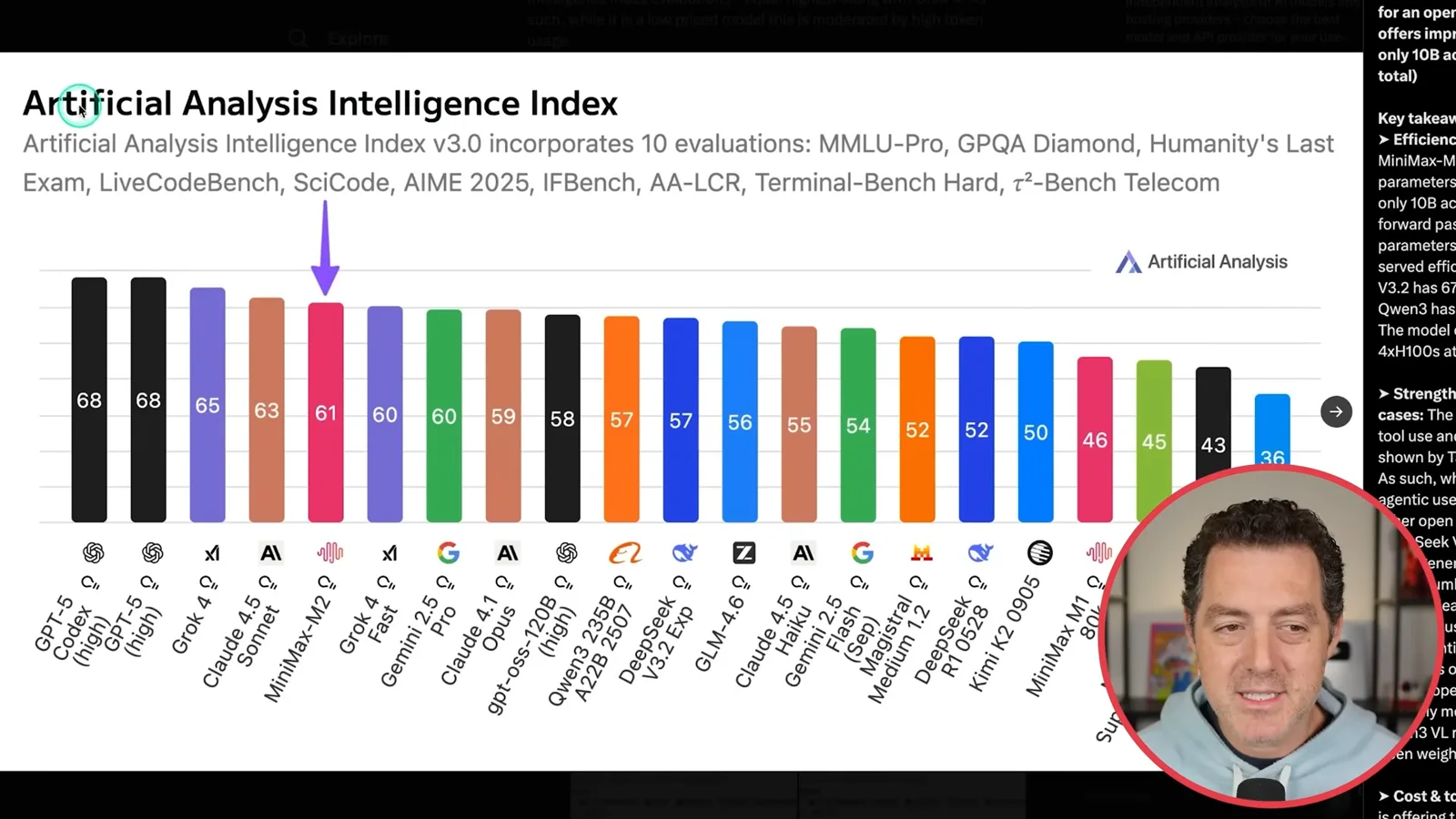
Artificial Analysis reports that MiniMax M2 reached a new high for an open-weights model on its intelligence index at the time. It has 200 billion total parameters, with 10 billion active. The displayed 2025 snapshot assigns it a score of 61, below Claude Sonnet 4.5 and above Grok 4 Fast and Gemini 2.5 Pro. This is a particular benchmark snapshot, not a universal ranking.
Nvidia, IBM and distributed inference
Nvidia’s Nokia investment and IBM’s small Granite models lead into Musk’s idea for using idle Tesla hardware. Berman treats the fleet as a future possibility.
Nvidia took a $1 billion stake in Nokia, according to the CNBC report I discuss, and the companies announced a strategic partnership on 5G and 6G technology using Nvidia chips. I find the investment notable alongside other relationships between AI companies and chip suppliers; my speculation about those financial ties is not a finding of wrongdoing.
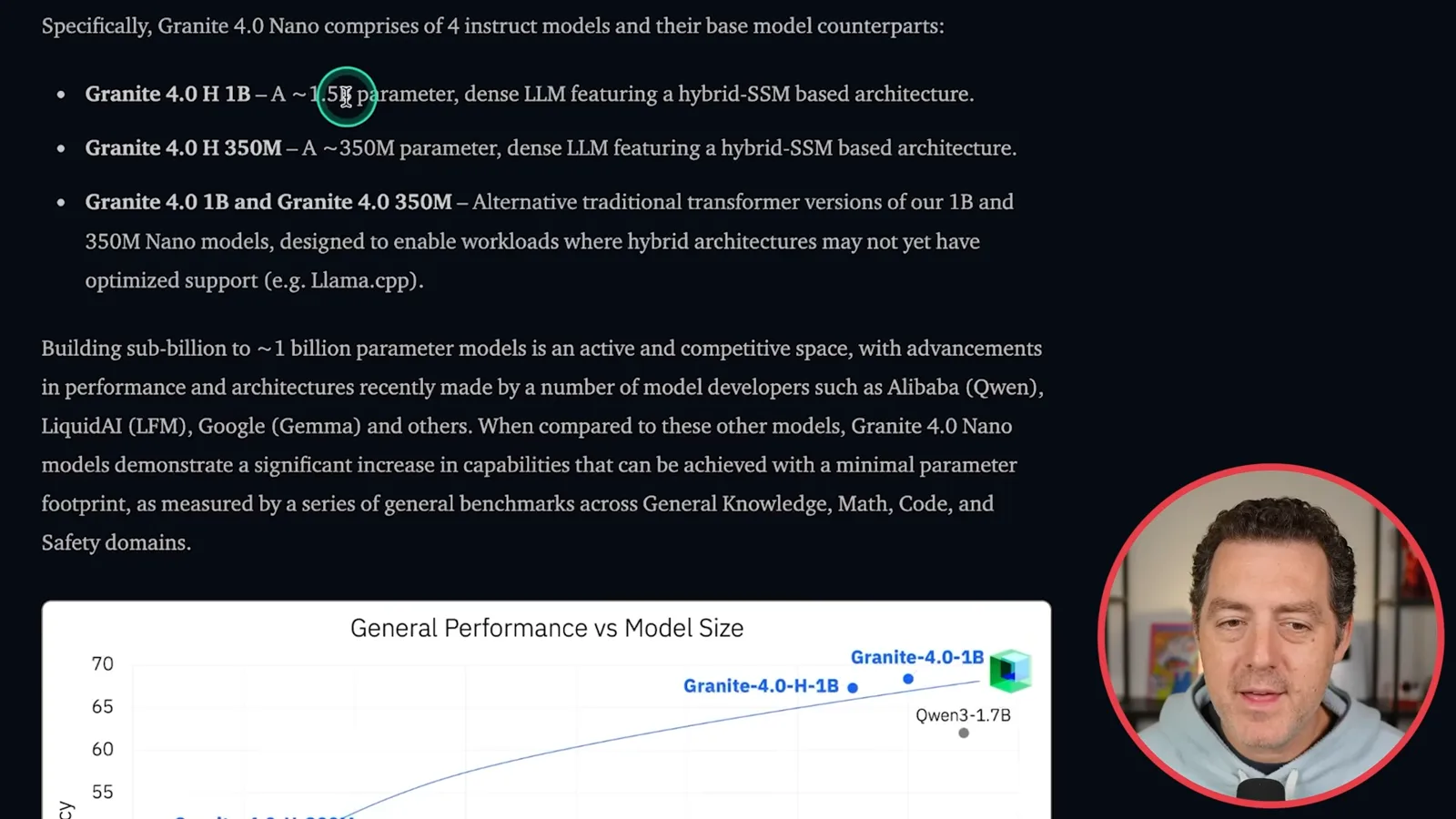
IBM has released Granite 4.0 Nano for edge and on-device use. The family includes hybrid state-space models of about 1.5 billion and 350 million parameters, along with traditional transformer versions in those size classes. IBM’s displayed chart compares general benchmark performance and model size; I find the small models promising for their size.
Elon Musk has floated using idle Tesla vehicles as a distributed inference fleet. His hypothetical calculation imagines 100 million cars with a kilowatt of inference capability each, yielding 100 gigawatts in aggregate. I find the idea of owners potentially earning money from unused compute interesting, but this is a proposal and calculation, not an existing fleet or a demonstrated payment scheme.
Cursor, lithography and browser agents
Cursor 2 adds an agent-focused interface and testing features. Berman also discusses Substrate’s lithography images and Copilot mode in Edge.
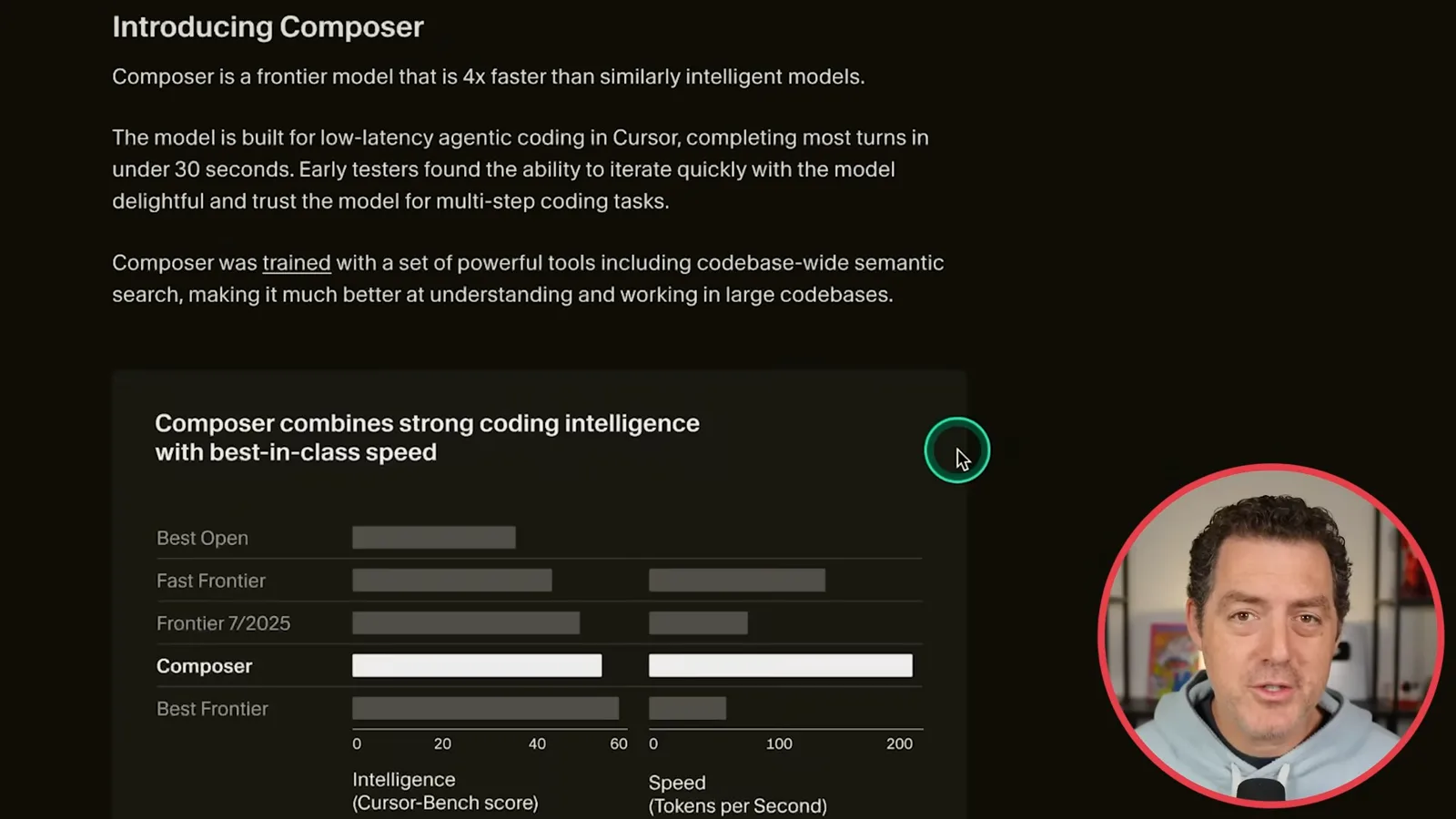
Cursor 2.0 introduces Composer, a model the company says is four times faster than similarly capable models and designed for low-latency agentic coding. Speed matters to me as much as quality because it affects how quickly I can iterate. This is Cursor’s comparison, rather than an independently verified result in this video.
The updated interface centers on agents rather than files. Cursor also describes code review and testing as emerging bottlenecks, and says its new tools make changes easier to inspect and include a native browser for testing and iteration. I see the design as another step toward building software through collaboration with an agent.
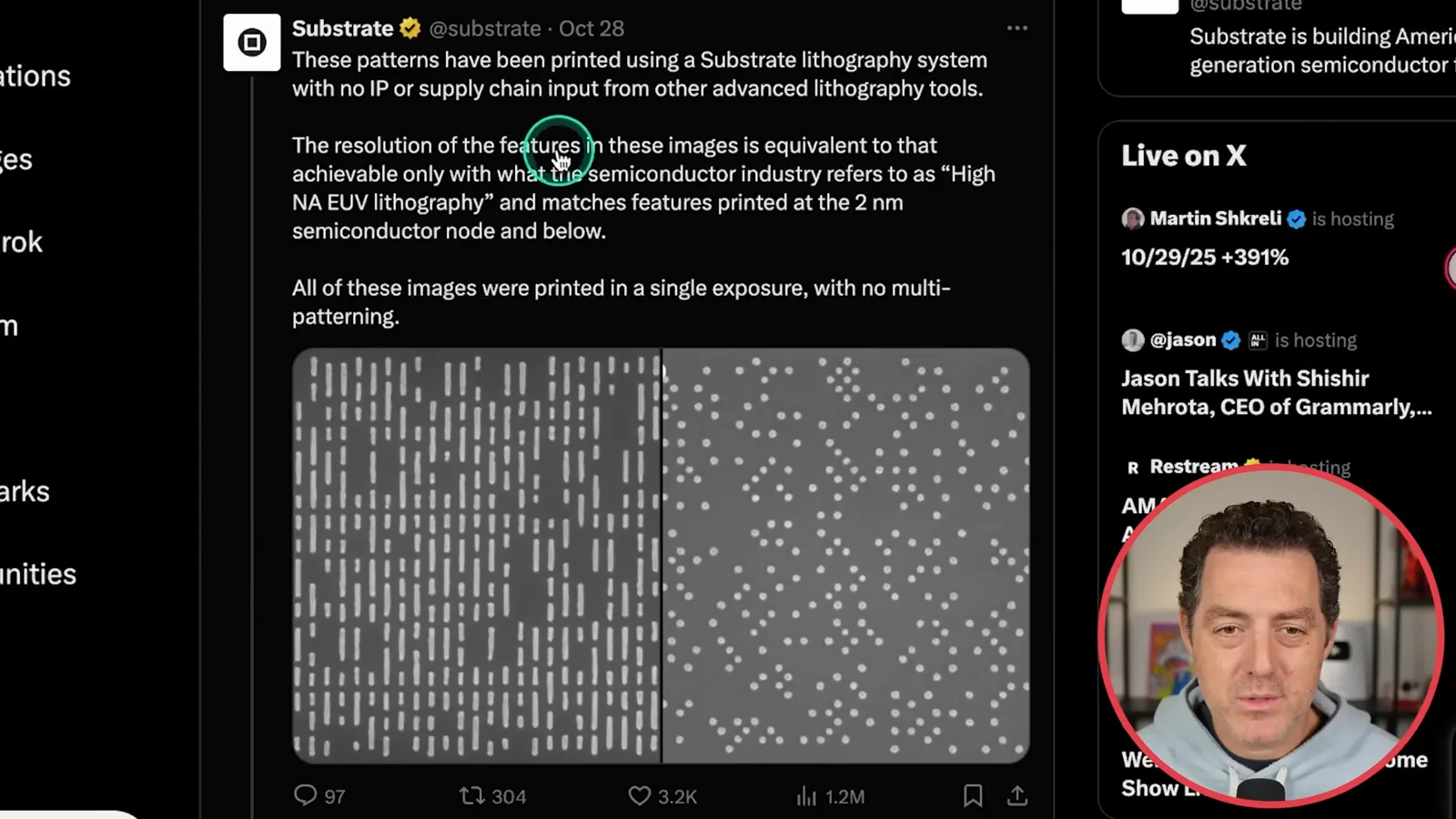
US startup Substrate says it is developing advanced X-ray lithography for a new semiconductor foundry. It shows patterns that it says match features printed at the 2-nanometer node and below. Those images are a company demonstration of features, not proof that the startup is already manufacturing complete chips at scale.
Microsoft promoted Copilot mode in Edge for Windows and Mac. At the time, OpenAI’s ChatGPT Atlas browser was available only on Mac. I speculate that the platform comparison could be a competitive signal, though it may not be intended as one.
Amazon layoffs and engineering careers
Berman discusses the reported corporate cuts, his own interpretation and Jassy’s comments on AI. An interview excerpt with Matt Garman emphasizes reasoning and learning skills.
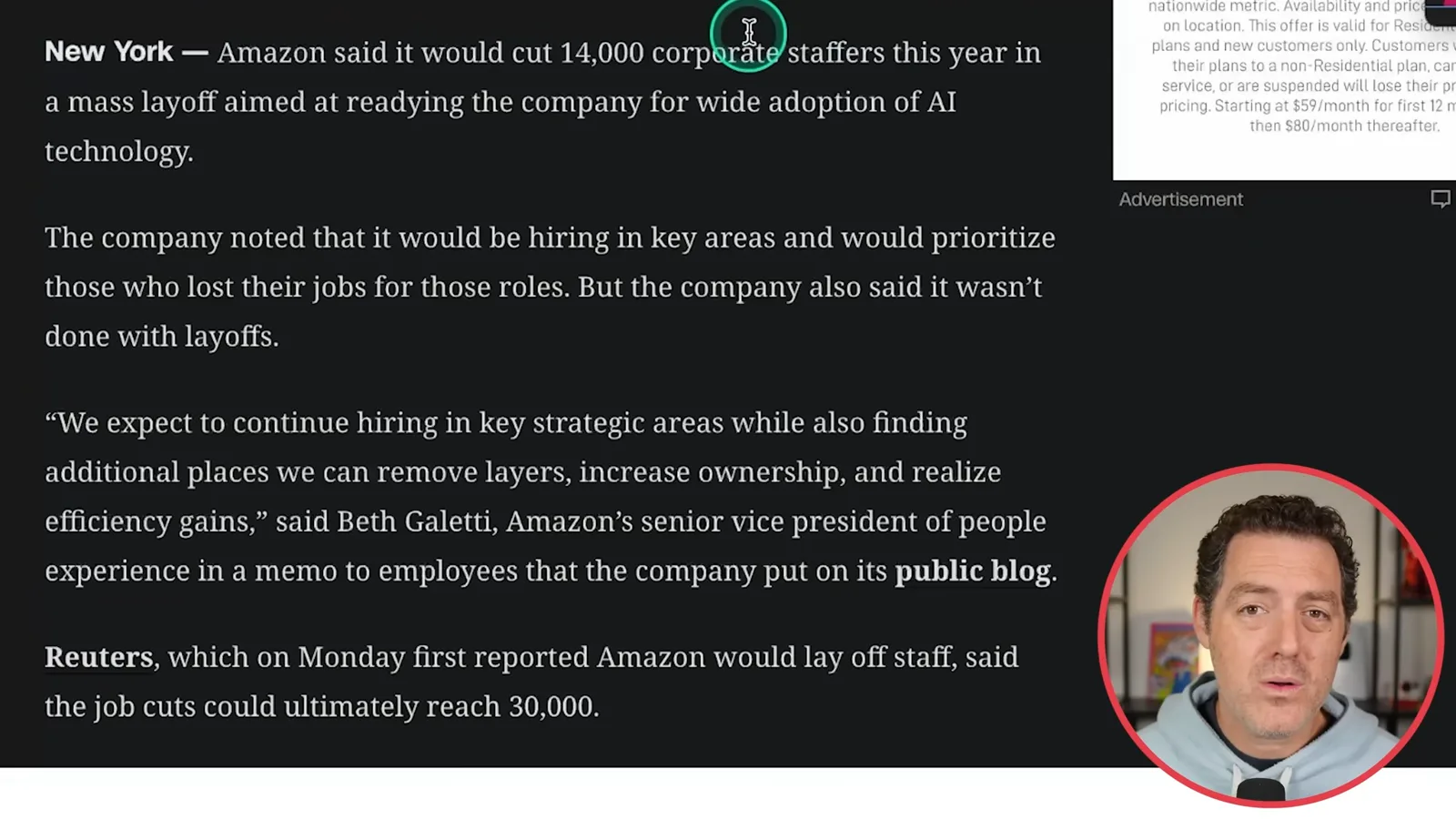
Amazon announced plans to cut 14,000 corporate roles, with reporting linking the reductions to preparation for wider AI adoption. I am skeptical that AI alone explains the cuts and suspect previous overhiring may also be involved; that is my interpretation, not a verified account of Amazon’s decision. The company said it would continue hiring in strategic areas while seeking further efficiencies.
The report says most affected employees would have 90 days to seek internal roles, with severance and benefits for those who did not find them. I feel for people facing that transition. CEO Andy Jassy had said in June that AI would eventually mean fewer people in some jobs and more in other kinds of work; that does not tell us how many new jobs will replace the positions lost.
In a clip from my interview, AWS CEO Matt Garman encourages students to develop critical thinking, creativity and a willingness to learn. He argues that specific technologies can change over a career, while engineering education can teach people how to break down and solve problems. Those skills, in his view, help people adapt as technology advances.
같은 채널의 다른 글
 34:21EN
 Matthew Berman· 2026년 10월 27일Matthew Berman Examines Anthropic’s IPO Filing, AI Growth and GovernanceMatthew Berman, Sam Altman · Forward FutureThe presenter reviews the S-1’s financial metrics, compute strategy and voting structure while questioning the tension between rapid AI development and safety.
 25:50ENMatthew Berman· 2026년 10월 24일Kimi K3.1 Pro Tested: Strong 3D Demos, Uneven Results and Competitive PricingMatthew Berman · Forward FutureMatthew Berman tests the open-weight model on coding, 3D rendering and visual explanations, then compares benchmark results and prices.
 32:20ENMatthew Berman· 2026년 10월 23일Who Is Local AI For? The Costs, Trade-offs and a Hybrid FutureMatthew Berman · Forward FutureMatthew Berman weighs data control and independence against hardware cost, setup complexity and inference speed.
 1:03:37ENMatthew Berman· 2026년 10월 23일Matthew Berman’s Team Tests Kimi K3.1 on Animation, Games, and ChartsMatthew Berman, Alex, Brian · Forward FutureA live team AMA turns into an informal test of Kimi K3.1, from personal-agent workflows to motion graphics, a browser game, and a benchmark chart.
 0:53ENMatthew Berman· 2026년 10월 22일Sam Altman on AI and the Discovery of New KnowledgeSam Altman · OpenAIAltman expects progress in mathematical discovery to extend to biology, materials and energy.
 0:22ENMatthew Berman· 2026년 10월 21일A Robot Bodyguard Video Shows Dramatic Rescue ScenariosMatthew Berman · Forward FutureMatthew Berman reacts to a short robot demonstration depicting fighting and vehicle-rescue scenarios.