30초 요약
Novelist Benjamín Labatut talks with Jasmine Sun about why he uses literature to explore scientific ambition and AI. Drawing on The MANIAC, he discusses John von Neumann, AlphaGo and the human experience that can be obscured by technical abstraction. Labatut questions a culture focused on speed, scale and superintelligence, urging technologists to ask what their creations are for. The discussion contrasts his skeptical outlook with enthusiasm for AI and ends with a defense of human vulnerability and limits.
- 1Why literatureLabatut says fiction can present a messier account of the people and irrationality behind scientific work.
- 2Von Neumann's blind spotsHe uses the mathematician's exceptional intellect to examine what reasoning alone can miss.
- 3What is it for?Discussing AlphaGo and AlphaZero, Labatut argues that excitement about technical trajectories can obscure human lives and purposes.
- 4Beyond superintelligenceHe says intelligence is only one part of human experience and asks builders to consider other qualities and ways of knowing.
- 5Human limitsLabatut describes the pursuit of knowledge as a Faustian bargain and argues that human finitude and vulnerability matter.
핵심 정리
- Labatut sees literature as a way to include irrationality and lived experience that technical abstractions leave out.
- His portrayal of von Neumann explores the power and blind spots of exceptional reasoning.
- The AlphaGo story interests him partly because of the human life surrounding a technical contest.
- He urges builders to ask what technology is for, not only how fast or powerful it can become.
- Labatut argues that vulnerability and limits are central to what people value about being human.
챕터별로 다듬은 전문 읽기
Literature and what abstraction leaves out
Labatut explains why he uses fiction to explore scientific ideas and people. He contrasts the digital abstractions of AI with what he calls the continuous and messy nature of human life.
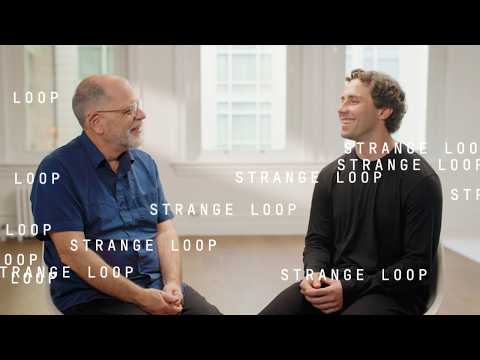
Jasmine Sun asks Benjamín Labatut why literary fiction is his chosen vehicle for exploring subjects such as quantum physics and advanced AI. Labatut answers that human phenomena are messier and more complex than the technical accounts presented in many discussions.
He contrasts a civilization increasingly organized around digital, discrete categories with what he calls the continuous nature of human beings. For him, literature attempts to bring back irrationality and other aspects that scientific method sets aside, producing a darker and less tidy perspective.
Asked to explain continuity, Labatut says the subject cannot be settled in the time available. The conference's optimistic visual language reminds him of an earlier enthusiasm for nuclear technology. He worries that digital systems emphasize what can be separated, measured and treated through logic.
He cites the McCulloch-Pitts neuron as an early mathematical abstraction: a model in which a neuron fires or does not. Labatut says that, when he studies the people behind foundational discoveries, their complicated lives reveal dimensions that the formal model leaves out.
Labatut suggests that the polished aesthetics surrounding AI omit darker visions of its future. He predicts that some present enthusiasm may give way to fear or shame. These are his judgments about the culture, rather than a claim that a particular outcome is certain.
Von Neumann, reason and human experience
Sun asks about the mathematician's portrayal in The MANIAC. Labatut considers exceptional intelligence, blind spots and the difficulty of becoming better rather than merely faster.
Sun turns to The MANIAC, whose central section portrays John von Neumann through a partly fictionalized, historically grounded biography. She asks what made the mathematician compelling as a flesh-and-blood figure of extraordinary intelligence.
Labatut says accounts of von Neumann's intellect and its effect on people around him resemble contemporary descriptions of superintelligence. He was fascinated not only by the scientist's ability but by his blind spots and a perspective Labatut characterizes as cold, calculating and logic-driven.
Human beings, Labatut argues, are not solely reasoning creatures: their ways of being exceed their ways of knowing. Logic can illuminate major problems, but he points to mutually assured destruction as an example of where rigid either-or reasoning can lead. Some problems, he suggests, are lived through and change the people involved.
As AI enters a messy world, Labatut fears harmful effects may be easier to obtain than genuine improvement. He distinguishes becoming better from becoming faster or cheaper, and questions whether modest economic growth alone would make people feel secure or satisfied.
Sun recalls the excitement of trying Claude Code and then wondering how many of her problems software actually solves. Labatut replies by asking how many problems software creates, and the two joke about the prospect of more luxurious software.
AlphaGo and the question of purpose
The conversation turns to AlphaGo, AlphaZero and Lee Sedol. Labatut argues that technical achievement should not crowd out attention to human lives.
Sun praises the ending of The MANIAC for holding both wonder at AlphaGo's capabilities and sadness for human players. She asks why the book ends with AlphaZero, which trained without human game data, rather than with Lee Sedol's loss to AlphaGo.
Labatut says the technical trajectory is fascinating but believes attention to it can be misplaced. He asks whether people focus too heavily on ‘how much’ and ‘how quickly’ while forgetting ‘what for.’ In his view, Lee Sedol's subsequent life may be more interesting than the next system in the sequence.
For Labatut, the human story includes not just a player's genius but family, interests and idiosyncrasies. He worries that fascination with abstraction pushes such details aside. He also says that, in his own experience, current AI writing has not produced prose or poetry he considers good.
Sun says AI's current writing limitations can be reassuring to a writer and may encourage people to write more distinctively, though she would not be surprised if systems improve at poetry. She asks what message Labatut would give scientists and engineers pursuing superintelligence.
Superintelligence and human limits
Labatut questions intelligence-centered language and reflects on uncertainty around AI. He closes by emphasizing human vulnerability and finitude.
Labatut questions the fascination with words such as ‘super’ and ‘ultra.’ He argues that human ways of knowing include lived processes, not intelligence alone: people are not simply brains in jars. He asks why discussions of greater intelligence receive more attention than other possible qualities.
The discussion turns to humanoid robots. Sun describes standing in front of a robot at Unitree and having an immediate feeling that it could be dangerous. Labatut interprets that reaction as evidence of embodied, pre-reflective experience that is missing from purely abstract descriptions.
Labatut calls for taking public claims about job loss and existential risk seriously. He rejects the idea that anyone has a fully reliable plan for navigating the transition, saying that private conversations with people developing AI reveal considerable uncertainty.
Asked about Demis Hassabis, Labatut declines to disclose private conversations. He describes the wider cultural pursuit of ever greater knowledge as a Faustian bargain and invokes stories in which the desire to know everything or live forever carries a cost.
Labatut argues that human limits and vulnerability are part of what makes people precious. Sun notes that, despite their different levels of optimism, he and Tyler Cowen converge on the limits of intelligence and rationality. Labatut closes by asking people to be more human in a frightening period.
같은 채널의 다른 글
 1:16EN
 Sana· 2026년 10월 14일팟캐스트How Volkswagen Group Middle East Uses Sana to Prepare Technicians for TrainingThierry Rochat describes using technical documents to create online courses before hands-on academy sessions.
 0:41ENSana· 2026년 9월 8일팟캐스트Sana Learn Customers Describe Bringing Training Resources TogetherA short customer montage contrasts fragmented learning resources with keeping company knowledge in one place.
 0:40ENSana· 2026년 8월 31일팟캐스트Sana Learn Customers Describe Their Partnership ExperienceIn a short montage, customers discuss implementation and the ongoing relationship with Sana.
 48:34ENSana· 2026년 8월 12일팟캐스트 · 2명Tyler Cowen on AI Adoption, Human Agency, and the Search for Beauty게스트 Tyler Cowen · 진행자 Joel HellermarkThe economist explains why AI's economic impact may arrive slowly, what people may still contribute, and why he is calling for a new aesthetic.
 0:16ENSana· 2026년 7월 21일팟캐스트Tyler Cowen on Human Presence in an AI WorldTyler Cowen predicts that charisma, physical presence and human interaction will gain importance as AI advances.
 0:23ENSana· 2026년 7월 9일팟캐스트Ethan Mollick on Measuring AI’s ImpactEthan Mollick argues that companies should allow room for new opportunities rather than relying only on old metrics.