







필터 결과
344개정렬
 2:51:18EN
 Zhang Xiaojun Podcast· 2026년 10월 15일팟캐스트 · 2명Lindon Gao on Building Dyna Robotics and Finding a Path Through the Fog게스트 Lindon Gao · 진행자 张小珺Dyna Robotics CEO Lindon Gao explains why his company builds intelligence through real workflows, how hardware and research must evolve together, and how a founder can find clarity by letting go of the need to be right.
 10:36EN
 Matthew Berman· 2026년 10월 13일Meta Muse Wonder Tested: Strong Benchmarks, Mixed Demos and Quota FrictionMatthew Berman · Forward FutureMatthew Berman tests Meta’s models on browser demos and reviews their published benchmark scores, availability and cost.
 1:08:02EN
 Sequoia Capital· 2026년 10월 13일팟캐스트AlphaGo Took Two Years. AlphaZero Took Hours. Silver Is Making the Same Bet on SuperintelligenceDavid Silver and Lasse Espeholt left DeepMind to build Ineffable Intelligence, a twenty-person lab that wants a superlearner to discover science, math, and language from experience rather than from a pre-training run.
 38:02EN
 Theo - t3․gg· 2026년 10월 13일Meta’s Muse Wonder Full: A Coding Agent Tested Against Opus and SolTheo Browne · Ping LabsTheo Browne tests Meta’s new model on code review, debugging, delegation and benchmarks, finding promising strengths alongside important limits.
 18:18ENTheo - t3․gg· 2026년 10월 12일Why AI Bills Can Rise as Intelligence Gets CheaperTheo Browne · Ping LabsTheo Browne explains the difference between token prices, task costs and capability, and why more useful agents can still drive larger bills.
 41:10ENTheo - t3․gg· 2026년 10월 9일Haiku 5.5: Where a Cheaper Small Model Helps Coding AgentsTheo Browne · Ping LabsTheo Browne examines Haiku 5.5 pricing, benchmark results and practical tests, including a failed pull-request audit.
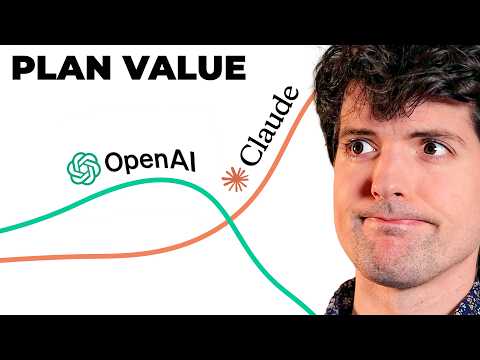 33:33ENTheo - t3․gg· 2026년 10월 7일Is the $200 Codex Plan Still Worth It?Theo Browne · Ping LabsTheo Browne compares subscription usage, API-equivalent estimates, model efficiency and the cost of Ultrafast.
 56:31EN
 Unsupervised Learning: With Jacob Effron· 2026년 10월 6일팟캐스트Post-Training Wins Inference: Why Owning the Weights Beats Betting on One Lab진행자 Jacob EffronApplied Compute CEO Yash Patil argues that control, private evals, and post-training on the biggest workloads matter more than fearing that frontier labs will turn malicious.
 27:29ENTheo - t3․gg· 2026년 9월 27일What Pacing the AI Frontier Could Mean for Model ReleasesTheo Browne · T3Theo argues that releasing more reliable and affordable models can be compatible with slowing the advance of the most dangerous capabilities.
 0:31ENTheo - t3․gg· 2026년 9월 24일Grok 4.7’s Token Use and the Claims Around Its ReleaseTheo Browne · T3Theo compares Elon Musk’s earlier predictions for Grok 4.7 with selected benchmark results and token counts.
 16:57ENMatthew Berman· 2026년 9월 22일Grok 4.7 Compared: Coding, Knowledge Work and Cost per TaskMatthew Berman · Forward FutureMatthew Berman examines reported benchmarks and prices while noting missing competitors and limited hands-on testing.
 38:14EN
 No Priors: AI, Machine Learning, Tech, & Startups· 2026년 9월 18일팟캐스트 · 2명Diffusion Will Win Inference: Stefano Ermon Bets Parallel Tokens Beat Custom Silicon진행자 Sarah Guo, Elad GilThe Stanford diffusion pioneer tells No Priors why a 50-person lab is training language models that generate many tokens at once — and why that maps to GPUs the way transformers once mapped to training.
 0:38ENMatthew Berman· 2026년 9월 13일A Quick DeepSeek Speed Test and V4.1 Flash API PricingMatthew Berman · Forward FutureMatthew Berman demonstrates a short essay response and reviews the peak and off-peak API rates displayed in September 2026.
 0:22ENTheo - t3․gg· 2026년 9월 12일Theo’s Take on GPT-6 Astra: A Next-Generation Model With Rough EdgesTheoTheo praises the model across coding and other tasks while warning that it can still over-engineer and get stuck in loops.
 16:39ENMatthew Berman· 2026년 9월 11일DeepSeek V4.1 Flash: Low-Cost Inference Meets Mixed Results in Practical TestsMatthew Berman · Forward FutureMatthew Berman examines DeepSeek’s efficient new open-weight model, its reported benchmarks and API pricing, then tests its speed, coding and visual work. His small set of demos reveals both impressive speed and problems with simulation accuracy.
 1:16:51ENTheo - t3․gg· 2026년 9월 11일Fable 5.1 vs GPT-6 Astra: Theo on Coding, Computer Use and CostTheoTheo compares the models through coding projects, 3D demos and agent workflows, and explains why he uses each for different jobs.
 1:16:29EN
 Jane Street· 2026년 8월 26일Grant Sanderson and Alok Puranik: Positional Encodings Through Group TheoryGrant Sanderson, Alok Puranik · 3Blue1BrownStarting with assumptions about attention, they derive matrix exponentials and connect rotations, decay and Jordan blocks to RoPE and ALiBi.
 1:56:40EN
 Cognitive Revolution "How AI Changes Everything"· 2026년 8월 8일팟캐스트The Periodic Table Was Already in the Weights진행자 Nathan LabenzGoodfire CTO Dan Balsam tells Nathan Labenz how concept manifolds, predictive data debugging, and a $1,000-a-month research agent are turning interpretability into a product.
 47:22ENSequoia Capital· 2026년 8월 4일팟캐스트From One in a Thousand to 15 Percent: Chai Discovery Treats Drug Design as a Scaling ProblemJoshua Meier and Matthew McPartlon tell Sequoia’s Training Data why antibody design is an engineering problem, not a bespoke science, and why they sell a molecular CAD suite instead of their own drugs.
 49:12ENSequoia Capital· 2026년 7월 29일팟캐스트The People Writing the Transformer’s Eulogy Want a Lab That Can Take Vacation Without Themo1’s reasoning lead and a Gemini pre-training lead argue the architecture, not more scale, is now the bottleneck — and that replacing it starts with automating kernel generation.
 2:59:03ENZhang Xiaojun Podcast· 2026년 7월 28일팟캐스트 · 2명You Kaichao on How vLLM Grew from Open-Source Project to AI Infrastructure Company게스트 You Kaichao · 진행자 张小珺Inferact co-founder You Kaichao traces vLLM’s path from Berkeley research to a company, then explains why model, inference, hardware and agent design increasingly have to move together.
 3:46:12ENZhang Xiaojun Podcast· 2026년 7월 16일팟캐스트 · 2명Kay Ke on Physical Intelligence, Robot Learning, and the Future of Robotics게스트 Kay Ke · 진행자 张小珺Physical Intelligence researcher Kay Ke traces the field's research lineages and explains Pi's progression from π₀ to π*₀.₆. She also reflects on education, fiction, ambition, and what it means to build robots that work beyond a demo.
 2:06:41ENCognitive Revolution "How AI Changes Everything"· 2026년 7월 9일팟캐스트Zero the J-Space and a Model's Hidden Goal Lights Up on Token One진행자 Nathan LabenzA weekly Cognitive Revolution cut of Anthropic's global-workspace paper, AI superforecasters, open video world models, and a chip that treats inference as data movement.
 50:57ENUnsupervised Learning: With Jacob Effron· 2026년 7월 9일팟캐스트A Trillion Dollars of GPUs Will Be Worth $100 Billion in Five Years, Says LSTM's Jürgen Schmidhuber진행자 Jacob EffronThe AI pioneer tells Unsupervised Learning's Jacob Effron why he is wildly optimistic about the technology and deeply pessimistic about the model companies buying the chips.
더 보기344개 중 24개 표시