30 秒でわかる
Theo Browne argues that downloadable weights do not automatically make large models practical on personal hardware. He discusses memory, throughput, parallel workloads, electricity and hosted alternatives, while affirming the value of open-weight competition and acknowledging on-device privacy benefits.
- 1Downloadable versus runnableThe displayed GLM-5.2 quantized file is about 395 GB; runtime requirements depend on the setup.
- 2ConcurrencyTheo’s workflow uses varying numbers of agents, making peak capacity and idle hardware important tradeoffs.
- 3Power costsHis electricity example assumes continuous GPU use in San Francisco; the actual cost varies.
- 4Provider competitionOpen weights let multiple providers offer different pricing, speed and reliability.
- 5Cost per taskDifferent token consumption can make the total task-cost gap much smaller than the per-token price gap.
ポイント
- Open weights allow independent hosting, but large models may exceed practical personal hardware capacity.
- Memory format, offloading, throughput and concurrency affect local performance.
- Hardware and electricity costs depend on equipment, usage and location.
- Hosted open-weight models can offer provider choice while changing the privacy and control tradeoff.
- Compare cost and quality per completed task, not only the price per token.
- Theo’s conclusions reflect his demanding coding-agent workflow and are not a dismissal of every local use.
チャプターごとに整えた全文を読む
Open weights and local hardware
Theo supports open-weight models but challenges expectations about running the largest ones at home. He introduces memory and performance constraints.
I want to distinguish two ideas that are often collapsed together. I value open-weight models and think they are important for the AI ecosystem. My frustration is with claims that the largest and strongest of them can straightforwardly replace hosted frontier models on ordinary personal hardware.
GLM-5.2 is impressive in my view, but being able to download weights is different from running them conveniently at home. The quantized variant I show is roughly 395 GB; the full BF16 weights are much larger. Memory needs depend on format, runtime, context and offloading, so one number is not a universal minimum.
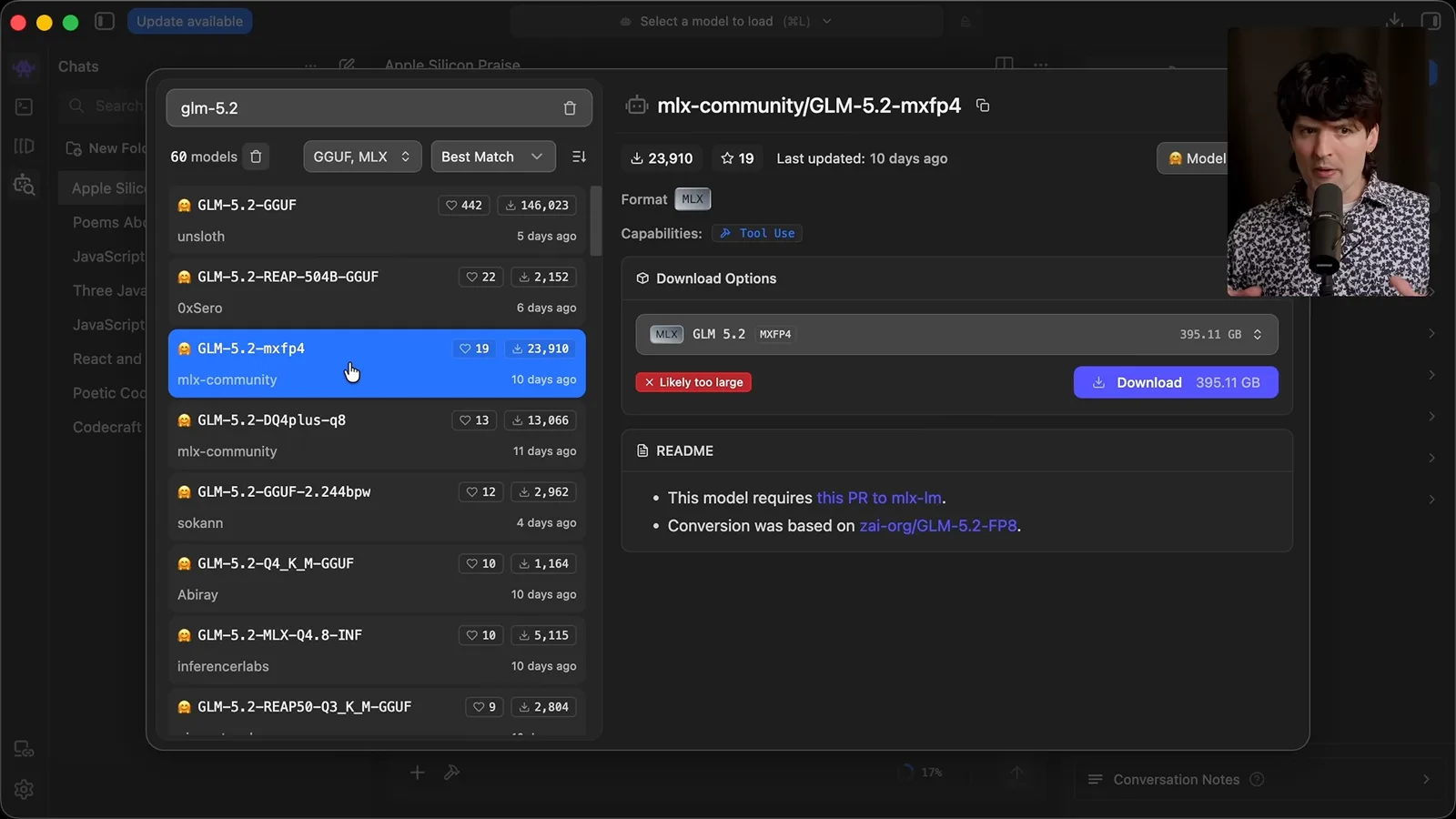
Even smaller quantized or pruned versions may be large and involve quality and speed tradeoffs. I am skeptical of claims that an ordinary laptop can replace the hosted coding agents I use. That is an assessment of demanding workflows, not a claim that smaller local models have no uses.
Memory and hardware prices
He compares unified memory, discrete GPUs and example systems. The prices shown are snapshots from the video.
The gap I care about is between a model merely running and doing useful work at an acceptable speed. I mention antirez’s DwarfStar inference engine, which targets DeepSeek V4 Flash and supports larger machines for Pro. Its displayed README also describes SSD streaming as an option when memory is lower.
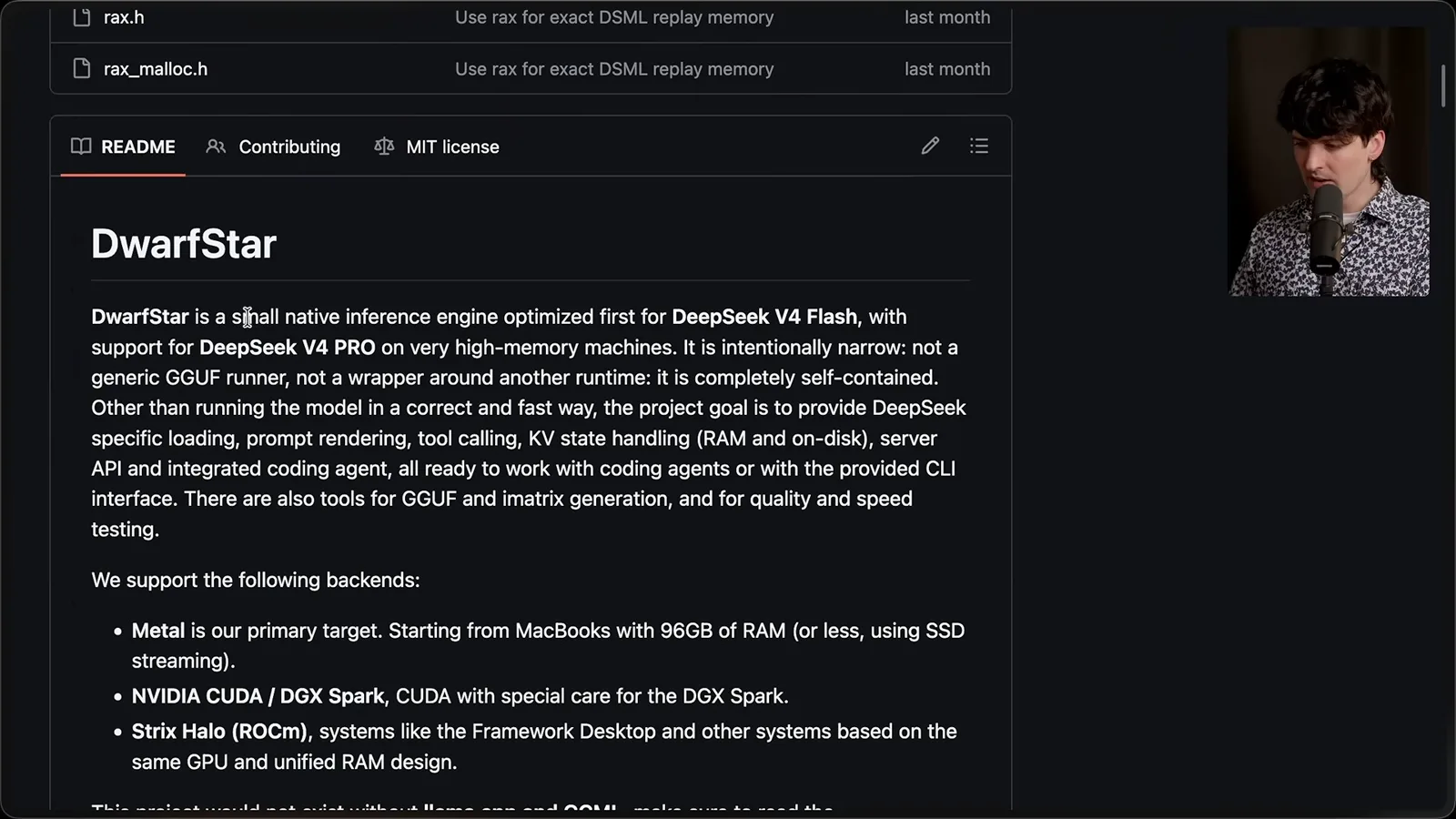
Memory architecture matters. A discrete GPU has its own VRAM, while Apple’s unified-memory machines allow the GPU to share system memory. System RAM can be used with offloading on other machines too, but fitting less on the GPU can substantially affect speed. The right setup depends on the model and runtime.
I compare high-memory Macs, DGX Spark and Strix Halo systems as ways to run larger models locally. My own Spark has not been useful enough for my work, and I find high-memory configurations expensive. These are my experiences and prices at the time, not a complete inventory of all possible hardware.
For a model that fits in both places, I see much faster performance on my RTX 5090 than on my MacBook. A larger model that fits in the Mac’s shared memory but not the GPU’s VRAM can reverse the practical experience. Capacity and compute throughput are separate constraints.
The hardware prices I show are substantial: an RTX 5090 resale listing around $4,300, a higher-memory RTX Pro 6000 around $13,000 and a four-GPU system listed at $75,000. These are examples from the video, not current recommendations or prices. Multiple GPUs also require an appropriate distribution strategy.
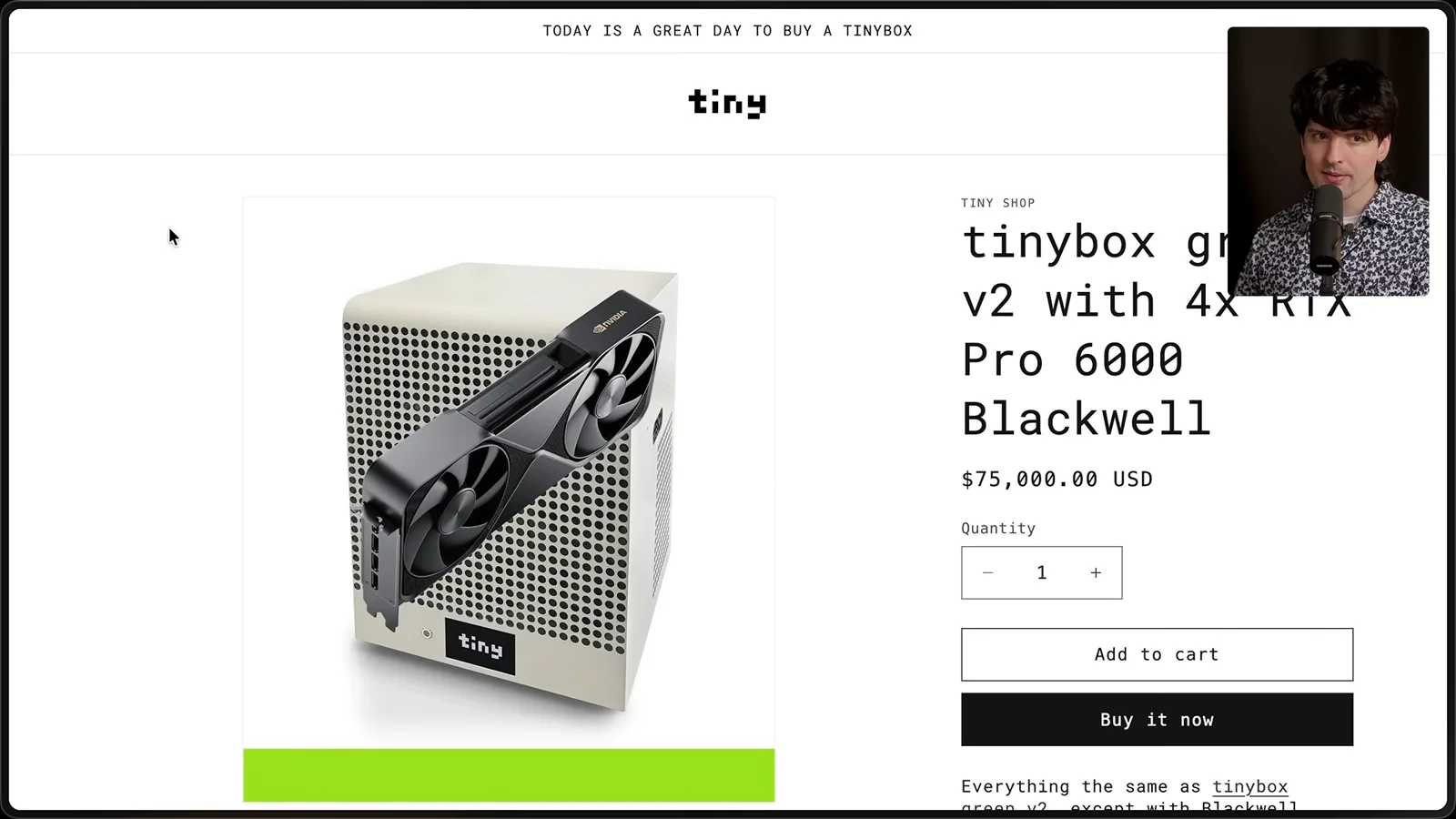
A cheaper multi-GPU example still offers much less memory than the largest open-weight models need in the formats I am discussing. My main point is that open weights create the option to run a model, but the required hardware and the performance you obtain are separate questions.
Benchmarks and parallel agents
He questions benchmark claims and considers the capacity needed for concurrent agent work. His workflow is particularly demanding.
When people cite model leaderboards, I want to know what the benchmark measures and whether it remains discriminating. I look at several coding tests and argue that some advertised scores exaggerate practical competitiveness. The scores I show are snapshots, and I do not treat a single benchmark as a complete evaluation.
Now suppose, hypothetically, that a small model suitable for a high-end laptop matches today’s frontier models. My next concern is concurrency. My own workflow can vary from one agent to dozens, including subagents exploring a project or different models working at the same time.
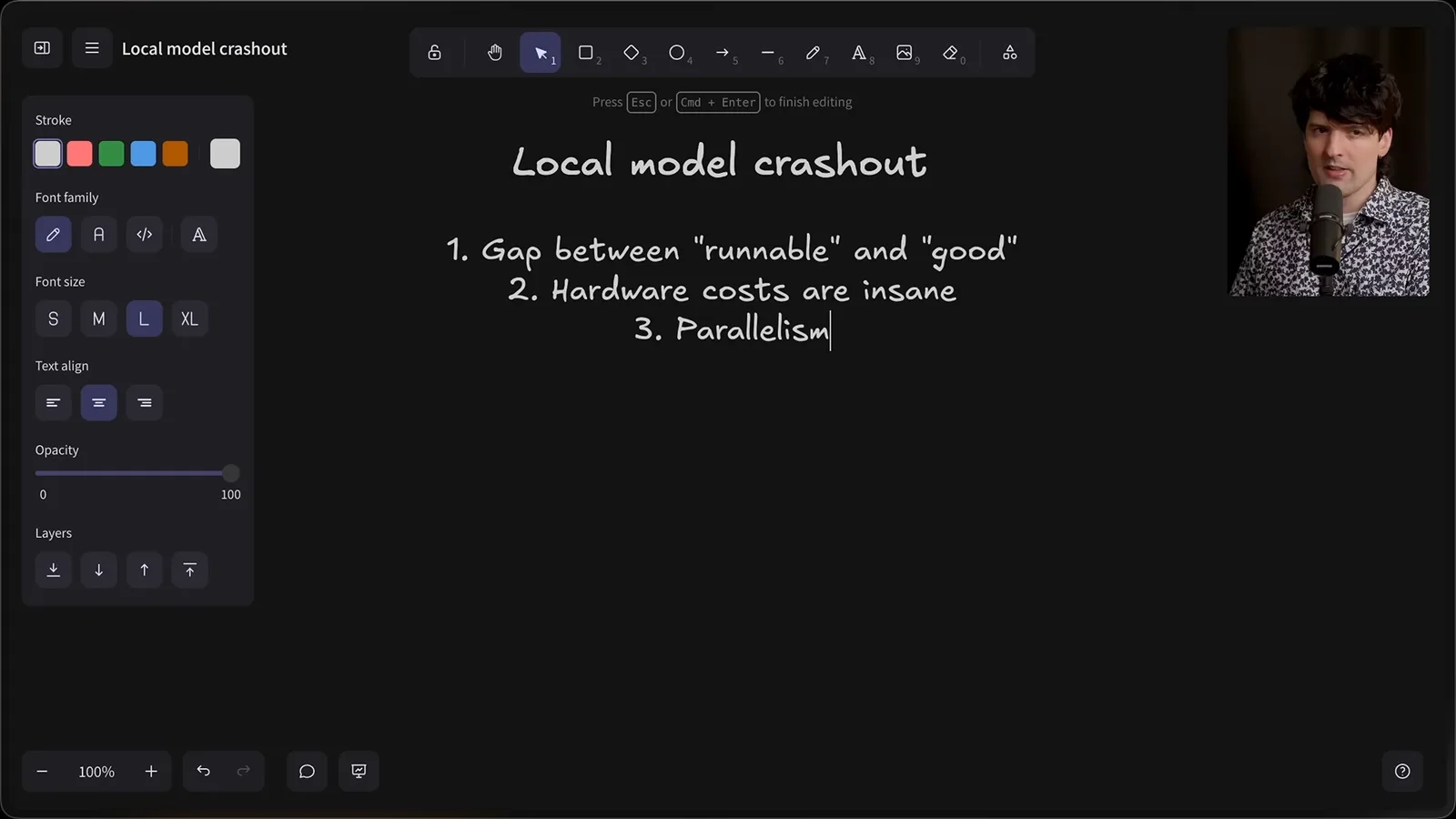
Local hardware has finite capacity: buying enough for peak demand means paying for equipment that may sit idle, while demand above that capacity must wait or be served elsewhere. Batching and caching can improve utilization, but the practical outcome depends on workload and latency requirements.
For my workflow, capability is more than an isolated score: an agent may need to coordinate stages, use tools, inspect a screenshot and respond to review feedback. I note that GLM-5.2 as discussed here lacks image input, which limits a visual feedback loop even if it can write UI code.
Power and device tradeoffs
Theo discusses electricity costs and acknowledges useful private on-device tasks. He also shows a phone CPU chart with a limited scope.
I also expect large frontier systems to remain demanding to host, although I do not know the undisclosed size of proprietary models. The electricity bill adds to hardware cost. An example estimated about $5 a day for a 5090 running continuously in San Francisco; actual cost depends on power draw, utilization and the electricity rate.
Not every task needs a frontier model. My argument is that stronger models expand the work I can delegate: they can handle longer processes, feedback and more complex coordination. That reflects my use pattern; other people may reasonably optimize for smaller, narrower tasks.
On-device summaries and similar features can be valuable because data need not leave the device for those tasks. I like that privacy benefit, but I worry about battery and thermal constraints when local inference is heavy. The tradeoff varies with the device, model and workload.
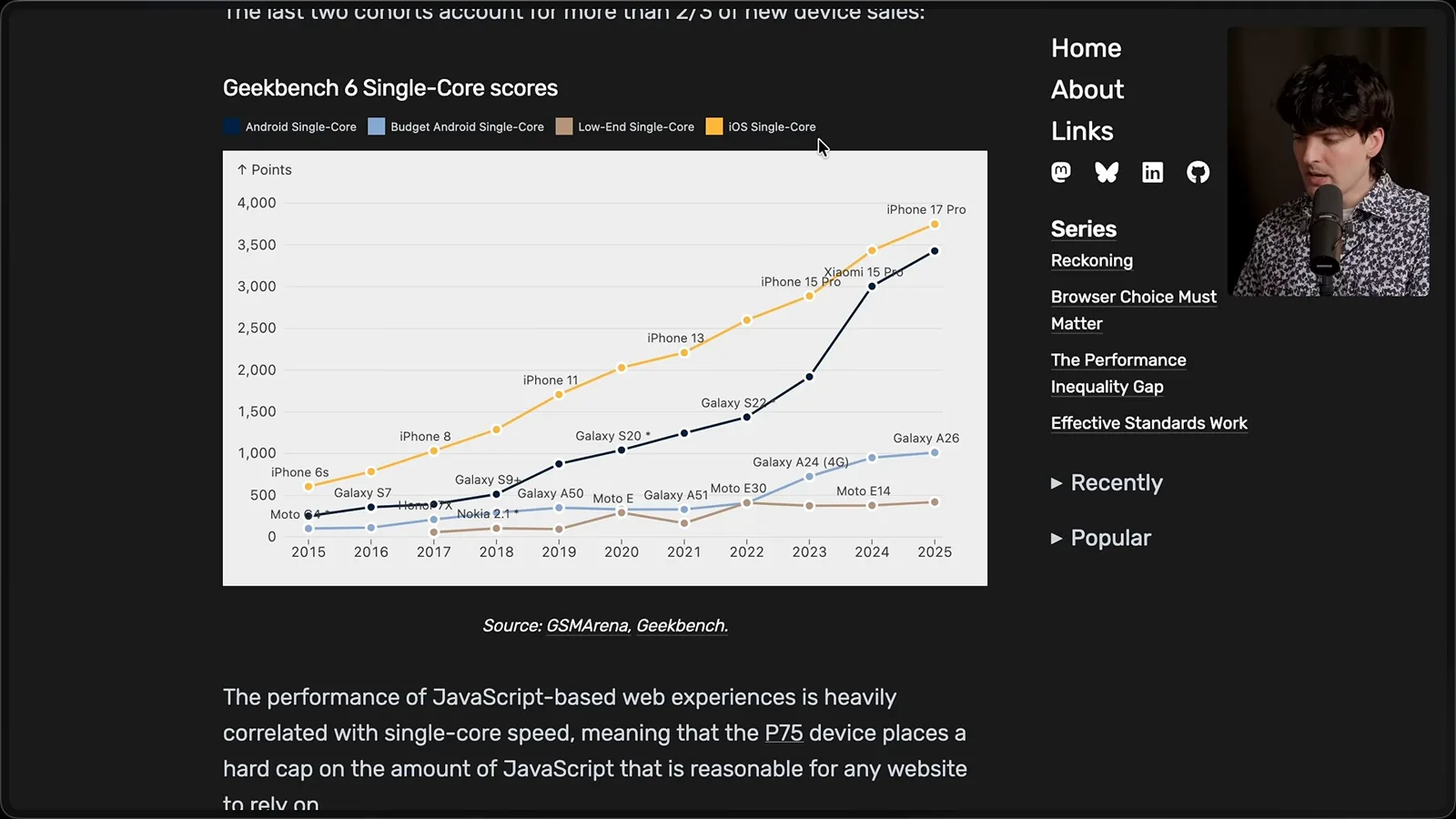
I show a chart of Geekbench 6 single-core scores across phone tiers to argue that inexpensive devices have not improved as quickly as flagship phones. The chart measures CPU single-core performance, not neural accelerator throughput, so it does not by itself establish on-device AI performance.
Hosted open weights and real cost
He argues that provider competition is a major benefit of open weights. He compares token prices with costs per benchmark task and closes by distinguishing local experimentation from general claims.
The strongest argument for open weights in my view is provider competition. Different hosts can run the same model on different hardware, in different locations and at different prices. That creates choices even for people who never run a model on their own computer.
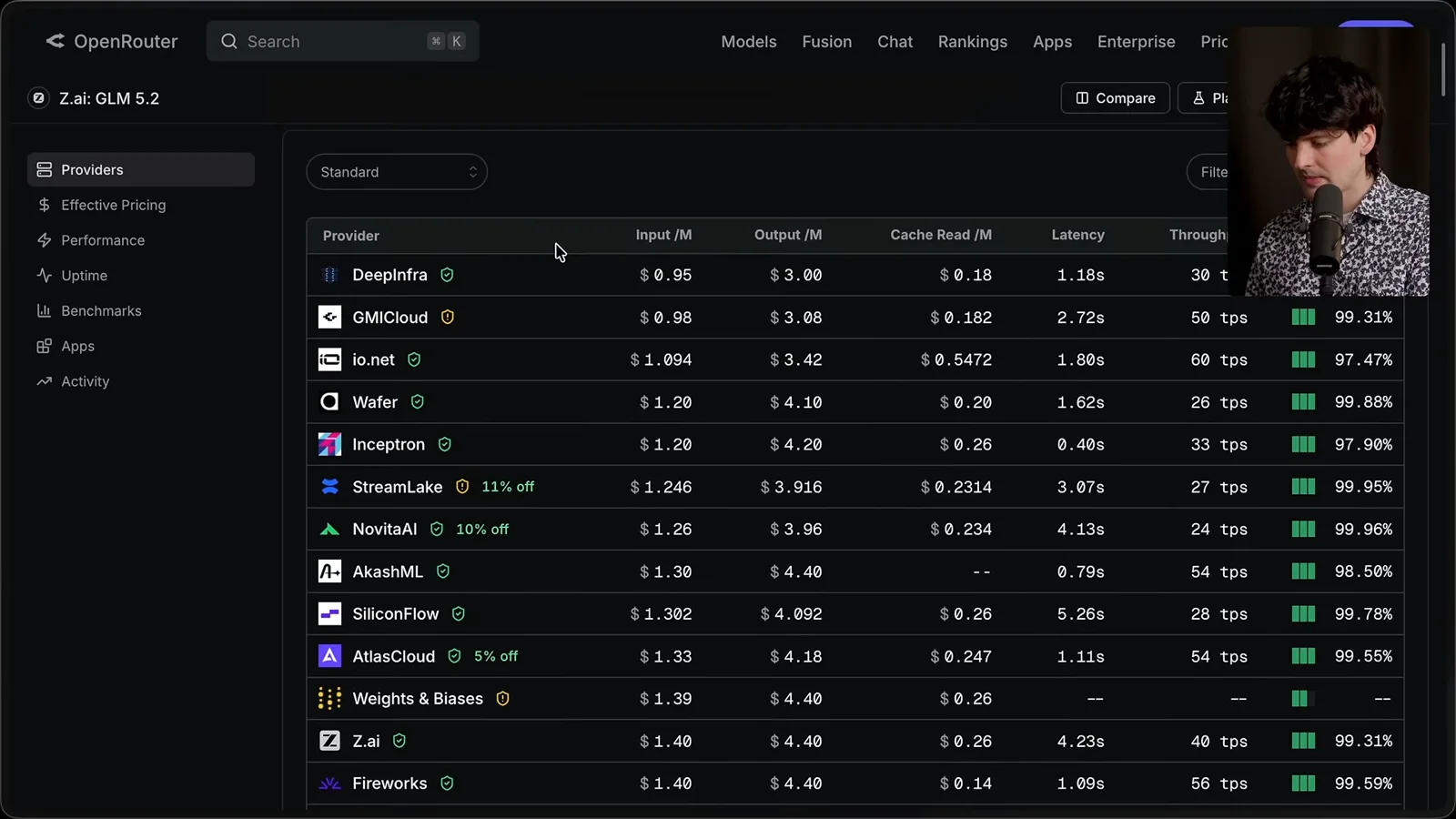
The provider list I show for GLM-5.2 offers a range of prices, speeds and reliability. A cheaper provider may be slower; another may charge more for throughput. Those numbers change, but the point is that consumers can choose between hosting tradeoffs rather than rely on a single service.
Hosted inference shifts hardware purchase, capacity management and power costs to the provider and into its price. It also gives up an important local benefit: keeping the work on your own machine. Privacy, control, availability and cost should be evaluated for the particular provider and task.
If an open-weight model reliably meets the needs of a workload, a hosted version can be an attractive alternative. But compare the actual result and failure rate for your own task rather than assuming that a lower token price is automatically a better deal.
For example, I compare a roughly $3 per million output-token GLM-5.2 rate with $25 for Opus 4.8 at the time. In the DeepSWE runs I show, however, estimated per-task costs are about $4 versus $8, because the models use different quantities of tokens. Settings and workloads matter.
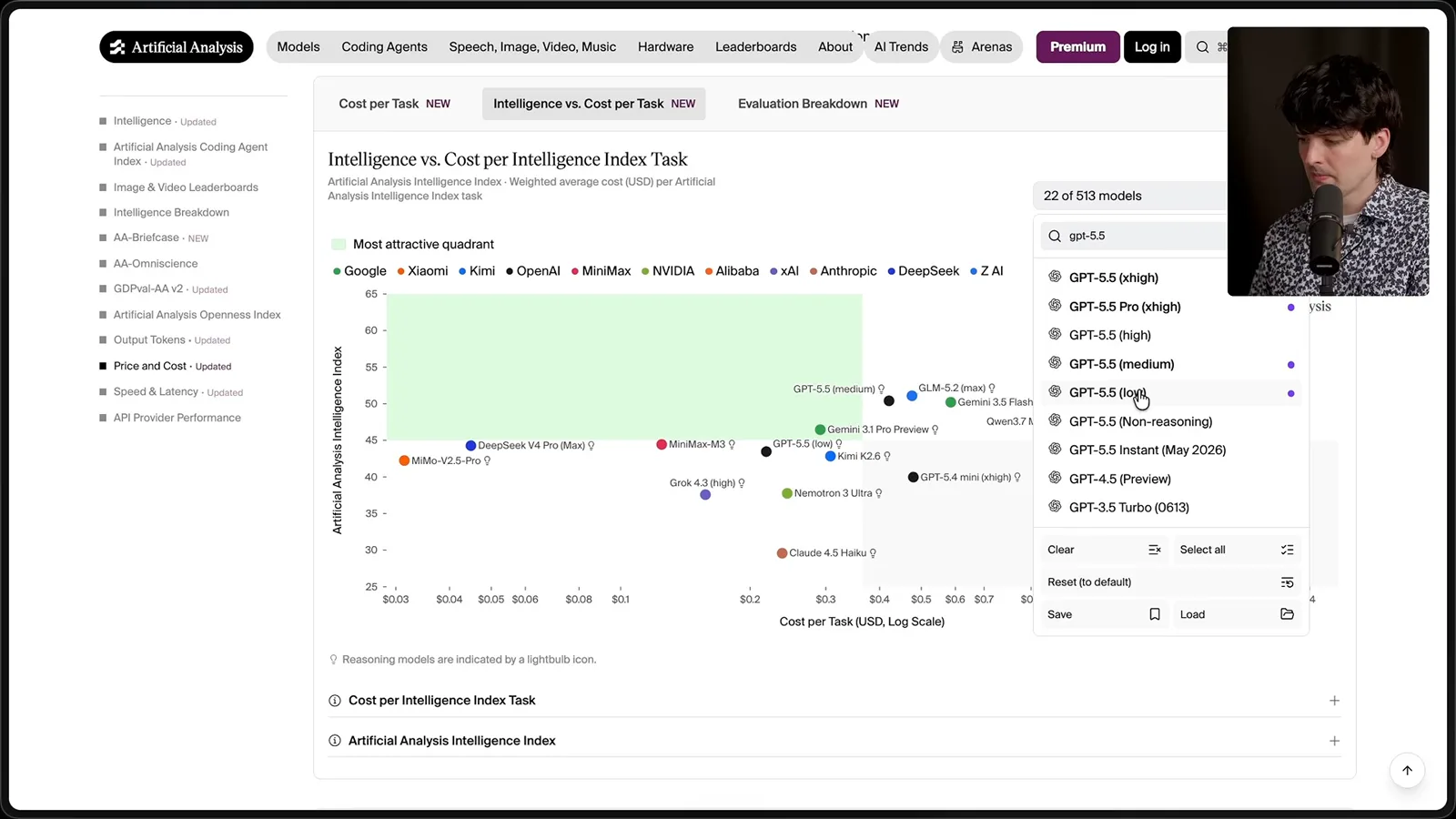
More generated tokens can also make a task slower even when the serving rate is higher. I use an intelligence-versus-cost chart to compare models and effort levels, including GPT-5.5 medium and GLM-5.2 max. It is useful for this suite, but not a universal ranking for every application.
I think GLM-5.2 is an excellent open-weight model, including for some UI work. My objection is to treating the listed token rate or the availability of weights as the whole story. Model quality, total tokens, latency, hardware and the task all affect the real comparison.
Open-weight releases can push the industry forward and create a competitive marketplace. I do not want that progress to stop. I simply disagree that everyone can run the largest capable models on personal hardware with performance comparable to hosted frontier services.
If building a GPU cluster and experimenting locally is your hobby, that is fun and worth discussing. My request is to be clear about what hardware is required and what the setup actually achieves, rather than suggesting the same path works for everyone.
同じチャンネルの記事
 38:47EN
 Theo - t3․gg· 2026年10月28日Theo’s Long-Running Agent Experiments: Verification, Compute and CostTheo Browne · Ping LabsA skateboard game and two compiler projects show how repeated checks and flexible compute can sustain agent work—and how expensive those loops can become.
 36:07ENTheo - t3․gg· 2026年10月27日Theo on Token Costs, Coding Agents, and the Price of AI CapabilityTheo Browne · Ping LabsA viral estimate of Lauren's AI spending prompts a closer look at cache pricing, benchmarks, and the changing work of coding agents.
 30:37ENTheo - t3․gg· 2026年10月26日Theo’s Three Skills for Reviewing and Shipping with Coding AgentsTheo Browne · Ping LabsHow sol-loop, full-send and full-stop encode review, verification and different levels of merge authority.
 0:43ENTheo - t3․gg· 2026年10月23日Theo Distinguishes Security Vulnerabilities from Active AttacksTheo Browne · Ping LabsA short explanation of why disclosed software flaws and reported attacks are different kinds of security news.
 29:22ENTheo - t3․gg· 2026年10月22日Theo on Security Vulnerabilities, Stolen API Keys and AITheo Browne · Ping LabsA look at the gap between vulnerability disclosure and patching, and a speculative account of why stolen inference keys may be valuable.
 31:13ENTheo - t3․gg· 2026年10月20日Theo on Why Smarter Models Help More Than DevelopersTheo Browne · Ping LabsFrom game modifications to compiler experiments, Theo revisits his assumptions about who benefits from more capable AI.