30 秒でわかる
After AlphaGo beat Lee Sedol, Google mechanical engineer Jim Gao emailed Mustafa Suleyman a one-line pitch: reinforcement learning plus data centers equals awesome? The question mark was honest. The pilot still cut energy use by 40% without changing hardware, and Gao left DeepMind to productize the idea as Phaidra, whose agents now operate as virtual plant operators. In this Training Data conversation with Sonya Huang and Pat Grady, he maps which industrial problems fit RL, why Google’s data was an anomaly, and why grid balancing may be AI’s largest climate lever.
- 1Applied RL needs three things you can map onto data: a KPI to optimize, actions you can take, and hard constraints you must not break. That is just constrained optimization under another name.
- 2Gao’s pitch to Mustafa Suleyman ended in a question mark because nobody knew whether industrial reinforcement learning would actually be awesome. Two weeks later a DeepMind team was in Mountain View.
- 3Ten pumps with ten setpoints already make 10 billion operating combinations, and real plants are dynamic. Humans and hardcoded rules have explored about 0.00001% of the action space.
- 4Demis Hassabis’s “AI creativity” is the point: the agent taught Gao things about a mechanical system he had helped design. After AlphaGo, Lee Sedol’s Elo, flat for a decade at around 2800, started climbing again.
- 5Google is an anomaly of data volume, quality, and access. Outside it, Phaidra’s first job is an AI-readiness journey, then a cloud intelligence layer that rides on 1970s–80s BMS and SCADA instead of ripping them out.
- 6Gao thinks AI load-balancing on the grid is the single most important thing AI can do for climate — turning data centers into coordinated load banks as renewables make supply stochastic.
チャプターごとに全文を読む
Phaidra’s agents are virtual operators on billion-dollar plants
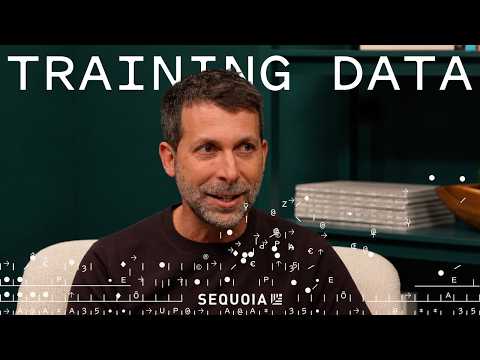
Sonya Huang and Pat Grady introduce Jim Gao as founder and CEO of Phaidra, and formerly the leader of DeepMind Energy — one of the first AlphaGo-style reinforcement-learning systems in the wild. At Google that work produced a number people still quote: 40% energy savings in data-center cooling. Gao’s one- or two-sentence version of the company is blunt. Phaidra is an AI automation company that uses reinforcement learning to directly control customers’ large, mission-critical industrial facilities. In practice the agents act as virtual plant operators, extra members of the operations team.
That framing is the episode’s through-line. The interesting question is not whether AI can write email. It is whether a learning system can sit on top of a physical plant worth billions of dollars, take actions, and stay inside the same safety envelope human operators already live with. Gao spends the rest of the conversation turning that slogan into a checklist: which problems map onto RL, how ready the data has to be, and which knobs the model should never touch.
The email to Mustafa ended with a question mark because nobody knew it would work
Gao once sent Mustafa Suleyman — later his boss at DeepMind — a subject line that has become company lore: “reinforcement learning plus data centers equals awesome?” The question mark was not cute punctuation. Combining RL with industrial facilities was an unknown. Gao’s day job was helping Google design and run hyperscale data centers whose electricity bills ran to billions of dollars; every percent of efficiency was real money. In 2013, on what he remembers as the second cohort of Andrew Ng’s Coursera machine-learning course, he taught himself to program and started tinkering with the mountains of data the plants already produced. AlphaGo, in March 2016, was the spark. He watched the Lee Sedol match at about 3 a.m. Bay Area time, could not let it go, and mailed “Moose.” If DeepMind could beat the best humans at Go, he wrote, the same agents could play a game Gao knew: optimize the power usage effectiveness of Google’s data centers.
The internal pitch to Joe Kava, who leads Google’s data centers, fit on one slide: a Go board on one side, an Xbox controller on the other. Go has an objective to maximize; a data center has energy to minimize. Go has legal moves; a plant has valves, pumps, and setpoints. Go has rules; a plant has temperature bands, chiller start-stop limits, minimum VFD speeds. Measurable environment, actions, constraints. “Reinforcement learning and operating large complex industrial systems are actually one and the same thing.” Grady asks whether those three pieces — objective, actions, constraints — are the ingredients for real-world RL. Gao says yes, 100%. If you can define a constrained optimization problem and map it onto data, you can try to solve it with RL. Controls and optimization, he adds, evolved separately and converged on the same math; Phaidra sits at that intersection.
Two weeks later Suleyman flew to Mountain View with a DeepMind team and they started mapping how RL might run Google’s plants. That partnership is also how Gao met co-founder Veda, an original AlphaGo engineer who had been in Seoul, met Lee Sedol and Larry Page, and was looking for a next problem. Gao had no idea if it would work. He still remembers the first time they turned the system on. He and the operators sat in a cornfield in Iowa — Google likes to put data centers in places like that — looked at the AI’s suggested moves, and thought it had learned the wrong thing. They tried it anyway. Energy dropped. Two surprises stuck. Gao had helped design the mechanical system; the agent was teaching him about his own plant. And the moves were counterintuitive. There was no performance trade-off: the same temperature profiles, the same chiller constraints, the same minimum pump speeds. Pure software gain, not a Johnson Controls or Trane chiller swap.
A toy thought experiment explains why the room was so large. Ten pumps with ten setpoints already yield 10 billion combinations, and real plants have far more machines, more modes, changing IT load and weather, corroding pipes, and fouling heat exchangers. Risk aversion plus hardcoded heuristics means operators have explored about 0.00001% of the action space; the rest is where better operating points likely hide. Facilities were already automated, Gao stresses, just not intelligently — a mix of if-then logic and human nudges. The 2016 pilot still kept humans in the loop: the AI emailed recommendations, experts reviewed them, energy savings hit 40%. Operators got tired of checking mail every fifteen minutes. Joe Kava’s operations team then went fully autonomous, into territory Gao says no one had validated: cloud control of huge industrial kit. He and Veda stood in a 90-megawatt hall; Veda merged a pull request from a MacBook; a bus-sized chiller roared to life and the floor shook. First data point: you can turn the plant on from the cloud. Next question: can you do it intelligently.
Lee Sedol’s Elo had been flat for a decade. After AlphaGo it rose
The feeling in Iowa made Gao a believer, and he reaches for a phrase from DeepMind CEO Demis Hassabis: AI creativity. Silicon Valley, he says, conflates AI with automation. AI can automate routine work; that undersells it. The real promise is acquiring knowledge that did not exist before. He was the expert who helped design the system, and the agent was telling him new things about it. “That’s a very, very powerful feeling.” The example he loves is Lee Sedol. For a decade Sedol sat at the top of Go, Elo somewhere around 2800, with no one left to push him. After the public match, DeepMind let him keep playing the system in private. For the first time in ten years his rating started climbing.
Gao’s inference is about where the gains concentrate. Routine automation — call centers, and so on — is not where he expects the interesting companies. The gold is domains of massive permutational complexity underpinned by data, where human intuition is already insufficient: protein folding, industrial control. The other DeepMind lesson is why he left. Technology does not create impact until people use it, and turning a lab result into a product is a hundredfold or a thousandfold more work. He, Veda, and third co-founder Katie Hoffman kept watching extraordinary DeepMind work that never left the building. Phaidra exists to make intelligent virtual operators a product.
Google’s data stack was an anomaly; everyone else needs an AI-readiness journey
What transferred from Google, Gao says, is the existence proof: closed-loop RL can move a complex industrial facility by a lot. What did not transfer is the environment. Every plant is a snowflake — equipment graphs, product gaps, and “a hundred different ways” mission-critical cooling data can break. Google could pioneer this because it is a forward-leaning company and, more importantly, a data-analytics company that had already paid for high-quality, high-availability telemetry. Leaving the nest was a rude awakening. Some customers are not capturing data at all. In pharma, district cooling, and data centers the sites are almost always sensorized — a billion-dollar plant can afford a million dollars of sensors — but many store only 90 days, six months, or a year. Storage is “expensive,” or, more commonly, nobody uses the data except as forensics after an incident.
He describes a Maslow pyramid of data needs: sensors; retention; cleaning, which means knowing what bad data looks like and how to repair it; then access in both streaming and historical batch. Customers sit all over that spectrum, so Phaidra’s first engagement is an “AI readiness journey” — get the facility into a state an agent can use — before the loop of data in, decision, action, evaluation against the objective. On the action side, today’s control systems were designed in the 1970s and 1980s, the Third Industrial Revolution’s shift from analog to digital and first-generation automation. Gao’s Fourth Industrial Revolution slogan is self-improving infrastructure: plant that operates itself and gets better at it. For now they are shoehorning intelligence into third-revolution hardware.
The product choice is to add no hardware and no new sensors. Phaidra inserts a cloud intelligence layer at the top of the existing stack and rides on the building management system or SCADA, with its millions of if-then lines. Hardcoded logic runs the same way it did a decade ago because nobody loves rewriting the backend. Gao’s battlefield metaphor: the AI is the general, watching on the order of 10,000 trends a minute and issuing commands; BMS and PLCs are the troops. Which pumps run, and at what speed, is the general’s call. How fast a valve physically opens is not. About 90% of the system, he says, is fine as hardcoded heuristics; putting non-deterministic intelligence on granular valve timing would be a disaster. Safety nets and guardrails are a large part of the customer work. Knowing what AI should not control matters as much as knowing what it can.
Merck’s vaccine plant is the public proof — and the first-week save is the wrong number
The week of the taping, Merck became Phaidra’s first public customer after more than two years of use. The site is a 500-acre vaccine manufacturing campus in Pennsylvania: 62,000 tons of cooling, four large chiller plants interconnected, hundreds of coupled machines. Merck itself presented conference numbers showing 16% energy savings when the system was first tried at one chiller plant. That is the definition of mission-critical complexity, Gao says, which is where the agent shines. Phaidra is already autonomously controlling data centers for customers as well.
He tells customers not to over-index on the initial percentage. These systems are non-deterministic; if he could tell you in advance what you are leaving on the table, you would not need the AI. What is valuable is the closed loop. The agent acts, measures the gap between outcome and prediction, and improves. You might start at 1%, 5%, or 10%; you will not climb forever — physics still applies — but you climb, and once you reach an optimum you can stay there. Hardcoded commissioning logic does not. Pipes corrode, exchangers foul, towers scale, equipment gets ripped out. A self-learning layer can move with a customer stuffing the hall with H100s and, soon, H200s. Gao’s name for that is self-improving infrastructure.
Grid balancing is the larger game, and transformers still need a causal loop
Asked what else RL is doing in the wild, Gao admits his map is indexed on Google and DeepMind: a neighboring team using RL to stretch Android battery life, YouTube recommendations, and of course AlphaZero teaching itself Go, chess, and shogi with one learning framework. Production RL outside big tech is scarce, and he does not think that is because the ingredient list is rare. The applications are “freaking massive”; the missing piece is data infrastructure. He names logistics and operations research — shipping, airlines, FedEx routing, trillions of dollars of activity — and then the use he cares about most. Grid balancing, he says, is probably the single most important way AI can fight climate change.
Data centers were about 1.5–2% of U.S. electricity, heading to 4% that year and perhaps 9% by 2030. Ireland already sends 22% of national electricity to data centers; the IEA, he says, puts that on a path to 37% by decade’s end. Those are gigantic load banks. If you could coordinate them, you could help balance a grid whose supply side is no longer a phone call to a coal plant. Renewables make generation stochastic; you cannot ramp the sun. Operators then carry spinning reserves — giant gas turbines idling like a car at a stoplight — and more renewables ironically demand more buffer. Germany, in his telling, decommissioned nuclear baseload while raising renewable share and then had to build more fossil plants as backup. The idea is to treat latency-insensitive compute as a grid instrument: shift work to hours that are cheap or clean. Magnitude of “energy savings” is the wrong metric; system-level cost and carbon are the point. Google has already experimented a bit with carbon-aware scheduling.
On transformers versus RL he defers to Veda, “by far the expert,” and calls himself a mechanical engineer who learned some AI. The strengths look complementary. Intelligent systems, Veda argues, need a model of the world, memory, and the ability to plan and reason. Transformers are strong at swallowing huge structured and unstructured data and learning a world model, but mostly through correlation. Industrial control needs causation: why the agent did this, why it must not do that, how to force a behavior you know has to exist. RL’s strength is planning long action trajectories and learning policies. The interesting intersection is transformers learning world models or value functions that an RL agent can plan against. Without the causal piece, Gao does not see a clean cutover into plants like Phaidra’s.
The next decade’s interesting work is physical, and the founder risk is smaller than it feels
In the lightning round Gao says the near term looks like a Cambrian explosion of AI applications, almost all of it clustered on LLMs and text. That is a large part of the economy and it is exciting. On a five- to ten-year view he is waiting for the same technology to hit cars, homes, and big industrial systems — “the real-world infrastructure that we live in.” Asked whom he admires, he names DeepMind researchers (working there felt like a candy shop for a technologist) and, at length, Mustafa Suleyman, now at Microsoft. The data-center project was a technology; Phaidra is a product; few people, Gao says, are as good as Moose at that translation. He and Katie once sat in a Seattle dive bar before GPT-2 while Suleyman raved about LLMs. They kept trying to steer the conversation back to Phaidra. They had no idea what he was talking about. He later founded Inflection. Gao still files that evening as evidence of product instinct.
Advice for would-be founders — people like his team, leaving a lab to start something — comes in two parts. First, have co-founders. The work is an emotional roller coaster; you need them for load and for sanity. Second, the risk is less than you think. Whatever you are worth in a rising job today, you will be worth more after you learn how to turn technology into product. If the company fails, Google and Microsoft will hire you back at a premium. The best investment is upskilling yourself. The practical version of the whole episode sits in the same spirit. If you run industrial plant, check Gao’s three ingredients. Audit the data pyramid, and do not keep 90 days of logs when the model’s value dwarfs storage. And if you are waiting for a stronger opponent before your own rating moves, notice that Gao’s career turned on a free 2013 Coursera course and an email that admitted uncertainty with a question mark.
同じチャンネルの記事
 1:08:02EN
 Sequoia Capital· 2026年10月13日ポッドキャストAlphaGo Took Two Years. AlphaZero Took Hours. Silver Is Making the Same Bet on SuperintelligenceDavid Silver and Lasse Espeholt left DeepMind to build Ineffable Intelligence, a twenty-person lab that wants a superlearner to discover science, math, and language from experience rather than from a pre-training run.
 1:04:26ENSequoia Capital· 2026年10月6日ポッドキャストAt 100,000 Accelerators, Something Fails Every HourGoogle AI infrastructure chief Amin Vahdat tells Sequoia's Sonya Huang why FLOPS is a vanity metric, why the TPU line split in two, and why he would rather wait on a utility than build his own gigawatt.
 1:05:21ENSequoia Capital· 2026年9月15日ポッドキャストThe Bridge From Model to Workflow Is a Trillion-Dollar BusinessBox CEO Aaron Levie argues that the money in this cycle sits in the messy gap between frontier models and real enterprise work — and that coding's overnight diffusion will not repeat for everyone else.
 52:27ENSequoia Capital· 2026年9月1日ポッドキャストAfter Two Dozen Police Departments Said No, They Built an Anti-Network-Effect AI CompanyA Wisconsin county had 300 gigabytes sitting on a cold case—and Peregrine's founders still refuse to take the credit.
 55:19ENSequoia Capital· 2026年8月25日ポッドキャストHuman Click Data Is a Bug: Rebuilding Search for a Web of AgentsParag Agrawal, former Twitter CEO and founder of Parallel Web Systems, argues that agents will query the web a thousand times more than people, and that both search infrastructure and the ad-supported internet have to be rebuilt for that customer.
 53:44ENSequoia Capital· 2026年8月18日ポッドキャストThe Biggest Bug in Today’s Models Is That the Weights Never ChangeTuring Award winner Rich Sutton and Khurram Javed founded Oak Lab to build agents that keep learning after they ship — and they call synthetic data a big mistake.